Mostrando entradas con la etiqueta Plástico. Mostrar todas las entradas

viernes, 28 de noviembre de 2014

Harvard Scientists May Have Just Solved One of the Biggest Environmental Issues of Our Time

Image Credit: Getty

For years, researchers have been attempting to find a viable, biodegradable alternative to plastic.

Plastic is all around us, in the containers we store our food and in the bottles we drink our beverages from. Our groceries and shopping purchases are all brought home in plastic bags, which have earned the distinction of being "the most ubiquitous consumer item in the world," according to the Guinness World Records.

That's all great, except for the fact that plastic is not a biodegradable product. It takes years for plastic to turn into smaller pieces, but it never breaks down into simple compounds that can be harmlessly reabsorbed by the environment. Instead, it becomes a dangerous pollutant, clogging up waterways, damaging the marine ecosystem and entering the food chain.

But it seems we're closer to the solution than we might think. On Monday, researchers at Harvard University's Wyss Institute announced they have created a new bioplastic based off a novel source: shrimp shells.


How it works: The main component is chitosan, a form of chitin, the second most abundant organic compound in the world. It is found in everything from crustacean shells to insect cuticles and butterfly wings.

Usually, shrimp shells would be discarded or used in fertilizers or makeup. But the Harvard researchers have been able to process these shrimp shells to create a material that is strong, transparent and renewable. They've named it "shrilk."

"There is an urgent need in many industries for sustainable materials that can be mass produced," said Wyss director Donald E. Ingber. "Our scalable manufacturing method shows that chitosan, which is readily available and inexpensive, can serve as a viable bioplastic that could potentially be used instead of conventional plastics for numerous industrial applications."

The best part is that not only does shrilk biodegrade in a matter of weeks once it's discarded, it actually releases nutrients into the environment as it breaks down. Researchers have been able to grow a plant in soil that is enriched with chitosan, demonstrating how man-made garbage can actually contribute to the environment.

Image Credit: Wikimedia

Why this is important: Plastic garbage has been a problem for decades, and it's only getting worse. Over the past decade, we have produced more plastic than in the entirety of the 20th century, and half was for single-use products such as soda cups, straws and plastic bags. We use 500 billion plastic bags alone every year.

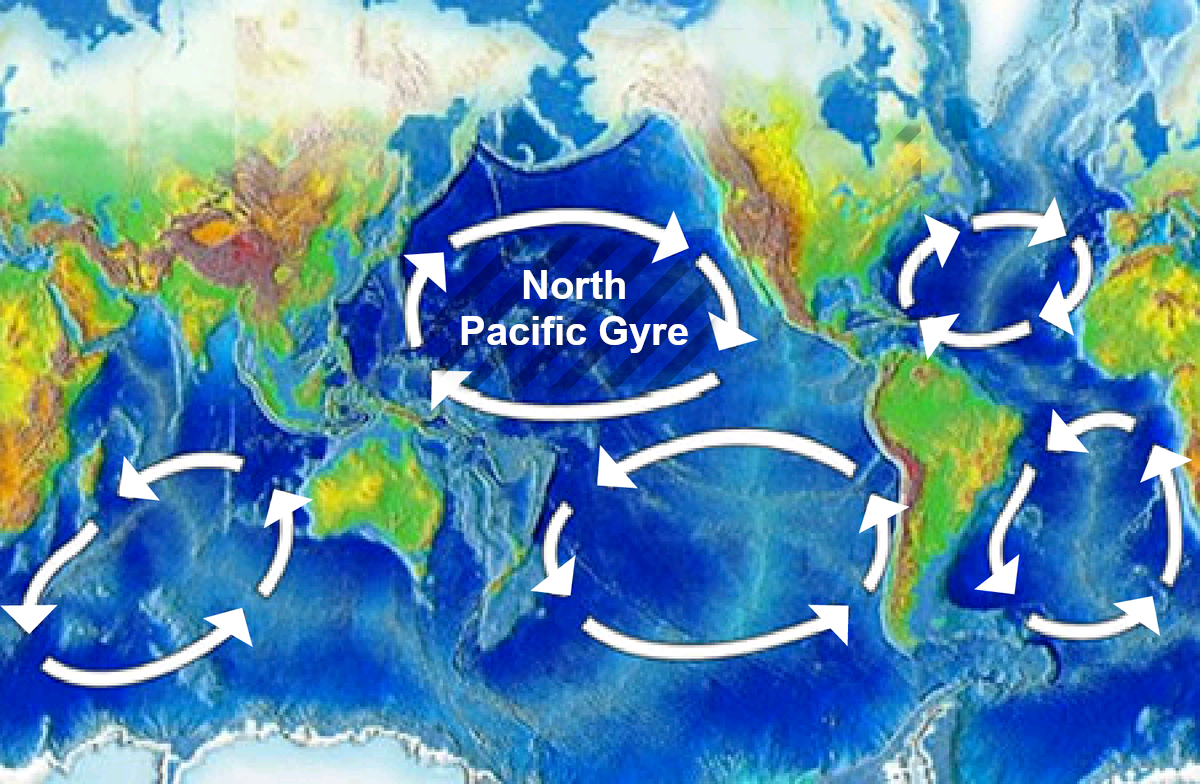
All that junk is not going anywhere anytime soon. Most plastic trash ends up in the oceans and accumulates in gyres, which are massive whirlpools created by the current. These giant, rotating heaps of garbage cover as much as 40% of the Earth's ocean surface; the biggest one, the infamous Great Pacific Garbage Patch, is located off the coast of California and is twice the size of Texas. Researchers predict that these gyres are only going to get bigger in coming years:


Creating plastic is not very efficient, either. Almost 3% of America's total petroleum consumption is due to plastic production, as well as around 2% of total U.S. natural gas consumption. And though we have all been told to do our part and "reuse, reduce and recycle," the latter doesn't really apply to plastic; due to the way they are processed, we can only recover 5% of the plastics we produce.

Given all these difficulties, a new material like shrilk could be a true game-changer, not only in the conservation movement, but in global consumer behavior. It will be many years before something like shrilk can be mass-produced and introduced to average consumers. But given that in our lifetime, we'll never be able clean up all the plastic trash we've already produced, it's certainly the right step to find a suitable alternative — especially if it can return nutritious byproducts to the environment.

ORIGINAL: MIC.com
May 7, 2014

Eileen Shim
Eileen is a writer living in New York. She studied comparative literature and international studies at Yale University, and enjoys writing about the intersection of culture and politics.

viernes, 12 de septiembre de 2014

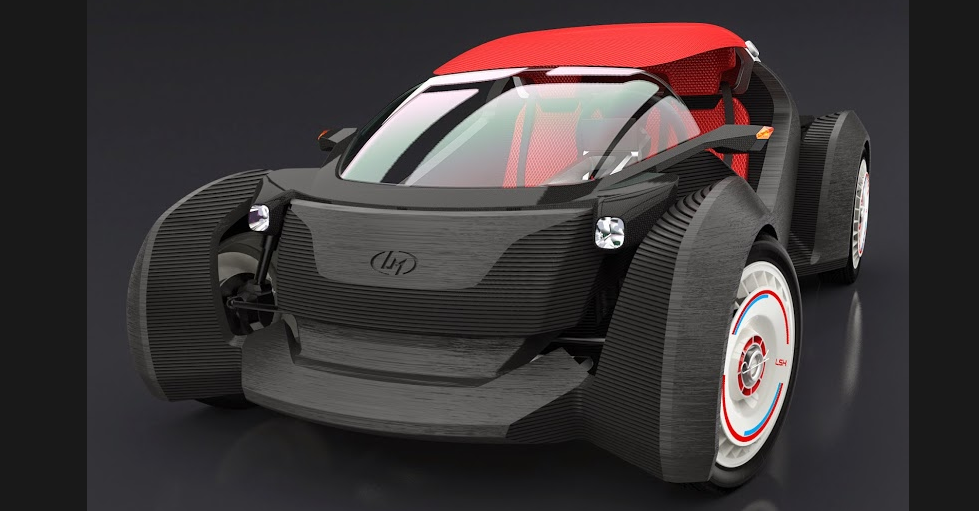
This Drivable Car Was Just 3D Printed In 44 Hours


At the International Manufacturing Technology Show in Chicago, Local Motors 3D printed a plastic car called the Strati in front of thousands of attendees.

Local Motors took the chassis, seats, door panels, and thousands of other components, and 3D printed all those parts into just one piece. The first phase of the process, completed on Tuesday, took just 44 hours. 

"A 3D printed car like ours will only have dozens of components," Local Motors engineer James Earle tells Business Insider. In the near future, he says, it could cost only about $7,000 to manufacture, perhaps the start of what will become a niche market for customized cars.

"You can make a vehicle for yourself that's basically a one-0ff, do the entire design," he says. "You could create custom-fit seats that conform to your shape, things like that, that you couldn't do with cars now."


ORIGINAL: Business Insider
By Will Wei.
SEP. 10, 2014

viernes, 17 de enero de 2014

World-first working eukaryotic cell made from plastic


Researchers at the Institute for Molecules and Materials at Radboud University Nijmegen used a water droplet as the structure upon which they built the first polymer cell

Previously, chemists have managed to create artificial cell walls and developed synthetic DNA to produce self-replicating, synthetic bacterial cells. Now, for the first time, researchers have used polymers to produce an artificial eukaryotic cell capable of undertaking multiple chemical reactions through working organelles.

Eukaryotic cells are the building blocks for complex life-forms like plants and animals. The main distinction between the simpler and more ancient prokaryotic cells and eukaryotes is the presence of organelles in the latter. Organelles are specialized subunits within a cell that have a specific function, and which allow cells to undertake multiple chemical processes in an extremely small space.

This compartmentalization was one of the key features developed by nature during the early evolution of early life on Earth. It is also of interest to chemists as eukaryotic cells are capable of efficient chemistry at a very small scale, something which is difficult to replicate in the lab. That might be all about to change now chemists at Radboud University Nijmegen in The Netherlands have built the world’s first eukaryotic cell using plastic.

Competing groups are working closer to biology; making cells from fatty acids, for example. We would like to do the same in the future," says Professor Jan van Hest who created the organelles with his PhD candidate Ruud Peters. "Another step would be to make cells that produce their own energy supply."

The researchers used a water droplet as the structure upon which they built the polymer cell. To create the organelles, they produced tiny polystyrene-b-poly spheres filled with enzymes designed to undertake set chemical processes. These sub-micrometric nanoreactors were then encapsulated in a coating of a polymer called polybutadiene-b-poly polymersome using emulsion-centrifugation to form a cell wall.

This formed a compartmentalized structure resembling nature’s eukaryotic cell. Within this, a multistep chemical reaction was undertaken which resembled a natural enzyme pathway. Using fluorescence, van Hest and Peters were able to show a chain of chemical reactions within the cell, proof they had created a polymer cell with working organelles.

"We are also working on ways of controlling the movement of chemicals within the cell, towards organelles," says van Hest. "By simulating these things, we are able to better understand living cells. One day we will even be able to make something that looks very much like the real thing."

Their work was published in the journals Angewandte Chemie and highlighted in Nature Chemistry.


ORIGINAL: GizMag
January 15, 2014

sábado, 21 de diciembre de 2013

Two young scientists break down plastics with bacteria

Miranda Wang and Jeanny Yao have identified a new bacteria that breaks down nasty compounds called phthalates, common to flexible plastics and linked to health problems. And they’re still teenagers.

Why you should listen to them:
After a visit to a plastic-filled waste transfer station last year, students Miranda Wang and Jeanny Yao learned that much of the plastic in trash may not degrade for 5,000 years. Synthesized into plastics are phthalates, compounds that make shower curtain liners, food wraps and other products bendable but may also adversely impact human reproductive development and health. As plastics slowly break down, these phthalates would leach into the surrounding environment.

So, the two young scientists tackled the problem and ultimately discovered strains of bacteria that have the potential to naturally degrade phthalates. Their work earned a regional first place in British Columbia for the 2012 Sanofi BioGENEius Challenge Canada, as well as a special award for the most commercial potential at the contest’s finals.

"[Wang and Yao] came up with the research idea and the underlying experimental design, which is remarkable for such young people."

Lindsay Eltis, University of British Columbia, The Vancouver Sun 5/3/2012

Speakers Miranda Wang and Jeanny Yao: Science fair winners


viernes, 28 de junio de 2013

16-year-old student in Turkey turns bananas into plastic

ORIGINAL: Raw Story
By Agence France-Presse
June 27, 2013

There’s nothing slippery about Elif Bilgin’s idea of using banana peels as a substitute for old-school petroleum-based plastics.

The 16-year-old student from Istanbul spent two years perfecting a way to make a bioplastic out of discarded banana peels that could, in turn, be used for the electrical insulation of cables.

On Thursday, her efforts paid off when Scientific American named her the winner of its $50,000 Science in Action prize, a stepping stone to the Google Science Fair for young inventors in California this September.

In her research, Bilgin — who says “science is my calling” — determined that if starch and cellulose from such food waste as mango skins can be used to make bioplastics, then banana peels ought to do the trick, too.

For me, this means that my project actually has a potential to be a solution to the increasing pollution problem caused by petroleum-based plastic,” said Bilgin, who counts Nobel laureate Marie Curie among her heroes.

It also means that I have started the process of changing the world, which makes me feel like a winner already,” she added in an interview on the Scientific American’s website, scientificamerican.com.

martes, 28 de mayo de 2013

Can plastic be made from algae?

ORIGINAL: Youris
by Thijs Westerbeek
27 May 2013

Photo: Antonio Guillén PROYECTO AGUA

Algae offer many advantages, for the production of precursor molecules used to produce plastics. But these solutions are still quite a long way away

Algae are an interesting natural resource because they proliferate quickly. They are not impinging on food production. And they need nothing but sunlight and a bit of waste water to grow on. Scientists working for the SPLASH research project, funded by the EU, are now addressing the challenge of making high-quality, affordable plastics from algae. They need to demonstrate that this new type of bioplastic —namely used to produce polyesters and polyolefins— can be of the same quality as traditional plastic. And they need to show whether it can be produced in an economically viable way.

We need a new species of algae which not only produces the right kind of hydrocarbons and sugars, but also does it fast,” explains says Maria Barbosa, SPLASH’s scientific coordinator and a researcher at Wageningen UR Food & Biobased Research unit, in the Netherlands. She believes that genetic engineering can provide the solution to this problem. “Believe it or not, that’s the easy part,” she adds. But then “we need a way to ‘milk’ the new algae, to take the desired components from the broth without killing it,” she points out. However, this is the challenge that remains to be addressed.

Once the project produces the right kind of molecules in a credible amount, Barbosa deems it fairly straightforward to make high-quality plastics of any kind. The resulting plastic precursor, made of long chain hydrocarbons, will be chemically identical to naphtha—a raw material, or feedstock, that is already used in plastic production today so quality will be no issue. She and her team hope that within four years she will be in a position to present a piece of rope made from plastic fibers produced from algae.

Experts in the field expect that quality is not going to be a problem. “There is absolutely no reason why bio-based plastics should be of inferior quality,” says Krijn de Jong, professor of inorganic chemistry and catalysis at the University of Utrecht in the Netherlands. He and his team developed a ferro-nano catalyst which produces syngas--a fuel gas mixture consisting of hydrogen and carbon monoxide and -dioxide-- from wood waste. He add: “Syngas, just like naphtha, is an existing feedstock in the plastics industry.

Other experts think algae-based bio plastics are interesting, but really far from practical application. “The idea itself is very nice, but first the perfect algae doesn’t exist yet, then nobody knows how to get these molecules out of the broth, and scaling this up to industrial levels is going to be very difficult” says Michael O’Donohue, research manager and deputy head of the Biocatalysis Team of CEPIA in Toulouse, France. He and his team are currently focusing on yeast as a microorganism for the production of the desired long chain hydrocarbons, to be used as precusors for bioplastics.These yeast cells are really good at producing [the desired hydrocarbons]. The stuff is literally pouring out of the individual cells. That’s why we nicknamed them ‘obese cells,” notes O’Donohue, adding: “What’s more, the cells themselves are almost identical to baking yeast, and we already have the knowledge to modify it, to fine-tune it to perfection.

Image credits to: Antonio Guillén

jueves, 28 de marzo de 2013

Un estudiante inventa un dispositivo para recoger más de 7 millones de toneladas de basura del mar

ORIGINAL: RT 
27 mar 2013 

boyanslat.com
boyanslat.com
boyanslat.com
 A sus 19 años el estudiante holandés de ingenería Boyan Slat ha inventado un dispositivo que puede limpiar los mares de plástico. El proyecto bautizado Ocean Array Cleanup podrá recoger 7.250 millones de toneladas de residuos en solo 5 años.

El dispositivo, que de momento es tan solo un prototipo, prevé recoger la basura del mar y reducir la contaminación de plástico con ayuda de sus enormes brazos. La basura captada por las 'alas' pasa a la plataforma de procesamiento. El concepto de la máquina es simple: trabaja como un embudo gigante.

El ángulo de los brazos hace que el plástico flote hacia la plataforma, donde se separa del plancton y se almacena para su reciclaje.

Tenemos que hacer hincapié en la importancia del reciclaje y reducir el consumo de envases de plástico”, subraya el inventor holandés.

La ingeniosa solución de Slat podría salvar anualmente a cientos de miles de animales acuáticos así como permitir una reducción de contaminantes.

boyanslat.com
Sin embargo, el estudiante admite que el proyecto tiene que ser perfeccionado ya que hay algunos obstáculos para su realización completa. “Uno de los problemas consiste en que no hay fotos de los lugares más ensuciados y así es complicado porque los elementos plásticos estan esparcidos a través de millones de kilómetros cuadrados”, dice Boyan.

Los ecologistas de varios países aseguran que gran parte de la producción mundial de plásticos, que no deja de aumentar, acaba finalmente en los océanos y amenaza a todos los seres vivos. Las micropartículas, es decir las piezas de plástico disueltas y que pueden acumularse en los organismos vivos, son particularmente peligrosas. Estas son absorvidas por el tracto gastrointestinal de los animales y también por el organismo humano.

lunes, 25 de febrero de 2013

Litter discovered in deepsea survey of one of Earth's final unexplored realms

ORIGINAL: The Guardian
Jon Copley guardian.co.uk
25 February 2013

A glimpse into one tiny nook of the UK's vast ocean depths uncovered two drink cans, one bottle, and a rusty food tin

Deep-sea pollution at 2,300 meters has arrived before the James Cook survey. Photograph: NERC

On 15 August 1934, two adventurers squeezed into a tiny metal capsule and became the first people to see another world. Their names were William Beebe and Otis Barton, and the world that they saw was the deep ocean, when they dived more than half a mile down in their bathysphere near Bermuda. They were the first to journey beyond the sunlit waters of the upper ocean, and Barton later commented that "no human eye had seen this part of the planet before us, this pitch-black country lighted only by the pale gleam of an occasional spiralling shrimp".

For the past two weeks, my colleagues and I have been exploring that pitch-black country further, by sending a remotely operated vehicle called Isis to the bottom of the Cayman Trough from the UK's royal research ship, James Cook. We have surveyed the slopes of an underwater mountain twice as high as Ben Nevis, but whose summit still lies one-and-a-half miles beneath the waves. We have also investigated the world's deepest undersea vents, three miles down in a volcanic rift on the ocean floor. And our journey has brought us face-to-face with new species of deep-sea creatures, from colonies of teeming glorious life in the abyss.

Colonies of teeming glorious life in the abyss. Photograph: NERC
The area where we are working is part of the UK's deep-sea territory, which covers an area 27 times greater than all of our land above the waves. Besides finding out what is in that unexplored realm, the goal of our expedition is to learn more about the geological forces that shape our world, the processes that govern the chemistry of the oceans, and how species disperse and evolve in the dark depths.

But while we have been among the first to see this particular part of our planet, we have found that human rubbish has arrived here before us. The list of litter we have seen so far during dives includes two soft drink cans, one beer bottle, and a rusty food tin. And ours is just one expedition, glimpsing only one tiny nook of the vast ocean depths.

In the logsheets that we use to record our observations at the seafloor, we have several categories for any human impacts that we encounter. To pass the time during a recent three-hour descent to the ocean floor, one of my research students asked me which of the categories I had seen before in recent deep-sea expeditions. The answer was all of them. Discarded fishing nets? Yes, on underwater mountains in the Indian Ocean. Discarded longlines? Yes, more than a mile deep in the remote south Atlantic. Plastic? Yes, a shopping bag at a deep-sea vent in a Pacific marine protected area. Scrap metal? Yes, a tangle of discarded pipework on an undersea volcanic ridge north of the Azores.

Human-generated rubbish unfortunately has a long history in the deep ocean. In the age of steamships, for example, vessels dumped the remains of burned coal, known as clinker, from their engine rooms. Clinker changed the nature of the seafloor in well-travelled areas, transforming the seabed from soft sediment in which some forms of marine life can burrow, into cobbled areas suiting other life-forms that can anchor to hard surfaces. The scale of that transformation is such that clinker is now recognised as a seafloor type when we are mapping the deep ocean.
During our present expedition, we plan to collect sediment cores around the world's deepest known undersea vents. Photograph: NERC
At the time that our great-great-grandparents were dumping clinker, however, they only had hazy notions about the depth of the oceans, let alone what was going on down there. Just starting to map the depth of the ocean, let alone visit it, required two technological advances. One was the ability to fix a ship's position accurately far from land, solved by inventions such as John Harrison's longitude-determining chronometer. The other was steam-powered winches, which helped early survey ships to pay out and haul in the miles of cable required to plumb the ocean depths.

Today we can gauge the large-scale landscape of the ocean floor from satellites, map it in far greater detail using sonar, and visit its most extreme depths with deep-diving vehicles. Plastic, meanwhile, has replaced clinker as a common contaminant of the deep ocean. During our present expedition, we plan to collect sediment cores around the world's deepest known undersea vents to see if there are any microplastics here: tiny ground-down remnants of plastic that may now be quite ubiquitous in the oceans.

Although we might not think about it, our daily lives have an impact on the deep ocean, not just through items of litter that ends up there, but increasingly through the resources that we use. We are fishing in deeper waters, extracting oil and gas from deeper waters, and now eyeing deposits of metals and rare earth elements on the ocean floor, needed for the ever-developing technology of our modern lives.
Deep-sea pollution at 5,000 metres. Photograph: NERC
As our planet's population continues to grow and develop, so will that impact. When William Beebe and Otis Barton first ventured into the deep ocean, the global population was around two billion people. Fewer than 80 years later, it is more than seven billion. But for the first time in human history, we can explore and investigate the half of our planet that lies beneath water more than two miles deep. With vehicles such as our Isis remotely operated vehicle, we can begin to understand the impact of our lives on the previously hidden face of our world.

So while my colleagues and I are exploring the deep ocean, we try to share what we are finding with anyone who wants to join us, through programmes of online outreach and work with the media. In this too we are following in the wake of William Beebe, who broadcast live on the radio during his bathysphere dives in the 1930s, describing what he was seeing.

However, I don't expect that simply finding out more about the deep ocean will prompt anyone suddenly to care more about it. But at least ignorance of it can no longer be an excuse. And to plot our course ahead among the economic opportunities and environmental challenges that the deep ocean has to offer, we need to think deep thoughts.

Jon Copley is aboard the RRS James Cook on a research mission to explore the ocean's deepest hydrothermal vents. You can follow him on twitter at @expeditionlog and use #deepestvents for updates from current expedition. There is also a free eBook about deep-sea vents and other recent expeditions

lunes, 12 de noviembre de 2012

¿El plástico «envenena» el agua?

ORIGINAL:  El Mundo (España)
DIEGO SINOVA


Foto: El Mundo. / DIEGO SINOVA
Tóxico. ¿Sabemos lo que bebemos? A juicio del químico William Shotyk, no. Este reputado científico de la Universidad alemana de Heidelberg, un auténtico Sherlock Holmes de la contaminación, sostiene en su última investigación que tanto el agua como los refrescos envasados en botellas de plástico no son tan saludables como parece. Estos populares recipientes contienen, según Shotyk, un metal, el antimonio, potencialmente tóxico y capaz de provocar vómitos y desarreglos en el sistema nervioso, entre otros riesgos para la salud. El camino, explica el químico, es siempre el mismo: el veneno pasa del plástico al líquido de forma similar a como lo hace el contenido de una bolsita de té en una taza de agua.

Las conclusiones del polémico investigador, que ha jurado no beber agua embotellada nunca más, han sido recibidas con ácidas críticas por el sector. «No tengo la menor duda sobre el resultado de mis estudios», se defiende Shotyk, en conversación con CRONICA.«Es más, pienso que alguien debería buscar alternativas a las botellas PET, que son los plásticos más usados por la industria de bebidas, y desarrollar una botella biodegradable, que no contamine ni las bebidas ni el medio ambiente».

La investigación, que será publicada en el próximo número del Royal Society of Chemistry Journal, se sustenta en el análisis de 48 marcas comerciales de agua mineral que se comercializan en Europa (incluidas tres españolas) y 15 canadienses. «Todas las botellas que estaban fabricadas con polietileno tereftalato, el PET, desprendían antimonio», asegura el científico. Dice más: «Cuanto más tiempo permanece el líquido en la botella, mayor es la concentración de este veneno», descubierto en 1450 por el alquimista alemán Basil Valentine. Una pequeña dosis de antimonio puede causar malestar y depresión. Una dosis mayor puede desembocar en náuseas o incluso ser letal. Las cantidades detectadas por Shotyk y su equipo son, sin embargo, menores que los niveles oficialmente recomendados, aunque el estudio concluye que en las botellas PET, después de tres meses de almacenamiento, la presencia de antimonio se duplica.

La curiosidad por este elemento natural, cuya presentación en forma de sulfuro ya utilizaban las mujeres del antiguo Egipto para pintarse los ojos y ennegrecer sus uñas, se le despertó hace cuatro años. Shotyk, estudioso de la química del aire, buscaba una explicación que aclarara las causas de la alta contaminación por antimonio que, desde el periodo romano, se detectaba en la atmósfera de Suiza. La respuesta la encontraría entre el hielo de los glaciares, una especie de caja negra del tiempo donde quedan registrados muchos de los fenómenos climáticos ocurridos en el pasado. «Empezamos a taladrar y a extraer muestras. Los resultados del estudio nos hicieron pensar si no serían aplicables a escala global. Y acertamos. Hemos constatado que existe también un aumento de la concentración de antimonio en el Artico. ¿De dónde demonios procede esto?, me pregunté. Hasta que supe que las dos terceras partes de este tóxico disponible en el mercado se destinan a la fabricación de productos ignífugos/retardantes, textiles y plásticos. Fue así, casi de manera fortuita, como supe que las botellas de PET llevan antimonio», relata el científico de origen canadiense.

En cuestión de 30 años el agua embotellada ha pasado de no ser prácticamente nada a que se hable de ella como la segunda o tercera mercancía (legal) que más dinero mueve en el mundo, después del petróleo y el café, asegura la consultora australiana de marketing de bebidas Fountainhead. El resultado es que los habitantes del planeta beben 148.000 millones de litros anuales, según la multinacional de la alimentación Nestlé, alrededor del doble que en 1996, y se gastan unos 84.000 millones de euros cada año.

Debido a que la fecha de caducidad, que en algunos casos puede llegar a los dos años, los científicos quieren estudiar el agua embotellada en mayor profundidad. Aunque no todos están dispuestos a comulgar con Shotyk. «Me ha llegado un resumen de su trabajo y, por los datos que aporta, no veo ningún motivo de alarma. Es más, creo que, como en todo lo que concierne a la seguridad de los productos que ingerimos, debemos ser cautelosos. De hecho, los niveles de concentración de antimonio encontrados en las botellas de agua mineral analizadas por Shotyk están muy lejos incluso del máximo permitido y aún más alejados de la cantidad letal», sostiene la bióloga Adela López, adscrita al departamento de Tecnología de los Alimentos de la Universidad de Navarra.

«La gente compra agua embotellada porque piensa que es mejor para su calidad de vida. Pero yo creo que los consumidores deberían tener todos los datos y luego tomar sus propias decisiones. Cuando se llevan a casa una botella de agua mineral, lo que hacen es comprar una imagen de pureza, que la publicidad se encarga de venderles», sentencia el controvertido químico. «A la gente no se le debe engañar».

CLAVES
EL CONSUMO
  • Cada español consume unos 140 litros al año de agua embotellada./ 
  • Alrededor de 5.200 millones de litros en total. / 
  • España es el cuarto país de Unión Europea que más agua envasada gasta por habitante. / 
  • Los italianos son los que beben más, seguidos de alemanes y franceses. / 
  • De cada 100 botellas vendidas en España, tres contienen agua del grifo.


martes, 11 de septiembre de 2012

The problems with plastic bottled water (and some solutions)

ORIGINAL: Econnect Design

"...issues of plastic bottled water. It explains the main problems and also shows existing practical solutions. Millions of tonnes of waste, energy and pollution would be avoided if the alternatives shown were introduced on a large scale. " (from Akiko) 


domingo, 5 de agosto de 2012

L.A. makes history with ban on plastic bags at stores

ORIGINAL: LA Times
May 23, 2012

Photo: Long Beach's ban on plastic bags, already in effect for larger retailers such as supermarkets, will soon expand to smaller businesses. Credit: Elaine Thompson / Associated Press

Los Angeles became the largest city in the nation to approve a ban on plastic bags at supermarket checkout lines, handing a hard-fought victory to environmentalists and promising to change the way Angelenos do their grocery shopping.

The City Council voted 13 to 1 to phase out plastic bags over the next 16 months at an estimated 7,500 stores, meaning shoppers will need to bring reusable bags or purchase paper bags for 10 cents each.

The ban came after years of campaigning by clean-water advocates who said it would reduce the amount of trash in landfills, as well as the region’s waterways and the ocean. They estimate that Californians use 12 billion plastic bags a year and that less than 5% of the state’s plastic bags are recycled.

Los Angeles become the latest in a string of California cities – including San Jose, San Francisco and Long Beach – to ban plastic bags.

Plastic bag bans across California vary in scale, with some applying to all retailers and restaurants, and others covering only supermarkets. Some are silent on paper bags while others, like Los Angeles County’s, require markets to charge customers who want to use paper bags.

Officials in some cities with bag bans hail the program as a success.

Santa Monica’s plastic bag ban has been in place since September. “There’ve been no citations necessary to give out,” said Josephine Miller, a city environmental analyst. “No stores have gone out of business.”

San Francisco approved the state’s first plastic bag ban in 2007, applying it only to supermarkets and pharmacies. Since then, officials have moved to expand the bag restrictions, which has drawn a legal challenge.

Despite initial grumbling from customers and business owners, people have gotten used to bringing their own bags, said David Assmann, a manager in San Francisco’s environment department. “I think it’s become part of the culture here,” he said.

In Los Angeles County, the 10-cent paper bag fee has led to a 94% reduction in the use of those bags, said Jennie R. Romer, founder of www.plasticbaglaws.org, who has advised cities on the passage of bag laws. 

Things went less smoothly in Oakland, which was sued over its bag ban. That city dropped its measure but will be covered by Alameda County’s plastic bag ban starting next year.

Council members in Los Angeles were egged on Wednesday by actress Julia Louis-Dreyfus and an array of environmental groups. As they prepared to approve the ban, city lawmakers called on their counterparts in Sacramento to follow suit.

Let’s get the message to Sacramento that it’s time to go statewide,” said Councilman Ed Reyes, who is pushing an effort to revitalize the Los Angeles River.The council’s decision kicks off a four-month environmental review, followed by what is expected to be routine passage of an ordinance enacting the ban.

As they celebrated their action, council members quietly backed away from a more controversial plan to also ban use of paper grocery bags, first proposed last year by appointees of Mayor Antonio Villaraigosa.

Once the plastic bag ban ordinance is enacted, larger stores will have six months to stop handing out plastic bags and smaller markets will have 12 months. After that, retailers would be required to charge 10 cents for each paper bag they provide customers.

My hope is that so few paper bags will be used as a result of this measure that the formal ban … on paper bags may not even be necessary,” said Councilman Paul Koretz, who initially had hoped to prohibit paper as well.

Councilman Bernard C. Parks cast the lone opposing vote, saying the city lacked information on potential health hazards from reusable bags.

Employees of plastic bag companies – many in T-shirts with the message “Don’t Kill My Job” – pleaded unsuccessfully with council members to change course, saying they feared they would soon be unemployed.

An industry group warned that the council’s decision will threaten the jobs of 2,000 workers statewide and said it is keeping open the option of filing a legal challenge. “With this bag ban, the city chose to take a simplistic approach that takes away consumer choice instead of pursuing meaningful programs that encourage greater recycling of plastic bags and wraps, while preserving jobs,” said Mark Daniels, chairman of the nonprofit American Progressive Bag Alliance.

--David Zahniser and Abby Sewell

domingo, 22 de julio de 2012

Biofuel from Plastic for this Young Egyptian Scientist from Alexandria

ORIGINAL:  Green Prophet

July 16th, 2012


Azza Abdel Hamid Faiad was the winner of the 2011 European Union Contest for Young Scientists for finding a new way of turning plastic into biofuel.  Image via European Commission Research
A sixteen-year-old Egyptian student, Azza Abdel Hamid Faiad from the Zahran Language School in Alexandria has identified a new low-cost catalyst which can generate biofuel by breaking down plastic waste.

The idea of breaking down plastic polymers into fuel feedstocks, the bulk raw material used for producing biofuel, is not a new idea. But Faiad has found a high yield catalyst, calcium bentonite catalyst, that breaks down plastic waste producing gaseous products like methane, propane and ethane, which are then converted into ethanol to use as biofuel.

Faiad and her mentors propose using this discovery to exploit Egypt’s high plastic consumption, which is estimated to amount to one million tons per year, and make money from recycled plastic! She calculates that this technology “can provide an economically efficient method for production of hydrocarbon fuel namely: cracked naphtha of about 40,000 tons per year and hydrocarbon gases of about 138,000 tons per year equivalent to $78 million.

As we know plastic waste is a huge problem in the Middle East and for our oceans, but hopefully this idea will help convert the problem into a solution.

For her findings, Faiad was presented with the European Fusion Development Agreement award at the 23rd European Union Contest for Young Scientists — involving 130 competitors from 37 countries — held in Finland last year from 23t o 28 September.

Faiad is now looking to get her findings patented this year through the Egyptian Patent Office and scaling up the idea so that it can become a tangible project on the ground.

She has already garnered interests from the Egyptian Petroleum Research Institute.

Out of the six projects in the environmental section of the contest, three came from Egypt.

Digesting paper with termites?
Aside from Faiad, two other young Egyptian scientists Hassan Ahmed and Yomna Yasser Mohamed, proposed interesting solutions to environmental issues. Hassan Ahmed looked at managing paper product waste through termite digestion; the paper is digested by the termites which then enrich the soil with potassium, phosphor and nitrogen and can be used as fertilizers, the termites also produce hydrogen which can be used as a renewable source of energy.

Jatropha plants for biofuel.  Image of jatropha plant from Shutterstock
Yasser Mohamed’s project instead looked at producing a clean and green source of energy that could be manufactured locally in poor rural areas in Egypt. The project selected a plant which is not linked to the food chain, the jatropha plant, to investigate whether it’s oil, methanol, and KOH, which are blended to make bio-diesel, could be produced using different parts of the plant.

Will young Egyptian scientists continue to be at the forefront of environmental solutions? Let’s hope so.


viernes, 20 de julio de 2012

The Most Dangerous Species in the Mediterranean

ORIGINAL: 

Sign the petition to ban plastic bags in California:
http://www.change.org/petitions/california-plastic-bag-ban

Narrated by Academy Award-winner Jeremy Irons, this "mockumentary" video, hammers home the stark reality of California's plastic bag pollution situation.


You can make the difference. 

martes, 17 de julio de 2012

The Great Pacific Garbage Patch And The Beach Cleanup Myth


ORIGINAL: Forbes
7/17/2012

As a member of the media, I can’t help but be annoyed when we get a story wrong. Particularly when we continue to get it wrong over and over again. To wit: the “Great Pacific Garbage Patch” is not a patch. It is not an island of plastic, nor is it, as Wired put it yesterday, a “huge mass. It would more accurately be described as plastic soup (there are millions of tiny particles of plastic in all of the world’s oceans), but I suppose Great Pacific Plastic Soup doesn’t have quite the same ring to it. Anyway, who cares, right? What possible difference could it make?

It sounds silly, but it does actually matter. The thing is, last year when a researcher at Oregon State University pointed out that the Great Pacific Garbage Patch was neither a patch nor really comprised of garbage, people everywhere who would like to see the end of any sort of regulation on packaging seized the opportunity, equating the lack of a “patch” to the lack of a problem when in fact the reality–an ocean of plastic soup–is that the problem is bigger than we thought. If it really were a patch or an island, it could feasibly be cleaned up.

Which brings me to the second mistake the media, and companies, continue to make on the ocean plastic issue: the clean-up myth. Let’s face it: No one likes a trashy beach, and beach clean-ups make everyone feel like they’re doing something good. The same goes for ocean clean-ups, which have been happening regularly since the Great Pacific Garbage Patch first made headlines. This week Method introduced a new soap bottle made out of ocean plastic collected on the beaches of Hawaii. Wired and other media outlets picked the story up, applauding the company for turning “the ocean garbage patch” into packaging. So what, right? What could possibly be wrong with Method turning beach trash into packaging?

Size Distracts From Real Danger Of The 'Great Pacific Garbage Patch 
Photos: In Pictures: Inside The World's Superdumps

Nothing, really. Except that it perpetuates the idea that all we need to do is clean this stuff up and find another use for it and the problem will be solved. Hundreds of thousands of dollars every year are being spent on ocean and beach cleanup efforts, money that is essentially wasted because for every ton cleaned up there are several more right behind it. Were Method to want to make a real impact on ocean garbage, it would be better served investing in research and development of some sort of alternative to plastic packaging.

Plastic is a terrific material–it’s durable, flexible, and has a seemingly endless number of uses. It also lasts forever, which is why it is not the ideal material for temporary uses like packaging, bags, straws and so forth. In an effort to set the record straight around the plastic problem and to take a closer look at the role of business in all of it–both the problem and the solutions–this column will be dedicated this month to a series of posts on the matter. Stay tuned for the next installment tomorrow.

domingo, 1 de julio de 2012

Carbon Footprints & Yelo Cafe

ORIGINAL:  Carbon Footprints & Yelo Cafe


This pretty little image was posted by Ian Somerhalder (Dead guy from LOST now undead on The Vampire Diaries) who is not only a really attractive actor but a global Ambassador for the Alliance for Global Conservation and and founder of ISF which is a not-for-profit organisation that has many projects that aim to help the environment. ANYWAYS, I have decided to reduce my carbon footprint by bringing a mug to work instead of using those disposable foam cups at work. Also, Today I caught up with a friend at Yelo Cafe on West Coast Drive for a cup of Fiori coffee and some carrot cake. It's a nice little cafe, with chill out music and a nice view overlooking the pristine waters of the beach. What I noticed at this lovely cafe/surf shop was the BioPak Coffee takeaway cups and wooden cutlery! All the coffee cups and packaging is biodegradable and compostable! It's always nice to see local businesses that are eco-friendly.


domingo, 3 de junio de 2012

La basura en los océanos

2012-05-29

Algunas criaturas prosperan con la presencia de fragmentos microscópicos de plástico 
¿Alguna vez has oído hablar de la Gran Placa de Basura del Pacífico (PBP)? 

Se trata de una región en el norte del océano Pacífico donde las corrientes marinas del norte y las corrientes de aire del sur chocan al fluctuar en dirección contraria, creando una región circular y tranquila llamada Giro del Pacífico Norte.

Es en el centro de esta región donde yacen toneladas de basura.

Muchas imágenes se han distribuido donde aparece una enorme placa sólida de basura, principalmente plástico PET, donde un hombre trata de remar en su canoa. Una imagen de este lugar, que se le adjudica a la PBP, está disponible abajo.

¿Alarmante? No te preocupes, esta es una de las tantas interpretaciones erróneas que el público tiene sobre lo que pasa con el plástico en los océanos (la imagen es de un depósito en Manila), debido a la desinformación que se ha hecho en pro de una consciencia ambiental.

"¡Esa foto del hombre en la canoa me ha estado siguiendo toda mi carrera!" dijo Miriam Goldstein, bióloga marina del Instituto Scripps, y quien ha completado un estudio del cómo el plástico está cambiando el ecosistema en el Giro del Pacífico Norte.

Goldstein habló con la publicación online io9.com sobre los mitos y verdades sobre la PBP.

"Creo que es un ejemplo de la multimedia telefónica, donde alguien quiere una imagen dramática para ilustrar su historia, y con la magia de Internet, la imagen es malinterpretada" dijo Goldstein.

La especialista en biología marina ha realizado múltiples trabajos de campo en la PBP, a mil 600 kilómetros de la costa californiana, nadando incluso en la placa. Según Goldstein, nunca había visto nada parecido con lo de la fotografía.

A continuación, se desmienten los siguientes mitos:

Mito: Existe una isla gigante de basura sólida flotando en el Pacífico.

Hecho: hay millones de microscópicas piezas de plástico, cerca de 0.4 piezas por cada metro cúbico, flotando sobre apenas 2 mil 736 kilómetros cuadrados de superficie en el océano Pacífico

Esta cantidad ha aumentado significativamente los últimos 40 años. Y aunque el tamaño de estos fragmentos es el de una falange, la cantidad es lo amenazante 

Mito: Todo este plástico está matando a los animales.

Hecho: algunos animales están siendo heridos, pero otros están prosperando. Éste vendría siendo el problema.

Nadie argüiría que un ecosistema marino no se vería afectado por el plástico, pero es difícil determinar si las aves y peces que se comen el material mueren por esta causa.

Además, existen animales como insectos marinos, pequeños cangrejos, percebes y algunos invertebrados que están emergiendo debido a la influencia del plástico contaminante.

Los percebes e invertebrados llegan a causar daños a ecosistemas que invaden, además de afectar los cascos de barcos. Como estas criaturas viven en el fondo marino, no se ven afectadas por el plástico fragmentado. 

Mito: La capa de plástico está matando al océano.

Hecho: La placa de plástico es una ecosistema fuera de balance.

La "plasticosfera" es un término acuñado por el biólogo marino Eric Zettler para describir a la criaturas que viven y prosperan en un ambiente de superficies duras en el agua. Son similares a los animales que usan superficies como los cascos de barcos para hacerlos su nicho marino.

El problema con la plasticosfera es que está cambiando radicalmente el balance del ecosistema de mares profundos, antes precedido principalmente por peces.

Entre más plástico y basura se distribuya por estas partes oceánicas, más invadirán los ecosistemas los animales de la plasticosfera, desequilibrándolos con efectos irreversibles.