Mostrando entradas con la etiqueta Quantum Computing. Mostrar todas las entradas

domingo, 10 de septiembre de 2017

15 Really Good Things Happening in Science Right Now

3Dme Creative Studio/Shutterstock.com
Enough bad news, here's the good stuff.

There's no shortage of bad news in the media, but sometimes we spend so much time focussing on nuclear weapons and disappearing seas that we forget there are some incredible things happening in the world of science and technology.

To provide you with some much-needed hope for the future, we've put together a list of some of the best science news of 2017 so far.

1. African wild dogs communicate with each other in the most adorable way ever: sneezes
Scientists have observed African wild dogs in Botswana sneezing at each other in order to cast their vote on whether it's time to get up and go hunting. And, yes, we have video footage:

2. Vaccines have saved the lives of almost 20 million children in poor countries since 2001

3. We're about to cross the 'quantum supremacy' limit in computing
At the 4th International Conference on Quantum Technologies held in Moscow in July, a team of American and Russian researchers announced they'd successfully tested a record-breaking 51-qubit device, taking us closer than ever before to a functioning quantum computer.

4. Scientists might have finally discovered the trigger that kicks off autoimmune diseases
Autoimmune diseases occur when the body's immune system starts to attack itself, but despite being incredibly widespread, researchers haven't been able to nail down what triggers this strange reaction in the first place.

Now, scientists have identified a chain reaction that could potentially explain why our own bodies can turn against healthy cells, potentially transforming the way we look at autoimmune diseases and the way we treat them.

5. We're finally getting close to achieving sustainable nuclear fusion
Nuclear fusion could be the key to producing almost-unlimited energy with few byproducts other than saltwater, but researchers have long struggled to create a machine that could sustainably control such a powerful reaction.

But that's changing. At the end of 2015, Germany switched on a massive nuclear fusion reactor that's since successfully been able to contain a scorching hot blob of hydrogen plasma.
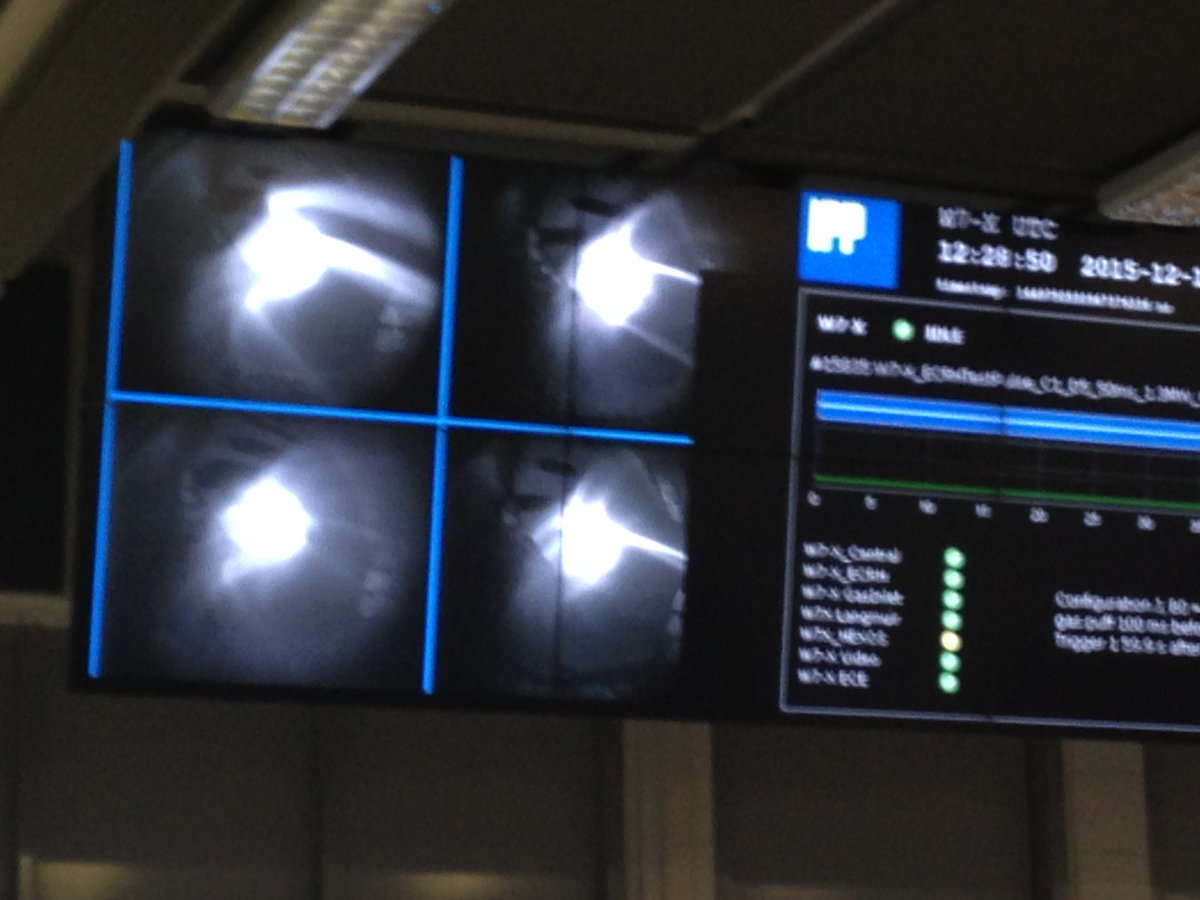


Das erste Plasma!!! / The first plasma!!! (js) #W7X


They're not the only ones, either, with South Korea and China both achieving record-breaking reactions in their own fusion machines. The UK has also switched on a revolutionary type of reactor that is now sustainably generating plasma within its core.

In fact, one MIT scientist has enthusiastically predicted that thanks to all these new advances, we should be able to get fusion energy on the grid by 2030.

6. Researchers are closer than ever before to having a drug that can treat autism symptoms
A small, but promising clinical trial in the US showed this year that a 100-year-old drug called suramin can measurably improve the symptoms of autism spectrum disorder (ASD) in children.

There's a lot more work to be done, but it's the first time we've been so close to having a drug that can potentially treat ASD symptoms. 

7. Scientists have discovered that crystals can be bent
Researchers have shown that crystals - which are traditionally brittle and inflexible - can be so flexible they can be bent repeatedly and even tied up in knots, overhauling our current understanding of the structures and challenging the very definition of a crystal.

The research opens up a whole new class of materials that could revolutionise electronics and technology.

QUT

8. You no longer need to pay ridiculous amounts to access peer-reviewed science research
The scientific community is fighting back against crazy paywalls, with a new study showing that more than a quarter of all scientific papers are now available free online thanks to the Unpaywall app.

9. We're getting really close to eradicating the second disease from the planet
First, humans got rid of smallpox. Now we're on the verge of wiping out the Guinea Worm parasite, which is a living nightmare that painfully erupts from people's skin.

At the start of 2015 there were just 126 cases of Guinea Worm left on Earth, mostly thanks to an ingenious and cheap drinking straw filter that stops people from being contaminated via water. As of May this year, there were only nine recorded cases.

L. Grubb/The Carter Centre

10. Finally, schools around the US are pushing back their start times
After numerous studies showing US schools start so early that they're putting a health strain on students, schools around the country are finally beginning to take note and shift their start time from 8.00 am to 8.30 am. And it's working surprisingly well.

11. Scientists think they might be able to reverse Alzheimer's memory loss
Lost memories might not be gone forever. An enzyme that interferes with key memory-forming processes in people with Alzheimer's can now be specifically targeted thanks to the discovery of a protein that helps it do its dirty work, according to new research out of MIT.

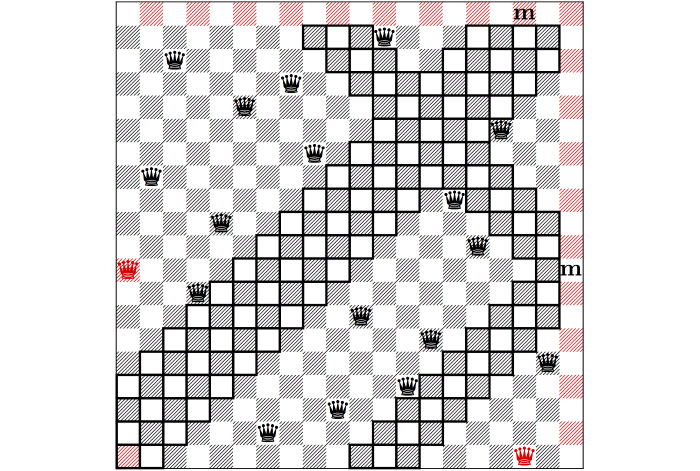
12. You could win US$1 million by solving this chess puzzle
Generous scientists are offering a US$1 million prize to anybody who can solve a fiendishly complicated twist on a classic chess problem called the Queen's Puzzle.

The beauty of the challenge is you don't even really need to understand the rules of chess to take part, but the catch is that it's so complicated the researchers predict it could take thousands of years... still, no risk, no reward, right? 

13. We've discovered a vitamin that could reduce the incidence of birth defects and miscarriages worldwide 
In what scientists are calling "the most important discovery for pregnant women since folate", a 12-year study has revealed that women could avoid miscarriages and birth defects by simply taking vitamin B3 during pregnancy.

So far, this effect has only been demonstrated in animal studies, but the results are extremely encouraging and human trials are imminent.

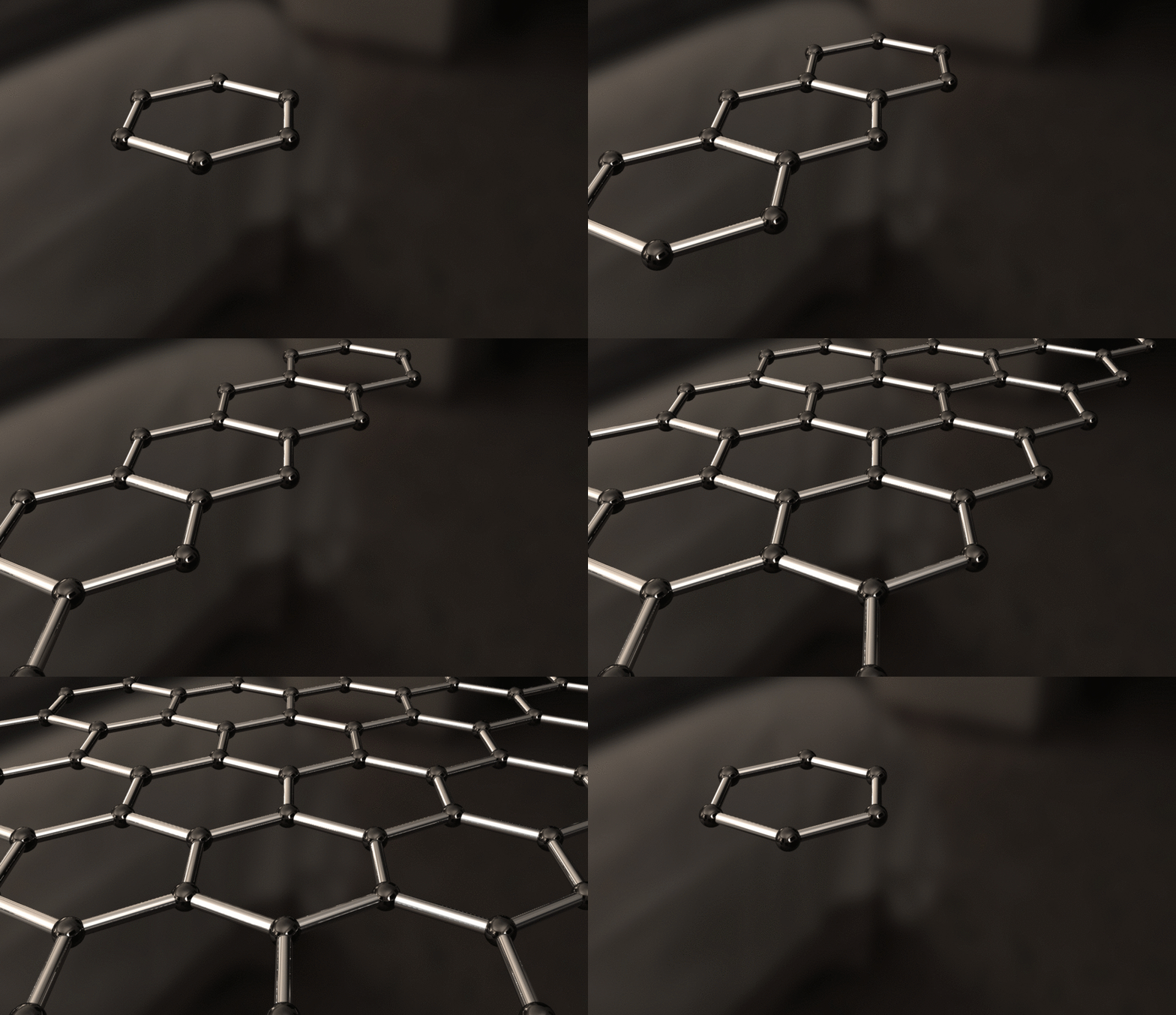
14. Graphene's superconductive abilities have finally been unlocked... 
At the start of this year, researchers finally unlocked the long-rumoured superconductive power of graphene, without having to dope the material.

Since then scientists have found even better ways of turning the wonder material into a superconductor, capable of shuttling electrons with zero resistance.

15. ...And researchers have shown electrons can flow through the material like liquid
Potentially even more impressive: researchers have shown that, through a new technique, electrons can actually flow through graphene like liquid, reaching limits physicists previously thought were impossible. This 'superballistic flow' could prove to be even more effective than superconductivity.

ORIGINAL IFLSCIENCE
FIONA MACDONALD
6 SEP 2017


We Recommend

jueves, 23 de febrero de 2017

10 Breakthrough Technologies 2017


These technologies all have staying power. They will affect the economy and our politics, improve medicine, or influence our culture. Some are unfolding now; others will take a decade or more to develop. But you should know about all of them right now.
  1. Reversing Paralysis 
    Scientists are making remarkable progress at using brain implants to restore the freedom of movement that spinal cord injuries take away.
  2. Self-Driving Trucks Tractor-trailers without a human at the wheel will soon barrel onto highways near you. What will this mean for the nation’s 1.7 million truck drivers?
  3. Paying with Your Face
    Face-detecting systems in China now authorize payments, provide access to facilities, and track down criminals. Will other countries follow?
  4. Practical Quantum Computing
    Advances at Google, Intel, and several research groups indicate that computers with previously unimaginable power are finally within reach.
     
  5. The 360-Degree Selfie
    Inexpensive cameras that make spherical images are opening a new era in photography and changing the way people share stories.
     
  6. Hot Solar Cells
    By converting heat to focused beams of light, a new solar device could create cheap and continuous power.
     
  7. Gene Therapy 2.0
    Scientists have solved fundamental problems that were holding back cures for rare hereditary disorders. Next we’ll see if the same approach can take on cancer, heart disease, and other common illnesses.
  8. The Cell Atlas
    Biology’s next mega-project will find out what we’re really made of.
  9. Botnets of Things
    The relentless push to add connectivity to home gadgets is creating dangerous side effects that figure to get even worse.
  10. Reinforcement Learning
    By experimenting, computers are figuring out how to do things that no programmer could teach them.

sábado, 19 de diciembre de 2015

Scientists have built a functional 'hybrid' logic gate for use in quantum computers

Scientists have built a functional 'hybrid' logic gate for use in quantum computers Logic Gate, Moore's Law, Quantum Computing, U of Oxford, NIST, U of Washington, Calcium,
An ion trap used in NIST quantum computing experiments. Credit: Blakestad/NIST
Here's how to solve the problem of quantum memory.
As conventional computers draw ever closer to their theoretical limit, the race is on to build a machine that can truly harness the unprecedented processing power of quantum computing. And now two research teams have independently demonstrated how entangling atoms from different elements can address the problem of quantum memory errors while functioning within a logic gate framework, and also pass the all-important test of true entanglement. 

"Hybrid quantum computers allow the unique advantages of different types of quantum systems to be exploited together in a single platform," said lead author Ting Rei Tan. "Each ion species is unique, and certain ones are better suited for certain tasks such as memory storage, while others are more suited to provide interconnects for data transfer between remote systems."

In the computers we use today, data is processed and stored as binary bits, with each individual bit taking on a state of either 0 or 1. Because these states are set, there’s a finite amount of information that can ultimately be processed, and we’re quickly approaching the point where this isn’t going to be enough.

Quantum computers, on the other hand, store data as qubits, which can be in the state of 0 or 1, or can take on another state called superposition, which allows them to be both 0 and 1 at the same time. If we can figure out how to build a machine that integrates this phenomenon with data-processing capabilities, we’re looking at computers that are hundreds of millions of times faster than the super computers of today.

The qubits used in this set-up are actually atomic ions (atoms with an electron removed), and their states are determined by their spin - spin up is 1, spin down is 0. Each atomic ion is paired off, and if the control ion takes on the state of superposition, it will become entangled with its partner, so anything you do to one ion will affect the other.

This can pose problems, particularly when it comes to memory, and there’s no point storing and processing information if you can’t reliably retain it. If you’ve got an entire system built on pairs of the same atomic ions, you leave yourself open to constant errors, because if one ion is affected by a malfunction, this will also affect its partner. At the same time, using the same atomic ions in a pair makes it very difficult for them to perform separate functions.

So researchers from the University of Oxford in the UK, and a second team from the National Institute of Standards and Technology (NIST) and the University of Washington, have figured out which combinations of different elements can function together as pairs in a quantum set-up.

"Each trapped ion is used to represent one ‘quantum bit’ of information. The quantum states of the ions are controlled with laser pulses of precise frequency and duration," says one of the researchers, David Lucas from the University of Oxford. "Two different species of ion are needed in the computer

  • one to store information, a 'memory qubit', and 
  • one to link different parts of the computer together via photons, an 'interface qubit'."
While the Oxford team achieved this using two different isotopes of calcium (the abundant isotope calcium-40 and the rare isotope calcium-43), the second team went even further by pairing up entirely different atoms - magnesium and beryllium. Each one is sensitive to a different wavelength of light, which means zapping one with a laser pulse to control its function won’t affect its partner.

The teams them went on to demonstrate for the first time that these pairs could have their 0,1, or superposition states controlled by two different types of logic gates, called the CNOT gate and the SWAP gate. Logic gates are crucial components of any digital circuit, because they’re able to record two input values and provide a new output based on programmed logic. 

"A CNOT gate flips the second (target) qubit if the first (control) qubit is a 1; if it is a 0, the target bit is unchanged," the NIST press release explains. "If the control qubit is in a superposition, the ions become entangled. A SWAP gate interchanges the qubit states, including superpositions."

The Oxford team demonstrated ion pairing in this set-up for about 60 seconds, while the NIST/Washington team managed to keep theirs entangled for 1.5 seconds. That doesn’t sound like much, but that's relatively stable when it comes to qubits.

"Both teams confirm that their two atoms are entangled with a very high probability; 0.998 for one, 0.979 for the other (of a maximum of one)," John Timmer reports for Ars Technica. "The NIST team even showed that it could track the beryllium atom as it changed state by observing the state of the magnesium atom."

Further, both teams were able to successfully perform a Bell test by using the logic gate to entangle the pairs of different-species ions, and then manipulating and measuring them independently.

"[W]e show that quantum logic gates between different isotopic species are possible, can be driven by a relatively simple laser system, and can work with precision beyond the so-called 'fault-tolerant threshold' precision of approximately 99 percent - the precision necessary to implement the techniques of quantum error correction, without which a quantum computer of useful size cannot be built," said Lucas in an Oxford press release.

Of course, we don't have proper quantum computers to actually test these components in the context of a functioning system - that will have to be the next step, and international teams of scientists and engineers are racing to get us there. We can't wait to see it when they do.

The papers have been published in Nature here and here.

ORIGINAL: ScienceAlert
BEC CREW
18 DEC 2015

miércoles, 9 de diciembre de 2015

Quantum Computing

Image credit: .Yuri Samoilov on Flickr
Scientists are exploiting the laws of quantum mechanics to create computers with an exponential increase in computing power.

Quantum computing

Since their creation in the 1950s and 1960s, digital computers have become a mainstay of modern life. Originally taking up entire rooms and taking many hours to perform simple calculations, they have become both highly portable and extremely powerful. Computers can now be found in many people’s pockets, on their desks, in their watches, their televisions and their cars. Our demand for processing power continues to increase as more people connect to the internet and the integration of computing into our lives increases.

Video source: In a nutshell - Kurzgesagt / YouTube. .View video details.

When Moore’s Law meets quantum mechanics
In 1965, Gordon Moore, co-founder of Intel, one of the world’s largest computer companies, first described what has now become known as Moore’s Law. An observation rather than a physical law, Moore noticed that the number of components that could fit on a computer chip doubled roughly every two years, and this observation has proven to hold true over the decades. Accordingly, the processing power and memory capacity of computers has doubled every two years as well.

Starting from computer chips that held a few thousand components in the 1960s, chips today hold several billion components. There is a physical limit to how small these components can get, and as they get near the size of an atom, the quirky rules that govern quantum mechanics come into play. These rules that govern the quantum world are so different from those of the macro world that our traditional understanding of binary logic in a computer doesn’t really work effectively any more. Quantum laws are based on probabilities, so a computer on this scale no longer works in a ‘deterministic’ manner, which means it gives us a definite answer. Rather, it starts to behave in a ‘probablistic’ way—the answer the computer would give us is based on probabilities, each result could fluctuate and we would have to try several times to get a reliable answer.

So if we want to keep increasing computer power, we are going to have to find a new way. Instead of being stymied or trying to avoid the peculiarities of quantum mechanics, we must find ways to exploit them.


Source: TEDx Talks on YouTube. View .video details and transcript.

Bits and qubits
In the computer that sits on your desk, your smartphone, or the biggest supercomputer in the world, information, be it text, pictures or sound is stored very simply as a number. The computer does its job by performing arithmetic calculations upon all these numbers. For example, every pixel in a photo is assigned numbers that represents its colour or brightness, numbers that can then be used in calculations to change or alter the image.

The computer saves these numbers in binary form instead of the decimal form that we use every day. In binary, there are only two numberss: 0 and 1. In a computer, these are known as ‘bits’, short for ‘binary digits’. Every piece of information in your computer is stored as a string of these 0s and 1s. As there are only two options, the 1 or the 0, it’s easy to store these using a number of different methods—for example, as magnetic dots on a hard drive, where the bit is either magnetised one way (1) or another (0), or where the bit has a tiny amount of electrical charge (1) or no charge (0). These combinations of 0s and 1s can represent almost anything, including letters, sounds and commands that tell the computer what to do.

Instead of binary bits, a quantum computer uses qubits. These are particles, such as an atom, ion or photon, where the information is stored by manipulating the particles’ quantum properties, such as spin or polarisation states.

In a normal computer the many steps of a calculation are carried out one after the other. Even if the computer might work on several calculations in parallel, each calculation has to be done one step at a time. A quantum computer works differently. The qubits are programmed with a complex set of conditions, which formulates the question, and these conditions then evolve following the rules of the quantum worldSchrödinger’s wave equation—to find the answer. Each programmed qubit evolves simultaneously; all the steps of the calculation are taken at the same time. Mathematicians have found that this approach can solve a number of computational tasks that are very hard or time consuming on a classical computer. The speed advantage is enormous—and grows with the complexity we can program (i.e. the number of qubits the quantum computer has).

Superposition
Individually, each qubit has its own quantum properties, such as spin. This has two values +1 and -1, but can also be in what’s called a superposition: partly +1 and partly -1. If you think of a globe, you can point to the North Pole (+1) or the South Pole (-1) or any other point in between: London, or Sydney. A quantum particle can be a in a state that is part North Pole and part South Pole.

A qubit with superposition is in a much more complex state than the simple 1 or 0 of a binary bit. More parameters are required to describe that state, and this translates to the amount of information a qubit can hold and process.

Entanglement
Even more interesting is the fact that we can link many particles, each in their state of superposition, together. We can create a link, called entanglement, where all of these particles are dependent upon each other, all their properties exist at the same time. All the particles together are in one big state that evolves, according to the rules of quantum mechanics, as a single system. This is what gives quantum computers their power of parallel processing—the qubits all evolve, individual yet linked, simultaneously.

Imagine the complexity of all these combinations, all the superpositions. The number of parameters needed to fully describe N qubits grows as 2 to the power N. Basically, this means that for each qubit you add to the computer, the information required to describe the assembly of qubits doubles. Just 50 qubits would require more than a billion numbers to describe their collective states or contents. This is where the supreme power of a quantum computer lies, since the evolution in time of these qubits corresponds to a bigger calculation, without costing more time.

For the particular tasks suited to quantum computers, a quantum computer with 30 qubits would be more powerful than the world’s most powerful supercomputer, and a 300 qubit quantum computer would be more powerful than every computer in the world connected together.

A delicate operation
An important feature of these quantum rules is that they are very sensitive to outside interference. The qubits must be kept completely isolated, so they are only being controlled by the laws of quantum mechanics, and not influenced by any environmental factors. Any disturbance to the qubits will cause them to leave their state of superposition—this is called decoherence. If the qubits decohere, the computation will break down. Creating a totally quiet, isolated environment is one of the great challenges of building a quantum computer.

Another challenge is transferring information from the quantum processor to some sort of quantum memory system that can preserve the information so that we can then read the answer. Researchers are working on developing ‘non-demolition’ readouts—ways to read the output of a computation without breaking the computation.

What are quantum computers useful for?
A lot of coverage of the applications of quantum computers talk about the huge gains in processing power over classical computers. Many statements have been made about being able to effortlessly solve hard problems instantaneously but it’s not clear if all the promises will hold up. Rather than being able to solve all of the world’s financial, medical and scientific questions at the press of a button, it’s much more likely that, as with many major scientific projects, the knowledge gain that comes from building the computers will prove just as valuable as their potential applications.

The nearest term and most likely applications for quantum computers will be within quantum mechanics itself. Quantum computers will provide a useful new way of simulating and testing the workings of quantum theory, with implications for chemistry, biochemistry, nanotechnology and drug design. Search engine optimisation for internet searches, management of other types of big data and optimising other systems, such as fleet routing and manufacturing processes could also be impacted by quantum computing.

Another area where large scale quantum computers are predicted to have a big impact is that of data security. In a world where so much of our personal information is online, keeping our data—bank details or our medical records—secure is crucial. To keep it safe, our data is protected by encryption algorithms that the recipient needs to ‘unlock’ with a key. Prime number factoring is one method used to create encryption algorithms. The key is based on knowing the prime number factors of a large number. This sounds pretty basic, but it’s actually very difficult to figure out what the prime number factors of a large number are.

Classical computers can very easily multiply two prime numbers to find their product. But their only option when performing the operation in reverse is a repetitive process of checking one number after another. Even performing billions of calculations per second, this can take an extremely long time when the numbers get especially large. Once numbers reach over 1000 digits, figuring out its prime number factors is generally considered to take too long for a classical computer to calculate—the data encryption is ‘uncrackable’ and our data is kept safe and sound.

However, the superposed qubits of quantum computers change everything. In 1994, mathematician Peter Shor came up with an algorithm that would enable quantum computers to factor large prime numbers significantly faster than by classical methods. As quantum computing advances we may need to change the way we secure our data so that quantum computers can’t access it.

Beyond these applications that we can foretell, there will undoubtedly be many new applications appearing as the technology develops. With classical computers, it was impossible to predict the advances of the internet, voice recognition and touch interfaces that are today so commonplace. Similarly, the most important breakthroughs to come from quantum computing are likely still unknown.

Quantum computer research in Australia
There are several centres of quantum computing research in Australia, working all over the country on a wide range of different problems. The Australian Research Council Centre of Excellence for Quantum Computation and Communication Technology (CQC2T) and the Centre of Excellence for Engineered Quantum Systems (EQuS) are both at the forefront of research in this field.

Two teams from the University of NSW (UNSW) are using silicon to create extremely coherent qubits in new ways, which opens the door to creating quantum computers using easy to manufacture components. One team is focussing on using silicon transistors like those in our laptops and smartphones.

The other UNSW-led team is working to create qubits from phosphorus atoms embedded in silicon. In 2012, this team created atom-sized components ten years ahead of schedule by making the world’s smallest transistor.

Source: UNSWTV on YouTube. View .video details and transcript.

Source: UNSWTV on YouTube. View .video details and transcript.

They placed a single phosphorus atom on a sheet of silicon with all the necessary atomic-sized components that would be needed to apply a voltage to the phosphorus atom, giving it its spin state in order to function as a qubit.

The nuclear spins of single phosphorus atoms have been shown to have 
  • the highest fidelity (>99%) and 
  • longest coherence time (>35 seconds
of any qubit in the solid state making them extremely attractive for a scalable system.

A team at the University of Queensland is working to develop quantum computing techniques using single photons as qubits. In 2010, this team has also conducted the first quantum chemistry simulation. This sort of a task involves computing the complex quantum interactions between electrons and requires such complicated equations that performing the calculations with a classical computer necessarily requires a trade-off between accuracy and computational feasibility. Qubits, being in a quantum state themselves, are much more capable of representing these systems, and so offer great potential to the field of quantum chemistry.

This group has also performed a demonstration of a quantum device using photons capable of performing a task that is factorially difficult – i.e. one of the specific tasks that classical computers get stuck with.

Large sums of money are being invested into Australian quantum computing research. In 2014, the Commonwealth Bank made an investment of $5 million towards the .Centre of Excellence for Quantum Computation and Communication Technology at the University of New South Wales. Microsoft has invested more than $10M in engineered quantum systems at University of Sydney, also in 2014.

It’s not very likely that in 20 years we’ll all be walking around with quantum devices in our pockets. Most likely, the first quantum computers will be servers that people will access to undertake complex calculations. However, it is not easy to predict the future, who would have thought fifty years ago, that we would enjoy the power and functionality of today’s computers, like the smartphones that so many of us now depend upon? Who can tell what technology will be at our beck and call if the power of quantum mechanics can be harvested?

ORIGINAL: .NOVA.org.au

Google says its quantum computer is more than 100 million times faster than a regular computer chip

Above: The D-Wave 2X quantum computer at NASA Ames Research Lab in Mountain View, California, on December 8.
Image Credit: Jordan Novet/VentureBeat
Google appears to be more confident about the technical capabilities of its D-Wave 2X quantum computer, which it operates alongside NASA at the U.S. space agency’s Ames Research Center in Mountain View, California.

D-Wave’s machines are the closest thing we have today to quantum computing, which works with quantum bits, or qubits — each of which can be zero or one or both — instead of more conventional bits. The superposition of these qubits enable machines to make great numbers of computations to simultaneously, making a quantum computer highly desirable for certain types of processes.

In two tests, the Google NASA Quantum Artificial Intelligence Lab today announced that it has found the D-Wave machine to be considerably faster than simulated annealing — a simulation of quantum computation on a classical computer chip.

Google director of engineering Hartmut Neven went over the results of the tests in a blog post today:

We found that for problem instances involving nearly 1,000 binary variables, quantum annealing significantly outperforms its classical counterpart, simulated annealing. It is more than 108 times faster than simulated annealing running on a single core. We also compared the quantum hardware to another algorithm called Quantum Monte Carlo. This is a method designed to emulate the behavior of quantum systems, but it runs on conventional processors. While the scaling with size between these two methods is comparable, they are again separated by a large factor sometimes as high as 108.

Google has also published a paper on the findings.

If nothing else, this is a positive signal for venture-backed D-Wave, which has also sold quantum computers to Lockheed Martin and Los Alamos National Laboratory. At an event at NASA Ames today where reporters looked at the D-Wave machine, chief executive Vern Brownell sounded awfully pleased at the discovery. Without question, the number 100,000,000 is impressive. It’s certainly the kind of thing the startup can show when it attempts to woo IT buyers and show why its technology might well succeed in disrupting legacy chipmakers such as Intel.

But Google continues to work with NASA on quantum computing, and meanwhile Google also has its own quantum computing hardware lab. And in that initiative, Google is still in the early days.

I would say building a quantum computer is really, really hard, so first of all, we’re just trying to get it to work and not worry about cost or size or whatever,” said John Martinis, the person leading up Google’s hardware program and a professor of physics at the University of California, Santa Barbara.

Commercial applications of this technology might not happen overnight, but it’s possible that eventually they could lead to speed-ups for things like image recognition, which is in place inside of many Google services. But the tool could also come in handy for a traditional thing like cleaning up dirty data. Outside of Google, quantum speed-ups could translate into improvements for planning and scheduling and air traffic management, said David Bell, director of the Universities Space Research Association’s Research Institute for Advanced Computer Science, which also works on the D-Wave machine at NASA Ames.

ORIGINAL: Venture Beat
DECEMBER 8, 2015
a

jueves, 16 de julio de 2015

After 85-year search, massless particle with promise for next-generation electronics discovered

An international team led by Princeton University scientists has discovered an elusive massless particle theorized 85 years ago. The particle could give rise to faster and more efficient electronics because of its unusual ability to behave as matter and antimatter inside a crystal, according to new research.

The researchers report in the journal Science July 16 the first observation of Weyl fermions, which, if applied to next-generation electronics, could allow for a nearly free and efficient flow of electricity in electronics, and thus greater power, especially for computers, the researchers suggest.

Proposed by the mathematician and physicist Hermann Weyl in 1929, Weyl fermions have been long sought by scientists because they have been regarded as possible building blocks of other subatomic particles, and are even more basic than the ubiquitous, negative-charge carrying electron (when electrons are moving inside a crystal). Their basic nature means that Weyl fermions could provide a much more stable and efficient transport of particles than electrons, which are the principle particle behind modern electronics. Unlike electrons, Weyl fermions are massless and possess a high degree of mobility; the particle's spin is both in the same direction as its motion — which is known as being right-handed — and in the opposite direction in which it moves, or left-handed.

"The physics of the Weyl fermion are so strange, there could be many things that arise from this particle that we're just not capable of imagining now," said corresponding author M. Zahid Hasan, a Princeton professor of physics who led the research team.
An international team led by Princeton University scientists has discovered Weyl fermions, elusive massless particles theorized 85 years ago that could give rise to faster and more efficient electronics because of their unusual ability to behave as matter and antimatter inside a crystal. The team included numerous researchers from Princeton's Department of Physics, including (from left to right) graduate students Ilya Belopolski and Daniel Sanchez; Guang Bian, a postdoctoral research associate; corresponding author M. Zahid Hasan, a Princeton professor of physics who led the research team; and associate research scholar Hao Zheng. (Photo by Danielle Alio, Office of Communications)


The researchers' find differs from the other particle discoveries in that the Weyl fermion can be reproduced and potentially applied, Hasan said. Typically, particles such as the famous Higgs boson are detected in the fleeting aftermath of particle collisions, he said. The Weyl fermion, however, was discovered inside a synthetic metallic crystal called tantalum arsenide that the Princeton researchers designed in collaboration with researchers at the Collaborative Innovation Center of Quantum Matter in Beijing and at National Taiwan University.

The Weyl fermion possesses two characteristics that could make its discovery a boon for future electronics, including the development of the highly prized field of efficient quantum computing, Hasan explained.

For a physicist, the Weyl fermions are most notable for behaving like a composite of monopole- and antimonopole-like particles when inside a crystal, Hasan said. This means that Weyl particles that have opposite magnetic-like charges can nonetheless move independently of one another with a high degree of mobility.
A detector image (top) signals the existence of Weyl fermions. The plus and minus signs note whether the particle's spin is in the same direction as its motion — which is known as being right-handed — or in the opposite direction in which it moves, or left-handed. This dual ability allows Weyl fermions to have high mobility. A schematic (bottom) shows how Weyl fermions also can behave like monopole and antimonopole particles when inside a crystal, meaning that they have opposite magnetic-like charges can nonetheless move independently of one another, which also allows for a high degree of mobility. (Image by Su-Yang Xu and M. Zahid Hasan, Princeton Department of Physics)

The researchers also found that Weyl fermions can be used to create massless electrons that move very quickly with no backscattering, wherein electrons are lost when they collide with an obstruction. In electronics, backscattering hinders efficiency and generates heat. Weyl electrons simply move through and around roadblocks, Hasan said.

"It's like they have their own GPS and steer themselves without scattering," Hasan said. "They will move and move only in one direction since they are either right-handed or left-handed and never come to an end because they just tunnel through. These are very fast electrons that behave like unidirectional light beams and can be used for new types of quantum computing."

Prior to the Science paper, Hasan and his co-authors published a report in the journal Nature Communications in June that theorized that Weyl fermions could exist in a tantalum arsenide crystal. Guided by that paper, the researchers used the Princeton Institute for the Science and Technology of Materials (PRISM) and Laboratory for Topological Quantum Matter and Spectroscopy in Princeton's Jadwin Hall to research and simulate dozens of crystal structures before seizing upon the asymmetrical tantalum arsenide crystal, which has a differently shaped top and bottom.

The crystals were then loaded into a two-story device known as a scanning tunneling spectromicroscope that is cooled to near absolute zero and suspended from the ceiling to prevent even atom-sized vibrations. The spectromicroscope determined if the crystal matched the theoretical specifications for hosting a Weyl fermion. "It told us if the crystal was the house of the particle," Hasan said.

The Princeton team took the crystals passing the spectromicroscope test to the Lawrence Berkeley National Laboratory in California to be tested with high-energy accelerator-based photon beams. Once fired through the crystal, the beams' shape, size and direction indicated the presence of the long-elusive Weyl fermion.

First author Su-Yang Xu, a postdoctoral research associate in Princeton's Department of Physics, said that the work was unique for encompassing theory and experimentalism.

"The nature of this research and how it emerged is really different and more exciting than most of other work we have done before," Xu said. "Usually, theorists tell us that some compound might show some new or interesting properties, then we as experimentalists grow that sample and perform experiments to test the prediction. In this case, we came up with the theoretical prediction ourselves and then performed the experiments. This makes the final success even more exciting and satisfying than before."

In pursuing the elusive particle, the researchers had to pull from a number of disciplines, as well as just have faith in their quest and scientific instincts, Xu said.

"Solving this problem involved physics theory, chemistry, material science and, most importantly, intuition," he said. "This work really shows why research is so fascinating, because it involved both rational, logical thinking, and also sparks and inspiration."

Weyl, who worked at the Institute for Advanced Study, suggested his fermion as an alternative to the theory of relativity proposed by his colleague Albert Einstein. Although that application never panned out, the characteristics of his theoretical particle intrigued physicists for nearly a century, Hasan said. Actually observing the particle was a trying process — one ambitious experiment proposed colliding high-energy neutrinos to test if the Weyl fermion was produced in the aftermath, he said.

Hasan (pictured) and his research group researched and simulated dozens of crystal structures before finding the one suitable for holding Weyl fermions. Once fashioned, the crystals were loaded into this two-story device known as a scanning tunneling spectromicroscope to ensure that they matched theoretical specifications. Located in the Laboratory for Topological Quantum Matter and Spectroscopy in Princeton's Jadwin Hall, the spectromicroscope is cooled to near absolute zero and suspended from the ceiling to prevent even atom-sized vibrations. (Photo by Danielle Alio, Office of Communications)

The hunt for the Weyl fermion began in the earliest days of quantum theory when physicists first realized that their equations implied the existence of antimatter counterparts to commonly known particles such as electrons, Hasan said.

"People figured that although Weyl's theory was not applicable to relativity or neutrinos, it is the most basic form of fermion and had all other kinds of weird and beautiful properties that could be useful," he said.

"After more than 80 years, we found that this fermion was already there, waiting. It is the most basic building block of all electrons," he said. "It is exciting that we could finally make it come out following Weyl's 1929 theoretical recipe."

Ashvin Vishwanath, a professor of physics at the University of California-Berkeley who was not involved in the study, commented: "Professor Hasan's experiments report the observation of both the unusual properties in the bulk of the crystal as well as the exotic surface states that were theoretically predicted. While it is early to say what practical implications this discovery might have, it is worth noting that Weyl materials are direct 3-D electronic analogs of graphene, which is being seriously studied for potential applications."

The team included numerous researchers from Princeton's Department of Physics, including graduate students Ilya Belopolski, Nasser Alidoust and Daniel Sanchez; Guang Bian, a postdoctoral research associate; associate research scholar Hao Zheng; and Madhab Neupane, a Princeton postdoctoral research associate now at the Los Alamos National Laboratory; and Class of 2015 undergraduate Pavel Shibayev.

Other co-authors were Chenglong Zhang, Zhujun Yuan and Shuang Jia from Peking University; Raman Sankar and Fangcheng Chou from National Taiwan University; Guoqing Chang, Chi-Cheng Lee, Shin-Ming Huang, BaoKai Wang and Hsin Lin from the National University of Singapore; Jie Ma from Oak Ridge National Laboratory; and Arun Bansil from Northeastern University. Wang is also affiliated with Northeastern University, and Jia is affiliated with the Collaborative Innovation Center of Quantum Matter in Beijing.

The paper, "Discovery of Weyl fermions and topological Fermi arcs," was published online by Science on July 16. The work was supported by the Gordon and Betty Moore Foundations Emergent Phenomena in Quantum Systems (EPiQS) Initiative (grant no. GBMF4547); the Singapore National Research Foundation (grant no. NRF-NRFF2013-03); the National Basic Research Program of China(grant nos. 2013CB921901 and 2014CB239302); the U.S. Department of Energy (grant no. DE-FG-02-05ER462000); and the Taiwan Ministry of Science and Technology (project no. 102-2119-M- 002-004).


ORIGINAL: Princeton
by Morgan Kelly, Office of Communications
July 16, 2015; 02:00 p.m.

miércoles, 1 de julio de 2015

A 3D Printhead with Single Atom Precision? Enter the Nanobeacon

John Bashonger has tipped us off to a possible precursor for an “atomic precision” 3D printhead where the interaction of tailored light with a single atom and individual nanostructures combine to create remarkably accurate results.

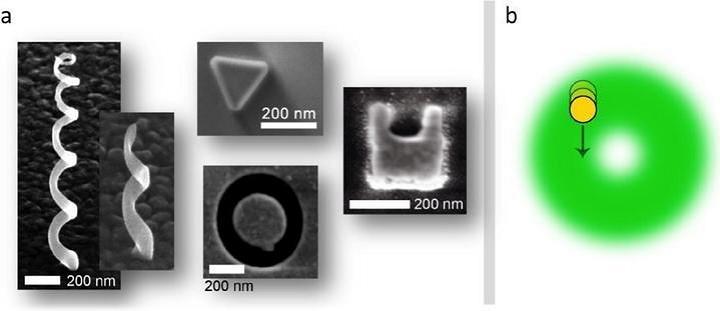
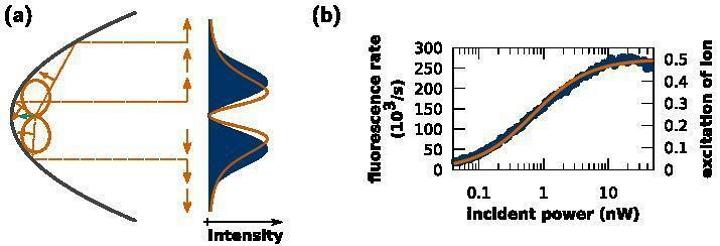
At the Max Planck Institute for the Science of Light, this approach is utilized to couple light to a single atom, or for that matter, to individual nano-particles. The research demonstrates that light can be coupled to an ion trapped within a parabolic mirror, and the upshot is a high efficiency, optimized polarized beam.


Dr. Gerd Leuchs
The researchers, led by Dr. Gerd Leuchs, say that as individual atoms, ions and molecules form the basic building blocks of matter, our perception of the tangible materials formed from such building blocks through their interaction with light is key to our ability to manipulate them.

Complex objects such as nanostructures can be built and manipulated by understanding specific interactions they have with a light field. The manipulations may well prove to serve as the basis for potential applications in biophysics or quantum information processing, and the individual nanostructures themselves may serve as “building blocks” to create metamaterials.

The process involves the creation of radially polarized light which is acutely focused. This incoming beam, which features a cylindrical symmetry, tracks across a path incident from right to left onto a lens. The focusing rotates the individual electric field vectors towards the optical axis, and they then interfere within the focal point to create an electric field component which oscillates along the optical axis.
The result is a tailored light where the precise shaping of the temporal and spatial distribution of the intensity of the light – and the polarization vector or direction of oscillation of the electric field – can then be concentrated to dimensions smaller than the wavelength of the light when focused onto a target object.

A radially polarized ring is focused with a parabolic mirror, and in this experiment, the researchers generated the tailored, radially polarized mode to an ideal field distribution down to 98%.

The work uses a “singly charged ytterbium ion” as the atom, and the ions can be accurately positioned, and even “trapped” for varying periods using an electrode arrangement and an applied AC voltage. An ion trap was developed to the parabolic mirror geometry which effectively shadows the ion from the focused light with minimal interference.

MPI says the methodology has been successfully applied to the investigation of numerous nanostructures and nanoscopic objects to create metamaterials of extraordinary properties
.

What it might mean is that, by “holding” a single atom with laser beams, it may well be possible to build a 3D printhead with singular atomic precision.

With the aid of artificial materials, light can be guided around objects and reflections can be suppressed to form a “nanobeacon.” The researchers say such light sources pave the way for high-precision control of light propagation in a range of optical networks.

Do you forsee a coming say when 3D printers which feature precision down to the level of a single atom could be created using this nanobeacon technology? Let us know in the Nanobeacon forum thread on 3DPB.com.


ORIGINAL: 3DPrint
July 1, 2015

lunes, 11 de mayo de 2015

Quantum boost for artificial intelligence

Quantum computers able to learn could attack larger sets of data than classical computers.

Peter Arnold/Stegerphoto/Getty Images

Article tools Rights & Permissions

Programs running on future quantum computers could dramatically speed up complex tasks such as face recognition.

Quantum computers of the future will have the potential to give artificial intelligence a major boost, a series of studies suggests.

These computers, which encode information in 'fuzzy' quantum states that can be zero and one simultaneously, have the ability to someday solve problems, such as breaking encryption keys, that are beyond the reach of ‘classical’ computers.

Algorithms developed so far for quantum computers have typically focused on problems such as breaking encryption keys or searching a list — tasks that normally require speed but not a lot of intelligence. But in a series of papers posted online this month the arXiv preprint server1, 2, 3, Seth Lloyd of the Massachusetts Institute of Technology in Cambridge and his collaborators have put a quantum twist on AI.

The team developed a quantum version of 'machine learning', a type of AI in which programs can learn from previous experience to become progressively better at finding patterns in data. Machine learning is popular in applications ranging from e-mail spam filters to online-shopping suggestions. The team’s invention would take advantage of quantum computations to speed up machine-learning tasks exponentially.
Quantum leap

Related stories


At the heart of the scheme is a simpler algorithm that Lloyd and his colleagues developed in 2009 as a way of quickly solving systems of linear equations, each of which is a mathematical statement, such as x + y = 4. Conventional computers produce a solution through tedious number crunching, which becomes prohibitively difficult as the amount of data (and thus the number of equations) grows. A quantum computer can cheat by compressing the information and performing calculations on select features extracted from the data and mapped onto quantum bits, or qubits.

Quantum machine learning takes the results of algebraic manipulations and puts them to good use. Data can be split into groups — a task that is at the core of handwriting- and speech-recognition software — or can be searched for patterns. Massive amounts of information could therefore be manipulated with a relatively small number of qubits.

"We could map the whole Universe — all of the information that has existed since the Big Bang — onto 300 qubits," Lloyd says.

Such quantum AI techniques could dramatically speed up tasks such as image recognition for comparing photos on the web or for enabling cars to drive themselves — fields in which companies such as Google have invested considerable resources. (One of Lloyd's collaborators, Masoud Mohseni, is in fact a Google researcher based in Venice, California.)

It's really interesting to see that there are new ways to use quantum computers coming up, after focusing mostly on factoring and quantum searches,” says Stefanie Barz at the University of Vienna, who recently demonstrated quantum equation-solving in action. Her team used a simple quantum computer that had two qubits to work out a high-school-level maths problem: a system consisting of two equations4. Another group, led by Jian Pan at the University of Science and Technology of China in Hefei, did the same using four qubits5.

Putting quantum machine learning into practice will be more difficult. Lloyd estimates that a dozen qubits would be needed for a small-scale demonstration.


Nature doi:10.1038/nature.2013.13453

References

Related stories and links

From elsewhere

ORIGINAL: Nature
26 July 2013