Ciencia en Canoa, by Vanessa Restrepo Schild.

Páginas

  • INICIO
  • About
  • The author
  • Opinión colgante
  • Graphic Adventure
  • EcoSecretos
Mostrando entradas con la etiqueta Brain. Mostrar todas las entradas

domingo, 27 de enero de 2019

Chemical Computing, the Future of Artificial Intelligence

In 1951, the Russian chemist Boris Belousov sent to a scientific journal a study in which he described an astonishing discovery: while trying to simulate a metabolic process in the laboratory, he had discovered a chemical reaction that occurred and then reversed itself on its own, alternating between a yellow colour and a colourless state. Belousov couldn’t find any journal willing to publish his results, since they appeared to violate a fundamental law of nature.

However, his work—which only came to light in 1959 through a brief presentation at a symposium—has become, half a century later, the foundation stone of a new discipline: chemical computing. This technological path is an alternative to quantum computing and conventional computing, capable of processing in parallel based on the same operating principles as our brain, promising futuristic applications, such as integrating in our body in the form of intelligent biosensors.

Portrait of Boris Belousov. Source: Wikimedia
Computing is based on the use of logic gates, which process a data input—usually in binary code—to produce a result or output. In the chips of our current computers, this function is carried out thanks to semiconductors, materials with a binary response capacity operating through the movement of electrons. However, this is not the only possible system; quantum computing, currently in the experimental phase, uses properties of subatomic particles that can also take alternative values, with greater versatility than semiconductors.

Until the discovery of Belousov, no one would have suspected that chemical reactions could act as logic gates. According to the second law of thermodynamics, these processes are linear, spontaneously moving towards equilibrium through an increase in entropy, a measure of the energy of chaos; what is done cannot be undone, at least on its own. For this reason, Belousov’s work was rejected and ignored, until a decade later it was recovered, extended and made known by the biophysicist Anatol Zhabotinsky.

THE FIRST CHEMICAL OSCILLATOR

The Belousov-Zhabotinsky reaction was the first chemical oscillator, a non-linear reaction that moves alternately in one direction and then the opposite as the process itself modifies the concentrations of the ions present, and which only stops when the reagents are consumed. In a Petri dish, these reactions produce waves of colours that diffuse from different points and act as inputs; the interaction between these input data can produce as an output a new wave—a 1, in binary code.

But this ability of chemical systems to compute by acting as logic gates is not something invented by humans, but was discovered, since it exists in nature. “We are already using chemical computers, because our brains and bodies employ communication via the diffusion of mediators, neuromodulators, hormones, etc.,” says computer scientist Andrew Adamatzky, director of the International Center of Unconventional Computing at the University of the West of England in Bristol. “We are chemical computers,” he summarises.
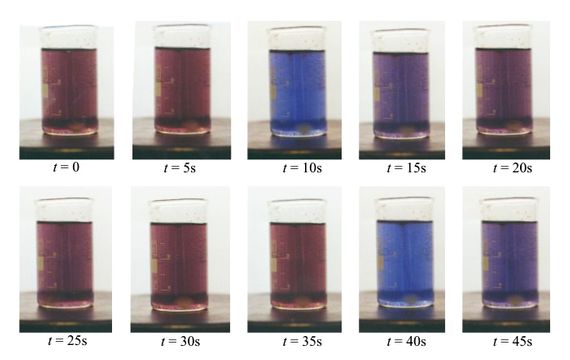
The Belousov-Zhabotinsky reaction is a non-linear reaction that moves alternately in one direction and then the opposite. Credit: Jkrieger
For decades it was believed that the brain’s computational capacity lay in the neuron as a minimal unit, and that its subcellular parts were limited to acting as simple transmitters of the decisions made by the cell in terms of the inputs received. Today it is known that this is not the case, and that discrete parts of the neuron, such as
  • the dendrites (the branches that receive the signals), 
  • the axon (which sends the impulse to other neurons), and 
  • the synapse (the space that communicates between them) 
are independently modulable, and therefore capable of computing by themselves. As this modulation is exerted through chemical agents, the brain is not an electrical computer, but an electrochemical one.

THE BRAIN, A PARALLEL COMPUTER

The great versatility of each neuron confers on the brain a valuable quality. “The brain and chemical computers are parallel computers,” explains biophysicist Vladimir Vanag, from the Centre for Nonlinear Chemistry at the Immanuel Kant Baltic Federal University (Russia). Parallel computing is not within the reach of conventional microprocessors (though it is for quantum ones). In practice, this advantage that chemical computing possesses overcomes one of its drawbacks—its slower speed.
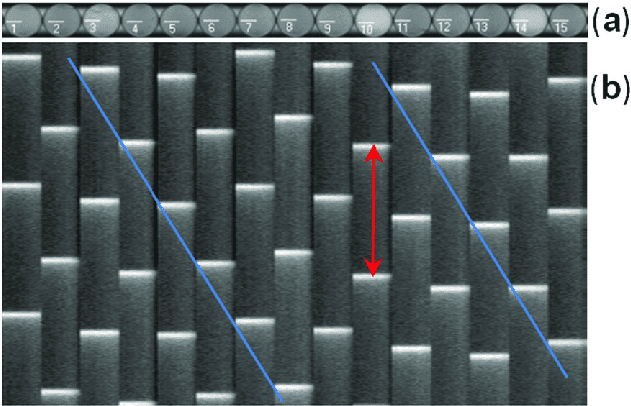
(a) The array of the BZ microdroplets in a 1D capillary. (b) Spacetime plot for the dynamics of the BZ MDs at GNF with coefficient g e = 0.11. The total size of the space-time plot is equal to 1875 mm  424 s. Short horizontal bars depict spikes for each of the 15 BZ MDs. The averaged diameter d of a single MD equals 125 mm. The red arrow depicts the averaged period of oscillations, T 0 = 159 s. The slope of the blue line characterizes the ''velocity'' spike propagation, 1.68 mm s À1. Some droplets in snapshot (a) look lighter since they are in the oxidized state of the catalyst, the others look darker since they correspond to the reduced state of the catalyst. White dashes in droplets with index numbers (from 1 to 15) display the image reading area to record the ox-red state of the droplets. Compared with the great speed of electronic chips, chemical computing is limited by the speed of the diffusion of reactions in the medium. Researchers like Adamaztky are working on breaking this barrier: “Systems can be scaled down to the nano-scale and then everything will be fast,” he says. However, he notes that certain applications will not require higher speeds: “When reaction-diffusion computers are embedded in the human body, their speed of processing information will perfectly match natural processes.”

But in any case, Vanag explains with an example how parallel computing compensates for any speed limit: if a micro-oscillator—equivalent to a processor—occupies a cubic volume of 100 microns on each side, a single cubic centimetre could contain a million of them, all working in parallel. Thus, “we can increase the number of micro-oscillators by many orders of magnitude and overcome the speed of conventional computers,” he says. Say goodbye to Moore’s law; with chemical computing, a small increase in volume is enough to multiply the processing capacity. This is the secret of the human brain, slower than any computer, but more powerful than all of them.

The brain is slower than any computer, but much more powerful. Credit: Pixbay
A NEW ARTIFICIAL-INTELLIGENCE
In addition, chemical computing brings other crucial advantages. “It should work without electricity,” says Vanag. “No viruses, autonomous regime of working, and extremely high efficiency.” And all this while using just a few cheap chemical reagents. Thanks to these qualities, chemical computing is emerging as a promising alternative to simulate the human brain. By building bottom-up systems, starting with small oscillator networks and adding more and more layers of complexity, scientists are learning how cognitive functions such as image recognition or decision making appear.

Of course, a consequence of this chemical recreation of the brain would be the possibility of obtaining new artificial-intelligence systems, but radically different from what we usually envision: imagine robots made of gel, without a defined shape, capable of dividing themselves into smaller ones so that each one of them works independently. Perhaps they’ll even be embedded in our own bodies, analysing our biological parameters, curing our diseases. “But this is a fantasy,” concludes Vanag. “At the moment.”


Javier Yanes

@yanes68


ORIGINAL: OpenMind
Posted by Unknown at 19:48 0 comments
Enviar por correo electrónicoEscribe un blogCompartir en XCompartir con FacebookCompartir en Pinterest
Etiquetas: ArtificialIntelligence, Biology, Brain, ChemicalComputing, HumanBody, Research

sábado, 3 de junio de 2017

We Could Build an Artificial Brain Right Now

Large-scale brainlike systems are possible with existing technology—if we’re willing to spend the money

Photo: Dan Saelinger


Brain-inspired computing is having a moment. Artificial neural network algorithms like deep learning, which are very loosely based on the way the human brain operates, now allow digital computers to perform such extraordinary feats as translating language, hunting for subtle patterns in huge amounts of data, and beating the best human players at Go.

But even as engineers continue to push this mighty computing strategy, the energy efficiency of digital computing is fast approaching its limits. Our data centers and supercomputers already draw megawatts—some 2 percent of the electricity consumed in the United States goes to data centers alone. The human brain, by contrast, runs quite well on about 20 watts, which represents the power produced by just a fraction of the food a person eats each day. If we want to keep improving computing, we will need our computers to become more like our brains.

Hence the recent focus on neuromorphic technology, which promises to move computing beyond simple neural networks and toward circuits that operate more like the brain’s neurons and synapses do. The development of such physical brainlike circuitry is actually pretty far along. Work at my lab and others around the world over the past 35 years has led to artificial neural components like synapses and dendrites that respond to and produce electrical signals much like the real thing.

So, what would it take to integrate these building blocks into a brain-scale computer? 
In 2013, Bo Marr, a former graduate student of mine at Georgia Tech, and I looked at the best engineering and neuroscience knowledge of the time and concluded that it should be possible to build a silicon version of the human cerebral cortex with the transistor technology then in production. What’s more, the resulting machine would take up less than a cubic meter of space and consume less than 100 watts, not too far from the human brain.

That is not to say creating such a computer would be easy. The system we envisioned would still require a few billion dollars to design and build, including some significant packaging innovations to make it compact. There is also the question of how we would program and train the computer. Neuromorphic researchers are still struggling to understand how to make thousands of artificial neurons work together and how to translate brainlike activity into useful engineering applications.

Still, the fact that we can envision such a system means that we may not be far off from smaller-scale chips that could be used in portable and wearable electronics. These gadgets demand low power consumption, and so a highly energy-efficient neuromorphic chip—even if it takes on only a subset of computational tasks, such as signal processing—could be revolutionary. Existing capabilities, like speech recognition, could be extended to handle noisy environments. We could even imagine future smartphones conducting real-time language translation between you and the person you’re talking to. Think of it this way: In the 40 years since the first signal-processing integrated circuits, Moore’s Law has improved energy efficiency by roughly a factor of 1,000. The most brainlike neuromorphic chips could dwarf such improvements, potentially driving down power consumption by another factor of 100 million. That would bring computations that would otherwise need a data center to the palm of your hand.

The ultimate brainlike machine will be one in which we build analogues for all the essential functional components of the brain: 
  • the synapses, which connect neurons and allow them to receive and respond to signals; 
  • the dendrites, which combine and perform local computations on those incoming signals; and 
  • the core, or soma, region of each neuron, which integrates inputs from the dendrites and transmits its output on the axon.
Simple versions of all these basic components have already been implemented in silicon. The starting point for such work is the same metal-oxide-semiconductor field-effect transistor, or MOSFET, that is used by the billions to build the logic circuitry in modern digital processors.

These devices have a lot in common with neurons. Neurons operate using voltage-controlled barriers, and their electrical and chemical activity depends primarily on channels in which ions move between the interior and exterior of the cell—a smooth, analog process that involves a steady buildup or decline instead of a simple on-off operation.

MOSFETs are also voltage controlled and operate by the movement of individual units of charge. And when MOSFETs are operated in the “subthreshold” mode, below the voltage threshold used to digitally switch between on and off, the amount of current flowing through the device is very small—less than a thousandth of what is seen in the typical switching of digital logic gates.

The notion that subthreshold transistor physics could be used to build brainlike circuitry originated with Carver Mead of Caltech, who helped revolutionize the field of very-large-scale circuit design in the 1970s. Mead pointed out that chip designers fail to take advantage of a lot of interesting behavior—and thus information—when they use transistors only for digital logic. The process, he wrote in 1990 [PDF], essentially involves “taking all the beautiful physics that is built into...transistors, mashing it down to a 1 or 0, and then painfully building it back up with AND and OR gates to reinvent the multiply.” A more “physical” or “physics-based” computer could execute more computations per unit energy than its digital counterpart. Mead predicted such a computer would take up significantly less space as well.

In the intervening years, neuromorphic engineers have made all the basic building blocks of the brain out of silicon with a great deal of biological fidelity. The neuron’s dendrite, axon, and soma components can all be fabricated from standard transistors and other circuit elements. In 2005, for example, Ethan Farquhar, then a Ph.D. candidate, and I created a neuron circuit using a set of six MOSFETs and a handful of capacitors. Our model generated electrical pulses that very closely matched those in the soma part of a squid neuron, a long-standing experimental subject. What’s more, our circuit accomplished this feat with similar current levels and energy consumption to those in the squid’s brain. If we had instead used analog circuits to model the equations neuroscientists have developed to describe that behavior, we’d need on the order of 10 times as many transistors. Performing those calculations with a digital computer would require even more space.
Illustration: James Provost Synapses and Soma: The floating-gate transistor [top left], which can store differing amounts of charge, can be used to build a “crossbar” array of artificial synapses [bottom left]. Electronic versions of other neuron components, such as the soma region [right], can be made from standard transistors and other circuit components.
Emulating synapses is a little trickier. A device that behaves like a synapse must have the ability to remember what state it is in, respond in a particular way to an incoming signal, and adapt its response over time.

There are a number of potential approaches to building synapses. The most mature one by far is the single-transistor learning synapse (STLS), a device that my colleagues and I at Caltech worked on in the 1990s while I was a graduate student studying under Mead.

We first presented the STLS in 1994, and it became an important tool for engineers who were building modern analog circuitry, such as physical neural networks. In neural networks, each node in the network has a weight associated with it, and those weights determine how data from different nodes are combined. The STLS was the first device that could hold a variety of different weights and be reprogrammed on the fly. The device is also nonvolatile, which means that it remembers its state even when not in use—a capability that significantly reduces how much energy it needs.

The STLS is a type of floating-gate transistor, a device that is used to build memory cells in flash memory. In an ordinary MOSFET, a gate controls the flow of electricity through a current-carrying channel. A floating-gate transistor has a second gate that sits between this electrical gate and the channel. This floating gate is not directly connected to ground or any other component. Thanks to that electrical isolation, which is enhanced by high-quality silicon-insulator interfaces, charges remain in the floating gate for a long time. The floating gate can take on many different amounts of charge and so have many different levels of electrical response, an essential requisite for creating an artificial synapse capable of varying its response to stimuli.

My colleagues and I used the STLS to demonstrate the first crossbar network, a computational model currently popular with nanodevice researchers. In this two-dimensional array, devices sit at the intersection of input lines running north-south and output lines running east-west. This configuration is useful because it lets you program the connection strength of each “synapse” individually, without disturbing the other elements in the array.

Thanks in part to a recent Defense Advanced Research Projects Agency program called SyNAPSE, the neuromorphic engineering field has seen a surge of research into artificial synapses built from nanodevices such as

  • memristors, 
  • resistive RAM, and 
  • phase-change memories (as well as floating-gate devices). 
But it will be hard for these new artificial synapses to improve on our two-decade-old floating-gate arrays. Memristors and other novel memories come with programming challenges; some have device architectures that make it difficult to target a single specific device in a crossbar array. Others need a dedicated transistor in order to be programmed, adding significantly to their footprint. Because floating-gate memory is programmable over a wide range of values, it can be more easily fine-tuned to compensate for manufacturing variation from device to device than can many nanodevices. A number of neuromorphic research groups that tried integrating nanodevices into their designs have recently come around to using floating-gate devices.

So how will we put all these brainlike components together? 
In the human brain, of course, neurons and synapses are intermingled. Neuromorphic chip designers must take a more integrated approach as well, with all neural components on the same chip, tightly mixed together. This is not the case in many neuromorphic labs today: To make research projects more manageable, different building blocks may be placed in different areas. Synapses, for example, may be relegated to an off-chip array. Connections may be routed through another chip called a field-programmable gate array, or FPGA.

But as we scale up neuromorphic systems, we’ll need to take care that we don’t replicate the arrangement in today’s computers, which lose a significant amount of energy driving bits back and forth between logic, memory, and storage. Today, a computer can easily consume 10 times the energy to move the data needed for a multiple-accumulate operation—a common signal-processing computation—as it does to perform the calculation.

The brain, by contrast, minimizes the energy cost of communication by keeping operations highly local. The memory elements of the brain, such as synaptic strengths, are mixed in with the neural components that integrate signals. And the brain’s “wires”—the dendrites and axons that extend from neurons to transmit, respectively, incoming signals and outgoing pulses—are generally fairly short relative to the size of the brain, so they don’t require large amounts of energy to sustain a signal. From anatomical data, we know that more than 90 percent of neurons connect with only their nearest 1,000 or so neighbors.

Another big question for the builders of brainlike chips and computers is the algorithms we will run on them. Even a loosely brain-inspired system can have a big advantage over digital systems. In 2004, for example, my group used floating-gate devices to perform multiplications for signal processing with just 1/1,000 the energy and 1/100 the area of a comparable digital system. In the years since, other researchers and my group have successfully demonstrated neuromorphic approaches to many other kinds of signal-processing calculations.

But the brain is still 100,000 times as efficient as the systems in these demonstrations. That’s because while our current neuromorphic technology takes advantage of the neuronlike physics of transistors, it doesn’t consider the algorithms the brain uses to perform its operations.

Today, we are just beginning to discover these physical algorithms—that is, the processes that will allow brainlike chips to operate with more brainlike efficiency. Four years ago, my research group used silicon somas, synapses, and dendrites to perform a word-spotting algorithm that identifies words in a speech waveform. This physical algorithm exhibited a thousandfold improvement in energy efficiency over predicted analog signal processing. Eventually, by lowering the amount of voltage supplied to the chips and using smaller transistors, researchers should be able to build chips that parallel the brain in efficiency for a range of computations.

When I started in neuromorphic research 30 years ago, everyone believed tremendous opportunities would arise from designing systems that are more like the brain. And indeed, entire industries are now being built around brain-inspired AI and deep learning, with applications that promise to transform—among other things—our mobile devices, our financial institutions, and how we interact in public spaces.

And yet, these applications rely only slightly on what we know about how the brain actually works. The next 30 years will undoubtedly see the incorporation of more such knowledge. We already have much of the basic hardware we need to accomplish this neuroscience-to-computing translation. But we must develop a better understanding of how that hardware should behave—and what computational schemes will yield the greatest real-world benefits.

Consider this a call to action. We have come pretty far with a very loose model of how the brain works. But neuroscience could lead to far more sophisticated brainlike computers. And what greater feat could there be than using our own brains to learn how to build new ones?

This article appears in the June 2017 print issue as “A Road Map for the Artificial Brain.”

About the Author

Jennifer Hasler is a professor of electrical and computer engineering at the Georgia Institute of Technology.

ORIGINAL: IEEE Spectrum
By JENNIFER HASLER 
Posted 1 Jun 2017 | 19:00 GMT
Posted by Unknown at 1:12 0 comments
Enviar por correo electrónicoEscribe un blogCompartir en XCompartir con FacebookCompartir en Pinterest
Etiquetas: Biomimicry, Bo Marr, Brain, Brain-inspired computing, DARPA; SyNAPSE, Floating Gate MOSFET, FPGA, Memristors, Neural Networks, Neuromorphic Computing, Neuroscience, Power

sábado, 15 de abril de 2017

Spectacular Visualizations of Brain Scans Enhanced with 1,750 Pieces of Gold Leaf

Self Reflected, 22K gilded microetching, 96″ X 130″, 2014-2016, Greg Dunn and Brian Edwards. The entire Self Reflected microetching under violet and white light. (photo by Greg Dunn and Will Drinker)
Anyone who thinks that scientists can't be artists need look no further than Dr. Greg Dunn and Dr. Brian Edwards. The neuroscientist and applied physicist have paired together to create an artistic series of images that the artists describe as “the most fundamental self-portrait ever created.” Literally going inside, the pair has blown up a thin slice of the brain 22 times in a series called Self-Reflected.

Traveling across 500,000 neurons, the images took two years to complete, as Dunn and Edwards developed special technology for the project. Using a technique they've called reflective microetching, they microscopically manipulated the reflectivity of the brain's surface. Different regions of the brain were hand painted and digitized, later using a computer program created by Edwards to show the complex choreography our mind undergoes as it processes information.

After printing the designs onto transparencies, the duo added 1,750 gold leaf sheets to increase the art's reflectivity. The astounding results are images that demonstrate the delicate flow and balance of our brain's activity. “Self Reflected was created to remind us that the most marvelous machine in the known universe is at the core of our being and is the root of our shared humanity,” the artists share.

Self Reflected fine art prints and microetchings are available for purchase via Dunn's website.

Self Reflected is an unprecedented look inside the brain.
Self Reflected (detail), 22K gilded microetching, 96″ X 130″, 2014-2016, Greg Dunn and Brian Edwards. The parietal gyrus where movement and vision are integrated. (photo by Greg Dunn and Will Drinker)

Self Reflected (detail), 22K gilded microetching, 96″ X 130″, 2014-2016, Greg Dunn and Brian Edwards. The brainstem and cerebellum, regions that control basic body and motor functions. (photo by Greg Dunn and Will Drinker)

An astounding achievement in scientific art, the artists applied 1,750 leaves of gold to the final microetchings.
Self Reflected (detail), 22K gilded microetching, 96″ X 130″, 2014-2016, Greg Dunn and Brian Edwards. The laminar structure of the cerebellum, a region involved in movement and proprioception (calculating where your body is in space).

Self Reflected (detail), 22K gilded microetching, 96″ X 130″, 2014-2016, Greg Dunn and Brian Edwards. The pons, a region involved in movement and implicated in consciousness. (photo by Greg Dunn and Will Drinker)

Self Reflected (detail), 22K gilded microetching, 96″ X 130″, 2014-2016, Greg Dunn and Brian Edwards. Raw colorized microetching data from the reticular formation.

Self Reflected (detail), 22K gilded microetching, 96″ X 130″, 2014-2016, Greg Dunn and Brian Edwards. The visual cortex, the region located at the back of the brain that processes visual information.

Self Reflected (detail), 22K gilded microetching, 96″ X 130″, 2014-2016, Greg Dunn and Brian Edwards. The thalamus and basal ganglia, sorting senses, initiating movement, and making decisions. (photo by Greg Dunn and Will Drinker)

Self Reflected, 22K gilded microetching, 96″ X 130″, 2014-2016, Greg Dunn and Brian Edwards. The entire Self Reflected microetching under white light. (photo by Greg Dunn and Will Drinker)
Self Reflected (detail), 22K gilded microetching, 96″ X 130″, 2014-2016, Greg Dunn and Brian Edwards. The midbrain, an area that carries out diverse functions in reward, eye movement, hearing, attention, and movement. (photo by Greg Dunn and Will Drinker)

This video shows how the etched neurons twinkle as a light source is moved.


Interested in learning more? Watch Dr. Greg Dunn present the project at The Franklin Institute.
Dr. Greg Dunn: Website | Facebook | Instagram
My Modern Met granted permission to use photos by Dr. Greg Dunn.


ORIGINAL: My MET
By Jessica Stewart 
April 12, 2017
Posted by Unknown at 15:58 0 comments
Enviar por correo electrónicoEscribe un blogCompartir en XCompartir con FacebookCompartir en Pinterest
Etiquetas: art, Brain, Complexity, Gold, Photography, reflective microetching, Visualization

miércoles, 1 de marzo de 2017

A Giant Neuron Has Been Found Wrapped Around the Entire Circumference of the Brain

Allen Institute for Brain Science
This could be where consciousness forms. For the first time, scientists have detected a giant neuron wrapped around the entire circumference of a mouse's brain, and it's so densely connected across both hemispheres, it could finally explain the origins of consciousness.

Using a new imaging technique, the team detected the giant neuron emanating from one of the best-connected regions in the brain, and say it could be coordinating signals from different areas to create conscious thought.

This recently discovered neuron is one of three that have been detected for the first time in a mammal's brain, and the new imaging technique could help us figure out if similar structures have gone undetected in our own brains for centuries.

At a recent meeting of the Brain Research through Advancing Innovative Neurotechnologies initiative in Maryland, a team from the Allen Institute for Brain Science described how all three neurons stretch across both hemispheres of the brain, but the largest one wraps around the organ's circumference like a "crown of thorns".
You can see them highlighted in the image at the top of the page.

Lead researcher Christof Koch told Sara Reardon at Nature that they've never seen neurons extend so far across both regions of the brain before.
Oddly enough, all three giant neurons happen to emanate from a part of the brain that's shown intriguing connections to human consciousness in the past - the claustrum, a thin sheet of grey matter that could be the most connected structure in the entire brain, based on volume.

This relatively small region is hidden between the inner surface of the neocortex in the centre of the brain, and communicates with almost all regions of cortex to achieve many higher cognitive functions such as 
  • language, 
  • long-term planning, and 
  • advanced sensory tasks such as 
  • seeing and 
  • hearing.
"Advanced brain-imaging techniques that look at the white matter fibres coursing to and from the claustrum reveal that it is a neural Grand Central Station," Koch wrote for Scientific American back in 2014. "Almost every region of the cortex sends fibres to the claustrum."

The claustrum is so densely connected to several crucial areas in the brain that Francis Crick of DNA double helix fame referred to it a "conductor of consciousness" in a 2005 paper co-written with Koch.

They suggested that it connects all of our external and internal perceptions together into a single unifying experience, like a conductor synchronises an orchestra, and strange medical cases in the past few years have only made their case stronger.

Back in 2014, a 54-year-old woman checked into the George Washington University Medical Faculty Associates in Washington, DC, for epilepsy treatment.

This involved gently probing various regions of her brain with electrodes to narrow down the potential source of her epileptic seizures, but when the team started stimulating the woman's claustrum, they found they could effectively 'switch' her consciousness off and on again.

Helen Thomson reported for New Scientist at the time:
"When the team zapped the area with high frequency electrical impulses, the woman lost consciousness. She stopped reading and stared blankly into space, she didn't respond to auditory or visual commands and her breathing slowed.

As soon as the stimulation stopped, she immediately regained consciousness with no memory of the event. The same thing happened every time the area was stimulated during two days of experiments.
"

According to Koch, who was not involved in the study, this kind of abrupt and specific 'stopping and starting' of consciousness had never been seen before.

Another experiment in 2015 examined the effects of claustrum lesions on the consciousness of 171 combat veterans with traumatic brain injuries.

They found that claustrum damage was associated with the duration, but not frequency, of loss of consciousness, suggesting that it could play an important role in the switching on and off of conscious thought, but another region could be involved in maintaining it.

And now Koch and his team have discovered extensive neurons in mouse brains emanating from this mysterious region.

In order to map neurons, researchers usually have to inject individual nerve cells with a dye, cut the brain into thin sections, and then trace the neuron's path by hand.

It's a surprisingly rudimentary technique for a neuroscientist to have to perform, and given that they have to destroy the brain in the process, it's not one that can be done regularly on human organs.

Koch and his team wanted to come up with a technique that was less invasive, and engineered mice that could have specific genes in their claustrum neurons activated by a specific drug.

"When the researchers fed the mice a small amount of the drug, only a handful of neurons received enough of it to switch on these genes," Reardon reports for Nature.

"That resulted in production of a green fluorescent protein that spread throughout the entire neuron. The team then took 10,000 cross-sectional images of the mouse brain, and used a computer program to create a 3D reconstruction of just three glowing cells."

We should keep in mind that just because these new giant neurons are connected to the claustrum doesn't mean that Koch's hypothesis about consciousness is correct - we're a long way from proving that yet.

It's also important to note that these neurons have only been detected in mice so far, and the research has yet to be published in a peer-reviewed journal, so we need to wait for further confirmation before we can really delve into what this discovery could mean for humans.

But the discovery is an intriguing piece of the puzzle that could help up make sense of this crucial, but enigmatic region of the brain, and how it could relate to the human experience of conscious thought.

The research was presented at the 15 February meeting of the Brain Research through Advancing Innovative Neurotechnologies initiative in Bethesda, Maryland.

ORIGINAL: ScienceAlert
BEC CREW
28 FEB 2017
Posted by Unknown at 12:07 0 comments
Enviar por correo electrónicoEscribe un blogCompartir en XCompartir con FacebookCompartir en Pinterest
Etiquetas: Allen Institute for Brain Science, Brain, Christof Koch, Claustrum, consciousness, GFP, Imaging, Mammal, Mouse, Neuron, Neuroscience

jueves, 23 de febrero de 2017

10 Breakthrough Technologies 2017


These technologies all have staying power. They will affect the economy and our politics, improve medicine, or influence our culture. Some are unfolding now; others will take a decade or more to develop. But you should know about all of them right now.
  1. Reversing Paralysis 
    Scientists are making remarkable progress at using brain implants to restore the freedom of movement that spinal cord injuries take away.
  2. Self-Driving Trucks Tractor-trailers without a human at the wheel will soon barrel onto highways near you. What will this mean for the nation’s 1.7 million truck drivers?
  3. Paying with Your Face
    Face-detecting systems in China now authorize payments, provide access to facilities, and track down criminals. Will other countries follow?
  4. Practical Quantum Computing
    Advances at Google, Intel, and several research groups indicate that computers with previously unimaginable power are finally within reach.
     
  5. The 360-Degree Selfie
    Inexpensive cameras that make spherical images are opening a new era in photography and changing the way people share stories.
     
  6. Hot Solar Cells
    By converting heat to focused beams of light, a new solar device could create cheap and continuous power.
     
  7. Gene Therapy 2.0
    Scientists have solved fundamental problems that were holding back cures for rare hereditary disorders. Next we’ll see if the same approach can take on cancer, heart disease, and other common illnesses.
  8. The Cell Atlas
    Biology’s next mega-project will find out what we’re really made of.
  9. Botnets of Things
    The relentless push to add connectivity to home gadgets is creating dangerous side effects that figure to get even worse.
  10. Reinforcement Learning
    By experimenting, computers are figuring out how to do things that no programmer could teach them.

ORIGINAL: Technology Review
Posted by Unknown at 7:49 0 comments
Enviar por correo electrónicoEscribe un blogCompartir en XCompartir con FacebookCompartir en Pinterest
Etiquetas: 3D Imaging, AI, Biometry, BotNet, Brain, Cell Atlas, Genomics, image recognition, Implant, IoT, Jobs, Neuroscience, Payment, Quantum Computing, Reinforcement Learning, Security, Self-Driving, Solar Energy, Truck

sábado, 16 de julio de 2016

A lab founded by a tech billionaire just unveiled a major leap forward in cracking your brain's code

This is definitely not a scene from "A Clockwork Orange." Allen Brain Observatory
As the mice watched a computer screen, their glowing neurons pulsed through glass windows in their skulls.

Using a device called a two-photon microscope, researchers at the Allen Institute for Brain Science could peer through those windows and record, layer by layer, the workings of their little minds.

The result, announced July 13, is a real-time record of the visual cortex — a brain region shared in similar form across mammalian species — at work. The data set that emerged is so massive and complete that its creators have named it the Allen Brain Observatory.

Bred for the lab, the mice were genetically modified so that specific cells in their brains would fluoresce when they became active. Researchers had installed the brain-windows surgically, slicing away tiny chunks of the rodents' skulls and replacing them with five-millimeter skylights.

Sparkling neurons of the mouse visual cortex shone through the glass as images and short films flashed across the screen. Each point of light the researchers saw translated, with hours of careful processing, into data: 
  • Which cell lit up? 
  • Where in the brain? 
  • How long did it glow? 
  • What was the mouse doing at the time? 
  • What was on the screen?
The researchers imaged the neurons in small groups, building a map of one microscopic layer before moving down to the next. When they were finished, the activities of 18,000 cells from several dozen mice were recorded in their database.

"This is the first data set where we're watching large populations of neurons' activity in real time, at the cellular level," said Saskia de Vries, a scientist who worked on the project, at the private research center launched by Microsoft co-founder Paul Allen.


The problem the Brain Observatory wants to solve is straightforward. Science still does not understand the brain's underlying code very well, and individual studies may turn up odd results that are difficult to interpret in the context of the whole brain.

A decade ago, for example, a widely-reported study appeared to find a single neuron in a human brain that always — and only — winked on when presented with images of Halle Berry. Few scientists suggested that this single cell actually stored the subject's whole knowledge of Berry's face. But without more context about what the cells around it were doing, a more complete explanation remained out of reach.

"When you're listening to a cell with an electrode, all you're hearing is [its activity level] spiking," said Shawn Olsen, another researcher on the project. "And you don't know where exactly that cell is, you don't know its precise location, you don't know its shape, you don't know who it connects to."

Imagine trying to assemble a complete understanding of a computer given only facts like under certain circumstances, clicking the mouse makes lights on the printer blink.

To get beyond that kind of feeling around in the dark, the Allen Institute has taken what Olsen calls an "industrial" approach to mapping out the brain's activity.

"Our goal is to systematically march through the different cortical layers, and the different cell types, and the different areas of the cortex to produce a systematic, mostly comprehensive survey of the activity," Olsen explained. "It doesn't just describe how one cell type is responding or one particular area, but characterizes as much as we can a complete population of cells that will allow us to draw inferences that you couldn't describe if you were just looking at one cell at a time."

In other words, this project makes its impact through the grinding power of time and effort.

A visualization of cells examined in the project. Allen Brain Observatory
Researchers showed the mice moving horizontal or vertical lines, light and dark dots on a surface, natural scenes, and even clips from Hollywood movies.

The more abstract displays target how the mind sees and interprets light and dark, lines, and motion, building on existing neuroscience. Researchers have known for decades that particular cells appear to correspond to particular kinds of motion or shape, or positions in the visual field. This research helps them place the activity of those cells in context.

One of the most obvious results was that the brain is noisy, messy, and confusing.

"Even though we showed the same image, we could get dramatically different responses from the same cell. On one trial it may have a strong response, on another it may have a weak response," Olsen said.

All that noise in their data is one of the things that differentiates it from a typical study, de Vries said.

"If you're inserting an electrode you're going to keep advancing until you find a cell that kind of responds the way you want it to," he said. "By doing a survey like this we're going to see a lot of cells that don't respond to the stimuli in the way that we think they should. We're realizing that the cartoon model that we have of the cortex isn't completely accurate."

Olsen said they suspect a lot of that noise emerges from whatever the mouse is thinking about or doing that has nothing to do with what's on screen. They recorded videos of the mice during data collection to help researchers combing their data learn more about those effects.

The best evidence for this suspicion? When they showed the mice more interesting visuals, like pictures of animals or clips from the film "Touch of Evil," the neurons behaved much more consistently.

"We would present each [clip] ten different times," de Vries said. "And we can see from trial to trial many cells at certain times almost always respond — reliable, repeatable, robust responses."

In other words, it appears the mice were paying attention.

Allen Brain Observatory
The Brain Observatory was turned loose on the internet Wednesday, with its data available for researchers and the public to comb through, explore, and maybe critique.

But the project isn't over.

In the next year-and-a-half, the researchers intend to add more types of cells and more regions of the visual cortex to their observatory. And their long-term ambitions are even grander.

"Ultimately," Olson said,"we want to understand how this visual information in the mouse's brain gets used to guide behavior and memory and cognition."

Right now, the mice just watch screens. But by training them to perform tasks based on what they see, he said they hope to crack the mysteries of memory, decision-making, and problem-solving. Another parallel observatory created using electrode arrays instead of light through windows will add new levels of richness to their data.

So the underlying code of mouse — and human — brains remains largely a mystery, but the map that we'll need to unlock it grows richer by the day.

ORIGINAL: Tech Insider
Rafi Letzter
Jul. 13, 2016
Posted by Unknown at 12:36 0 comments
Enviar por correo electrónicoEscribe un blogCompartir en XCompartir con FacebookCompartir en Pinterest
Etiquetas: Activity, Allen Institute for Brain Science, Brain, Genetic Engineering, Imaging, Neuroscience, Two-Photon Microscope, Visual Cortex

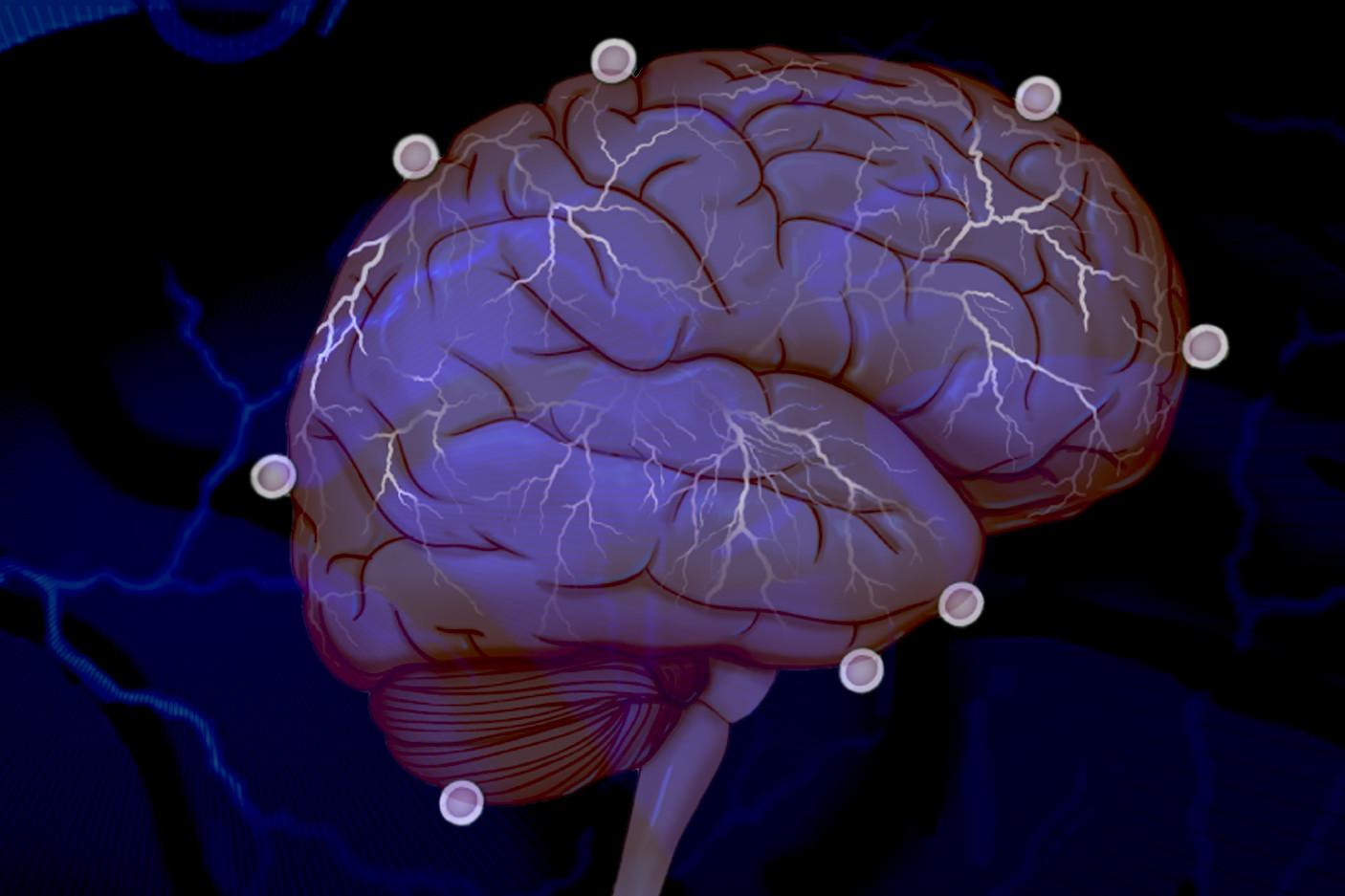
Shocking New Role Found for the Immune System: Controlling Social Interactions

In a startling discovery that raises fundamental questions about human behavior, researchers at the University of Virginia School of Medicine have determined that the immune system directly affects – and even controls – creatures’ social behavior, such as their desire to interact with others.

So could immune system problems contribute to an inability to have normal social interactions? The answer appears to be yes, and that finding could have significant implications for neurological diseases such as autism-spectrum disorders and schizophrenia.

“The brain and the adaptive immune system were thought to be isolated from each other, and any immune activity in the brain was perceived as sign of a pathology. And now, not only are we showing that they are closely interacting, but some of our behavior traits might have evolved because of our immune response to pathogens,” explained Jonathan Kipnis, chair of UVA’s Department of Neuroscience. “It’s crazy, but maybe we are just multicellular battlefields for two ancient forces: pathogens and the immune system. Part of our personality may actually be dictated by the immune system.”


Evolutionary Forces at Work
It was only last year that Kipnis, the director of UVA’s Center for Brain Immunology and Glia, and his team discovered that meningeal vessels directly link the brain with the lymphatic system. That overturned decades of textbook teaching that the brain was “immune privileged,” lacking a direct connection to the immune system. The discovery opened the door for entirely new ways of thinking about how the brain and the immune system interact.
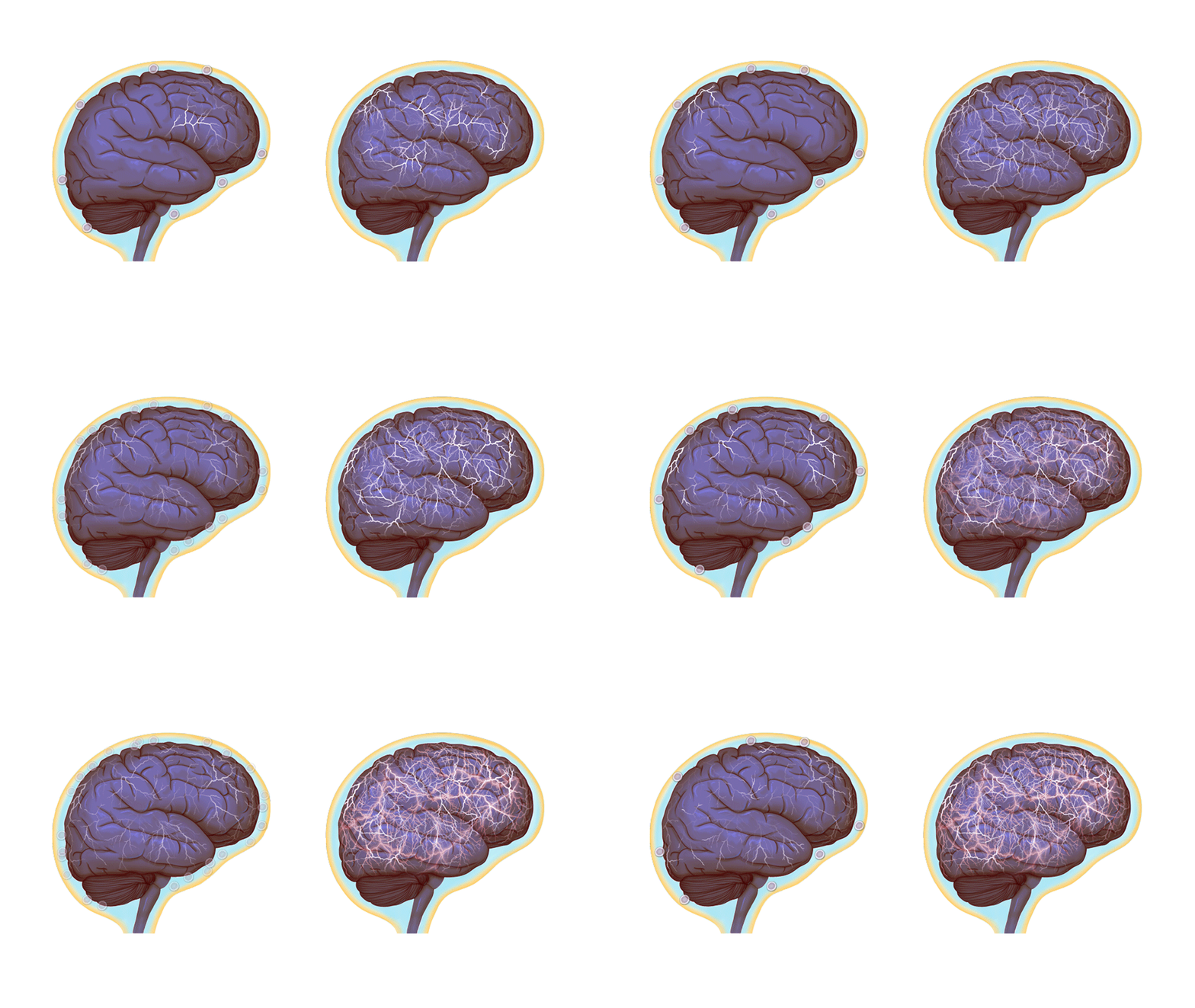
Normal brain activity, left, and a hyper-connected brain. (Images by Anita Impagliazzo, UVA Health System)
The follow-up finding is equally illuminating, shedding light on both the workings of the brain and on evolution itself. The relationship between people and pathogens, the researchers suggest, could have directly affected the development of our social behavior, allowing us to engage in the social interactions necessary for the survival of the species while developing ways for our immune systems to protect us from the diseases that accompany those interactions. Social behavior is, of course, in the interest of pathogens, as it allows them to spread.

The UVA researchers have shown that a specific immune molecule, interferon gamma, seems to be critical for social behavior and that a variety of creatures, such as flies, zebrafish, mice and rats, activate interferon gamma responses when they are social. Normally, this molecule is produced by the immune system in response to bacteria, viruses or parasites. Blocking the molecule in mice using genetic modification made regions of the brain hyperactive, causing the mice to become less social. Restoring the molecule restored the brain connectivity and behavior to normal. In a paper outlining their findings, the researchers note the immune molecule plays a “profound role in maintaining proper social function.”

“It’s extremely critical for an organism to be social for the survival of the species. It’s important for foraging, sexual reproduction, gathering, hunting,” said Anthony J. Filiano, Hartwell postdoctoral fellow in the Kipnis lab and lead author of the study. “So the hypothesis is that when organisms come together, you have a higher propensity to spread infection. So you need to be social, but [in doing so] you have a higher chance of spreading pathogens. The idea is that interferon gamma, in evolution, has been used as a more efficient way to both boost social behavior while boosting an anti-pathogen response.”

Understanding the Implications
The researchers note that a malfunctioning immune system may be responsible for “social deficits in numerous neurological and psychiatric disorders.” But exactly what this might mean for autism and other specific conditions requires further investigation. It is unlikely that any one molecule will be responsible for disease or the key to a cure. The researchers believe that the causes are likely to be much more complex. But the discovery that the immune system – and possibly germs, by extension – can control our interactions raises many exciting avenues for scientists to explore, both in terms of battling neurological disorders and understanding human behavior.

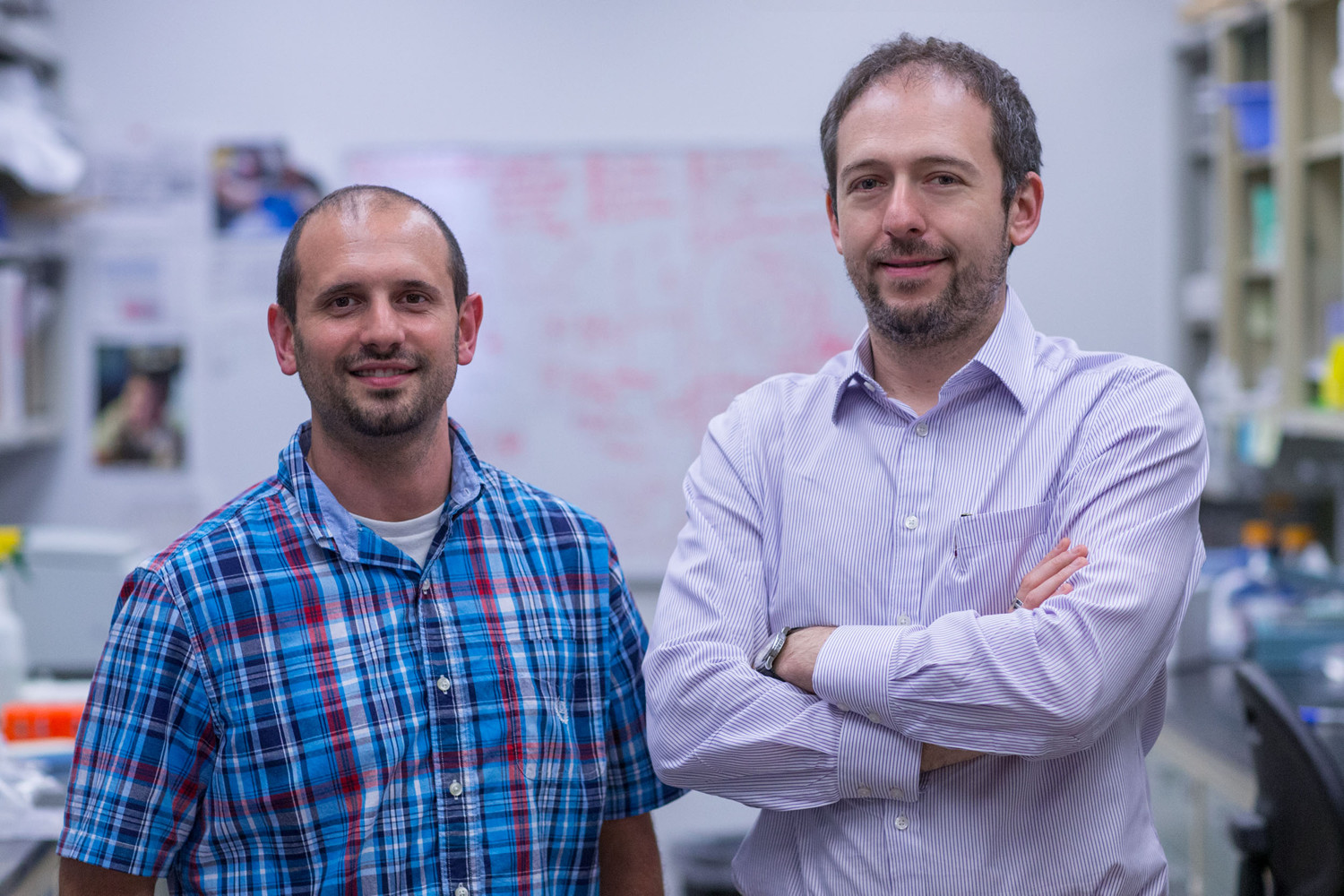
Postdoctoral researcher Anthony J. Filiano, left, and Jonathan Kipnis, chairman of UVA’s Department of Neuroscience. (Photo by Sanjay Suchak, University Communications)
“Immune molecules are actually defining how the brain is functioning. So, what is the overall impact of the immune system on our brain development and function?” Kipnis said. “I think the philosophical aspects of this work are very interesting, but it also has potentially very important clinical implications.”

Findings Published
Kipnis and his team worked closely with UVA’s Department of Pharmacology and with Vladimir Litvak’s research group at the University of Massachusetts Medical School. Litvak’s team developed a computational approach to investigate the complex dialogue between immune signaling and brain function in health and disease.

“Using this approach we predicted a role for interferon gamma, an important cytokine secreted by T lymphocytes, in promoting social brain functions,” Litvak said. “Our findings contribute to a deeper understanding of social dysfunction in neurological disorders, such as autism and schizophrenia, and may open new avenues for therapeutic approaches.”

The findings have been published online by the prestigious journal Nature. The article was written by Filiano, Yang Xu, Nicholas J. Tustison, Rachel L. Marsh, Wendy Baker, Igor Smirnov, Christopher C. Overall, Sachin P. Gadani, Stephen D. Turner, Zhiping Weng, Sayeda Najamussahar Peerzade, Hao Chen, Kevin S. Lee, Michael M. Scott, Mark P. Beenhakker, Litvak and Kipnis.

This work was supported by the National Institutes of Health (grants No. AG034113, NS081026 and T32-AI007496) and the Hartwell Foundation.

ORIGINAL: News UVA
Josh Barney, jdb9a@virginia.edu
July 13, 2016 


Add caption
Add caption
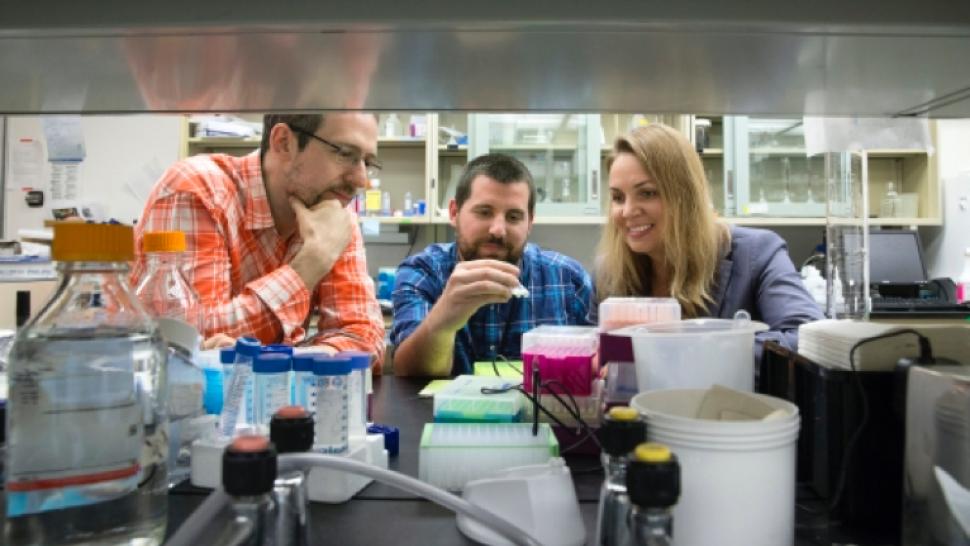
The discovery was made possible by the work of Antoine Louveau, a postdoctoral fellow in Kipnis’ lab. The vessels were detected after Louveau developed a method to mount a mouse’s meninges — the membranes covering the brain — on a single slide so that they could be examined as a whole. After noticing vessel-like patterns in the distribution of immune cells on his slides, he tested for lymphatic vessels and there they were. The impossible existed. “Live imaging of these vessels was crucial to demonstrate their function, and it would not be possible without collaboration with Tajie Harris,” Kipnis noted. Harris is an assistant professor of neuroscience and a member of the Center for Brain Immunology and Glia. Kipnis also saluted the “phenomenal” surgical skills of Igor Smirnov, a research associate in the Kipnis lab whose work was critical to the imaging success of the study.
Posted by Unknown at 12:23 0 comments
Enviar por correo electrónicoEscribe un blogCompartir en XCompartir con FacebookCompartir en Pinterest
Etiquetas: Autism-Spectrum Disorders, Brain, Discover, Immune System, Interaction, Interferon Gamma, Lynphatic Vessels, Neuroscience, Social Behavior, U of Virginia, UVA
Entradas antiguas Inicio
Suscribirse a: Entradas (Atom)

VANESSA RESTREPO SCHILD

VANESSA RESTREPO SCHILD
Co-founder and editor of Ciencia en Canoa

Buscar en este blog

Small Acts...

Small Acts...
Small acts, when multiplied by millions of people, can transform the world.

PeerJ

Cargando...

Greentech Media: Headlines

Cargando...

Most Recent

Random Posts


TOTAL DE GASES DE EFECTO INVERNADERO EN LA ATMÓSFERA EN TONELADAS MÉTRICAS

www.know-the-number.com

Our Climate is Changing!
Please download Flash Player.

@cienenca

Tweets by @cienenca

Cuántas personas han visitado la Página

Translate


¿Qué es CIENCIA en CANOA?

Ciencia en Canoa es un blog que comparte acontecimientos ambientales de alto impacto.

EVOLUCIÓN DEL CONCEPTO


2010 - 2011 Ciencia en Canoa inspirado en Ciencia en Bicicleta.

La bicicleta va por los pueblos, por las calles, repartiendo el conocimiento, llega a una región a la que no puede acceder porque hay agua en el medio, entonces se baja de la bicicleta y sigue viajando en la canoa por el agua repartiendo conocimiento en las comunidades más abandonadas.

Se usa el Pirarucú (Arapaima gigas) -un animal endémico de Colombia que habita en la selva del Amazonas y es cazado indiscriminadamente- como el símbolo de la canoa. El reconocimiento de la naturaleza como medio de transporte.


2012 Ciencia en Canoa inspirado en la expresión indígena.

Las bicicletas son metálicas, simbolizan la perpetuación de la industrialización en nuestros tiempos. El crecimiento población y la desbordante demanda de productos es la mayor preocupación de éste siglo que se enfrenta al aparente irreversible cambio climático y de allí donde surge la búsqueda por la preservación. Surgen palabras como biodegradable, autosostenible y ecoamigable como pilares para el desarrollo.

En una relación endosimbiotica sin nuestra especie estar dentro de otra o viceversa se crea esa conexión, ese aprendizaje del otro como fuente de ideas aquella similitud que nos permite construir con la esencia de nuestros cuerpos, que para aquellos que son vida están hechos de los mismos materiales.


VANESSA RESTREPO SCHILD
30/12/2011


Add to iGoogle
Follow @CienEnCa


This Week in Science - The Kickass Science Podcast

Cargando...

Archivo del blog

  • ▼  2019 (7)
    • ▼  noviembre (1)
      • The scientists who are creating a bio-internet of ...
    • ►  septiembre (3)
    • ►  febrero (1)
    • ►  enero (2)
  • ►  2018 (15)
    • ►  noviembre (1)
    • ►  agosto (9)
    • ►  mayo (3)
    • ►  enero (2)
  • ►  2017 (50)
    • ►  diciembre (4)
    • ►  noviembre (2)
    • ►  octubre (3)
    • ►  septiembre (2)
    • ►  agosto (1)
    • ►  junio (5)
    • ►  mayo (1)
    • ►  abril (4)
    • ►  marzo (11)
    • ►  febrero (12)
    • ►  enero (5)
  • ►  2016 (139)
    • ►  diciembre (1)
    • ►  noviembre (6)
    • ►  octubre (10)
    • ►  septiembre (19)
    • ►  agosto (2)
    • ►  julio (7)
    • ►  junio (27)
    • ►  mayo (16)
    • ►  abril (13)
    • ►  marzo (16)
    • ►  febrero (6)
    • ►  enero (16)
  • ►  2015 (296)
    • ►  diciembre (30)
    • ►  noviembre (25)
    • ►  octubre (12)
    • ►  septiembre (27)
    • ►  agosto (9)
    • ►  julio (32)
    • ►  junio (29)
    • ►  mayo (32)
    • ►  abril (25)
    • ►  marzo (43)
    • ►  febrero (16)
    • ►  enero (16)
  • ►  2014 (500)
    • ►  diciembre (27)
    • ►  noviembre (51)
    • ►  octubre (3)
    • ►  septiembre (17)
    • ►  agosto (31)
    • ►  julio (21)
    • ►  junio (14)
    • ►  mayo (17)
    • ►  abril (42)
    • ►  marzo (97)
    • ►  febrero (95)
    • ►  enero (85)
  • ►  2013 (997)
    • ►  diciembre (98)
    • ►  noviembre (35)
    • ►  octubre (13)
    • ►  septiembre (97)
    • ►  agosto (97)
    • ►  julio (117)
    • ►  junio (78)
    • ►  mayo (82)
    • ►  abril (93)
    • ►  marzo (107)
    • ►  febrero (90)
    • ►  enero (90)
  • ►  2012 (1461)
    • ►  diciembre (64)
    • ►  noviembre (71)
    • ►  octubre (133)
    • ►  septiembre (148)
    • ►  agosto (148)
    • ►  julio (170)
    • ►  junio (156)
    • ►  mayo (197)
    • ►  abril (140)
    • ►  marzo (126)
    • ►  febrero (48)
    • ►  enero (60)
  • ►  2011 (147)
    • ►  diciembre (16)
    • ►  noviembre (17)
    • ►  octubre (19)
    • ►  septiembre (12)
    • ►  agosto (16)
    • ►  julio (14)
    • ►  junio (15)
    • ►  mayo (9)
    • ►  abril (7)
    • ►  marzo (7)
    • ►  febrero (7)
    • ►  enero (8)
  • ►  2010 (25)
    • ►  diciembre (5)
    • ►  noviembre (8)
    • ►  octubre (12)

Entradas populares

  • Los ‘Steve Jobs’ criollos
  • Plants 'Talk' To Each Other Using Nanoscale Sound Waves To Help Them Grow, Study Suggests
  • Motor de Google Earth fue presentado en Cumbre Ambiental de Cancún
  • Devolver a la vida colores prehistóricos
  • 5 Ways to Make STEM More Exciting For Students
  • #BicisPorLaVida hoy 22 de septiembre
  • The scientists who are creating a bio-internet of things
  • How Fluorescence Works - The Science
  • Only for Children
  • UC Berkeley installing first CO2 sensor network in Oakland

Etiquetas

Colombia (330) Biodiversidad (236) Agua (229) Medio Ambiente (157) Biomimicry (154) Contaminación (152) Cambio Climático (133) Ciencia (128) Educación (128) Estados Unidos (117) Innovación (113) Investigación (109) Minería (106) ecosistema (106) Evolución (105) Salud (103) Biología (102) Medellín (99) MIT (95) Video (94) Cultura (93) Energía (92) Google (92) Océano (92) ADN (90) NASA (85) Física (83) Computación (82) Genética (82) Amazonía (74) Combustible Fósil (72) Bacteria (67) Calentamiento Global (66) IBM (63) Deforestación (62) Japón (62) Economía (61) Comportamiento (60) Conservación (59) Nanotecnología (59) Biotecnología (58) Emisiones de Carbono (58) Materiales (57) Tecnología (56) Brasil (54) Gobierno (54) Descubrimiento (52) Antioquia (50) Arte (50) modelo (50) Astronomía (48) Protección (48) Transporte (48) China (47) Inundación (47) TED (47) Agricultura (45) Emergencia (45) Urbanismo (45) Desplazamiento Indígena (44) Geología (42) Nanomaterial (41) Colciencias (39) Especie en vía de Extinción (39) Matemáticas (39) Genómica (37) Aves (36) Jóvenes (36) Sequía (36) Australia (35) Abejas (34) Ambiente (34) Bioinformática (34) Exploración (34) Hidroelectricidad (34) Parques Naturales (34) Química (34) Bioenergía (33) Imagen (33) Naturaleza (33) Riesgo (33) Canadá (32) Política (32) biocomputación (32) Ecología (31) Sostenible (31) Vanessa Restrepo Schild (31) Ártico (30) Alemania (29) Bogotá (28) microscopía (28) Aire (27) Oro (27) Libro (26) Suiza (26) Efecto Invernadero (25) Entrevista (25) U de A (25) Arquitectura (24) Planeación (24) Chile (23) Ecuador (23) Recursos (23) 2012 (22) Bosques (22) Mujer (22) Reciclaje (22) Visualización (22) Bosque Húmedo Tropical (21) Desarrollo (21) Hongos (21) Imágenes (21) ONU (21) Clima (20) Premio (20) Tierra (20) Antropología (19) México (19) Reserva Natural (19) Smart Grid (19) Africa (18) Fauna (18) Fotografía (18) Hábitat (18) Satélite (18) Sociedad (18) Laboratorio (17) Solar (17) Alteración Antropogénica (16) Hidrología (16) Ilegal (16) Impacto Ambiental (16) Invención (16) Legislación (16) Ley (16) Mar (16) Medios (16) Música (16) Opinión (16) Pesticidas (16) Tailandia (16) Mercurio (15) Parque Explora (15) Alimento (14) Conferencia (14) Paleontología (14) Polinización (14) Seguridad (14) 2011 (13) Ambiental (13) Carbón (13) Deshielo (13) Especies (13) Flores (13) Pacífico (13) Tortuga (13) Bioluminiscencia (12) Financiación (12) Mutación (12) Nivel del Mar (12) Nuclear (12) Planta (12) Antártica (11) Bosque Tropical (11) Congreso (11) Corrupción (11) Global (11) Incendio Forestal (11) Jardín Botánico (11) Reforestación (11) Suelos (11) Botánica (10) EPFL (10) Lluvia (10) Renovable (10) BBC (9) El Carro del Futuro (9) Endangered Species (9) Espacio (9) Naciones Unidas (9) Población (9) Sir David Attenborough (9) Caza (8) Consumo (8) EPM (8) Gases (8) Gorila (8) ISS (8) La Niña (8) Nueva Zelandia (8) Orgánica (8) Patente (8) Reglamentación (8) Autonomía (7) Carro Eléctrico (7) Filipinas (7) Flora (7) Social (7) Trabajo (7) ACAC (6) Estadística (6) Evento (6) Inundaciones (6) Personajes (6) Políticas (6) Presupuesto (6) 2010 (5) Agua Subterránea (5) Andrés Hurtado García (5) CIENCIA EN CANOA (5) Charles Darwin (5) Comunidad (5) Congo (5) Control (5) Feria Científica (5) Fósiles (5) Galápagos (5) IPCC (5) Manizales (5) Radiación (5) Respeto (5) Temperatura (5) Tiempo (5) crecimiento (5) fósil (5) árbol (5) Alcaldía (4) Capital de Riesgo (4) Cuenca Hidrográfica (4) Entomología (4) Habitat (4) Huracán (4) Mercado de carbono (4) Mosca (4) Mujeres Jóvenes Talento (4) Negocios (4) Ocean (4) Parásitos (4) Resultados (4) USA (4) CAR (3) Cesar (3) Ciencia En Los Barrios (3) Concurso Mujeres Jóvenes Talento (3) Contaminación Genética (3) David Attenborough (3) Ecoturismo (3) Emergencias (3) Guayacán (3) IDEAM (3) IEA (3) Investigación Espacial (3) Mono (3) Mundial (3) Parque Tayrona (3) Partículas (3) Pesca Ilegal (3) Pingüino (3) Ser Humano (3) Tornados (3) Vías (3) acuerdo (3) Administración (2) Agrocombustibles (2) Aleta (2) Arctic (2) Bonobo (2) Carnívora (2) Cautiverio (2) Centro América (2) Ciudades (2) Convenio Diversidad Biológica (2) Deslizamientos (2) Disciplina (2) Energía Química (2) Estabilidad (2) Extremo (2) Historia Natural (2) Holograma (2) Humedales (2) Ilustración (2) Imágen (2) Incendio (2) Informe (2) Intervención (2) Irregularidades (2) Logros (2) Mapas (2) Mejoramiento Genético de Alimentos (2) Modelo de Negocio (2) Pequeño (2) Puerto Rico (2) Ranas (2) Relatividad (2) Secretaría de la Mujer (2) Sistema (2) Sur Äfrica (2) Tornado (2) Unicelular (2) Video Game 3D (2) Vía Láctea (2) fractales (2) ojo (2) Albinismo (1) Altura Marina (1) Alvaro Cogoyo (1) BST (1) Bio 2030 (1) Biofelicidad (1) Bosque Seco Tropical (1) Campaign (1) Construcción ilegal (1) Corporación (1) Cundinamarca (1) Célular (1) Efecto Lock-in (1) Estados Unidos de América (1) Expouniversidad (1) Fosil Fuel (1) Gasoducto (1) Gen Hox (1) Herramienta (1) Humberto Maturana (1) Iberoamérica (1) Industria acuícola (1) Interactiva (1) Invernal (1) Isabelinismo (1) LSU (1) Laboratorios de Investigación y Desarrollo (1) Malpelo (1) Mascota (1) Mayas (1) Muros Verdes (1) Naciones Unidad (1) Nativas (1) Neutrinos (1) Normas (1) Nueva Guinea (1) Observaciones (1) Periodista (1) Petición (1) Pisos (1) Pluricelular (1) Pol'iticas (1) Precámbrico (1) Propiedad (1) Proridades (1) Reflexiones (1) Rio de Janeiro (1) Suramerica (1) Tormentas Eléctricas (1) Vertebrado (1) Virtual Reality (1) Vocaloid (1) confocal (1) África Oriental (1) Économía (1)

EcoEarth.Info Environment

Cargando...

Seguidores

Business

Flickr Widget

Recent

Comments

Popular Posts

  • Electric Eels Found To Leap Out Of Water To Shock Predators
    Electric Eels Found To Leap Out Of Water To Shock Predators
    Main image credit:  Josh More/Flickr CC BY-NC-ND 2.0 ELECTRIC EELS HAVE BEEN FOUND TO SHOW SHOCKING LEAPING BEHAVIOR. As if growing...
  • The olm: the blind cave salamander that lives to 100
    ORIGINAL: Discover Magazine The olm is a blind, cave-dwelling salamander, also called the proteus and the “human fish”, for its pale, ...
  • Smart Contact Lenses Will Give You Superhuman Vision
    LAS VEGAS — Your future contact lenses could give you superhuman vision. Just one year after eyewear startup Innovega announced a pro...
  • How to Make Moss Graffiti
    ORIGINAL: WikiHow Edited by Teresa and 19 others Moss graffiti, also called eco-graffiti or green graffiti , replaces spray p...
  • Lego-like modular components make building 3-D 'labs-on-a-chip' a snap
    Modular fluidic and instrumentation components developed by researchers at the University of Southern California Viterbi School of Engi...
  • The scientists who are creating a bio-internet of things
    The internet of things connects devices across the globe. Now researchers are considering how bacteria can join the network. by Emerging T...
  • Physicists confirm (what biologists have already konwn for years)  there's a second layer of information hidden in our DNA
    Physicists confirm (what biologists have already konwn for years) there's a second layer of information hidden in our DNA
    Liya Graphics/Shutterstock.com Theoretical physicists have confirmed that it's not just the information coded into our DNA that sh...
  • Luke Bawazer on Genetically Evolving Technology
    Luke Bawazer on Genetically Evolving Technology
    ORIGINAL: 33rd Square April 1, 2013  Synthetic Biology    Luke Bawazer 's research in synthetic biology aims to ...
  • Colombia Magia Salvaje
    Colombia Magia Salvaje
    Sinopsis Colombia Magia Salvaje es una aventura que llevará a los colombianos por paisajes inexplorados y a conocer especies enca...
  • Absurd Creature of the Week: 10-Foot Bobbit Worm Is the Ocean’s Most Disturbing Predator
    ORIGINAL: Wired By Matt Simon 09.06.13 Image: Wikimedia If I could go back to my childhood I would have never waited for rain...

RSS

Entradas
Atom
Entradas
Comentarios
Atom
Comentarios

Contact

Vanessa Restrepo Schild
Research Scientist

cienciaencanoa@gmail.com

Research Interests
Biochemistry and Physiology

FB:
http://www.facebook.com/pages/Ciencia-en-canoa/168229513187101
Copyright © Ciencia en Canoa created by Vanessa Restrepo Schild & Hugo Angel. Imágenes del tema: Storman. Con la tecnología de Blogger.