Mostrando entradas con la etiqueta 3D Printing. Mostrar todas las entradas

miércoles, 15 de marzo de 2017

Squishy Clockwork Biobot Could Dose You With Drugs From the Inside

Photo: Sau Yin Chin. Soft and 3D-printed micromachines can be implanted in the body to deliver doses of a chemo drug.

When Swiss watchmakers invented the Geneva drive, a two-geared mechanism that produces precise ticks forward, they probably never imagined that bioengineers would one day craft a 15-millimeter version out of squishy hydrogel. But then, they weren’t trying to make a biocompatible micromachine that could be implanted in the body to deliver doses of drugs.

This strange new biobot comes from the lab of Samuel Sia, a professor of biomedical engineering at Columbia University, in New York City. It uses neither battery nor wires, and can be controlled from outside the body to deliver a dose on command. It’s a gadget well suited for this new era of personalized medicine, Sia tells IEEE Spectrum. “Doctors want to see how the patient is doing and then modify the therapy accordingly,” he says.

He has already tested the gizmo in lab mice with bone cancer, with exciting results that were published today in the journal Science Robotics. More on that experiment later.
Photos: Sau Yin Chin The researchers constructed their Geneva device layer by layer, in a process that took about 30 minutes.
Sia’s team first had to invent a type of 3D printing to fabricate their tiny Geneva drive and several other soft micromachines. They came up with a fabricator that lays down layers of a hydrogel to produce rubbery solid shapes. While human hands are required to put the pieces together, Sia says those assembly steps could be automated. And it’s pretty quick, as is: The whole process of printing and assembling one Geneva drive takes less than 30 minutes. Today’s typical 3D printers would take several hours to construct a similar device, Sia says, and most can’t handle soft materials like hydrogel.

Here’s the part that runs like clockwork! The squishy Geneva drive clicks forward when an external magnet moves a simple gear, which is just a rubbery piece with embedded iron nanoparticles (the black curved piece in the video below). With each click, one of six chambers lines up with a hole and a dose of medicine flows out. In the video, a magnet (the silver disk) keeps the device running continuously to demonstrate the mechanism, but in clinical use, a doctor could apply a magnet only when a dose is required.


You may be wondering: Could someone’s implanted micromachine be triggered accidentally by an external magnet or by a malicious person with fiendish magnetic powers? In other words, is the X-Men’s Magneto a risk factor? “Somebody walking by with a magnet won’t trigger it, but there are some cases where it’s not ideal,” Sia says. His lab is working on other ways to wirelessly drive the mechanism, including an ultrasound technique.

The hardest part of the design process was getting the material right, Sia says. Very flexible and soft materials are compatible with the body’s soft innards, unlike rigid silicon or metal devices. “But if your material is collapsing like jello, it’s hard to make robots out of it,” he says. “It has to be stiff enough to work like a tiny implantable machine.”
Image: Sau Yin Chin The pieces of the Geneva device were each printed in soft hydrogel.

The next step was in vivo.
Sia’s team wanted to see if their devices would work inside the body, with all the complications of chemistry and anatomy. Some mice with bone cancer received implanted devices that were loaded up with a chemo drug; other mice received typical chemotherapy, which floods the whole body with a toxic drug. When the team compared the effects of the device’s localized and periodic delivery of the drug to those of the typical treatment, the results were impressive. The bionic mice’s tumors grew slower, more tumor cells died off, and fewer cells elsewhere in the body suffered peripheral damage.
Photos: Sau Yin Chin Fluorescent imaging shows a chemo-delivering device inside a lab mouse.
The clinical possibilities seem obvious—oncologists could deliver more targeted and concentrated doses of powerful chemo drugs, and Sia imagines other uses, like regulating the release of hormones. But the drug delivery device is really just a proof of concept, he says. He’s not rushing out to form a startup: “We have to do the cost-benefit analysis to see if this is really a commercializable device,” he says.

He is bullish, however, on the medical potential of tiny squishy robots in general. Soft and mobile little bots could one day act as internal repair crews, doing a doctor’s work from the inside. (For more on this, check out IEEE Spectrum’s article on medical microbots.) Sia says his fabrication platform is capable of turning out a wide variety of devices. “I’m confident that we’ll find something useful,” he says.

Sia won’t say exactly what types of devices his lab is now experimenting with, except to say that they’re looking at implanted devices that move. Here’s my guess: It’s a tiny squishy micromachine that resembles a cuckoo clock.

ORIGINAL: IEEE Spectrum
By Eliza Strickland
4 Jan 2017

viernes, 8 de abril de 2016

Next Rembrandt

01 GATHERING THE DATA
To distill the artistic DNA of Rembrandt, an extensive database of his paintings was built and analyzed, pixel by pixel.

FUN FACT:
150 Gigabytes of digitally rendered graphics

BUILDING AN EXTENSIVE POOL OF DATA
t’s been almost four centuries since the world lost the talent of one its most influential classical painters, Rembrandt van Rijn. To bring him back, we distilled the artistic DNA from his work and used it to create The Next Rembrandt.

We examined the entire collection of Rembrandt’s work, studying the contents of his paintings pixel by pixel. To get this data, we analyzed a broad range of materials like high resolution 3D scans and digital files, which were upscaled by deep learning algorithms to maximize resolution and quality. This extensive database was then used as the foundation for creating The Next Rembrandt.

“Data is used by many people today to help them be more efficient and knowledgeable about their daily work, and about the decisions they need to make. But in this project it’s also used to make life itself more beautiful. It really touches the human soul.”
– Ron Augustus, Microsoft

02 DETERMINING THE SUBJECT
Data from Rembrandt’s body of work showed the way to the subject of the new painting.

FUN FACT:
346 Paintings were studied


DELVING INTO REMBRANDT VAN RIJN
  • 49% FEMALE
  • 51% MALE
Throughout his life, Rembrandt painted a great number of self-portraits, commissioned portraits and group shots, Biblical scenes, and even a few landscapes. He’s known for painting brutally honest and unforgiving portrayals of his subjects, utilizing a limited color palette for facial emphasis, and innovating the use of light and shadows.

“There’s a lot of Rembrandt data available — you have this enormous amount of technical data from all these paintings from various collections. And can we actually create something out of it that looks like Rembrandt? That’s an appealing question.”
- Joris Dik, Technical University Delft
BREAKING DOWN THE DEMOGRAPHICS IN REMBRANDT’S WORK
To create new artwork using data from Rembrandt’s paintings, we had to maximize the data pool from which to pull information. Because he painted more portraits than any other subject, we narrowed down our exploration to these paintings.

Then we found the period in which the majority of these paintings were created: between 1632 and 1642. Next, we defined the demographic segmentation of the people in these works and saw which elements occurred in the largest sample of paintings. We funneled down that selection starting with gender and then went on to analyze everything from age and head direction, to the amount of facial hair present.

After studying the demographics, the data lead us to a conclusive subject: a portrait of a Caucasian male with facial hair, between the ages of thirty and forty, wearing black clothes with a white collar and a hat, facing to the right.

03 GENERATING THE FEATURES
A software system was designed to understand Rembrandt’s style and generate new features.

FUN FACT:
500+ Hours of rendering

MASTERING THE STYLE OF REMBRANDT
In creating the new painting, it was imperative to stay accurate to Rembrandt’s unique style. As “The Master of Light and Shadow,” Rembrandt relied on his innovative use of lighting to shape the features in his paintings. By using very concentrated light sources, he essentially created a “spotlight effect” that gave great attention to the lit elements and left the rest of the painting shrouded in shadows. This resulted in some of the features being very sharp and in focus and others becoming soft and almost blurry, an effect that had to be replicated in the new artwork.

“When you want to make a new painting you have some idea of how it’s going to look. But in our case we started from basically nothing — we had to create a whole painting using just data from Rembrandt’s paintings.”
- Ben Haanstra, Developer
GENERATING FEATURES BASED ON DATA
To master his style, we designed a software system that could understand Rembrandt based on his use of geometry, composition, and painting materials. A facial recognition algorithm identified and classified the most typical geometric patterns used by Rembrandt to paint human features. It then used the learned principles to replicate the style and generate new facial features for our painting.

CONSTRUCTING A FACE OUT OF THE NEW FEATURES
Once we generated the individual features, we had to assemble them into a fully formed face and bust according to Rembrandt’s use of proportions. An algorithm measured the distances between the facial features in Rembrandt’s paintings and calculated them based on percentages. Next, the features were transformed, rotated, and scaled, then accurately placed within the frame of the face. Finally, we rendered the light based on gathered data in order to cast authentic shadows on each feature.


04 BRINGING IT TO LIFE
CREATING ACCURATE DEPTH AND TEXTURE

Analyses
We now had a digital file true to Rembrandt’s style in content, shapes, and lighting. But paintings aren’t just 2D — they have a remarkable three-dimensionality that comes from brushstrokes and layers of paint. To recreate this texture, we had to study 3D scans of Rembrandt’s paintings and analyze the intricate layers on top of the canvas.


“We looked at a number of Rembrandt paintings, and we scanned their surface texture, their elemental composition, and what kinds of pigments were used. That’s the kind of information you need if you want to generate a painting by Rembrandt virtually.”
- Joris Dik, Technical University Delft
USING A HEIGHT MAP TO PRINT IN 3D
We created a height map using two different algorithms that found texture patterns of canvas surfaces and layers of paint. That information was transformed into height data, allowing us to mimic the brushstrokes used by Rembrandt.

We then used an elevated printing technique on a 3D printer that output multiple layers of paint-based UV ink. The final height map determined how much ink was released onto the canvas during each layer of the printing process. In the end, we printed thirteen layers of ink, one on top of the other, to create a painting texture true to Rembrandt’s style.


ORIGINAL: Next Rembrandt

miércoles, 1 de julio de 2015

A 3D Printhead with Single Atom Precision? Enter the Nanobeacon

John Bashonger has tipped us off to a possible precursor for an “atomic precision” 3D printhead where the interaction of tailored light with a single atom and individual nanostructures combine to create remarkably accurate results.

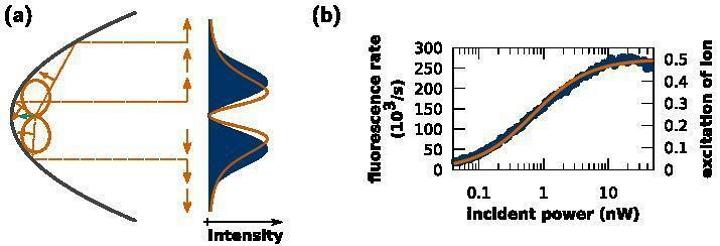
At the Max Planck Institute for the Science of Light, this approach is utilized to couple light to a single atom, or for that matter, to individual nano-particles. The research demonstrates that light can be coupled to an ion trapped within a parabolic mirror, and the upshot is a high efficiency, optimized polarized beam.


Dr. Gerd Leuchs
The researchers, led by Dr. Gerd Leuchs, say that as individual atoms, ions and molecules form the basic building blocks of matter, our perception of the tangible materials formed from such building blocks through their interaction with light is key to our ability to manipulate them.

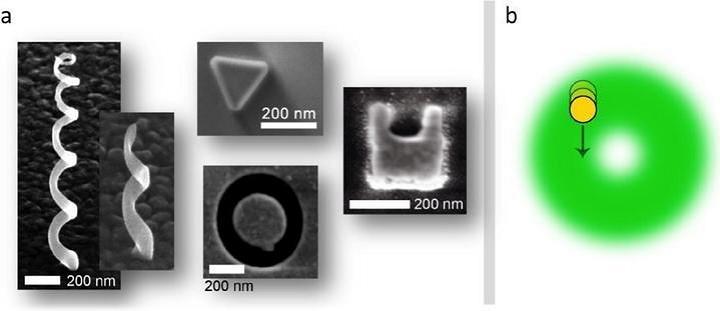
Complex objects such as nanostructures can be built and manipulated by understanding specific interactions they have with a light field. The manipulations may well prove to serve as the basis for potential applications in biophysics or quantum information processing, and the individual nanostructures themselves may serve as “building blocks” to create metamaterials.

The process involves the creation of radially polarized light which is acutely focused. This incoming beam, which features a cylindrical symmetry, tracks across a path incident from right to left onto a lens. The focusing rotates the individual electric field vectors towards the optical axis, and they then interfere within the focal point to create an electric field component which oscillates along the optical axis.
The result is a tailored light where the precise shaping of the temporal and spatial distribution of the intensity of the light – and the polarization vector or direction of oscillation of the electric field – can then be concentrated to dimensions smaller than the wavelength of the light when focused onto a target object.

A radially polarized ring is focused with a parabolic mirror, and in this experiment, the researchers generated the tailored, radially polarized mode to an ideal field distribution down to 98%.

The work uses a “singly charged ytterbium ion” as the atom, and the ions can be accurately positioned, and even “trapped” for varying periods using an electrode arrangement and an applied AC voltage. An ion trap was developed to the parabolic mirror geometry which effectively shadows the ion from the focused light with minimal interference.

MPI says the methodology has been successfully applied to the investigation of numerous nanostructures and nanoscopic objects to create metamaterials of extraordinary properties
.

What it might mean is that, by “holding” a single atom with laser beams, it may well be possible to build a 3D printhead with singular atomic precision.

With the aid of artificial materials, light can be guided around objects and reflections can be suppressed to form a “nanobeacon.” The researchers say such light sources pave the way for high-precision control of light propagation in a range of optical networks.

Do you forsee a coming say when 3D printers which feature precision down to the level of a single atom could be created using this nanobeacon technology? Let us know in the Nanobeacon forum thread on 3DPB.com.


ORIGINAL: 3DPrint
July 1, 2015

martes, 17 de marzo de 2015

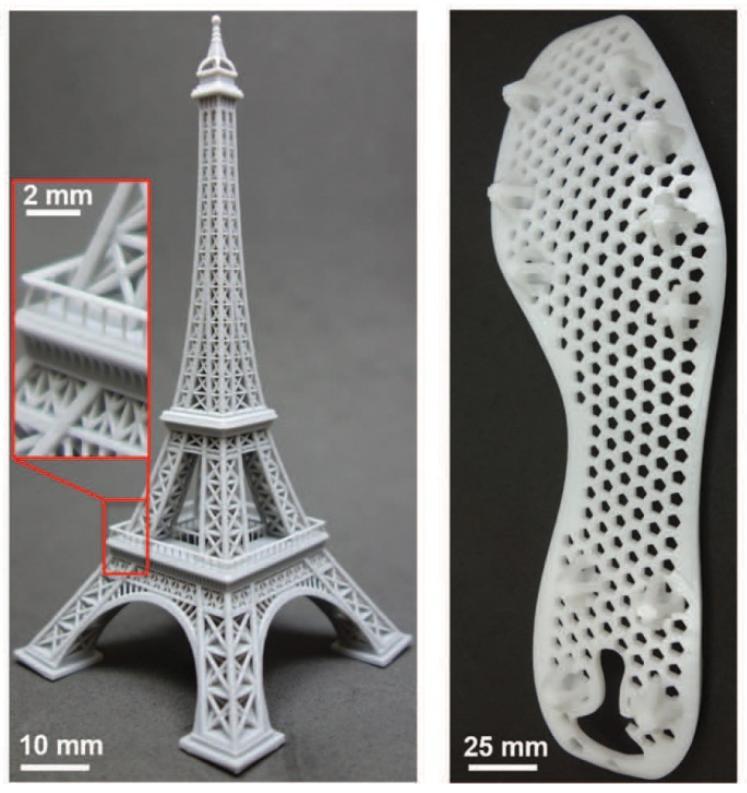
Carbon3D Unveils Breakthrough CLIP 3D Printing Technology, 25-100X Faster


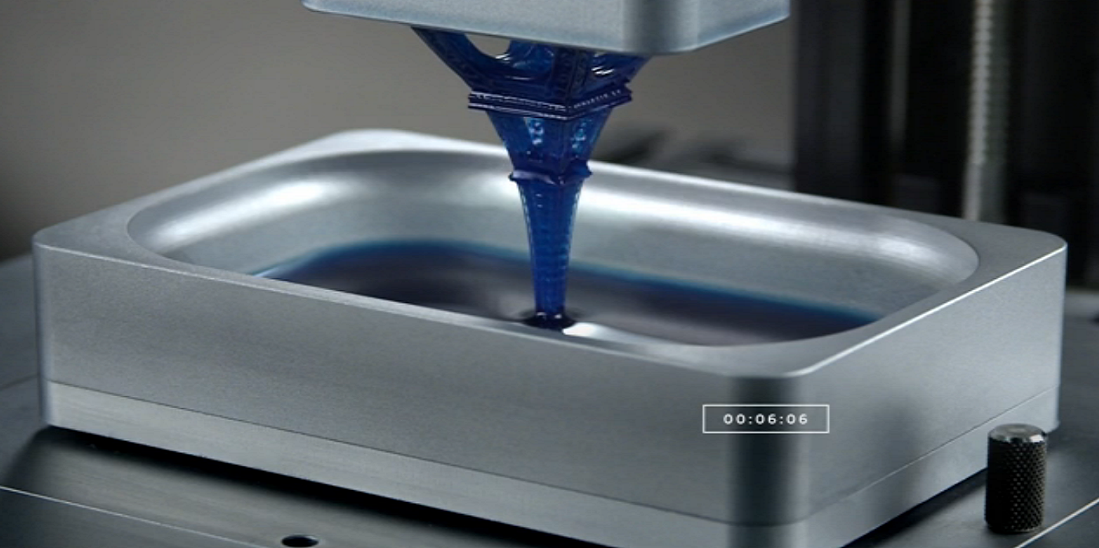
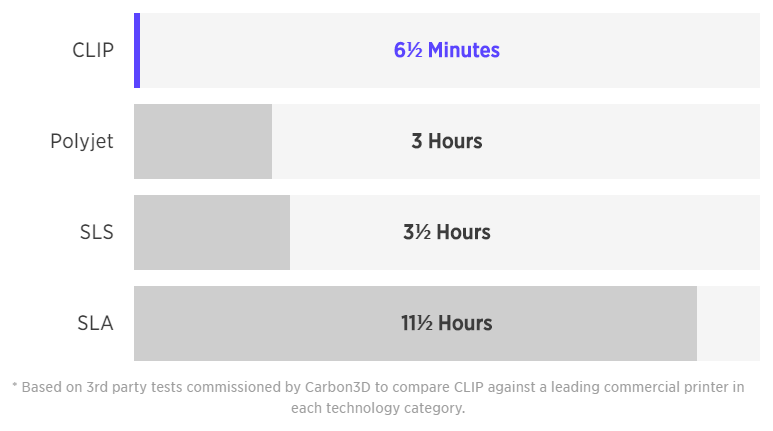
In what may be one of the biggest stories we have covered this year, a new company, Carbon3D has just emerged out of stealth mode, unveiling an entirely new breakthrough 3D printing process, which is anywhere between 25 and 100 times faster than what’s available on the market today.

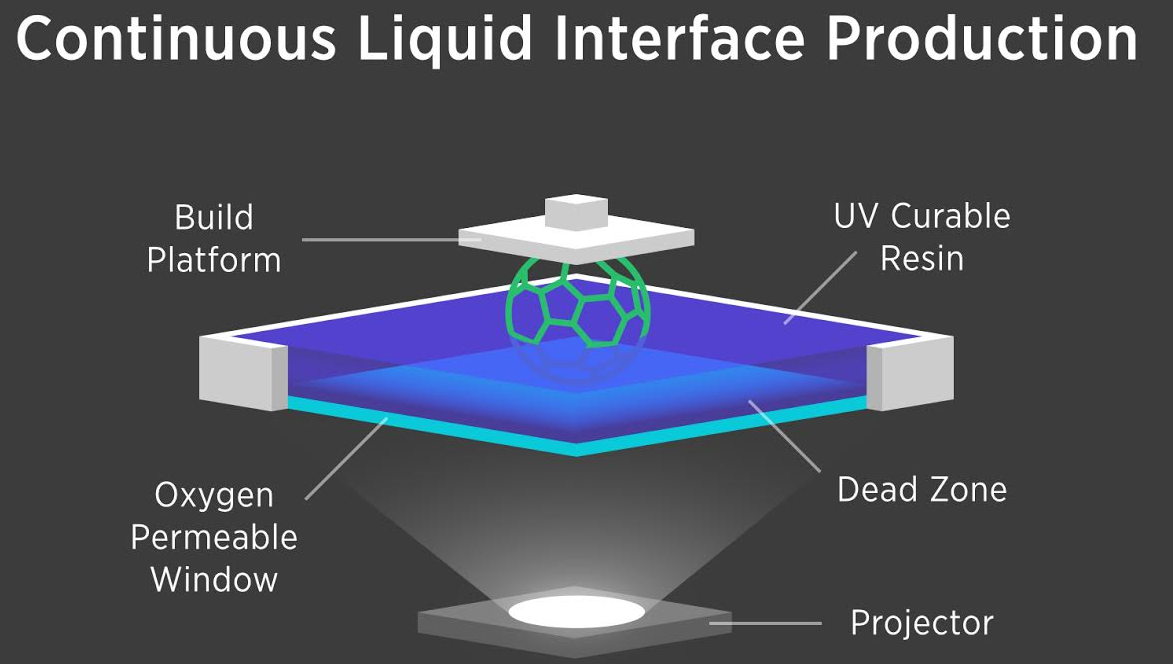
The privately-held Redwood City, California-based company, Carbon3D, was founded in 2013, and since then has been secretly perfecting a new 3D printing technology which promises to change the industry forever. The technology that the company calls Continuous Liquid Interface Production technology (CLIP) works by harnessing the power of light and oxygen to cure a photosensitive resin. Sounds an awful lot like Stereolithography (SLA) technology, doesn’t it? While it uses principles we see within a typical SLA process, where a laser or projector cures a photosensitive resin, Carbon3D’s CLIP process strays greatly from the technology that we are all used to seeing.

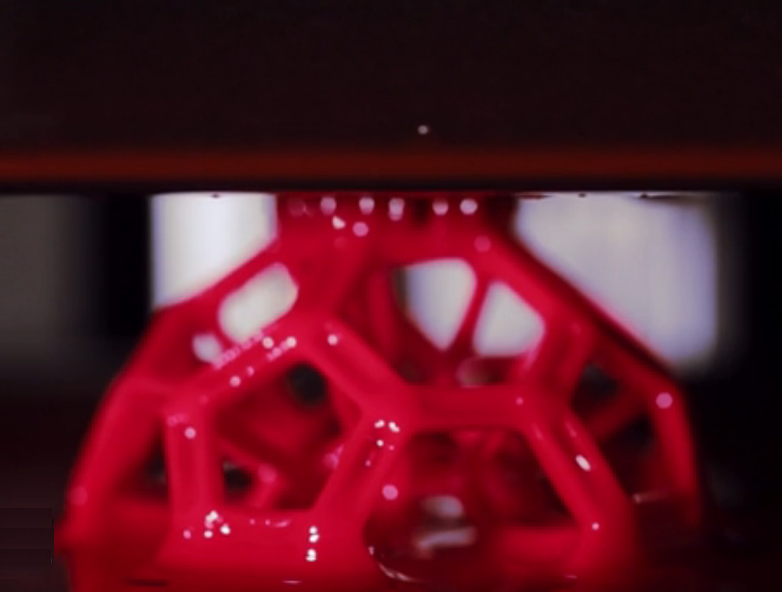
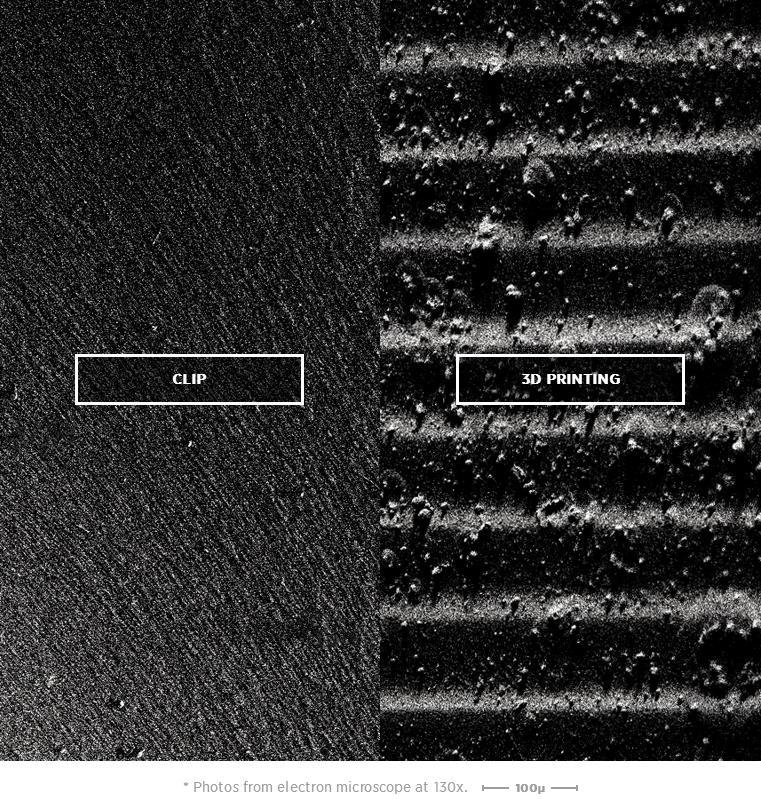
Instead of printing an object layer-by-layer, which leads to incredibly slow speeds as well as a weak overall structure similar to that of shale, this new process harnesses 

  • light as a way to cure the resin, and 
  • oxygen as an inhibiting agent, to print in true 3-dimensional fashion.

“Current 3D printing technology has failed to deliver on its promise to revolutionize manufacturing,” said Dr. Joseph DeSimone, CEO and Co-Founder, Carbon3D. “Our CLIP technology offers 

  • the game-changing speed, 
  • consistent mechanical properties and 
  • choice of materials required for complex commercial quality parts.”
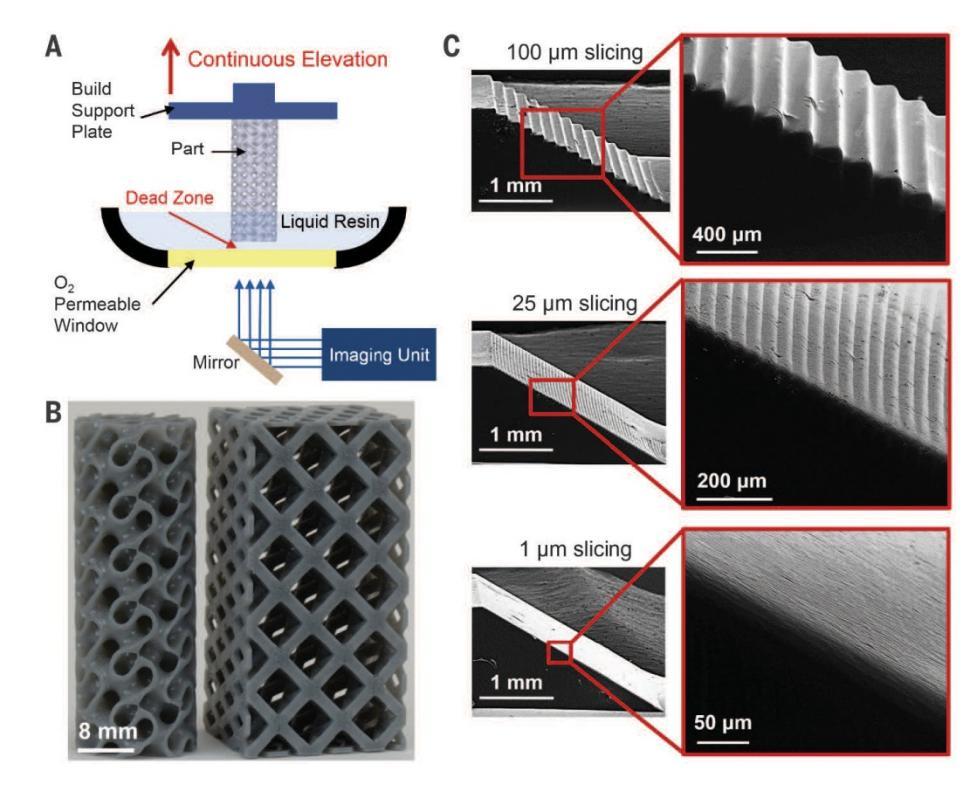
By bringing oxygen into the equation, a traditionally mechanical technique for 3D printing suddenly becomes a tunable photochemical process which rapidly decreases production times, removes the layering effect, and provides a technology which may just take 3D printing to the next level. The CLIP process relies on a special transparent and permeable window which allows both light and oxygen to get through. Think of it as a large contact lens. The machine then is able to control the exact amount of oxygen and when that oxygen is permitted into the resin pool. The oxygen thus acts to inhibit the resin from curing in certain areas as the light cures those areas not exposed to the oxygen. Thus the oxygen is able to create a ‘dead zone’ within the resin which is as small as tens of microns thick (about the diameter of 2-3 red blood cells). In this subsection of the resin, it is literally impossible for photopolymerization to take place. The machine will then produce a series of cross sectional images using UV light in a fashion similar to playing a movie.


For those of you who are thinking right now, “This company must be a fluke. After all, how could they have created such a breakthrough 3D printing technique but we’ve yet to hear a peep from them,” the next tidbit of information will certainly diminish your doubts.

Carbon3D has managed to partner with Sequoia Capital, one of the oldest and most successful venture capital firms on the planet, to lead their Series A round of financing in 2013, and with Silver Lake Kraftwerk for their Series B round. In total, they have raised $41 million to date, all practically under the radar.


“If 3D printing hopes to break out of the prototyping niche it has been trapped in for decades, we need to find a disruptive technology that attacks the problem from a fresh perspective and addresses 3D printing’s fundamental weaknesses,” said Jim Goetz, Carbon3D board member and Sequoia partner. “When we met Joe and saw what his team had invented, it was immediately clear to us that 3D printing would never be the same.”

The CLIP process was originally developed by the company’s CEO, Joseph DeSimone, along with his colleagues Professor Edward Samulski, and Dr. Alex Ermoshkin. It’s going to be very interesting to see just how this technology ultimately plays out, and when it may come to market. Now that the company is out of stealth mode, will the larger players within the space try acquiring them? Let’s hear your thoughts on this breaking story in the Carbon3D forum thread on 3DPB.com

(image source: sciencemag.org)

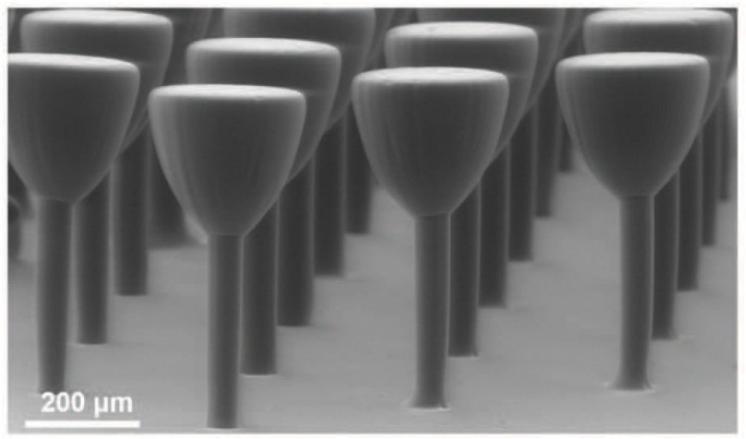
(image source: sciencemag.org)

clip6

ORIGINAL: 3D Print
BY BRIAN KRASSENSTEIN
MARCH 16, 2015