Mostrando entradas con la etiqueta TV. Mostrar todas las entradas

viernes, 21 de marzo de 2014

El Nuevo Cosmos

"Acabo de disfrutar el estreno mundial de la serie de ciencia más esperada de los últimos años: Cosmos, una Odisea en el Espacio-Tiempo.  Mi veredicto: ¡fantástica!  Aunque como dicen por ahí un hombre no se baña dos veces en el mismo río y este hombre se ha bañado más de ~10,000 veces desde que disfrutó por primera vez la Cosmos de Sagan, puedo asegurar que la joya de la divulgación científica de los años 80, ha vuelto a la vida"

“Solo un gran documental puede contener tan buenas ideas. La mejor del estreno del nuevo #Cosmos: todos somos descendientes de Astrónomos“
Marzo 11 de 2014
http://bit.ly/trino-estreno-cosmos

cosmos_logo.jpg.CROP.original-original

¿Qué hace a una serie documental una gran serie?  ¿qué hace al nuevo Cosmos tan bueno como el Cosmos de Sagan? Aunque muchos (o tal vez pocos, es mi esperanza) pueden pensar que mi emoción es desmedida y que el Nuevo Cosmos es tan solo una versión con mejores efectos especiales y un poco más personal que otras series científicas de nuestro tiempo, quiero presentarles aquí algunos argumentos para proponerles que declaremos oficialmente el renacer del Cosmos de Sagan.  Si sueno muy emocional es porque tanto mi razón como mis más profundos sentimientos sobre la ciencia están íntimamente vinculados con esta serie.  Hoy, sentimientos similares afloraron mientras disfrutaba del que para mí fue simplemente el capítulo 14 de Cosmos, congelado en el tiempo por casi 20 años como si esperará los adelantos científicos y tecnológicos de nuestro tiempo.
¿Cuál es entonces la receta para crear un buen documental de ciencia y que los productores del nuevo Cosmos lograron conservar por más de 20 años para producir de nuevo este tesoro? 

El primero, nuevamente, es Sagan.  Muy a pesar de haber muerto hace poco menos de 20 años, el fantasma del creador de la serie sigue ahí e incluso se nos aparece en uno de los momentos más emotivos de este capítulo 14.  No en persona sino en una vieja agenda que conserva intacto el nombre del nuevo presentador, al que conoció cuando este último tenía apenas 17 años.  Se nos aparece en un acantilado, el acantilado en el que comenzó el viaje de la nave de la imaginación en 1986.  Esta vez personificado como otro astrónomo.  Uno como él y que en esa carrera de obstáculos que llamamos la ciencia, le recibe el testigo.  Se nos aparece en una voz en “off” que repite una de las frases más contundentes de toda la serie, “Somos el medio para que el cosmos se conozca a sí mismo”.

En síntesis, una gran serie documental, es también una gran personalidad científica.  Sagan, deGrasse Tyson y no Tom Selleck  o Morgan Freeman.

El segundo elemento que hace a la nueva Cosmos tan buena como la Cosmos de Sagan es que te sorprende con lo inesperado.  En el momento en el que te podrían simplemente soltar un dato más, algo que podrías encontrar en una enciclopedia o en un libro de texto, te deja caer una variación de algo que ya sabías y que simplemente no habías pensado de esa manera.  Si bien para personas distintas el dato más impactante de un capítulo en una serie como esta puede variar, para mí el de este estreno fue uno solo: todos somos, de alguna manera, descendientes de astrónomos;  la astronomía estuvo de una manera u otra vinculada con nuestra supervivencia cuando comenzaba nuestro periplo en este planeta.  ¡Fantástico! Ese es el Cosmos que me conecto con la ciencia en los años 80. 

El tercer elemento es hacerlo personal.  Los seres humanos vibramos con todo lo que implique a otros seres humanos.  Una cosa es explicar lo que le pasa a un asteroide cuando cae en un agujero negro y otra es contar la misma historia pero con un astronauta de carne y hueso como protagonista. En Cosmos, el viaje es personal, como rezaba el título de la que ahora llamaremos la primera era de la serie.  Y es personal porque todo en la ciencia lo es.  Por encima de todas las cosas, la ciencia es un proyecto cultural y social.  Creado y sostenido por series humanos.  Un viaje de descubrimiento y uno muy largo en el que aún la muerte de los viajeros es un evento más que no puede ser motivo para detenerse.
En este capítulo de estreno nos encontramos con los sueños personales de un hombre completamente chiflado: Giordano Bruno.  Después del capítulo de hoy ya no sé si admirarlo o gritar a voz en cuello que fue el chiflado más recordado de todos los tiempos.  Les confieso que yo podría estar perfectamente entre los que le tiraban tomates en ese auditorio en Inglaterra.  ¿Cuantos Brunos habrán por ahí? ¿cuánto tiempo tardaremos en saber que estaban en lo cierto? ¿10 años? ¿1,000 años?

El cuarto elemento de una gran serie científica es que te hable en un lenguaje en el que todos podamos entender.  Me sorprendió poderosamente el lenguaje claro y preciso de la nueva Cosmos.  El mismo lenguaje que utilizaba Sagan y que hoy le vale toda la admiración de la comunidad divulgativa internacional.  En esto los creadores de la nueva Cosmos se lucieron y debo confesar que a pesar de mis temores, sé que este logro puede ser en gran medida obra del mismo DeGrasse Tyson.

Me quito el sombrero ante este digno continuador de la Saga Sagan.
El uso de un lenguaje sencillo tiene que ir acompañado de analogías, herramientas didácticas o visuales sencillas también.  El Calendario Cósmico es la mejor de todas.  ¿Quién no tiene claro que marzo es muy temprano y noviembre bastante tarde? Una invención original de Sagan vuelve a la vida magistralmente ilustrada por las herramientas que él lamentablemente no vería en vida.  Como en la vida, Enero coincide con el período de “oscuridad” más profundo de todo el año: todo esta por hacerse, todo se esta cocinando en silencio.  La Galaxia cumpleaños en marzo, claro en el marzo del calendario cósmico.  El Sol llega tarde.  Hay que esperar las vacaciones de fin de año para que el Universo haya cocinado los elementos químicos que se apilaran como basura a su alrededor y crearán a la Tierra apenas hasta el mes de agosto.  La vida es una invención  del cálido septiembre cuando “prácticamente” el año se acabo.  Las flores llegan como una broma el 28 de diciembre.  Y todo lo que ha sido la miserable (en términos cósmicos) historia de la humanidad, se reduce a un “faltan 12 (segundos) pa’las 12, el año va terminar“.
En esta escala solo falto un evento importante: Cosmos, el nuevo Cosmos, se estrenó 6 centésimas de segundo después de la media noche del primero de enero del calendario cósmico creado por el mismo Sagan en 1986.
carl_sagan_cosmic_calendar

ORIGINAL: Trinoceronte
Por Jorge Zuluaga

lunes, 10 de marzo de 2014

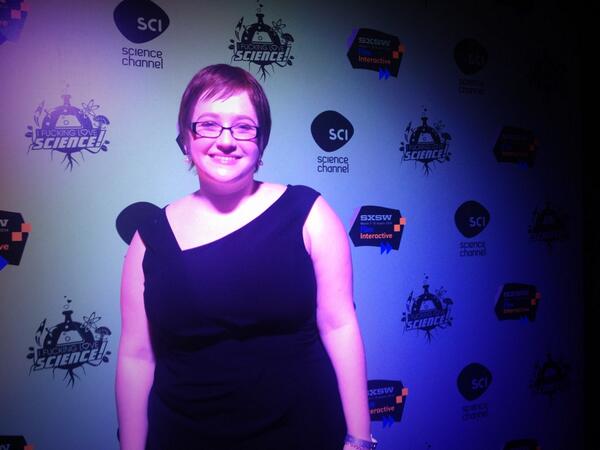
The ‘I F—ing Love Science’ Facebook Page Is Becoming a TV Show


Michael Tullberg—Getty Images
Late Late Show host Craig Ferguson will act as executive producer of Science Channel show


The wildly popular “I F—ing Love Science” Facebook page—which has amassed more than 10 million fans—will soon become a television show.

The new Science Channel series will be executive-produced by Late Late Show host Craig Ferguson, who made the announcement with a videotaped message at the South by Southwest festival in Austin Saturday, Deadline reports.

British biology student Elise Andrew created the page in March 2012, posting any science-related photos, articles, diagrams or comics that she found interesting. Two years later, the page is still gaining new followers every day. Andrew is on board as a consulting producer for the show.

The one-hour program, debuting later this year, will feature a mix of live-action, animation, and recreations, with appearances by celebrities and scientists. And why is Ferguson exec-producing? He explained in his statement:

If you know anything about me, you know I love science. Science has a naughty secret – it’s that all things are connected. And this show is going to explore the randomness of science. Think of it as a late night Google search that goes a hundred pages deep until things get weird – and then you just keep going. And there is no better partner for this kind of smart entertainment like Science Channel and Elise.

ORIGINAL: Time
By Samantha Grossman @sam_grossman
March 9, 2014

viernes, 7 de marzo de 2014

Neil deGrasse Tyson on Why Cosmos Will Be Better Than Ever


Astrophysicist Neil deGrasse Tyson will host the new Fox series Cosmos: A Space-Time Odyssey, blasting off in March. Peter Yang

Before Carl Sagan, science and TV didn’t get along too well. Then, in 1980, the man in the turtleneck blew our minds with his PBS miniseries, Cosmos. Sagan took a nar­rative approach to science, inviting viewers to explore the universe and discover their own place in it. Thirty-four years later, the sequel has finally arrived: Hosted by astrophysicist Neil deGrasse Tyson, Cosmos: A Space-Time Odyssey hits Fox in March. It’s far from Tyson’s only gig; while nominally the director of the Hayden Planetarium at New York’s American Museum of Natural History, he has become our most visible champion of science, thanks to numerous appearances on The Colbert Report and shenanigans like his (viral) Twitter fact-checking of the movie Gravity. Sagan may be busy somewhere among the heavens’ billions and billions of stars, but Tyson talked with WIRED about inheriting the man’s mantle, what the new Cosmos hopes to teach us, and the future of science and education in the US.


You’ve spent the past year working on Cosmos: A Space-Time Odyssey. You’re no stranger to television, but this is the first time you’ve been involved in a project of this magnitude.
It was a surreal experience for me as an academic. Everything about it was novel. Everything. A particular pleasure was working with people who felt strongly about Cosmos at a time when the country most needs an injection of science literacy. I don’t know if love overstates it, but people came to the project with a commitment to making something bigger than all of us.

The first series was associated very closely with Carl Sagan.

As a matter of fact, it was subtitled “A Personal Voyage.”

How do you build on Sagan’s legacy, then, without letting your series be defined by it?
Well, it depends on how you think of the old Cosmos. If you think of it as “the Carl Sagan show,” then it can’t be redone with anyone else. But if it’s “Carl Sagan presenting the universe,” and the universe is the subject and he’s your guide, then it works just fine—and that’s how we’re proceeding.


What are some differences we can expect to see?
We have a cinematic dimension this time: People working on the show have brought tools from cinema and are applying them to tell the story of the universe. Think about how potent and powerful things like camera angles and scene development are. In a stereotypical documentary, somebody sets up a camera and somebody walks in front of the camera and just talks to you, and then you go to some other thing and then you come back. With this, I think, the viewer will walk away with a much more complete encounter.

How has the current climate around science in the US informed the new series?
Cosmos was conceived and filmed in the midst of the Cold War. The exploration of the solar system was still considered an odd thing that, maybe, if you had no other problems in the world, you might undertake. Then Cosmos airs in 1980, and its entire mission statement is all about a cosmic perspective, understanding things on the largest scale possible. Today there’s the issue of what we are doing as a species to the environment on a global scale. The environmental movement really started out at a very local level.

Cosmos: A Space-Time Odyssey features a “cosmic calendar” that helps viewers make sense of the universe’s vast history.  Courtesy of Fox


That all changed when photos from Apollo 8 showed Earth as an object in space.
As Sagan is famous for saying, “Molecules don’t have passports.” The idea that your influence on a local environment has global consequences is something I don’t think we could’ve arrived at were it not for Apollo 8. Climate change has influenced the modern Cosmos in the way nuclear proliferation influenced the previous one.

In addition, at least in America, science has been treated sort of cavalierly, not only by the public but also by government. The idea that science is just some luxury that you’ll get around to if you can afford it is regressive to any future a country might dream for itself. Innovations in science and technology are the engines of the 21st-century economy; if you care about the wealth and health of your nation tomorrow, then you’d better rethink how you allocate taxes to fund science. The federal budget needs to recognize this.

It seems like right now, we’re leaning on the private sector to pick up that slack, with for-profit companies like SpaceX, for example.

The private sector requires quarterly reports and annual returns on the investors’ capital. It’s not a 20-year baseline. It’s not even a five-year baseline. If you really want to invest in the long-term health of a nation, the government needs to step in for the long-term returns on those investments.

“The Idea That Science is a Luxury is regressive to any future a country might dream for itself.”

In the 1920s, the government was investing huge amounts of money and physicists’ brainpower on understanding the atom. What emerged was the birth of quantum physics. If you were around back then, you might have said, “Look at all the smart people just wasting their time. Why are we even doing this?” But the information technology revolution has at its foundation techniques for the creation, storage, and retrieval of information that would not have been possible without an understanding of quantum physics.

So corporations engage in applied science, while pure science requires the ongoing support of the state?
Exactly. As history has shown, pure science research ultimately ends up applying to something. We just don’t know it at the time.

But in an era where science is low on many people’s priority lists, do you think there’s also enough hunger from viewers to sustain a show like Cosmos?
The top two shows in all of television are The Big Bang Theory and NCIS. The Big Bang Theory has received plenty of criticism for its caricatures of scientists, but what comes out of their mouths and what’s on the whiteboards is real science. At the same time, I have 1.6 million followers on Twitter—all of this tells me that there’s an appetite.

An appetite for scientific information, or just for the human stories around it?
Whoever said you couldn’t communicate science by way of stories? Cosmos is an occasion to bring everything that I have, all of my capacity to communicate. We may go to the edge of the universe, but we’re going to land right on you: in your heart, in your soul, in your mind. My goal is to have people know that they are participants in this great unfolding cosmic story.

ORIGINAL: Wired
By Rachel Edidin
03.07.14

jueves, 13 de febrero de 2014

Fox Networks Group To Launch ‘Cosmos: A Spacetime Odyssey’ In 181 Countries, 220 Channels

Fox Networks Group today announced its first ever cross-network global premiere event — for Seth MacFarlane‘s passion project, Cosmos: A Spacetime Odyssey, on Sunday, March 9, 9-10 PM ET/PT. In addition to premiering on the 10 U.S. networks simulcasting the premiere episode — Fox Broadcasting Company, National Geographic Channel, FX, FXX, FXM, FOX Sports 1, FOX Sports 2, Nat Geo Wild, Nat Geo Mundo and FOX Life — and on the Fox International Channels and National Geographic Channels International, as previously announced, Cosmos will premiere on all 90 National Geographic Channels in 180 countries, as well as 120 Fox-branded channels in 125 countries, making this the largest global launch ever for a television series. Rolling out immediately after the U.S. premiere, international markets will begin airing the premiere episode day and date on both Fox-branded and National Geographic Channels, concluding within one week of the domestic premiere event. The additional 12 episodes will air exclusively on National Geographic Channels outside the U.S.


TV Trailer: Seth MacFarlane’s ‘Cosmos’

This first multi-network launch event for Fox Networks Group, along with the series debut on Fox International Channels and National Geographic Channels International, will make Cosmos: A Spacetime Odyssey available on 220 channels in 181 countries, with an overall footprint of more than half a billion homes.

In today’s announcement, Fox Networks Group chairman and CEO Peter Rice called it “one of the most incredible experiences ever imagined for television.” From the announcement:

After the cross-network premiere event, COSMOS: A SPACETIME ODYSSEY will continue its epic 13-episode run, airing Sundays (9:00-10:00 PM ET/PT) on FOX, and Mondays – with all-new bonus footage and behind-the-scenes content – on the National Geographic Channel (NGC) (10:00-11:00 PM ET/PT).

More than three decades after the debut of “Cosmos: A Personal Voyage,” Carl Sagan’s stunning and iconic exploration of the universe as revealed by science, Seth MacFarlane has teamed with Sagan’s original creative collaborators – writer/executive producer Ann Druyan and co-writer, astronomer Steven Soter – to conceive the 13-part series that will serve as a successor to the Emmy and Peabody Award-winning original series.

COSMOS: A SPACETIME ODYSSEY is hosted by renowned astrophysicist Dr. Neil deGrasse Tyson. As with the legendary original series, the new COSMOS is the saga of how we discovered the laws of nature and found our coordinates in space and time. The series brings to life never-before-told stories of the heroic quest for knowledge, transporting viewers to new worlds and across the universe for a vision of the cosmos on the grandest – and the smallest – scale. The series invents new modes of scientific storytelling to reveal the grandeur of the universe and re-invent celebrated elements of the original series, including the Cosmic Calendar and the Ship of the Imagination. The most profound scientific concepts are presented with stunning clarity, uniting skepticism and wonder, and weaving rigorous science with the emotional and spiritual into a transcendent experience.

ORIGINAL:
Deadline
By THE DEADLINE TEAM
February 13, 2014

lunes, 15 de octubre de 2012

EL CIRCO Y SUS VÍCTIMAS

ORIGINAL: El Colombiano
Por ALBERTO SALCEDO RAMOS
13 de octubre de 2012

El columnista Armando Silva criticó una vez en el periódico El Tiempo el cubrimiento que los noticieros de televisión colombianos les dan a los desastres naturales y a ciertas noticias violentas.

El argumento central de Silva era que las imágenes se repiten hasta la saciedad, como si nada nuevo pasara de un día a otro, y de ese modo existe el riesgo de causar indiferencia.

Al leer la columna recordé una escena descorazonadora que había visto días atrás en un restaurante. Cuando en el televisor apareció la noticia de la emergencia invernal, dos muchachas le preguntaron al mesero si era posible cambiar de canal.

-¡Qué mamera las inundaciones… -dijo una de ellas, apartando la vista de la pantalla, fastidiada ante la pobre familia de La Dorada, Caldas, que dormía sobre cartones.

Lo inconveniente no es que nos muestren a los mártires de las tragedias, pues como dice Boutros Boutros-Ghali, exsecretario general de la ONU, "sin imágenes no hay compasión y mucho menos reacción política urgente".

El problema es la forma de mostrarlos.

Después de ver a las víctimas en informes repetitivos y carentes de contexto, la gente empieza a desinteresarse en ellas.

El país de la televisión oscila entre las catástrofes de los primeros segmentos y la frivolidad de los últimos.

La escena de la campesina que llora frente a su colchón sumergido en la creciente ya no genera entre los televidentes ningún efecto, pues se le considera rutinaria.

Nuestra audiencia ha sido adiestrada en las reglas de juego que establecen los telenoticieros: la realidad solo es importante en la medida en que puede funcionar como espectáculo.

¿Y qué es lo que puede funcionar como espectáculo?

Sobre todo, hechos violentos. O dramas relacionados con estrellas de la farándula y gente de la alta sociedad.

Este año, por ejemplo, los canales han mostrado hasta la saciedad a la exreina Válerie Domínguez y nos han hablado en casi todas sus emisiones del asesinato del joven universitario Luis Andrés Colmenares .

Ambos hechos son graves, pero vistos en la TV parecen simples novelones.

Poner el foco en la historia de desamor de Válerie Domínguez es hacerles un favor perverso a los principales responsables del escándalo de Agro Ingreso Seguro. 

Y convertir la muerte de Colmenares en un dramatizado por capítulos es abusar de sus dolientes y banalizar los problemas de fondo: por un lado, la soberbia de cierta gente que, por ser adinerada, se cree con derecho a hacer lo que le dé la gana, incluso a costa de la vida ajena. 

Y por el otro, la falta de seriedad de nuestra justicia. 

La mixtura de lentejuelas con calamidades, aparte de ser injusta, constituye una forma de la mentira: crea la sensación falsa de que el contrapeso de la muerte no es la vida sino el circo.

Con razón decía el escritor George Faludy que hoy en día los noticieros reproducen en una sola noche todo el horror que un romano habría visto en el coliseo durante el reinado completo de Nerón.


martes, 3 de julio de 2012

David Saltzberg, el físico detrás de la serie televisiva “The Big Bang Theory”


David Saltzberg es el físico más envidiado de toda la profesión. Profesor de física y astronomía en la Universidad de California, David se licenció en la Universidad de Princeton, realizó su doctorado en Chicago y continuó como postdoc en el colisionador de hadrones del CERN.

Si queréis haceros una idea de los experimentos que realiza, os recomiendo un artículo que lleva el tan campechano título: “Observación del efecto Askaryan. Emisión Cherenkov de microondas coherentes desde cargas asimétricas en cascadas de partículas de altas energías”. (Podéis descargarlo aquí).

La carrera investigadora de David es impresionante, pero lo que despierta nuestra envidia es su otro oficio: asesor científico de la comedia televisiva “The Big Bang Theory”.

Un mes antes de que se grabe cada episodio, David recibe un guión repleto de huecos para que él los rellene con comentarios científicos. Por ejemplo, una frase de Sheldon a Leonard aparece en el borrador como: “Tengo entendido que tu último experimento sobre [aquí David escribe algo] ha sido un fracaso total”. David la transforma a: “Tengo entendido que tu último experimento sobre el decaimento de antiprotones ha sido un fracaso total”.

También asiste a los rodajes para comprobar que todas las ecuaciones que aparecen en las pizarras son correctas y asesora a los actores cuando tienen alguna duda sobre las teorías científicas que discuten.

David cuenta que su trabajo es mucho más sencillo desde que apareció, en la tercera temporada, el personaje de Amy Farrah Fowler. Intepretado por la actriz Mayim Bialik (más conocida como Blossom), Bialik es también doctora en neurociencias por la Universidad de California y ayuda a David en todos los aspectos relacionados con la biología.

Cuando preparaban la primera temporada de la serie, los productores pidieron a David que les presentase a sus estudiantes de doctorado. Querían conocer la vida cotidiana de jóvenes investigadores en física: cómo vestían, cómo estaban decorados sus pisos, cómo era su vida social, etc. Los guionistas prepararon un episodio piloto que reflejaba fielmente a los chicos. Pero a los dueños de la cadena les pareció tan, pero tan deprimente, que obligaron a hacer cambios. Los aspectos científicos se mantendrían, pero el estilo de vida tendría que ser mucho más fashion.

Aunque viole mis principios corporativistas, yo doy toda la razón a los dueños de la cadena.

Permitidme acabar con una aclaración para el público femenino de este blog y que evitará malentendidos si alguna vez nos encontramos en una discoteca. Todos los físicos llevamos dentro un Sheldom Cooper. Los daños cerebrales provocados por un vida profesional perfectamente reflejada en este video: