Mostrando entradas con la etiqueta Alimentos. Mostrar todas las entradas

jueves, 27 de marzo de 2014

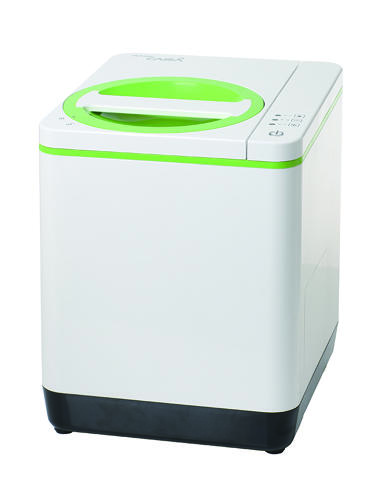
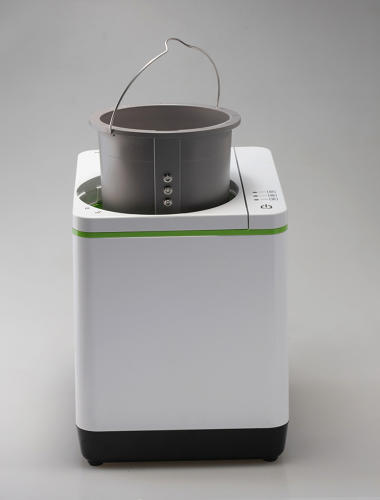
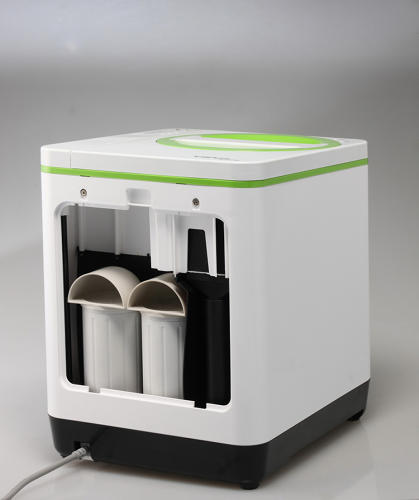
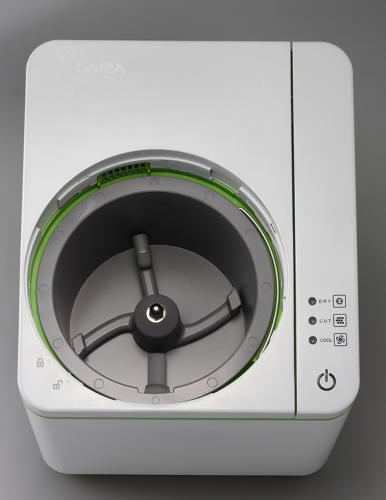
A Countertop Composter That Zaps Your Food Scraps Into Healthy Soil Fertilizer


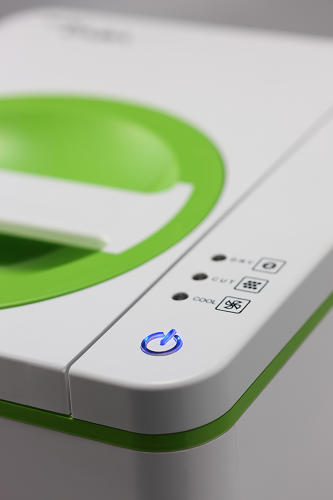
In just three hours, the Food Cycler turns waste into value--and could hopefully help households cut down on the hundreds of pounds of uneaten food they throw away. 

About 25% of the food in your refrigerator will probably end up in the trash instead of on your plate. And while that’s unfortunate for your wallet, it’s even worse for the environment: The carbon footprint from food waste is actually bigger, amazingly, than the pollution from driving the typical car. Some of the impact comes when the food goes to the landfill, since rotting scraps release the potent greenhouse gas methane.


This is all the reason for a new kitchen device called the Food Cycler Home that aims to make it much easier for people to compost their scraps, even in cities that don't offer composting services (which is most cities). In three hours, it can sterilize and deodorize anything and everything from orange rinds to meat and convert it to a soil amendment that can be safely sprinkled on plants.

The byproduct is organic and looks like coffee grinds. “This will vary slightly depending on what you choose to process, but what is great is that anything you could eat, it could eat--including chicken and fish bones," says Brad Crepeau from the manufacturer Food Cycle Science.

The company, which recently launched a crowdfunding campaign for the Food Cycler on Indiegogo, hopes that the product might offer a viable alternative to the need to create new municipal composting programs. “The challenge with greenbin programs is that they are often costly, and it is sometimes difficult to achieve quotas and sustain widespread buy-in, often because of the odor and unattractiveness of the greenbin and everything that lives in it,” Crepeau says.


A larger version of the Food Cycler has been in use for three years at hospitals, restaurants, universities, and grocery stores, so the company says the technology is proven. But it’s not exactly cheap: The expected retail price is $499, while some chains might offer it for $399.

It also takes a fair amount of electricity as it runs--perhaps not surprising if you’re running something for three hours every day. In a month, it can use about as much as the average dishwasher. It’s not clear how that environmental impact would stack up against something like curbside composting or not composting at all, since that also takes energy, both in driving food away in trucks and running giant commercial composting facilities.

In the end, backyard composting is still probably best for anyone who has the option. Even better is trying to remember to eat the leftovers next time before they turn to mold, so we don't have as much food waste in the first place.

ORIGINAL: FastCo Exist

sábado, 30 de noviembre de 2013

TellSpec: What's in your food?

A revolutionary hand-held device that tells you the allergens, chemicals, nutrients, calories, and ingredients in your food.


How does it work?
TellSpec
brings together laser spectroscopy, nanophotonics, and a unique mathematical algorithm in a revolutionary hand-held consumer device that can analyze the chemical composition of any food in less than 20 seconds.

The TellSpec handheld device beams a low-powered laser at the food you wish to analyze, measures the reflected light with a spectrometer, and sends the data via your smart phone, computer, or tablet to TellSpec’s servers in the cloud. Those servers use this data to deduce information about your food that is of interest to you. This information is then displayed on your computer, tablet or smart phone so you can intelligently decide if you want to buy or eat the food.


Features

Open & Accessible Our platform is available to anyone, anywhere, to raise money for anything.

Free and Immediate You can start creating your campaign right now for free. There is no application process.

Open to Any Campaign You can raise money for anything, including for-profit ventures, creative ideas or personal needs.

Global Access No matter where you live, you can start your campaign and collect money from any country in the world as long as you have a valid bank account. Back to top Start Now ▶

Powerful Tools We have the tools you need to easily create, share and manage your campaign.

Create Use our platform to customize and publish a professional online funding campaign. No tech skills needed!
Share One-click social media integration, direct email and announcement features make it easy to spread the word, raise awareness and increase funding.

Track Manage contributions with our analytics tools, and stay on top of sending off your perks with our dashboard. Track who has claimed perks and how to get in touch with contributors to ensure they receive perks on time. Back to top Start Now ▶

Global Exposure Get merit-based promotion to make people around the world aware of your campaign.

Gogofactor Exposure Indiegogo promotes campaigns based on their gogofactor. This is a unique, merit-based algorithm that tracks the level of activity of each campaign based on how much you share, update, and attract funding. Work hard on your outreach, and we'll give you a boost!

Social Media and Community Outreach Based on your gogofactor activity, you may be eligible for exposure in our social media outreach, community and content creation, and press access. This is how Indiegogo helps to generate excitement and interest in your campaign! Back to top Start Now ▶

Personalization We provide campaign options and educational support that are right for you.

Your Money, Your Choice Keep all the money you raise, even if you don't meet your goal. Or, opt for Fixed Funding and only keep your money if your campaign reaches its goal.

Customizable Template You can customize your campaign page using our step-by-step set up. Write your story, upload videos, create a gallery of images, and offer perks.

Flexible Payment Options All campaigns can offer multiple funding types to their contributors, including PayPal and major credit cards.

Ongoing Education You can learn as you go from the experts (yes, real people!). Our Customer Happiness team and our blog posts will help you along the way - and we always respond in 24 hours or less.


TellSpec's CEO and CTO show a live demo of the TellSpec's food analysis algorithm.


A message from Dr Stephen Watson, TellSpec's CTO:

A message from Isabel Hoffmann, TellSpec's CEO:


TellSpec in the News:


ORIGINAL: Indiegogo

miércoles, 5 de junio de 2013

Junio 5, Día Mundial del Medio Ambiente: "Piensa. Aliméntate. Ahorra."

ORIGINAL: UNEP


El Día Mundial del Medio Ambiente es el mayor evento global en favor del medio ambiente. Aunque las actividades se organizan durante todo el año será el día 5 de junio cuando tenga lugar el gran encuentro en defensa de nuestro planeta y sus recursos naturales.

El Día Mundial del Medio Ambiente comenzó a celebrarse en 1972 y desde entonces ha crecido hasta convertirse en una de las principales herramientas de Naciones Unidas para extender la conciencia sobre el medio ambiente, llegando incluso a impulsar la acción política en este campo.

A través del DMMA, el Programa de las Naciones Unidas para el Medio Ambiente (PNUMA) puede profundizar en las distintas cuestiones relacionadas con el medio ambiente así como promover el poder de todos para convertirnos en agentes de cambio que favorezcan un planeta sostenible y equlibrado.

Es también un día en el que todos caminamos juntos para asegurar un hábitat más limpio, verde y agradable para nosotros y también para las generaciones del futuro.

Tu ayuda cuenta y el Día Mundial del Medio Ambiente confía en que tú también lo harás posible. ¡Haz lo que te parezca! Crea un equipo de limpieza en tu barrio, deja de usar bolsas de plástico y anima a tus vecinos a hacer lo mismo, frena los desechos, ve andandao al trabajo... tienes un sinfín de posibilidades ante ti.

Por eso, hagas lo que hagas, ¡queremos que nos lo cuentes! Colgaremos todas las actividades en esta web y formarás parte del mapa del Día Mundial del Medio Ambiente.

¿Cuál será tu iniciativa para el DMMA?


ORGANIZA TU dmma EN 5 SENCILLOS PASOS
  1. INVESTIGA SOBRE EL DMMA
    En primer lugar, puedes pensar una actividad para organizar con tus amigos, vecinos, colegas, comunidad... relacionada con el Día Mundial del Medio Ambiente. Para ello, puede servirte de ayuda e inspiración saber qué hicieron otros en anteriores ediciones.
  2. ENTERÁTE DEL PROGRAMA DEL DMMA Y HAZLO POSIBLE
    Enteráte sobre las actividades previstas para tu país, ciudad o región. Habla con los organizadores e investiga sobre qué puedes hacer para apoyarles.
  3. HAZ QUE TUS ACTIVIDADES FORMEN PARTE DE PIENSA.ALIMÉNTATE. AHORRA
    El tema oficial del DMMA´13 es Piensa. Aliméntate. Ahorra. Este eslógan tiene que ver con el desecho y pérdida de alimentos. Sé creativo e intenta que tus actividades traten sobre ello. Busca formas atractivas de hacer realidad y dar a conocer el mensaje del Día Mundial del Medio Ambiente.
  4. PLANIFICA CON ANTELACIÓN
    Esboza un pequeño planning de tus actividades y díscutelo con tus amigos, compañeros,.. Fíjate unos objetivos y fechas aproximadas. No te olvides de pedir permisos a las autoridades locales siempre que sea necesario. Busca socios o patrocinios que puedan servirte de ayuda. Una buena organización es la clave de tu éxito. Puedes descargarte materiales aquí.
  5. CELEBRA EL DMMA CON EL MUNDO
    ¿Por qué celebrar el DMMA tú solo? Es fundamental que compartas tus planes y conseguir así que el DMMA sea mundialmente conocido. Para ello, puedes inscribir tus actividades en nuestra web y hacer que aparezcan en el mapa mundial del DMMA. Además, puedes llamar a la prensa y buscar la colaboración de líderes o personas famosas que harán tu campaña más visible. ¡Piensa cómo convertir tu actividad en un trending topic! Para ver el mapa mundial del DMMA haz click aquí.

No necesitas dinero...sé imaginativo

Participar en el Día Mundial del Medio Ambiente no supone una enorme inversión económica. Es un día pensado para que cada uno participe a su manera. En el caso de que necesites apoyo financiero, incluir a patrocinadores de tu comunidad o de otros entornos puede serte de ayuda. Todo lo que necesitas es pasión por la causa y una buena planificación. Deja que la imaginación te guíe y ¡buena suerte!

¿Necesitas el logo del DMMA?

Tienes el logo disponible en los idiomas oficiales de Naciones Unidas: inglés, francés, español, chino, ruso y árabe.

¿Dónde conseguir más información?

Nuestra página web es el sitio ideal para encontrar todo lo que necesitas, pero no dudes en ponerte en contacto con nosotros.
Lucia Jasmin
Departamento de Comunicación e Información Pública
Programa de las Naciones Unidas para el Medio Ambiente (UNEP)
Tel:254-20-7623401
Email: worldenvironmentday@unep.org
- See more at: http://www.unep.org/spanish/wed/wedpack/planning/#sthash.kb6qWOtH.dpuf

sábado, 25 de mayo de 2013

The 10 healthiest foods on the Planet

ORIGINAL: My Amazing Earth
by Amazing Earth
May 25, 2013


These 10 super-foods are proven disease fighters and energy boosters according to our pals at fitnessmagazine.com.

Lemons: Just one lemon has more than 100 per cent of your daily intake of vitamin C, which may help increase ‘good’ HDL cholesterol levels and strengthen bones. And the citrus flavonoids found in lemons may help inhibit the growth of cancer cells and act as an anti-inflammatory.

Broccoli: One medium stalk of broccoli contains more than 100 per cent of your daily vitamin K requirement and almost 200 per cent of your recommended daily dose of vitamin C — two essential bone-building nutrients. The same serving also helps stave off numerous cancers.

Dark chocolate: Just one-fourth of an ounce daily can reduce blood pressure in otherwise healthy individuals. Cocoa powder is also rich in flavonoids, antioxidants shown to reduce ‘bad’ LDL cholesterol and increase ‘good’ HDL levels.

Potatoes: One red potato contains 66 micrograms of cell-building folate — about the same amount found in one cup of spinach or broccoli. One sweet potato has almost eight times the amount of cancer-fighting and immune-boosting vitamin A you need daily.

Salmon: A great source of omega-3 fatty acids, which have been linked to a reduced risk of depression, heart disease and cancer. A three-ounce serving contains almost 50 per cent of your daily dose of niacin, which may protect against Alzheimer’s disease and memory loss.

Walnuts: Contain the most omega-3 fatty acids, which may help reduce cholesterol, of all nuts. Omega-3s have been shown to improve mood and fight cancer; they may protect against sun damage, too (but don’t skip the SPF!).

Avocados: Rich in healthy, satisfying fats proven in one study to lower cholesterol by about 22 percent. One has more than half the fiber and 40 percent of the folate you need daily, which may reduce your risk of heart disease.

Garlic: Garlic is a powerful disease fighter that can inhibit the growth of bacteria, including E. coli. Allicin, a compound found in garlic, works as a potent anti-inflammatory and has been shown to help lower cholesterol and blood-pressure levels.

Spinach: Spinach contains lutein and zeaxanthin, two immune-boosting antioxidants important for eye health. Recent research found that among cancer-fighting fruits and veggies, spinach is one of the most effective.

Beans: Eating a serving of legumes (beans, peas, and lentils) four times a week can lower your risk of heart disease by 22 percent. That same habit may also reduce your risk of breast cancer.

Please Share!

viernes, 24 de mayo de 2013

The Human City

May 23, 2013


SINGAPORE – The tangled web of international organizations that constitutes global governance has become so remote and ineffective that few count on it to deliver results anymore. Now, after decades of turf wars and self-marginalization, international organizations must rally around an increasingly pressing global priority: sustainable urbanization.
This illustration is by Chris Van Es and comes from NewsArt.com, and is the property of the NewsArt organization and of its artist. Reproducing this image is a violation of copyright law.

The world is undergoing an unprecedented and irreversible wave of urbanization, with the share of the global population living in cities set to reach 60% by 2030. But rapid urbanization is driving up industrial fossil-fuel consumption and household water consumption, and is increasing demand for food in areas where arable land is scarce. In short, the current urbanization trajectory is not sustainable.

But existing efforts to alter the situation remain woefully inadequate. While the United Nations General Assembly has tasked its agency for human settlements, UN-HABITAT, with promoting sustainable urbanization, the agency lacks the influence to ensure that this vital issue makes it onto the global agenda.

Moreover, international development players – including UN agencies, NGOs, corporate citizenship programs, and other charitable organizations – rarely coordinate their activities, even though their interventions are increasingly concentrated in densely populated cities.
Given that promoting sustainable urbanization and improving coordination would bolster progress in other priority areas (including women’s rights, climate change, youth unemployment, and literacy), sustainable urbanization must become a bureaucratic priority. And it must be complemented by a technological disruption, with investments channeled toward developing and distributing innovations that would make cities more livable, efficient, and sustainable.

In fact, many useful innovations, such as energy-generating building materials and zero-emissions transportation, already exist; they simply need to be made accessible to those who need them most. Devices like small-scale water-filtration systems, portable heart monitors, and low-cost tablet computers are already dramatically improving the lives of the world’s poorest citizens and helping to level the economic playing field.

The future impact of global governance rests on forging new alignments that facilitate the flow of vital knowledge and technologies from an increasingly diverse array of sources to urban populations worldwide. The tools needed to make urban life more sustainable are no longer flowing only from North to South and West to East. China has taken the lead in exporting solar photovoltaic cells, while clean-tech parks are arising even in the Arab world.

Governments, companies, supply-chain managers, corporate-citizenship strategists, NGOs, and others should commit to reducing their carbon footprints and to leveraging their resources to contribute to sustainable urbanization. Opportunities to make such contributions are appearing constantly – and across all sectors.

In construction, for example, contractors are forming partnerships with labs to test materials that better reflect heat while absorbing energy to power cooling systems, and utility companies are leveraging new software tools to deploy smart meters in homes and offices. Two US cities – New York and Seattle – have raised efficiency standards for new construction to record levels.

Similarly, automobile manufacturers, mobility-services companies, and local governments are working together to advance sustainable transportation by providing incentives for efficient non-ownership of vehicles. As a result, carpooling is gaining prevalence in cities like Berlin.

Furthermore, MIT has developed the foldable electric CityCar, four of which can fit into a conventional parking space. At last year’s Rio+20 conference, the eight largest multilateral development banks pledged $175 billion to develop sustainable transportation.

Information technology can also reduce stress on the transportation system. For example, Singapore is harnessing its near-complete fiber-optic network to reduce urban congestion by introducing a spate of measures encouraging workers to telecommute. As these measures take effect, self-sufficient satellite towns will likely develop, reducing transportation-related energy consumption further, while fostering a more active civil society.

Singapore is leading the way in another area as well: production and distribution of potable recycled water. Many cities worldwide are following its example, expanding their water catchment and treatment programs.

Meanwhile, vertical farm experiments – which aim to augment urban food supplies by cultivating crops in skyscraper greenhouses – are proliferating from the American Midwest to Osaka, Japan. And India has become a leader in converting biomass and food waste into energy.

Of course, the billions of farmers and villagers worldwide should not be forgotten. Interventions like rural electrification, the provision of drought-resistant seeds and agricultural technology, and the expansion of micro-insurance are vital not only to rural populations’ welfare, but also to catalyze a new “Green Revolution,” without which city dwellers will face severe food shortages.

With new, innovative solutions appearing every day, the real challenge lies in bringing them to scale – and that requires international cooperation. But the “smartest” cities are not necessarily the most technologically advanced. Rather, they are the places where technology and public policy support citizens’ welfare and aspirations. This crucial fact will guide discussion at the New Cities Foundation’s second annual summit in June – the theme of which is “The Human City” – and should be at the heart of sustainable urbanization initiatives.

Making sustainable urbanization a strategic priority might be the only way to overcome the interrelated crises of jobless growth, youth unemployment, and income inequality. While some factory jobs can be outsourced or automated, robots cannot yet retrofit buildings, install solar PV cells on rooftops, or construct vertical farms. Even the movement in some cities, such as Singapore and Tokyo, toward driverless subways or cars will demand substantial labor to build and manage the relevant systems. In the future, as in the past, the most labor-intensive jobs will involve building homes, production facilities, and, in turn, communities.

Reprinting material from this Web site without written consent from Project Syndicate is a violation of international copyright law. To secure permission, please contact us.

lunes, 13 de mayo de 2013

Peru says no to GMO

ORIGINAL: CSMonitor
By Annie Murphy
April 25, 2013

Peru is the first country in the Americas to ban genetically modified foods, putting its food policy closer to that of Europe, than the United States or many of its South American neighbors.

A man drags a cart loaded with vegetables in downtown Lima, Peru, Wednesday.  Mariana Bazo/Reuters
LIMA, PERU
There isn’t much local Chef Pedro Miguel Schiaffino won’t eat. His highly accliamed Amaz restaurant is devoted to finding and using Amazonian food native to the country, like a 600-pound freshwater fish or a little-known fruit nicknamed “cannonball” that tastes like a cross between a guava, coconut, and melon.

But a year ago Mr. Schiaffino stopped eating supermarket tomatoes.

Even though Peru is the birthplace of the crop, it’s difficult to find anything other than hard, pale Roma tomatoes in supermarkets, and Schiaffino says that worried him.

They’re a big monoculture, which is why people usually end up using [genetically modified organisms] GMOs. Because when you have monocultures, the crops end up getting diseases, and you have to look for these extreme ways to fix them,” he says.

Peru was the cradle of the Inca Empire, and today it’s home to many crops indigenous to the Americas. It has 400 varieties of potato alone, and a geography that allows farmers to grow almost anything.

It's also the only country in the Americas to put a 10-year ban on genetically modified food, with a law that was first introduced in 2011, and went into effect at the end of last year. Its basic intention, say Schiaffino and others, is to protect Peru’s biodiversity, as well as the practices that have kept it intact for so long

In the end, it’s not a law that’s ‘against’ anything,” says Antonietta Gutierrez, a biologist at Peru’s National Agrarian University. “This is a law in favor of biosecurity. The idea is that there should be a responsible way of using technology, so that it helps us develop resources – and at the same time, doesn’t destroy what we already have."

GMOs are organisms that have been altered via genetic engineering – and this can mean anything from bacteria, to animals, and plants. Supporters praise the ability of engineers to do things like create plants resistant to pests and drought, or ones that have higher yields. Yet those wary of GMO crops worry about food safety, a lack of longterm research, and the potential for contaminating and even wiping out non-GMO species.

For the past few decades, Profesor Gutierrez has kept a packed schedule, doing experiments in the test fields and laboratories of the agrarian university, and as a proponent of laws to regulate GMO crops.

There aren’t yet long term studies of GMOs,” says Gutierrez in a spartan concrete and linoleum lab just outside the capital. “You can’t measure their real effects in five, 10, or even 20 years. It takes more time to observe those effects, especially when we’re talking about entire ecosystems.

Peru's new law puts its food policy closer to that of Europe, than to that of the United States or many of its South American neighbors. While genetically modified species can still be tested in controlled lab settings, as of December 2012, they can’t be planted or set free, and GMO seeds are barred from entering the country. Both activists and many scientists consider this a coup.

GMOs produced outside the country, however, are still present in products sold in supermarkets. A law requiring products containing GMOs to be labeled was passed in 2011 – but terms and regulations were never set. According to a study done by the Peruvian Association of Consumers and Users, of 13 basic products bought and tested for the presence of GMOs, 10 tested positive.

Activists say this is all the start of a long fight. 

'Ancient culture'
Uldarico Reyes Roldán has been working at the popular Madre Natura natural food market in Lima’s Miraflores neighborhood since the store opened 30 years ago. He jokes that a lot of the people who come into the store “want to stay thin,” and that if healthy food also happens to be organic and GMO-free, they just see it as an added bonus.

But seriously, for instance, take a look at this,” he says, pawing through a wooden cabinet filled with bags of freshly milled grain. He holds up a small sack of coarsely ground wheat the color of tree bark, explaining that it’s a Peruvian variety, unaltered, and free of pesticides. “People taste the difference. It’s nuttier, more malty. They come back asking for this stuff. Not some stuff that comes from who knows where.” 

Many of these products have been around for centuries—since the Incas, and earlier.

Our ancient cultures knew how to do this,” says Schiaffino, the chef. “They grew crops together, in terraces, with the seasons, with the rain, and natural irrigation. I think they had more knowledge about crops and cultivation and farming than we have now.”

Back in the dining room of Amaz, one of Schiaffino’s two restaurants, an enormous mural of a tropical serpent covers the wall behind him. It’s done in tiny iridescent beads, meant to evoke the indigenous, plant-based hallucinogen ayahuasca.

Schiaffino’s restaurants function according to the logic that monoculture and the implementation of GMOs is “going against nature. What nature tells you is that you have to have different plants and different animals around.” He relies on small producers and foragers, many of whom are from indigenous groups that have long acted as stewards of Peru’s biodiversity. A few of those producers even introduced him to a tomato native to the Amazon.

It’s an heirloom seed that’s stayed in the Amazon. It looks like a bull’s heart, but smaller. Very tasty.

Schiaffino says the flavor of a good tomato is all about the smell. 

Like some humidity, with earth, along with a green scent. You can tell it’s just-picked," he says. "The supermarket tomatoes have no smell. 

"Sometimes we don't think to appreciate the possibility of doing this another way."

domingo, 12 de mayo de 2013

'Colombia no está preparada para la locomotora minera'

ORIGINAL: El Espectador
Por: Viviana Londoño Calle 
6 Mayo 2013

La más completa investigación hecha por la Contraloría General 

Mientras la extracción de un gramo de oro implica gastar hasta 1.060 litros de agua, para producir arroz, papa o leche en la misma cantidad, se utilizan menos de 2 litros. 


Hace dos semanas, el ministro de Minas y Energía, Federico Renjifo, anunció que el Gobierno planea abrir las puertas a nuevas solicitudes mineras a finales de este mes. Según el ministro, hay notorios avances en la depuración de los títulos y el país estaría preparado de nuevo para permitir nuevas exploraciones.

Sin embargo, la más reciente investigación de la Contraloría General, que revela una completa radiografía de esta actividad en el país, advierte que más allá de la depuración de los títulos mineros otorgados hasta ahora (19.000 según el Ministerio de Minas), hay una serie de complejos retos con pocos los avances, que habría que resolver antes de reactivar la titulación minera, según el ente de control.

Uno de esos desafíos tiene que ver con las implicaciones ambientales de la minería de oro y de carbón a gran escala. El Espectador conoció el libro ‘Minería en Colombia. Fundamentos para superar el modelo extractivista’ que será presentado este lunes en la tarde y que confirma lo que vienen advirtiendo los expertos en medio ambiente, desde que el país se subió en la locomotora minera: los efectos ambientales por la extracción de estos materiales son serios, evidentes y además irreversibles.
  • La generación de grandes cantidades de residuos, 
  • la desaparición y contaminación de las aguas y del aire, 
  • la pérdida del suelo y de la biodiversidad, 
son sólo algunos de los costos ambientales que representa la minería a gran escala, de acuerdo con la investigación.

Cifras de Catastro y Registro minero señalan que de los títulos otorgados en Colombia, el 43% es para la explotación de oro y el 25% para carbón. Estos dos materiales terminan en países extranjeros: el 99% del oro extraído es para exportación y lo mismo sucede con el 95% del carbón. Para la Contraloría, además de representar fuertes daños ambientales, se trata de un modelo que “no genera encadenamientos productivos y no dinamiza directamente la economía”.


Julio Fierro, uno de los investigadores del capítulo ambiental insiste en que “la apuesta de desarrollo económico basada en la minería permea todas las decisiones del Estado y el país no tiene la capacidad ni la fortaleza institucional”. Además –según el experto- preocupa la absoluta desaparición del Ministerio de Ambiente y Desarrollo Sostenible en la discusión del tema minero.

Minería vs agua
Extraer un gramo de oro implica gastar hasta 1.060 litros de agua. La misma cantidad de arroz, de papa o de leche se puede producir con menos de dos litros. Estos datos, que recoge la investigación, advierten sobre el alto consumo de agua para la actividad minera y la eventual competencia con la producción de alimentos. A esto se suma la contaminación de las aguas por mercurio o cianuro, utilizados para separar el oro de los minerales y por residuos tóxicos que acompañan los desechos mineros.

Consumo de Agua por Actividad
De acuerdo con el documento, “los yacimientos de extracción se caracterizan por contener oro en muy bajas concentraciones, lo cual implica la generación de grandes volúmenes de residuos”. Buena parte de estos residuos terminan contaminando las aguas y el ambiente y representando un riesgo para la salud pública. Por cada gramo de oro se pueden generar 
  • 40 gramos de arsénico, 
  • 10 gramos de cromo, 
  • 170 gramos de plomo y 
  • 50 gramos de zinc (ver gráfico).
Para la Contraloría, “un modelo de desarrollo basado en la extracción de minerales e hidrocarburos puede causar un impacto aún más fuerte debido a la contaminación de aguas y suelos, en particular en la zona de laderas andinas, poniendo en riesgo no sólo la diversidad, sino también la soberanía alimentaria, pues las especies químicas tóxicas liberadas pueden permanecer por muy largo plazo (decenas de miles de años) disponibles en el ambiente”. 

El mapa minero del país muestra –de acuerdo con los investigadores- que “los principales proyectos mineros de carbón están en zonas con alta susceptibilidad a la desertización y los de oro se ubica en zonas de alta montaña, fundamentales en la preservación de la oferta hídrica”.

Millones de residuos
Ciudades como Bogotá, Buenos Aires o Río de Janeiro generan alrededor de dos millones de toneladas de residuos al año. Un proyecto de minería de oro a gran escala puede generar en el mismo período hasta 70 veces más residuos y en el caso de carbón, hasta 12 veces más deshechos. 

Aún así, los efectos que en el largo plazo representan estos materiales no están contemplados en la normatividad. ¿Quién responde entonces?

MInerales tóxicos tras el oro.
Según datos de la investigación, de los 1.997 títulos para la explotación de metales reportados en 2010, sólo 194 de ellos contaban con licencia ambiental. Así las cosas, es evidente que será el país y no las empresas las que tendrán que responder por los pasivos ambientales a largo plazo.

La debilidad de las licencias ambientales
La reglamentación ambiental en Colombia no ha sido ajustada para prevenir, mitigar, corregir o compensar los impactos generados por la minería”, así define el documento de la Contraloría el débil control ambiental de los proyectos mineros en el país. Una de las falencias tiene que ver con las licencias ambientales: pese a que deberían ser la carta de navegación para que cualquier proyecto garantice los mínimos impactos, sólo son requeridas durante la etapa de explotación.

Mientras no tienen licencia –sin embargo- los proyectos adelantan vías, túneles, talas y diferentes actividades que aunque representan un claro impacto no tienen ningún tipo de control. Otro de los aspectos frente a los que llama la atención la investigación tiene que ver con la información que manejan las instituciones frente al tema minero. Todos los datos -incluso el estudio de impacto ambiental- lo proporcionan las mismas mineras. A la debilidad institucional se suma además la deficiencia de conocimientos técnicos y científicos frente a la extracción de minerales.

Entre las conclusiones de la investigación se destaca que el modelo actual de minería es una apuesta arriesgada que no incorpora los impactos ambientales. Según Fierro, “hay una apuesta económica por encima de todas las reglamentaciones ambientales, étnicas, tributarias y de ordenamiento territorial. Es una apuesta sin soportes y todos estos impactos sociales y ambientales no han sido tenidos en cuenta”.

Lo que implica explotar oro y carbón
Para los investigadores es evidente que los efectos ambientales son sólo algunos de las razones que justifican la declaratoria de una moratoria minera indefinida y la suspensión de los megaproyectos. Mantener cerrada la ventanilla minera, es una de las propuestas hasta que se plantee una nueva política minera que tenga en cuenta “el desarrollo integral, el respeto a la Constitución Nacional, la observancia de los derechos fundamentales de los ciudadanos”.

Esta tarde, la investigación, que recoge además otros temas gruesos como la renta minera, la normatividad de esta actividad y su relación con el conflicto armado, estará en manos del Ministerio de Minas y Energía, del de Ambiente, de los Congresistas y de todas las entidades de las que depende el futuro de la minería en el país.

Luis Jorge Garay, coordinador de la investigación es enfático al respecto: “lo que mostramos es que Colombia no está preparada para desarrollar una industria minera necesaria bajo criterios de respeto de los derechos, de conservación del medio ambiente y desarrollo integral”. Para Fierro, es claro que no debe haber minería en lugares ricos en biodiversidad y en cuencas frágiles y debe prohibirse en zonas de conflicto. “Si uno se imagina ese mapa, muy probablemente este no sea el país adecuado para basar su desarrollo en la minería”. 

Oro y mercurio.
Por: Viviana Londoño Calle

miércoles, 27 de febrero de 2013

Ireland Invests in Industry-Backed Research Centers

ORIGINAL: ScienceMag
by Anthony King
26 February 2013


Sean Sherlock. Credit: The Labour Party
The Irish government announced yesterday an investment of €300 million in seven new research centers. The centers will support key sectors of the Irish economy and be funded over 6 years with €200 million from the government and €100 million from industry partners.

Despite the country's dire economic situation, the program marks Ireland's largest ever government-industry co-funding arrangement. The Irish minister for research and innovation, Sean Sherlock, says that research will deliver jobs and major economic and societal benefits: "Today we are sending out a major positive signal that, despite our status as an E.U./IMF program country, we are still investing smartly and significantly in research talent."

Not everyone is happy about the emphasis on industry-relevant research, however. "The negative side to my mind is how all the money is now allocated in such a tightly focused way by interests outside science. Basic research as I understand the concept is now excluded," says theoretical physicist Mike Peardon of Trinity College Dublin.

The seven centers are in the areas of 
  • big data, 
  • marine renewable energy, 
  • nanotechnology, 
  • functional foods, 
  • photonics, 
  • drug processes, and 
  • perinatal translational research. 
They were selected from 35 proposals following an international review process. Mark Ferguson, director general of the funding agency Science Foundation Ireland (SFI), says the projects were first reviewed for scientific excellence by a panel of leading international researchers. The winners were then ranked for potential impact in Ireland by an international panel of leaders from the investment community, R&D experts in industry, and technology transfer people from universities. "This was highly competitive," Ferguson says.

The biggest center will focus on big data. It consolidates five existing SFI research centers but brings onboard more than 40 different industry partners, including Abbott pharmaceuticals, the consulting firm Accenture, sportswear company Adidas, large multinational companies such as Intel and Microsoft, and media companies such as The Irish Times and Storyful. "There is no one big anchor tenant. It's a constellation of different partners," explained Alan Smeaton, a computing professor at Dublin City University who led the big data project submission.

The announcement today follows on from the recommendations of the Report of the Research Prioritisation Steering Group 2012. It recommended that government investment focus on 14 priority areas, such as data analytics, medical devices, food and marine resources, with an emphasis on growing the economy and jobs.

Some are concerned about this focus. "Scientific discovery without potential economic return or job creation potential is therefore not being considered by SFI or the Irish government at the moment," notes physicist Peter Gallagher of Trinity College Dublin, who adds that Ireland remains one of the few European countries not in CERN, the European laboratory for particle physics. "The government sees research exclusively as a fix to improve our economic well-being in the short-term. This might pay off attracting investment in the near future but longer term, Ireland's reputation will suffer," Peardon says.

SFI says the seven centers are not the last word and that this is just the beginning. "Some important areas are not represented, so another call for applications will open toward the end of this year," Ferguson says. "As a small country, we cannot do everything well. We are not a scaled down version of the U.S. or the U.K. We have to be subjective and support a few areas of excellence, while maintaining broader support at much lower levels for other areas because they need to support teaching and so on," Ferguson tells Science.

Follow ScienceInsider on Facebook and Twitter

jueves, 13 de diciembre de 2012

Water purifier chemical 'increases food allergy risk'

ORIGINAL: Daily Telegraph
By Stephen Adams, Medical Correspondent
03 Dec 2012

A byproduct of chemicals used to help purify water could be to blame for a surge in food allergies, according to a study.

Researchers believe high levels of dichlorophenols, byproducts of chlorination, could lead to food allergies. Photo: ALAMY
Researchers have found that people exposed to high levels of dichlorophenols, produced when chlorine is added to water to ensure it is free of bugs, tend to be more prone to food allergies too.

Elina Jerschow, assistant professor of allergy and immunology at the Albert Einstein College of Medicine in New York, said: “Our research shows that high levels of dichlorophenol-containing pesticides can possibly weaken food tolerance in some people, causing food allergy.

This chemical is commonly found in pesticides used by farmers and consumer insect and weed control products, as well as tap water.

Together with colleagues, she looked at the incidence of food allergies among 2,211 people who were participants in the US National Health and Nutrition Examination Survey.

Of those, the quarter with the highest level of dichlorophenols in their urine were looked at in detail.

Related Articles

The academics found their chance of having a food allergy - for example to eggs, peanuts, milk or shrimp - was 80 per cent higher than those with lower levels of dichlorophenols.

Writing in the journal Annals of Allergy, Asthma and Immunology, they concluded: "In this population, we found consistent associations between high levels of dichlorophenol exposure and a higher prevalence of food allergies.”

Among this group 550 or so people with the highest levels of the chemicals, their chance of having both a food allergy and an ‘environmental’ allergy - for example to pollen - was 61 per cent higher.

Dr Jerschow said: "Previous studies have shown that both food allergies and environmental pollution are increasing in the United States.

"The results of our study suggest these two trends might be linked, and that increased use of pesticides and other chemicals is associated with a higher prevalence of food allergies."

However, she said that further studies were necessary “to confirm this link.

If firm evidence emerged that dichlorophenols triggered allergies, Dr Jerschow cautioned that avoiding tap water was unlikely to solve the problem.

Other dichlorophenol sources, such as pesticide-treated fruits and vegetables, may play a greater role in causing food allergy, she said.

Chlorophenols are a byproduct of chlorinating water. When the chlorinating agent is added, it reacts for phenols - organic compounds found in plants - which creates a range of chlorophenols.

According to the World Health Organisation, there are no guidelines for concentrations of dichlorophenols because data on toxicity “are limited”.

According to the Centres for Disease Control and Prevention, an increase in food allergy of 18 per cent was seen between 1997 and 2007. The most common food allergens are milk, eggs, peanuts, wheat, tree nuts, soy, fish, and shellfish.

Allergy experts agree that food allergies are also on the increase in Britain, and that this increase is not solely the result of people being more likely to report potential problems to their doctors.

A recent study conducted on the Isle of Wight found one in 20 children had a clinically confirmed allergy.

However, it is thought many people believe they suffer from a food allergy but actually do not.

In 2010 the National Institute for Health and Clinical Excellence (Nice) estimated that while more than a third of people believed they were allergic to some form of food, only a tenth actually were when properly tested.

A spokesman for Thames Water said: "We chlorinate water once it has been fully processed, so there is no organic matter in it."

domingo, 18 de noviembre de 2012

Activists Vow to Stick it to Frankenfoods Following Prop 37's Defeat at the Polls

Nov. 9 2012
labelityourself.org

In the wake of the defeat of Proposition 37 this Tuesday, which, if passed, would have required the labeling of most genetically modified foods in the state, many are pondering what comes next? The angered among them have suggested a boycott against biotech bullies like Monsanto who produce GMO products and waged an effective propaganda campaign ensuring the prop would drop at the polls.

For months, activists haven't waited on corporations or government for the answer, opting instead for direct action tactics. The nationwide Label It Yourself(LIY) movement has been literally "sticking it" to frankenfoods with downloadable open source GMO warning labels for anyone to take into grocery stores! 

The tactics are pure activism 2.0 with suggested Twitter hashtags and a Tumblr site set up to promote their exploits. Froot Loops, Teddy Grahams, Honey Nut Cheerios andPop Tarts have all been given the sticker treatment by the campaign that describes itself as "decentralized," "autonomous" and "grassroots."

http://labelityourself.tumblr.com/ Honey Nut GMOs?
Taking a keen interest in Prop 37's fate, the Facebook page for LIY posted that, "We, the people need to stand up for ourselves and each other, not just at the voting booth every couple of years, but in our every day lives. Please feel free to download sticker templates... and print them out, so the next time you head to your grocery store, you can help let people know what's in their food. It's time to take our food supply back!"

The Label It Yourself campaign is compelled by the dangers it sees posed by GMO tampering of food to personal health, the environment, and consumer rights. Ironically, the act of putting a sticker on a Pop Tarts box saying that they may contain GMOs has folks concerned that doing so can be construed as a violation of the Federal Anti-Tampering Act.

Either way, posing the question, "If there's nothing to hide, why hide it?" to the makers and sellers of much of our processed foods, activists are already taking the fight to the aisles.

Follow Stick a Fork In It on Twitter @ocweeklyfood or on Facebook! And don't forget to download our free Best Of App here!