Ciencia en Canoa, by Vanessa Restrepo Schild.

Páginas

  • INICIO
  • About
  • The author
  • Opinión colgante
  • Graphic Adventure
  • EcoSecretos
Mostrando entradas con la etiqueta Vehículos. Mostrar todas las entradas

martes, 4 de noviembre de 2014

Urban Algae Farm Gobbles Up Highway Air Pollution


A French and Dutch design firm has come up with an elegantly simple way to harness the wonderful power of nature in order to clean up the environment: an algae farm suspended over a small stretch of highway in Geneva, Switzerland.


Gizmodo/Cloud Collective

Algae are a diverse group of organisms that, like plants, generate energy from photosynthesis using sunlight and carbon dioxide, churning out oxygen along the way. Since CO2 is a pollutant that’s produced by car engines, a busy highway riddled with environmentally damaging emissions is the perfect place to set up an urban algae farm.


Cloud Collective
The bioreactor consists of a closed system of transparent, algae-filled tubes that are hooked up to secondary equipment such as filters, pumps and solar panels. Thriving on the abundance of CO2 and sunlight, the algae will bloom and mature inside the tubes, filtering the air before being extracted and used for a variety of applications. According to the company that came up with the idea, Cloud Collective, the material could be used to create biodiesel, green electricity, medication, cosmetic products or even foods. That’s quite an impressive list.

“The functioning and the placement of this bioreactor signal practices of the future: food production in an urban environment, the conservation of green space and the reinterpretation of existing infrastructures,” the Cloud Collective writes on their website.

Cloud Collective

At the moment, the bioreactor is a proof of concept system that was built as part of a garden festival in Geneva, which “focuses on the co-habitation of the urban and the natural within the context of the urban expansion of Geneva.” However, it demonstrates how easy it could be to scale-up and install over larger areas.

Check out Cloud Collective’s video of the system here:


ORIGINAL: IFLScience
by Justine Alford
November 4, 2014

Posted by Unknown at 12:29 0 comments
Enviar por correo electrónicoEscribe un blogCompartir en XCompartir con FacebookCompartir en Pinterest
Etiquetas: Algae, Bioenergía, Biomasa, CO2, Contaminación, Energía, Granja, Suiza, Transporte, Vehículos

domingo, 2 de noviembre de 2014

This Algae Farm Eats Pollution From the Highway Below It


A highway overpass is the last place most of us would think to install a farm. But algae, that wonderful little ecological miracle, is different. Since it consumes sunlight and CO2 and spits out oxygen, places with high emissions are actually the perfect growing area. Which is why this overpass in Switzerland has its own algae farm.

Built this summer as part of a festival in Genève, the farm is actually fairly simple: It thrives on the emissions of cars that pass below it, augmented by sunlight. A series of pumps and filters regulate the system, and over time, the algae matures into what can be turned into any number of usable products. According to the designers behind it, the Dutch and French design firm Cloud Collective, those uses can range from combustable biomass to material for use in cosmetics and other consumer-facing products.

Of course, this is just a proof of concept—an installation to explain how easy it would be to do this on a larger scale. But that's just as important, at this point. Injecting an emerging system like algae into the public consciousness, bit by bit, shows how realistic a larger scale version could really be. [Cloud Collective; DesignBoom]

ORIGINAL: Gizmodo
By Kelsey Campbell-Dollaghan
Posted by Unknown at 8:41 0 comments
Enviar por correo electrónicoEscribe un blogCompartir en XCompartir con FacebookCompartir en Pinterest
Etiquetas: Algae, Bioenergía, Biomasa, CO2, Contaminación, Energía, Granja, Suiza, Transporte, Vehículos

miércoles, 12 de febrero de 2014

Augmented reality turns drivers into a car mechanic

Augmented reality - technology which takes virtual objects and layers them on top of live camera images - is being used by the car industry to help design the next generation of cars.

Click's Dan Simmons visits Audi's research headquarters in Germany to find out how the company is using the technology and looks at some of the augmented reality apps which could help drivers fix problems without needing to consult a manual.

How augmented reality is aiding car design and helping drivers fix problems without a manual.
ORIGINAL: BBC
Posted by Unknown at 6:48 0 comments
Enviar por correo electrónicoEscribe un blogCompartir en XCompartir con FacebookCompartir en Pinterest
Etiquetas: Mantenimiento, Realidad Aumentada, Vehículos

domingo, 2 de febrero de 2014

How DeepMind’s artificial intelligence will make Google even smarter


Google is ringing in 2014 with a spending spree, first dropping $3.2 billion to acquire Nest Technologies and now spending a reported $400 million (or more) on the UK-based artificial intelligence outfit DeepMind.

It’s no secret that Google has an interest in artificial intelligence; after all, technologies derived from AI research help fuel Google’s core search and advertising businesses. AI also plays a key role in Google’s mobile services, its b, and its growing stable of robotics technologies. And with the addition of futurist Ray Kurzweil to its ranks in 2012, Google also has the grandfather of “strong AI” on board, a man who forecasts that intelligent machines may exist by mid century.

If all this sounds troubling, don’t worry: Google’s acquisition of DeepMind isn’t about fusing a mechanical brain with faster-than-human robots and giving birth to the misanthropic Skynet computer network from the Terminator franchise. But it does raise key questions: What exactly is artificial intelligence, and what does Google hope to accomplish by buying companies like DeepMind?

Top-down versus bottom-up AI

In general terms, AI refers to machines doing intellectual tasks at a level comparable to humans. That means reasoning, planning, learning, and using language to communicate at a high level. It also probably includes sensing and interacting with the physical world, although those might not be a requirement, depending on who you ask.

AI research is almost as old as computers, going back to the 1950s. Early efforts (sometimes called symbolic or “top-down” AI) were basically collections of rules. The idea was that with enough explicit rules (like IF person(bieber) IS arrested(drunk driving) THEN respond(LOL!)), systems could make decisions and act autonomously – it was just a question of writing enough rules and waiting for computing hardware powerful enough to handle it all. Top-down AI works well when a defined “knowledge base” can be constructed. For instance, in the 1970s, Stanford’s “Mycin” expert system diagnosed blood-borne infections better than many human internists, and in the 1980s the University of Pittsburg’s “Caduceus” extended the idea to over 1,000 different diseases. In other words, AI in real life isn’t new. 

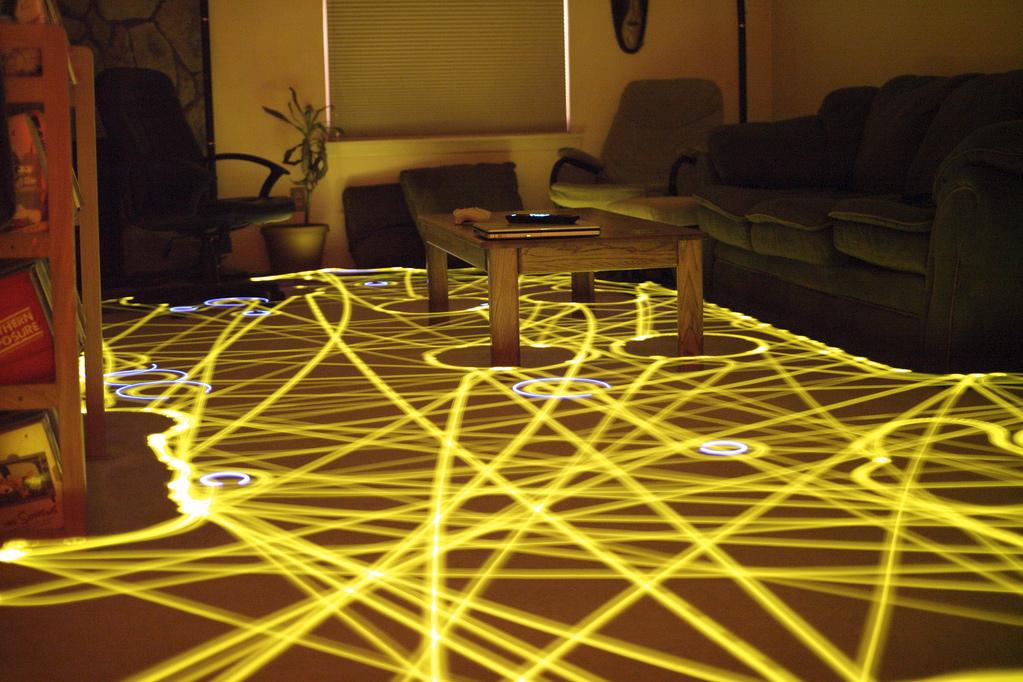
 A Roomba’s path represents an example of bottom-up AI.

But top-down AI can’t cope with stuff outside its rules-and-knowledge sets. Dealing with the unknown – like an autonomous car navigating the constantly changing conditions on the street – requires an inconceivably large number of rules. So researchers developed behavioral or “bottom-up” AI. Instead of writing thousands (or millions or billions) of rules, researchers built systems with simple behaviors (like “move left” or “read the next word”) and showed those systems which actions worked in different contexts – typically by “rewarding” them with points. Some bottom-up AI technologies are based on real-world neuroscience; for instance, neural networks simulate synaptic connections akin to a biological brain. As they’re trained, bottom-up systems develop behaviors – learn – to cope with unforeseen circumstances in ways top-down AI never managed. Real-world technologies developed in part from bottom-up AI include things like the Roomba vacuum, Siri’s speech recognition, and Facebook’s face recognition. Again, AI in the real world. 

What is machine learning?

Google’s acquisition of DeepMind is partly about “deep learning,” or ways of teaching bottom-up AI systems about complex concepts. Teaching bottom-up systems means throwing data at them and rewarding correct interpretation or behavior – this is called “supervised” training, because the data is already labelled with the correct answers. Of course, most data in the real world (pictures, video feeds, sounds, etc.) is not labelled – or not labelled well. Very basically, deep learning pre-trains bottom-up AI systems on unlabeled (or semi-labelled) data, leaving the systems free to draw their own conclusions. The pre-trained systems then get feedback on their performance from systems that received supervised training – and they catch on very fast, thanks to their previous experience.

Layer these systems on top of each other, and you get programs that can quickly cope with unknown and unlabeled data – just the kind of thing Google deals with by the thousands of gigabytes, twenty-four hours a day, seven days a week. Artificial intelligence researchers with connections to DeepMind have indicated the company’s research has recently produced significant advances in this type of machine learning.


“In my opinion, reinforcement learning and deep learning are not enough to give us ‘thinking machines.’” Sounds silly? Google’s already been at it for years. In 2012 it constructed a (comparatively small) neural network and showed it images culled from YouTube for a week. What did it learn to recognize without any guidance from humans or labelled data? Cats. (Figures, right?) “It basically invented the concept of a cat,” Google fellow Jeff Dean told the New York Times.

A year ago Google picked up image-recognition technology developed by Geoffrey Hinton at the University of Toronto and quickly put it to work on photos.google.com (login required) – they got Hinton part time, too. Last summer Google released word2vec, open source deep-learning software that runs on everyday hardware and can figure out relationships between words without training – that could have huge implications for software deducing concepts and intentions behind written and spoken language. A Google researcher speaking on background indicated he had high hopes for its use in education and information science.

What could Google do with deep learning?

What does Google see in DeepMind’s deep learning technology and (perhaps) applications that’s worth hundreds of millions of dollars? Nobody is saying – and both Google and DeepMind representatives declined to comment. But Google has many operations that could benefit:

Video recognition – Google says users upload more than 100 hours of new video to YouTube every minute. Google already scan new content looking for copyright violations and inappropriate material, but systems with deep learning capabilities could take the idea much further, perhaps recognizing people, objects, brands, products, places, and events. Of course, one focus could be piracy and copyright violations (potentially worth hundreds of millions to Google all by itself). But the technology could also better curate the millions of videos on YouTube, making suggestions and related videos much smarter.


Speech recognition and translation – Google Translate is already well regarded, but deep-learning neural networks could make it even better. Imagine traveling to a country where you don’t know the language and speaking with someone in a store using your smartphone; its microphone could hear their speech and pump an English translation into an earbud for you, then translate your speech for them. It’s not far-fetched: Microsoft Research has used the same deep-learning ideas pioneered by Geoffrey Hinton to significantly reduce error rates in speech recognition; combined with Bing Translator, they even have speech recognition, translation, and text-to-speech happening in near-real time.

Better search – Google’s empire is based on search, and Google has long used heuristics to refine results. (Searching for “football” this week will turn up more Super Bowl-related results than three months ago – at least for U.S. users.) Deep-learning technologies mean Google can better understand what people are searching for, producing better results. The same technology can also let Google better understand new information – think social-media posts, news items, and just-published Web pages – faster, delivering the “freshest” results more reliably.

Security – Deep learning and neural networks excel at pattern recognition, whether that’s pixels in an image or behaviors exhibited by users’ accounts or devices. Google could use deep-learning technologies to protect accounts and improve users’ trust in Google (no easy task these days). Security technology augmented by machine learning could not only look for suspicious behavior on individual accounts, but (perhaps more usefully) look at activity across the full breadth of Google’s services, identifying and shutting down malicious attempts to hack, phish, and manipulate users or employees.

Social – Google is already using deep learning technologies in Google+, so don’t be surprised when deep learning augments more social (and mobile) offerings. After all, Google needs to distinguish itself from competitors. Obvious examples include improved face recognition in videos and photos, as well as recognizing places and events, but the technology could go further, recognizing objects (skis, cameras, cars, holiday decor), products, clothing – heck, even types of food. After all, pictures of cats are only outnumbered on social networks by pictures of lunch.

Let’s not forget ecommerce – The bulk of Google’s revenue comes from online advertising, where deep-learning technologies could be applied to targeting users even more precisely with ads. But Google also wants to sell users movies, music, books, and apps via Google Play – and let’s not forget Google has been trying (not very successfully) to sell goods online via efforts like Google Shopping. Just as deep-learning technologies can enrich social experiences, they can power product recommendations and custom offers, perhaps helping Google compete with the likes of Amazon and Groupon.

Google will have to walk a fine line: Any of these applications could exponentially increase Google “creep factor” as leverage our personal data. Curiously, Google’s acquisition of DeepMind reportedly includes oversight by an internal ethics board.

Will DeepMind help the “Google Brain?”

So what the effort to create an artificial intelligence on par with human intellect? Sadly for fans of robot overlords, the DeepMind acquisition is at best peripheral to that effort, and probably unrelated.

“I’m glad to hear the news about Google’s acquisition of DeepMind, since it will attract more attention to this field,” noted Pei Wang, an artificial general intelligence researcher at Temple University. “However, in my opinion, reinforcement learning and deep learning are not enough to give us ‘thinking machines.’”


Google is still a long way from achieving the processing scale of a human brain, let alone understanding how it works. Part of the problem is scale. Google’s neural network that identified cats had 16,000 nodes, while a human brain has an estimated 100 billion neurons and 100 to 500 trillion synapses. Even Google doesn’t have that kind of computing horsepower sitting around.

More significantly, a “node” in a neural network – even one trained by deep learning – doesn’t correspond to a biological neuron. We still only have general ideas of how neurons work. If we want to build human-level intelligence by emulating biological processes, that means modeling physical and chemical details of neurons – and that’ll take even more computing power. Efforts have been made: In 2005, a 27-processor cluster took 50 days to simulate one second of the activity of 100 billion neurons; since then, the biggest brain simulation effort has probably been IBM’s 24,576-node effort to simulate a cat brain – although it did not model individual neurons.

In other words, Google is still a long way from achieving the processing scale of a human brain, let alone understanding how it works. Even with DeepMind.

DT

ORIGINAL:
Digital Trends
By Geoff Duncan
January 30, 2014
Posted by Unknown at 23:27 0 comments
Enviar por correo electrónicoEscribe un blogCompartir en XCompartir con FacebookCompartir en Pinterest
Etiquetas: Base de Datos, Conocimiento, Deep Learning, Domótica, Google, Inteligencia Artificial, Jeff Dean, Neurociencia, Publicidad, Reconocimiento de Video, Reconocimiento de Voz, Robótica, Vehículos

lunes, 23 de septiembre de 2013

(Energy) Harvest Festival

ORIGINAL: Traffic Technology International
August/September 2013

Illustration courtesy of Patrick George
The energy produced by vehicles driving on our roadways is a potentially huge source of untapped electricity. Louise Smyth meets the people who will have cause to celebrate if the concept sparks into life

Although the ideas of piezoelectric generation and embedding functionality into roads are not new, the notion of merging the two is novel. We've long embedded technologies in roadways, a case in point being the much-maligned loop detector Meanwhile, we've used piezoelectric materials for numerous applications over the years. So when considering a marriage between the two, a simple question to ask is, can any of the power created by vehicles driving over our roads be harnessed? Answering how this could be achieved is rather more complicated.

Simple thingsA piezoelectric energy harvesting system for roads is relatively straightforward. Vehicles drive over the surface, their tires place pressure on piezoelectric crystals embedded in the road, wíuch subsequently produce a small amount of energy. Multiply that scenario over a stretch of road with many vehicles traveling over the top and thousands of embedded crystals and you can almost envision a day when the lights of the Golden Gate Bridge could be powered by the vehicles driving over it We're not there yet We're at the academic and research stages, although some commercial outfits are taking the tentative steps to forming a compelling business case, as well as selling energy-harvesting equipment designed for roads. The potential would seem to be enormous, but fulfilling it is not without major challenges - something that anyone who's worked in the área can testify. John Gambatese, professor in the School of Civil and Construction Engineering at Oregon State University, is festival one of those researchers. Hot on the heels of Oregon’s successful solar highway deployment, he submitted his Research Problem Statement on energy harvesting for roadways to Oregon DOT at the end of 2012. 
“We leave a lot of energy on the road in different ways,” he says. “Whether it’s the vibration on a bridge or roadway, or the wind produced by the traffic, there’s energy there that can be harvested. It might only be a small amount at each location but when you add it up, it could help to power our traffic infrastructure, our streetlighting, or other electrical requirements we may have.”
So if that goes according to plan, what about selling the surplus back into the grid? 
“For now we’re just trying to develop the technology so we can start collecting energy,” Gambatese says. “Once we do that, we can monitor how much we obtain and then there’s a chance we can optimize the technologies with the goal being to feed electricity back into the grid. Whether or not we’ll have that capability in the next five to 10 years, though, I’m not so sure.”

From research to reality?
The FHWA is funding work on energy harvesting for roads, indicating that it sees some future potential in the concept. The Administration’s Eric Weaver reveals how the testing is being conducted and what the initial results have shown

The Virginia in Tech Transportation Institute (VTTI) presence is a notable in the testing of piezoelectric energy harvesting for roads and is currently involved in a US$1M FHWA-funded project.  The stated aim isn’t to assess commercially available systems but to put a VTTI-developed system through its paces. The research is being overseen by Eric Weaver, a research civil engineer in the FHWA’s Office of Infrastructure, R&D, and an expert in this sector. “We are currently exploring the potential," says a cautiously optimistic Weaver about the technology. “Our initial research indicates that the amount of energy harvested might be modest but could theoretically offset some utility costs or provide power in areas that  are currently inaccessible to the grid.”

Like many people in the field, Weaver foresees any power generated being used only where it is harvested, for th short term at least. "It's meant to provide energy within the energy right-of-way to be used for transportation infrastructure demands,” he continues. “However, depending on the application and the infrastructure demand, excess energy could potentially be transferred back to the grid, provided that the electric grid infrastructure is updated to enable this.
 “Our work has involved a significant amount of analytical modeling, as well as laboratory trial and error with different  geometric configurations of piezoelectric generators and the materials that encase them. Virginia Tech researchers have installed some sensors at two locations in the state, one of which is at a truck weigh station and the other at a full-scale test road called the VA Smart Road."

Interestingly, for comparison purposes, researchers also installed sensors from the Israeli company Innowattech in at least one of those locations.

Although Weaver reveals that the results so far are perhaps not as encouraging as vendors or proponents of the technology might hope, the work is helping to identify teething problems that likey be overcome. “So far in our research, low power output is observed with each axle load application. Part of the reason for this is that the wheel load doesn’t always pass directly over the generator, because they’re centered in the wheel path, where the wheels don’t onsistently track. To mitigate this problem, researchers are exploring other generator geometries that provide more spatial coverage.”

“The sensors have been rugged enough so far to hold up to the traffic loading they have received,” Weaver continues. “A further benefit is that the data from this project has been used to support another study performed for the California Energy Commission to evaluate the feasibility of all piezoelectric generation technologies currently on the market.”

Complete Text: Traffic Technology International August/September 2013 

"Depending on the application and the infrastructure demand, excess energy could potentially be transferred back to the grid"

www.TrafficTechnologyToday.com

Posted by Unknown at 9:50 0 comments
Enviar por correo electrónicoEscribe un blogCompartir en XCompartir con FacebookCompartir en Pinterest
Etiquetas: Autopista Solar, Energía Alternativa, ITS, Libro, Oregon, OSU, Piezoelectricidad, Recolección de Energía, Sistemas de Transporte Inteligente, Smart Grid, Transporte, Vehículos
Entradas antiguas Inicio
Suscribirse a: Entradas (Atom)

VANESSA RESTREPO SCHILD

VANESSA RESTREPO SCHILD
Co-founder and editor of Ciencia en Canoa

Buscar en este blog

Small Acts...

Small Acts...
Small acts, when multiplied by millions of people, can transform the world.

PeerJ

Cargando...

Greentech Media: Headlines

Cargando...

Most Recent

Random Posts


TOTAL DE GASES DE EFECTO INVERNADERO EN LA ATMÓSFERA EN TONELADAS MÉTRICAS

www.know-the-number.com

Our Climate is Changing!
Please download Flash Player.

@cienenca

Tweets by @cienenca

Cuántas personas han visitado la Página

Translate


¿Qué es CIENCIA en CANOA?

Ciencia en Canoa es un blog que comparte acontecimientos ambientales de alto impacto.

EVOLUCIÓN DEL CONCEPTO


2010 - 2011 Ciencia en Canoa inspirado en Ciencia en Bicicleta.

La bicicleta va por los pueblos, por las calles, repartiendo el conocimiento, llega a una región a la que no puede acceder porque hay agua en el medio, entonces se baja de la bicicleta y sigue viajando en la canoa por el agua repartiendo conocimiento en las comunidades más abandonadas.

Se usa el Pirarucú (Arapaima gigas) -un animal endémico de Colombia que habita en la selva del Amazonas y es cazado indiscriminadamente- como el símbolo de la canoa. El reconocimiento de la naturaleza como medio de transporte.


2012 Ciencia en Canoa inspirado en la expresión indígena.

Las bicicletas son metálicas, simbolizan la perpetuación de la industrialización en nuestros tiempos. El crecimiento población y la desbordante demanda de productos es la mayor preocupación de éste siglo que se enfrenta al aparente irreversible cambio climático y de allí donde surge la búsqueda por la preservación. Surgen palabras como biodegradable, autosostenible y ecoamigable como pilares para el desarrollo.

En una relación endosimbiotica sin nuestra especie estar dentro de otra o viceversa se crea esa conexión, ese aprendizaje del otro como fuente de ideas aquella similitud que nos permite construir con la esencia de nuestros cuerpos, que para aquellos que son vida están hechos de los mismos materiales.


VANESSA RESTREPO SCHILD
30/12/2011


Add to iGoogle
Follow @CienEnCa


This Week in Science - The Kickass Science Podcast

Cargando...

Archivo del blog

  • ▼  2019 (7)
    • ▼  noviembre (1)
      • The scientists who are creating a bio-internet of ...
    • ►  septiembre (3)
    • ►  febrero (1)
    • ►  enero (2)
  • ►  2018 (15)
    • ►  noviembre (1)
    • ►  agosto (9)
    • ►  mayo (3)
    • ►  enero (2)
  • ►  2017 (50)
    • ►  diciembre (4)
    • ►  noviembre (2)
    • ►  octubre (3)
    • ►  septiembre (2)
    • ►  agosto (1)
    • ►  junio (5)
    • ►  mayo (1)
    • ►  abril (4)
    • ►  marzo (11)
    • ►  febrero (12)
    • ►  enero (5)
  • ►  2016 (139)
    • ►  diciembre (1)
    • ►  noviembre (6)
    • ►  octubre (10)
    • ►  septiembre (19)
    • ►  agosto (2)
    • ►  julio (7)
    • ►  junio (27)
    • ►  mayo (16)
    • ►  abril (13)
    • ►  marzo (16)
    • ►  febrero (6)
    • ►  enero (16)
  • ►  2015 (296)
    • ►  diciembre (30)
    • ►  noviembre (25)
    • ►  octubre (12)
    • ►  septiembre (27)
    • ►  agosto (9)
    • ►  julio (32)
    • ►  junio (29)
    • ►  mayo (32)
    • ►  abril (25)
    • ►  marzo (43)
    • ►  febrero (16)
    • ►  enero (16)
  • ►  2014 (500)
    • ►  diciembre (27)
    • ►  noviembre (51)
    • ►  octubre (3)
    • ►  septiembre (17)
    • ►  agosto (31)
    • ►  julio (21)
    • ►  junio (14)
    • ►  mayo (17)
    • ►  abril (42)
    • ►  marzo (97)
    • ►  febrero (95)
    • ►  enero (85)
  • ►  2013 (997)
    • ►  diciembre (98)
    • ►  noviembre (35)
    • ►  octubre (13)
    • ►  septiembre (97)
    • ►  agosto (97)
    • ►  julio (117)
    • ►  junio (78)
    • ►  mayo (82)
    • ►  abril (93)
    • ►  marzo (107)
    • ►  febrero (90)
    • ►  enero (90)
  • ►  2012 (1461)
    • ►  diciembre (64)
    • ►  noviembre (71)
    • ►  octubre (133)
    • ►  septiembre (148)
    • ►  agosto (148)
    • ►  julio (170)
    • ►  junio (156)
    • ►  mayo (197)
    • ►  abril (140)
    • ►  marzo (126)
    • ►  febrero (48)
    • ►  enero (60)
  • ►  2011 (147)
    • ►  diciembre (16)
    • ►  noviembre (17)
    • ►  octubre (19)
    • ►  septiembre (12)
    • ►  agosto (16)
    • ►  julio (14)
    • ►  junio (15)
    • ►  mayo (9)
    • ►  abril (7)
    • ►  marzo (7)
    • ►  febrero (7)
    • ►  enero (8)
  • ►  2010 (25)
    • ►  diciembre (5)
    • ►  noviembre (8)
    • ►  octubre (12)

Entradas populares

  • Lego-like modular components make building 3-D 'labs-on-a-chip' a snap
  • The BIOLATAM 2013 program:
  • Concern Over Rare Rhino Rouses Clean Energy Drive in Malaysia
  • Asian Lion, Gir Forest. (Fewer than 300 or so Asian lions left on Earth)
  • The Secret of Ant Transportation Networks
  • ADN en la Nube
  • Plantas, animales y microbios son también recursos renovables
  • Se ha encontrado una nueva "Super Tierra" a la distancia apropiada para albergar vida
  • Lucía Atehortúa, profesora de la Facultad será conferencista de TEDxMedellín 2012
  • Jugando con sistemas biológicos

Etiquetas

Colombia (330) Biodiversidad (236) Agua (229) Medio Ambiente (157) Biomimicry (154) Contaminación (152) Cambio Climático (133) Ciencia (128) Educación (128) Estados Unidos (117) Innovación (113) Investigación (109) Minería (106) ecosistema (106) Evolución (105) Salud (103) Biología (102) Medellín (99) MIT (95) Video (94) Cultura (93) Energía (92) Google (92) Océano (92) ADN (90) NASA (85) Física (83) Computación (82) Genética (82) Amazonía (74) Combustible Fósil (72) Bacteria (67) Calentamiento Global (66) IBM (63) Deforestación (62) Japón (62) Economía (61) Comportamiento (60) Conservación (59) Nanotecnología (59) Biotecnología (58) Emisiones de Carbono (58) Materiales (57) Tecnología (56) Brasil (54) Gobierno (54) Descubrimiento (52) Antioquia (50) Arte (50) modelo (50) Astronomía (48) Protección (48) Transporte (48) China (47) Inundación (47) TED (47) Agricultura (45) Emergencia (45) Urbanismo (45) Desplazamiento Indígena (44) Geología (42) Nanomaterial (41) Colciencias (39) Especie en vía de Extinción (39) Matemáticas (39) Genómica (37) Aves (36) Jóvenes (36) Sequía (36) Australia (35) Abejas (34) Ambiente (34) Bioinformática (34) Exploración (34) Hidroelectricidad (34) Parques Naturales (34) Química (34) Bioenergía (33) Imagen (33) Naturaleza (33) Riesgo (33) Canadá (32) Política (32) biocomputación (32) Ecología (31) Sostenible (31) Vanessa Restrepo Schild (31) Ártico (30) Alemania (29) Bogotá (28) microscopía (28) Aire (27) Oro (27) Libro (26) Suiza (26) Efecto Invernadero (25) Entrevista (25) U de A (25) Arquitectura (24) Planeación (24) Chile (23) Ecuador (23) Recursos (23) 2012 (22) Bosques (22) Mujer (22) Reciclaje (22) Visualización (22) Bosque Húmedo Tropical (21) Desarrollo (21) Hongos (21) Imágenes (21) ONU (21) Clima (20) Premio (20) Tierra (20) Antropología (19) México (19) Reserva Natural (19) Smart Grid (19) Africa (18) Fauna (18) Fotografía (18) Hábitat (18) Satélite (18) Sociedad (18) Laboratorio (17) Solar (17) Alteración Antropogénica (16) Hidrología (16) Ilegal (16) Impacto Ambiental (16) Invención (16) Legislación (16) Ley (16) Mar (16) Medios (16) Música (16) Opinión (16) Pesticidas (16) Tailandia (16) Mercurio (15) Parque Explora (15) Alimento (14) Conferencia (14) Paleontología (14) Polinización (14) Seguridad (14) 2011 (13) Ambiental (13) Carbón (13) Deshielo (13) Especies (13) Flores (13) Pacífico (13) Tortuga (13) Bioluminiscencia (12) Financiación (12) Mutación (12) Nivel del Mar (12) Nuclear (12) Planta (12) Antártica (11) Bosque Tropical (11) Congreso (11) Corrupción (11) Global (11) Incendio Forestal (11) Jardín Botánico (11) Reforestación (11) Suelos (11) Botánica (10) EPFL (10) Lluvia (10) Renovable (10) BBC (9) El Carro del Futuro (9) Endangered Species (9) Espacio (9) Naciones Unidas (9) Población (9) Sir David Attenborough (9) Caza (8) Consumo (8) EPM (8) Gases (8) Gorila (8) ISS (8) La Niña (8) Nueva Zelandia (8) Orgánica (8) Patente (8) Reglamentación (8) Autonomía (7) Carro Eléctrico (7) Filipinas (7) Flora (7) Social (7) Trabajo (7) ACAC (6) Estadística (6) Evento (6) Inundaciones (6) Personajes (6) Políticas (6) Presupuesto (6) 2010 (5) Agua Subterránea (5) Andrés Hurtado García (5) CIENCIA EN CANOA (5) Charles Darwin (5) Comunidad (5) Congo (5) Control (5) Feria Científica (5) Fósiles (5) Galápagos (5) IPCC (5) Manizales (5) Radiación (5) Respeto (5) Temperatura (5) Tiempo (5) crecimiento (5) fósil (5) árbol (5) Alcaldía (4) Capital de Riesgo (4) Cuenca Hidrográfica (4) Entomología (4) Habitat (4) Huracán (4) Mercado de carbono (4) Mosca (4) Mujeres Jóvenes Talento (4) Negocios (4) Ocean (4) Parásitos (4) Resultados (4) USA (4) CAR (3) Cesar (3) Ciencia En Los Barrios (3) Concurso Mujeres Jóvenes Talento (3) Contaminación Genética (3) David Attenborough (3) Ecoturismo (3) Emergencias (3) Guayacán (3) IDEAM (3) IEA (3) Investigación Espacial (3) Mono (3) Mundial (3) Parque Tayrona (3) Partículas (3) Pesca Ilegal (3) Pingüino (3) Ser Humano (3) Tornados (3) Vías (3) acuerdo (3) Administración (2) Agrocombustibles (2) Aleta (2) Arctic (2) Bonobo (2) Carnívora (2) Cautiverio (2) Centro América (2) Ciudades (2) Convenio Diversidad Biológica (2) Deslizamientos (2) Disciplina (2) Energía Química (2) Estabilidad (2) Extremo (2) Historia Natural (2) Holograma (2) Humedales (2) Ilustración (2) Imágen (2) Incendio (2) Informe (2) Intervención (2) Irregularidades (2) Logros (2) Mapas (2) Mejoramiento Genético de Alimentos (2) Modelo de Negocio (2) Pequeño (2) Puerto Rico (2) Ranas (2) Relatividad (2) Secretaría de la Mujer (2) Sistema (2) Sur Äfrica (2) Tornado (2) Unicelular (2) Video Game 3D (2) Vía Láctea (2) fractales (2) ojo (2) Albinismo (1) Altura Marina (1) Alvaro Cogoyo (1) BST (1) Bio 2030 (1) Biofelicidad (1) Bosque Seco Tropical (1) Campaign (1) Construcción ilegal (1) Corporación (1) Cundinamarca (1) Célular (1) Efecto Lock-in (1) Estados Unidos de América (1) Expouniversidad (1) Fosil Fuel (1) Gasoducto (1) Gen Hox (1) Herramienta (1) Humberto Maturana (1) Iberoamérica (1) Industria acuícola (1) Interactiva (1) Invernal (1) Isabelinismo (1) LSU (1) Laboratorios de Investigación y Desarrollo (1) Malpelo (1) Mascota (1) Mayas (1) Muros Verdes (1) Naciones Unidad (1) Nativas (1) Neutrinos (1) Normas (1) Nueva Guinea (1) Observaciones (1) Periodista (1) Petición (1) Pisos (1) Pluricelular (1) Pol'iticas (1) Precámbrico (1) Propiedad (1) Proridades (1) Reflexiones (1) Rio de Janeiro (1) Suramerica (1) Tormentas Eléctricas (1) Vertebrado (1) Virtual Reality (1) Vocaloid (1) confocal (1) África Oriental (1) Économía (1)

EcoEarth.Info Environment

Cargando...

Seguidores

Business

Flickr Widget

Recent

Comments

Popular Posts

  • Electric Eels Found To Leap Out Of Water To Shock Predators
    Electric Eels Found To Leap Out Of Water To Shock Predators
    Main image credit:  Josh More/Flickr CC BY-NC-ND 2.0 ELECTRIC EELS HAVE BEEN FOUND TO SHOW SHOCKING LEAPING BEHAVIOR. As if growing...
  • Lego-like modular components make building 3-D 'labs-on-a-chip' a snap
    Modular fluidic and instrumentation components developed by researchers at the University of Southern California Viterbi School of Engi...
  • How to Make Moss Graffiti
    ORIGINAL: WikiHow Edited by Teresa and 19 others Moss graffiti, also called eco-graffiti or green graffiti , replaces spray p...
  • The olm: the blind cave salamander that lives to 100
    ORIGINAL: Discover Magazine The olm is a blind, cave-dwelling salamander, also called the proteus and the “human fish”, for its pale, ...
  • Physicists confirm (what biologists have already konwn for years)  there's a second layer of information hidden in our DNA
    Physicists confirm (what biologists have already konwn for years) there's a second layer of information hidden in our DNA
    Liya Graphics/Shutterstock.com Theoretical physicists have confirmed that it's not just the information coded into our DNA that sh...
  • Smart Contact Lenses Will Give You Superhuman Vision
    LAS VEGAS — Your future contact lenses could give you superhuman vision. Just one year after eyewear startup Innovega announced a pro...
  • Luke Bawazer on Genetically Evolving Technology
    Luke Bawazer on Genetically Evolving Technology
    ORIGINAL: 33rd Square April 1, 2013  Synthetic Biology    Luke Bawazer 's research in synthetic biology aims to ...
  • The BIOLATAM 2013 program:
    PROGRAM BIOLATAM 2013 will feature a program of conferences addressing the following topics: Conferences, December 9th “VEN...
  • The scientists who are creating a bio-internet of things
    The internet of things connects devices across the globe. Now researchers are considering how bacteria can join the network. by Emerging T...
  • Concern Over Rare Rhino Rouses Clean Energy Drive in Malaysia
    ORIGINAL: National Geographic News Jeff Smith Published February 22, 2012 Plans for a coal plant near one of the last remaini...

RSS

Entradas
Atom
Entradas
Comentarios
Atom
Comentarios

Contact

Vanessa Restrepo Schild
Research Scientist

cienciaencanoa@gmail.com

Research Interests
Biochemistry and Physiology

FB:
http://www.facebook.com/pages/Ciencia-en-canoa/168229513187101
Copyright © Ciencia en Canoa created by Vanessa Restrepo Schild & Hugo Angel. Imágenes del tema: Storman. Con la tecnología de Blogger.