Bioprinting technique may provide potential for tissue repair and regenerative medicine
Researchers are one step closer to embedding vascular networks into thick human tissues, which could result in tissue repair and regeneration — and ultimately even replacement of whole organs.
The advance was reported Monday in the journal Proceedings of the National Academy of Sciences.
“This latest work extends the capabilities of our multi-material bioprinting platform to thick human tissues, bringing us one step closer to creating architectures for tissue repair and regeneration,” says the study’s senior author, Jennifer A. Lewis, who is a Wyss core faculty member and the Hansjörg Wyss Professor of Biologically Inspired Engineering at SEAS.
Printing Vascular Tissue
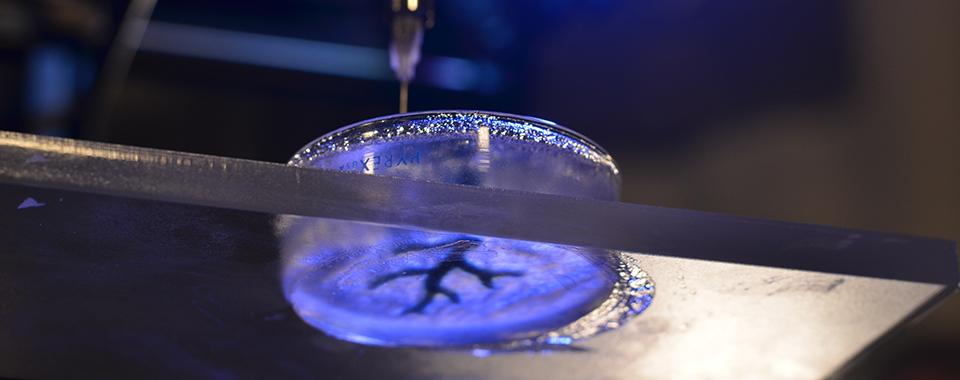
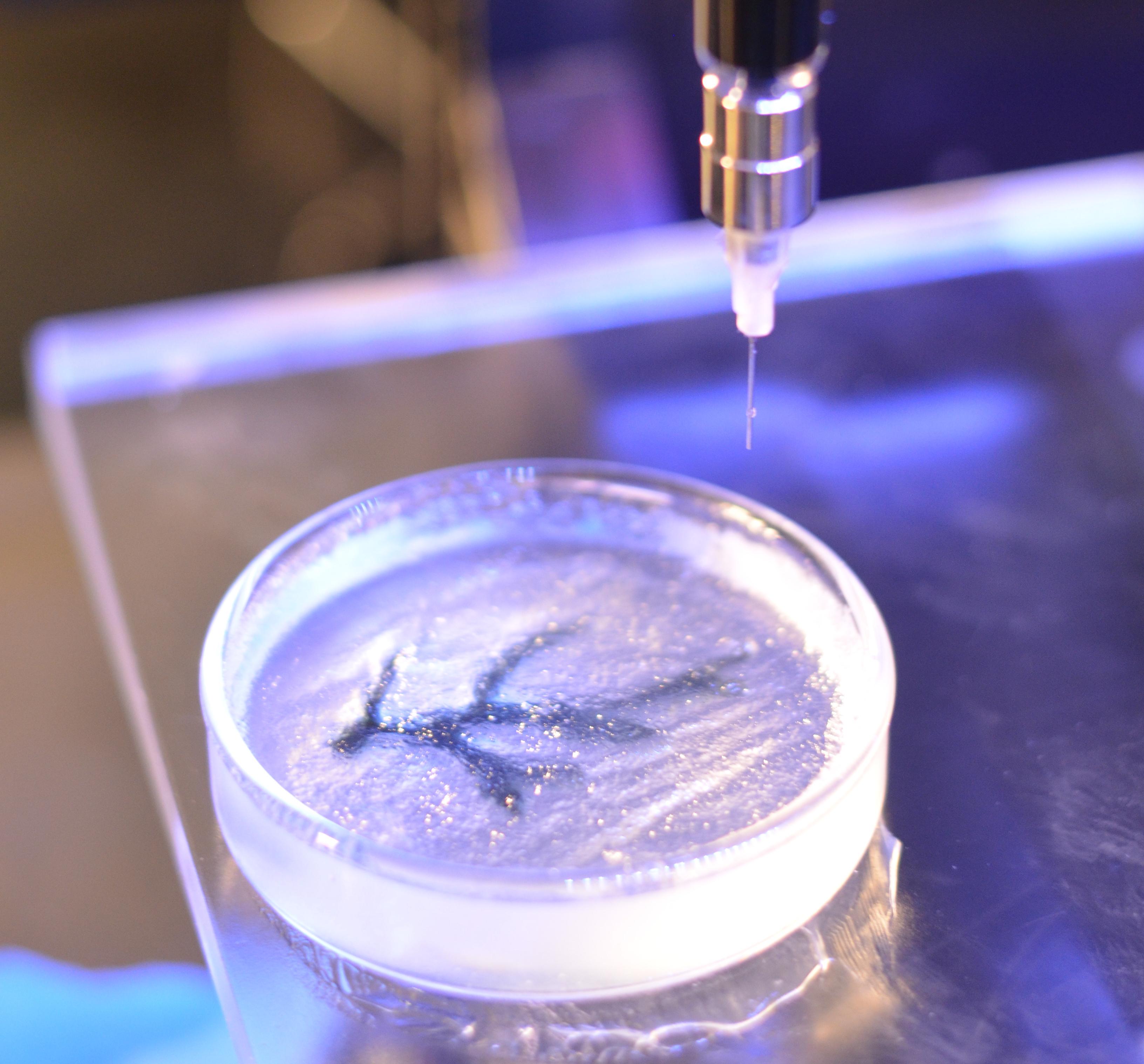
Printing vessel vasculature is essential for sustaining functional living tissues. Until now, bioengineers have had difficulty building thick tissues, lacking a method to embed vascular networks. Credit: Lewis Lab/ Wyss Institute at Harvard University
In the study, Lewis and her team showed that their 3-D printed, vascularized tissues could thrive and function as living tissue architectures for upwards of six weeks.
To date, scaling up human tissues built of a variety of cell types has been limited by an inability to embed life-sustaining vascular networks. Building on their earlier work, Lewis and her team have now increased the tissue thickness threshold nearly tenfold, setting the stage for future advances in tissue engineering and repair. The method combines vascular plumbing with living cells and an extracellular matrix, enabling the structures to function as living tissues.
As an example of what can be done with the technology, Lewis’ team printed 1-centimeter-thick tissue containing human bone marrow stem cells surrounded by connective tissue. By pumping bone growth factors through supporting vasculature lined with the same endothelial cells found in human blood vessels, the scientists induced the cells to develop into bone cells over the course of one month, according to the study.
“This research will help to establish the fundamental scientific understanding required for bioprinting of vascularized living tissues,” said Zhijian Pei, National Science Foundation program director for the Directorate for Engineering Division of Civil, Mechanical, and Manufacturing Innovation, which funded the project. “Research such as this enables broader use of 3-D human tissues for drug safety and toxicity screening and, ultimately, for tissue repair and regeneration.”
Lewis’ novel 3-D bioprinting method uses a customizable, printed silicone mold to house the printed tissue structure. Inside this mold, layers of vascular channels made of pluronic (a material that liquefies at refrigerator temperature) and living stem cells are interdigitated like locking fingers. A cellular matrix is poured around this structure, and solidifies. The entire device is then refrigerated until the pluronic turns to liquid and is sucked out by a vacuum. This creates channels through which liquid containing endothelial cells, oxygen, nutrients, and growth factors — basically, simulated blood — can flow.
The bioprinted material can be used to create living tissue cultures as well as to drive directed tissue growth such as differentiating stem cells. To achieve a variety of tissue shapes, thicknesses, and composition, the shape of the printed silicone chip can be customized and the printable cellular material can be tuned to include a wide variety of cell types. In other words, this new method creates a fully controllable, living 3-D tissue environment, researchers say.
“Having the vasculature prefabricated within the tissue allows enhanced cell functionality at the deep core of the tissue, and gives us the ability to modulate those cell functions through the use of perfusable substances such as growth factors,” said David Kolesky, a graduate researcher at the Wyss Institute and SEAS and one of the study’s first authors.
“Jennifer and her team are shifting the paradigm in the field of tissue engineering based on their unique bioprinting approach,” said Wyss Institute Director Donald Ingber. “Their ability to build living 3-D vascularized tissues from the bottom up provides a potential way to form macroscale functional tissue replacements that can be surgically connected to the body’s own blood vessels to provide immediate perfusion of these artificial tissues, and thus, greatly increase their likelihood of survival. This would overcome many of the problems that held back tissue engineering from clinical success in the past.”
Ingber is also the Judah Folkman Professor of Vascular Biology at Harvard Medical School and the vascular biology program at Boston Children’s Hospital, and professor of bioengineering at SEAS. In addition to Lewis and Kolesky, other team members on the new study include co-first authors Kimberly Homan, research associate at the Wyss Institute, and Mark Skylar-Scott, postdoctoral fellow at the Wyss Institute.
The work was supported by the National Science Foundation and the Wyss Institute for Biologically Inspired Engineering at Harvard University.
Adapted from a Wyss Institute press release written by Kat J. McAlpine, Wyss Institute Communications.
It's 7.5 times lighter than air, and a cubic metre of the stuff weighs just 160 grams. It's 12 percent lighter than the second lightest material in the world -aerographite - and you can balance a few cubic centimetres of the stuff on a dandelion head.Water is about 1,000 times as dense.
Yep, graphene aerogel is about as cool as it gets. And while silica aerogel(pictured above) is the most commonly used and studied type of aerogel, as of 2013, graphene aerogel has held the record of being the lightest material on Earth. And producing it is about to get a whole lot easier, because scientists have just figured out how to 3D print it.
Nicknamed 'frozen smoke', aerogel looks like a gas - and certainly has the weight and density of a gas - but is actually a solid, and an incredibly flexible, conductive, compressible, and absorbent one at that.
Its strange and entirely unique properties have scientists exploring its potential in everything from invisibility cloaks to environmental clean-up - just 1 gram of aerogel can absorb up to 900 times its own weight in materials such as oil - so a cheap, efficient way of producing it is key to accelerating the process.
Now, scientists from the State University of New York and Kansas State University describe how they’ve managed to produce it using a 3D printing technique that ensures that the whole process is automated, and every piece comes out uniform and perfect.
On its own, graphene is a two-dimensional, one-atom-thick layer of pure carbon atoms, tightly packed together in a hexagonal honeycomb lattice. To produce graphene aerogel, you basically have to freeze-dry layers of graphene and stack them into a three-dimensional structure.
aerogel, balancing on a flower. Credit: Zhejiang University
Graphene
Figuring out how to marry graphene aerogel with 3D printing technology was no small feat, because the molecular structure that gives rise to all its incredible properties is the one thing that makes printing it extremely difficult.
"Typically, to 3D print aerogel, the core material is mixed with other ingredients, such as a polymer, so that it can be pushed out using inkjet printers. Once the structure is made, the polymer is removed by a chemical process. In the case of graphene aerogel, however, doing this destroys its delicate structure."
The solution?Graphene oxide - a form of graphene with molecular oxygen incorporated into it. By mixing this compound with water and laying it out over a surface cooled to -25°C, the researchers could instantaneously freeze individual layers of graphene, and construct the three-dimensional aerogel, scaffolded by ice.
As Rathi explains, once the construction process was complete, the ice 'scaffolds' were removed by using liquid nitrogen to freeze-dry the water right out of the ice without damaging the rest of the structure.
"The material was then heated to remove oxygen atoms, which left only graphene in the aerogel," says Rathi. "The resulting solid had densities ranging from 0.5 kg per cubic metre to 10 kg per cubic metre. The lightest aerogel ever produced is about 0.16 kg per cubic metre (compared to 1,000 kg per cubic metre for water)."
You can watch the process below:
The team has published the technique in the journal Small, and they're now looking at how they can produce other types of aerogel, such as silica aerogel, using the same machine.
It’s easy to see why 3D printing is so often equated with magic. Who would have ever dreamed we could set up a fairly simple machine, give it some instructions, and watch it fabricate items from the smallest to largest–right in our own homes? That’s enough to blow any time traveler’s mind, but when you look at the progress being made with bioprinting, it’s apparent that we’ve finally entered that future of technology and progress that has been predicted for decades.
Scientists today would most certainly make it clear that bioprinting is not a result of magic, but that of many hours logged in the lab as they work to make it viable in the future for use in the areas of pharmaceuticals and organ transplants. Before concepts can come to fruition, however, the tools must be in place.
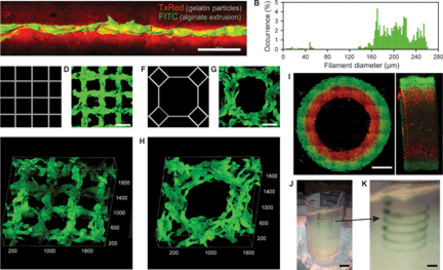
Analysis of the hydrogel filaments and structures fabricated using FRESH
At the Carnegie Mellon University College of Engineering, research in soft material bioprinting may eventually mean that waiting lists for transplants can one day be eliminated, as procedures like repairing the heart may soon become much easier.
Their first concern though was creating the optimum 3D printer for the fabrication of soft materials and tissue. Because the normal 3D printer is used to create models that are generally hard and durable, the research team had to come up with a machine that could make pliable materials. While traditional 3D printing hardware may not work for the type of bioprinting these researchers want to do, all the same benefits that come with 3D printing technology are what propels these researchers to their ultimate goal, with the use of open-source technology and great affordability.
Just published in Science Advances, the researchers outline how they are able to 3D print ‘soft protein and polysaccharide hydrogels’ with a new process they have abbreviated to call FRESH, which stands for freeform reversible embedding of suspended hydrogels.
Add caption
“Traditional 3D printers print hard materials, and we’re really trying to move that into a whole new range of soft materials that will eventually allow us to print living things,” says Adam Feinberg, associate professor of Materials Science and Engineering and Biomedical Engineering at Carnegie Mellon University.
One gel is printed inside of another, which acts as a support and allows for stable printing of layers. The soft materials are 3D printed in a gentle support bath which is heated at the end and allows for removal of the pliant model without damaging or killing it.
“The support bath is composed of gelatin micro-particles that act like a Bingham plastic during the print process, behaving as a rigid body at low shear stresses but flowing as a viscous fluid at higher shear stresses,” state the researchers. “This means that, as a needle-like nozzle moves through the bath, there is little mechanical resistance, yet the hydrogel being extruded out of the nozzle and deposited within the bath is held in place. Thus, soft materials that would collapse if printed in air are easily maintained in the intended 3D geometry.”
Adam Feinberg
The team has gotten to this point through hacking and building their own 3D printer. While technology for this type of work would generally cost close to $100K, it is the use of open-source software and hardware, resourcefulness, and numerous different innovative approaches that allowed them to make their own machine for exponentially less.
“FRESH is built on open-source hardware and software and the gelatin slurry is low cost and readily processed using consumer blenders,” state the researchers. “To emphasize the accessibility of the technology, we implemented FRESH on a $400 3D printer (Printrbot Jr, movie S10) and the STL file to 3D print the custom syringe-based extruder can be downloaded…”
“It should be acknowledged that the direct bioprinting of functional tissues and organs requires further research and development to become fully realized, and a number of companies and academic laboratories are actively working toward this goal.”
The researchers see the low cost of their technique, combined with the 3D printing of hydrogels, as one that could transform and significantly expand bioprinting and breakthroughs in a variety of sectors–especially in pharmaceuticals and regenerative therapy.
“We’ve been able to take MRI images of coronary arteries and 3-D images of embryonic hearts and 3D bioprint them with unprecedented resolution and quality out of very soft materials like collagens, alginates and fibrins,” said Feinberg.
Their next step as they evolve in this process, is to integrate actual cells from the heart into their 3D printed tissue. This will work in the future as a foundation or scaffold for building actual muscle. We’ll continue to follow this team as they work together in making staggering developments via research, open source software and hardware and 3D printing. Let’s hear your thoughts on the implications of printing such tissue. Discuss in the 3D Printed Soft Tissue forum thread on 3DPB.com.
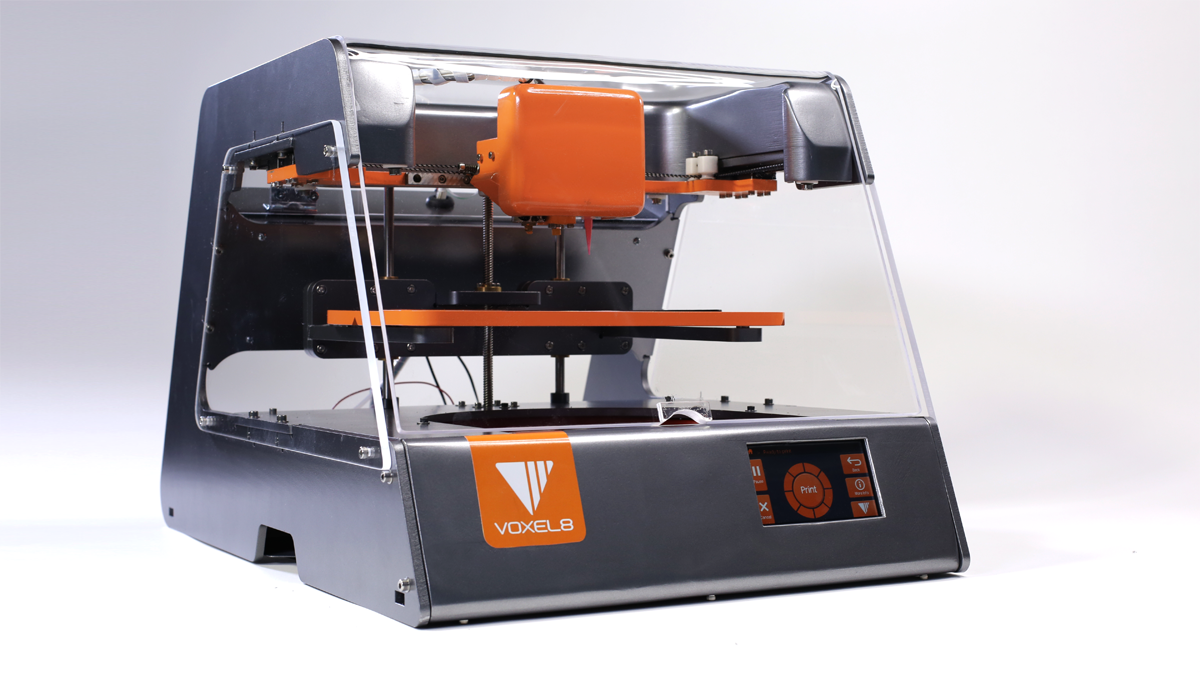
This year, one startup shook the industry with the potential to push 3D printing to the next level and it wasn’t Carbon3D. Though Carbon3D’s ultra-fast CLIP technology has huge implications for the potential of 3D printing, it can only satiate the desire for speed and instant gratification. Still, CLIP will be, at least as it was presented to the public, a method for producing parts. Voxel8, however, is working towards the ability to produce, not parts, but completely functional objects with their Developer’s Kit, a unique desktop platform for 3D printing electronics and other multi-material objects. And, now, the Boston-based Harvard spin-out has obtained $12 million to push this technology even farther.
Today, Voxel8 announced the closure of a Series A funding round that saw the startup receive $12 million in capital, led by Braemar Energy Ventures and ARCH Venture Partners, with participation from Autodesk’s Spark Fund and In-Q-Tel, the investment arm of the Intelligence Community. I had the opportunity to speak with CEO and Founder Dr. Jennifer Lewis, along with Co-Founder & Business Lead Daniel Oliver, about the new funding, what it means for Voxel8, and what Voxel8’s technology means for the future of 3D printing.
CEO and Founder of Voxel8, Dr. Jennifer Lewis.
“There are two pathways that we’re going to be executing on with that funding,” Dr. Lewis began, “First and foremost, we’re going to be using those funds to ramp up manufacturing of the Developer’s Kits, for which we’ve received pre-orders across multiple industry sectors: aerospace, automotive, consumer electronics, and beyond. We’re still targeting shipment of these pre-orders for Q4 of this year.” Manufacturing of the Developer’s Kits will be performed in house, which ensures the quality of each product, while also educating the startup as to the proper methods for building a quality assurance operation.
Then came the really exciting news, “And, at the same time, there’s a lot of market pull for our next advanced industrial-scale – what we’re calling – a ‘pro printer’, if you will. So, some of those dollars will go towards bringing that product to market, as well.”
What is the Developer’s Kit?
Currently, the Developer’s Kit works with two materials,
PLA plastic and
conductive silver ink,
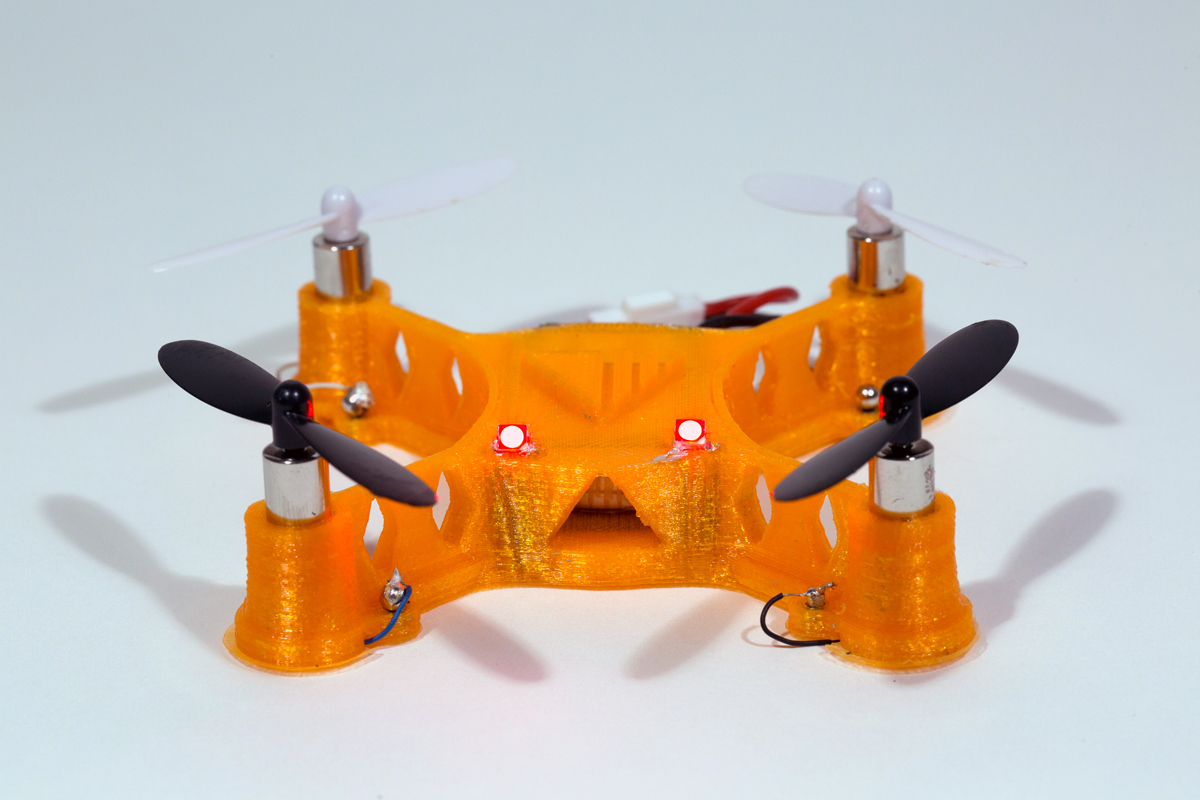
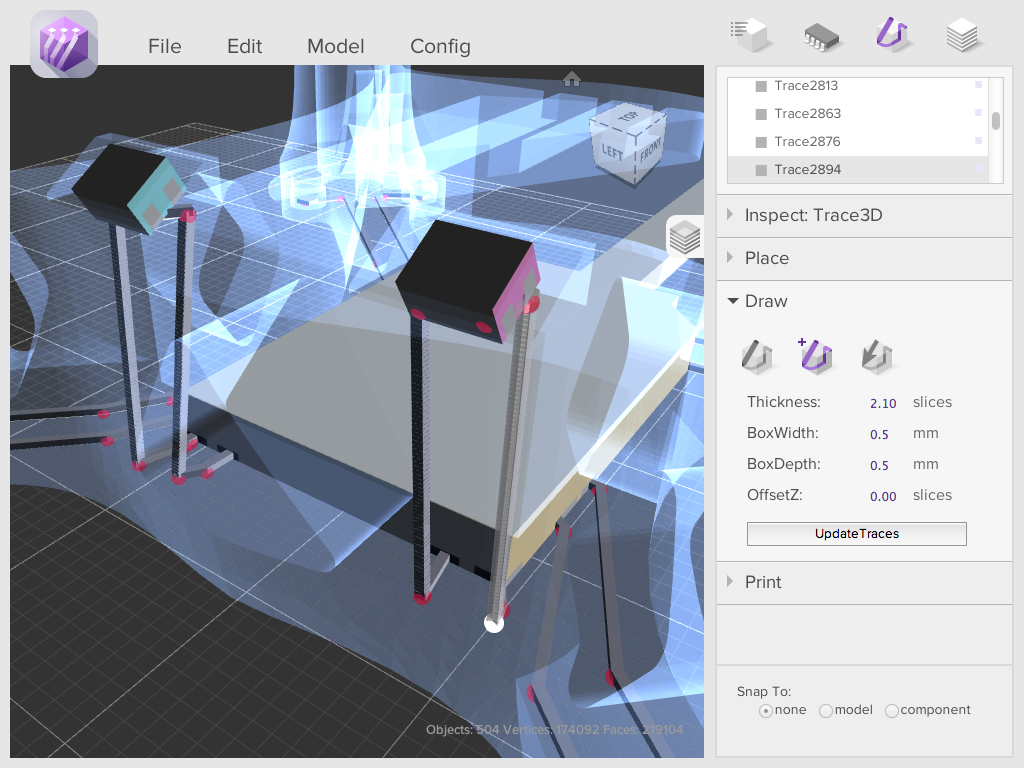
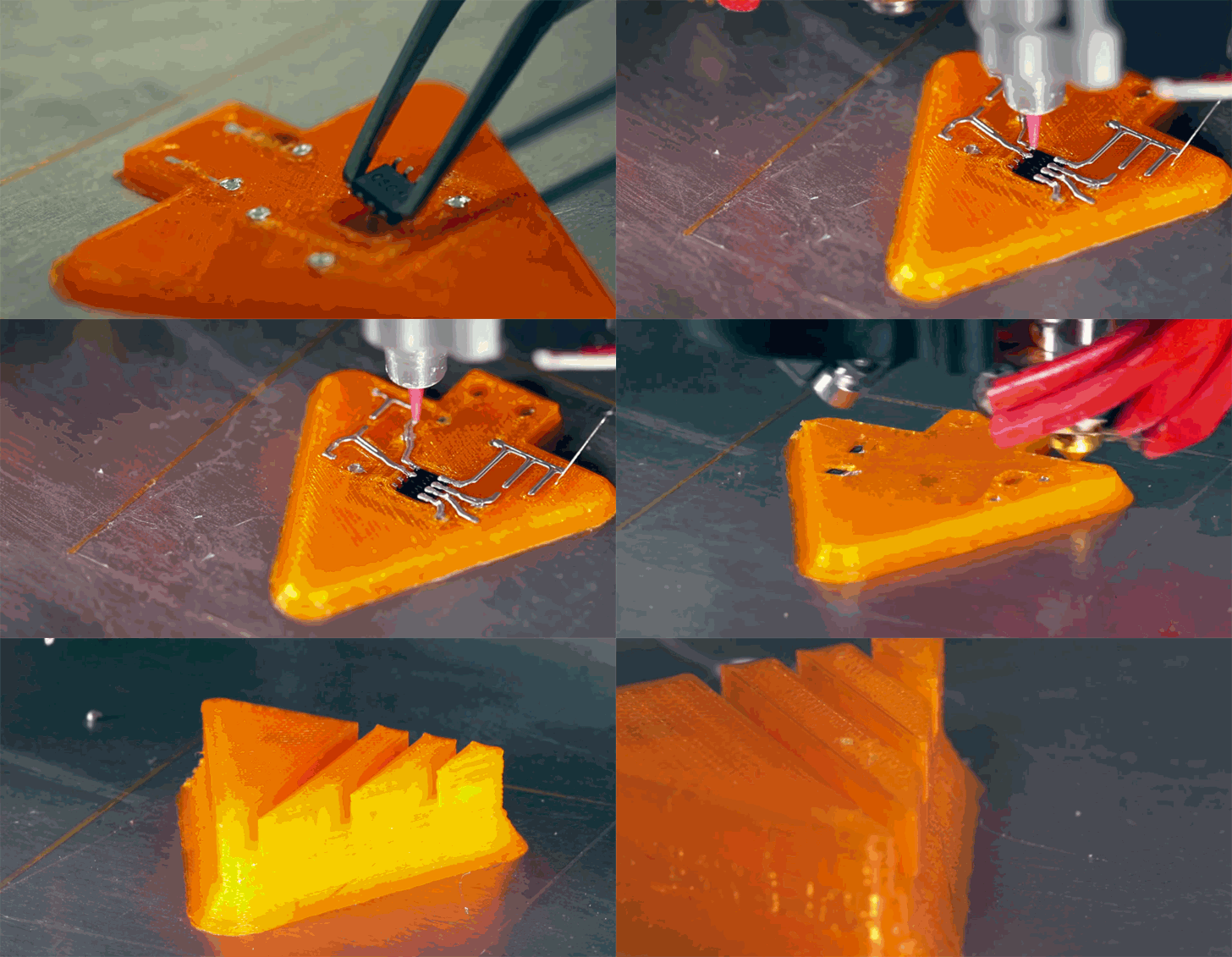
to combine traditional fused filament printing with electronic circuitry. Plastic is extruded out of one portion of the printhead and the conductive ink is dispensed out of another to create electric traces. With the help of Autodesk’s Project Wire, users can drag and drop components, such as transistors and resistors, into a CAD model so that, using Voxel8’s proprietary toolpath software, the printer can pause at the appropriate moment during a print task for the manual embedding of these electronics within the print. Printing then continues and, in the end, the user has a fully-functional object. The startup showcased this ability by 3D printing a quadcopter that, once completed, was able to fly off of its printbed.
The, now famous, Voxel8 3D printed quadcopter, unveiled at CES.
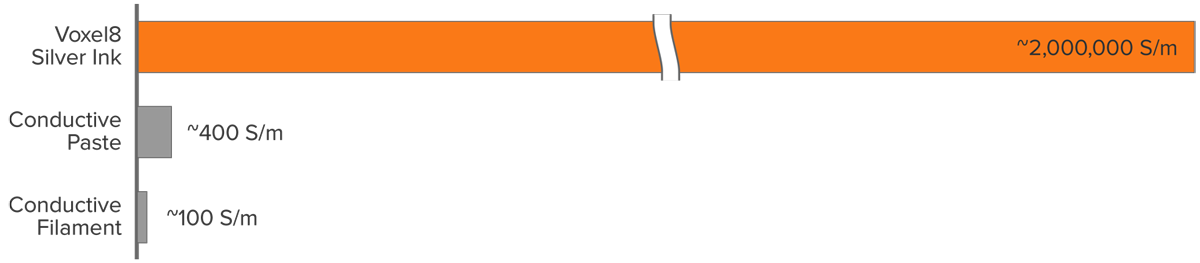
There are already conductive filaments on the market, meant for 3D printing projects that involve electronics, so I asked the Voxel8 founder to elaborate on the difference between their conductive ink and the filaments currently being sold. Lewis replied,“Right now, so, if people get desktop printers that use filaments – They’re typically carbon-filled, so they have really low conductivity because carbon particles are much less conductive than metallic particles. So, we’re developing these silver-based inks. First of all, they have this higher-conductivity particle phase and, secondly, they’re not based on polymer filaments. It’s really a low-viscosity solvent.”
The conductivity of Voxel8’s silver ink, as compared to other conductive 3D printing materials on the market.
She goes on to discuss the dispensing mechanism that makes the Voxel8 platform possible, “It’s an extrusion-based, pneumatic dispenser and that’s one of the really big innovations on the desktop printing platform. We’re moving beyond fused filament deposition and we’re complementing that with pneumatically dispensed inks. That opens up, basically, every ink design we’ve developed in my lab at Harvard, all of which are dispensed in that fashion. So we can bring a broad range of materials to the printing platform.”
Combining multiple materials, Oliver adds, gives users the ability to interface objects created by the Developer’s Kit with other technologies, “The ability to print multiple materials together really works well with interfacing with other technologies.
We can print conductive traces.
We’re able to interface with a large amount of electronic components out there.
So, you can see the power of these electronic components within a 3D printed object and we look to expand that in the future. The key here though is being able to print multiple materials together on the same printer. And that allows you to interface with more and more technologies, really expanding the dimensions of what’s on the printer.”
Challenges in Developing the Developer’s Kit
As you might imagine, bringing the hardware, software, and materials together in just the right way to pull off multimaterial electronics printing is no easy task. Dr. Lewis describes the different obstacles Voxel8 has overcome to bring about this novel device,“The challenges we’re tackling on all fronts. It’s materials integration: trying to integrate disparate materials, like thermoplastics with conductive inks. It’s the hardware, which brings together multiple printheads.”
She continues, “And this, frankly speaking, is also on the software side. We’ve been very fortunate to partner with Autodesk, through their Spark platform on the software Project Wire, which allows designers and engineers to actually create, in their CAD models, the ability to embed these conductive features and electronic parts. But then Voxel8 has proprietary software for slicing for toolpath planning and, as you start to think about co-printing multiple types of materials – the matrix, the plastic, and the conductive materials – that toolpath planning is also very important.”
The CEO concludes, “So, tertially speaking, there’s challenges across all three key components of the printing platform – the materials, the hardware, and the software. And Voxel8 is tackling those.”
The Voxel8 Pro
Details about Voxel8’s “pro printer” are still “locked down” at this point, according to Lewis, but Dan Oliver was able to elaborate on the fact that it will be developed based off of input from their first Developer’s Kit customers, “We’re working with our current customers and our initial partners to effectively guide the design of the next, pro platform. Michael, as you and I have talked about in the past, the idea with the Developer’s Kit was to get them out there and to spark people’s imagination. We’ve gotten really great feedback of what people would want down the line and they’re super excited to get their printers. So, we’ll be working with those initial customers to help define what those next types of platforms would look like and make sure we’re executing on our customers’ input.”
As exciting as conductive ink is, my mind was reeling with possibilities for the next generation machine – which I label in my mind “the Voxel8 Pro”. Dr. Lewis’s work with her Harvard lab and, previously, her University of Illinois lab, fill the spectrum of materials sciences and 3D printing, from 3D printing microscale lithium ion batteries to fabricating channels for possible uses with bioprinting. Though some of this work may not necessarily make it into her startup, the pneumatic dispenser at the heart of Voxel8’s hardware was developed right out of her lab and opens the doors to a huge array of materials for desktop printing.
So, while the Voxel8 Pro may be an overall improved machine, it will also likely have the ability to print a greater variety of materials, including epoxy and elastomers. Lewis explains, “It’s not only the printing platform – you know, bringing an improved platform with higher resolution and these kinds of things to market – but it’s also a broader palette of materials. Releasing a customized set of materials that best meets our users’ needs. In addition to the conductive ink that’s going to be launched with our Developer’s Kit, we’re going to broaden the matrix materials to include epoxy and elastomeric materials. Just a broader palette of matrix and functional inks.”
Who Wants to Buy a Voxel8 Printer?
The ability to 3D print electronics and, in the future, elastic materials with rigid materials, has, naturally, garnered a lot of attention. Without disclosing their customers, Dr. Lewis was able to speak to one possible application for their platform,“We can talk generically about some use cases. We’ve been given, by prospective customers and people that have already pre-ordered our developer’s kit, applications in the biomedical space – we see hearing aids as a big target opportunity. There are use cases in almost every vertical I’ve mentioned already that we’ve either received CAD files for or have had discussions.”
As enticing as it would be know who these clients were, Oliver was quick to point out that the diverse industries represented by their clients indicate just how widely applicable the Voxel8 platform could be. “The most interesting thing to talk about here is our customer list,” Oliver explains. “You have the leading companies in automotive, aerospace, consumer electronics, medical devices, and apparel. We have really interesting companies that have bought the printer, so, the use cases span the gamut of those customers.”
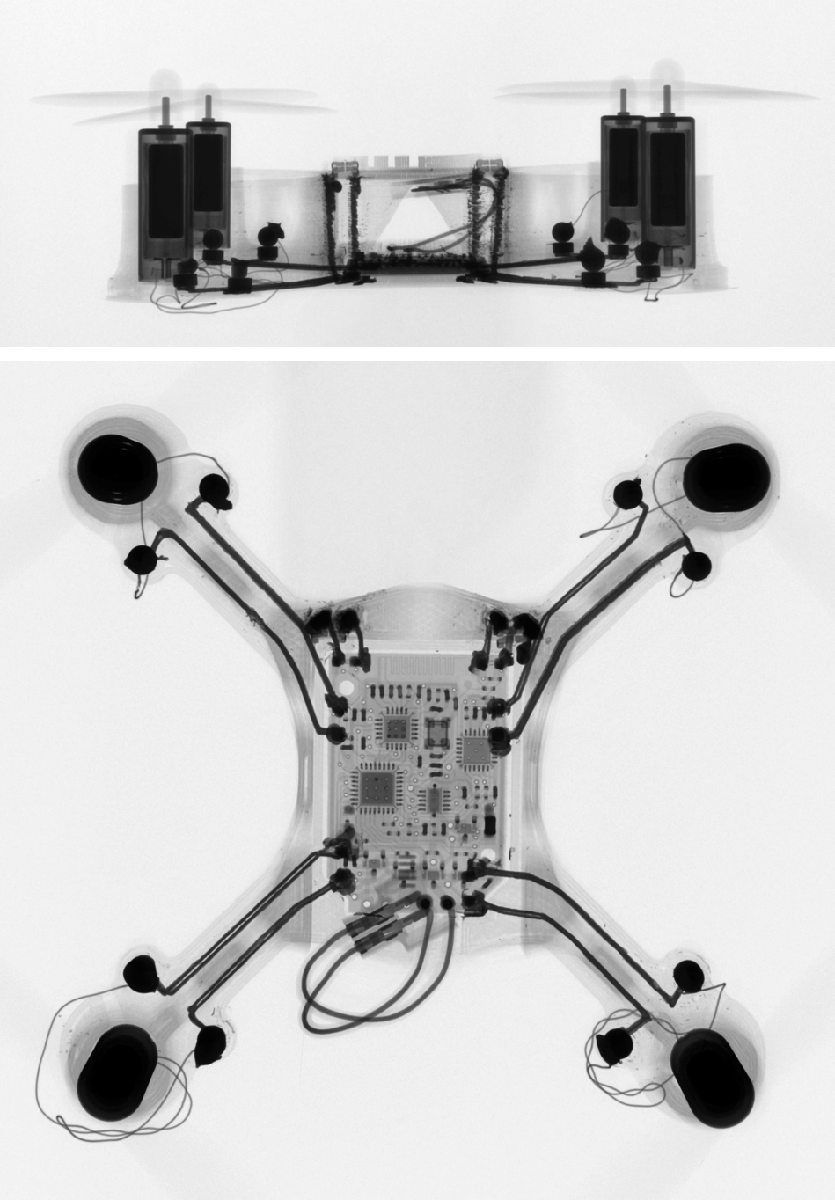
Voxel8’s 3D printed quadcopter under CT scan.
Dr. Lewis added, “We should also mention the defense companies, because they’re also prominent early adopters.”In fact, Voxel8 has already received interest from some pretty important customers. Among them is In-Q-Tel, the non-profit venture capital arm of the Intelligence Community, who have just contributed even more to the startup. As you may have guessed, this work is top secret, but the investment speaks to the profound power that multi-material electronics 3D printing has.
Voxel8 has also signed an agreement with the government-focused MITRE Corporation, for whom the startup is researching the possibilities of 3D printing antenna arrays. Of course, as they’re doing this work on behalf of an unnamed government sponsor, this work is also under wraps. “We can’t really say more than that we’re working on 3D printed embedded antenna and antenna arrays. That’s all that we’re at liberty to say. But I think you can imagine that what our printer can deliver is three-dimensional antenna designs that simply can’t be manufactured by other means.”
Dan Oliver, however, was able to elaborate on the benefits that 3D printing brings to fabricating antennas. “Standard antennas are made on standard PCB boards, which are two-dimensional. Antennas themselves, though, really live in the three-dimensional world. So, we’ve created these large-footprint antennas by forcing them to live in two dimensions,”Oliver says. “But what we’re really excited about is being to create these high-performance antennas that are three-dimensional. And ours is one of the few technologies that’s able to do that.”
Voxel8 2.0 & 3D Assembly
These projects will only be pushed further with the latest funding round and the future of the technology looks bright. At the moment, electronic components must be manually placed into an object during the printing process, but this is definitely a feature that could be made obsolete. Lewis and Oliver explain that all of the technologies to automatically fabricate fully functional electronic devices already exist, but separately from one another.
When asked about the possibility of automatically inserting transistors and resistors into 3D printed objects, Lewis responded, “Yes. At this point, with our desktop printer, we’re already embedding these kinds of functional objects. We’re doing it by manual pick and place, but it’s very easy to conceive that, on our road map, transitioning to automated pick and place is the future. So, absolutely, that will be accommodated by our printing platforms.”
Oliver elaborated, “One thing we think about a lot is, ‘what is the next printer going to look like?’ And the answer to that is to ask what is needed. Effectively, the technologies to print that all automatically exist separately, if you combined our technology with pick and place technology. So. it becomes, not solving the technological problems – though we still have work to do there – it’s what things we need to put together that’s really going to push this to the next level.”
In fact, Oliver says, there is a lot going on behind the closed doors of the Voxel8 lab that just aren’t ready to be launched with this first product. “So, something like the quad copter. We’re already doing that. We don’t have an automatic pick and place system because that doesn’t make sense for the developer’s kit. So, a lot of these things that seem futuristic, we’re doing every day out back in the lab.”
But, when, I wondered aloud, will someone be able to take a Voxel8 printer and fabricate a quadcopter completely without manual intervention. Dr. Lewis gave me, what I thought, was a very promising response, “I would say within the next few years is our target.”
A Team Effort
All of this news and the opportunity to speak directly with the innovators behind what has been, to me, the most important development in 3D printing so far this year, was truly exciting. And, from the sound of it, Dr. Lewis was on an exciting ride herself. “I think it’s really gratifying to see some of the ideas we’ve worked on in the lab to move out into the commercial sector and really have a chance to have a major impact in that way. For me and the research group, it’s really exciting to have this opportunity.”
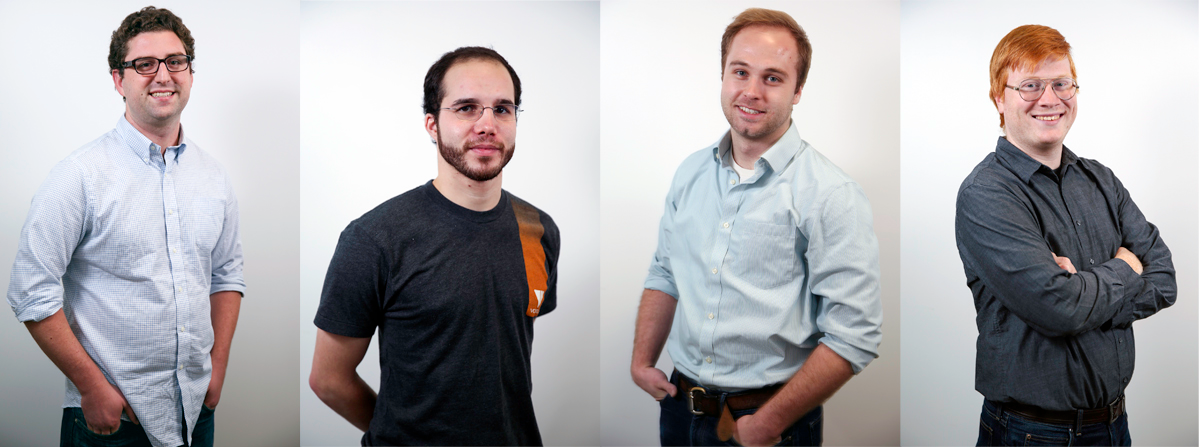
Lewis says, though, that this isn’t a one-person operation, “I really want to emphasize that that wouldn’t be happening without the amazing team we have at Voxel8. The boundaries between my lab and Voxel8 is one where we’ve done lab-based research at Harvard and at my former institution at Illinois, but to take that to the next level and do commercialization, the team at Voxel8 is just doing incredible well. You know, with Dan Oliver and with the three other team leads: Michael Bell, Travis Busbee, Jack Minardi – materials, hardware, and software – it’s really just been tremendous… Dan, of course, has been pushing forward on the marketing side and driving the whole team forward. The four co-founders are incredibly invaluable… The energy, the drive, the talent and expertise that Voxel8 have is really just making this happen.”
The new funding, of course, allows them to build this team even further, Lewis says.“We’ll definitely expand the team. We’ve already made some really exciting hires from some IT companies, like iRobot, Philips Medical, Warby Parker, and DEKA, which is behind Dean Kamen’s Segway. We’ve been able to attract a lot of really awesome talent and that’s only going to continue to build as we go forward with the new funding.”
What they do next, whether it’s “locked down” or not, is sure to be amazing. In some ways, what’s been left unsaid – potential materials and customers – really paints a powerful picture. Without knowing who or what will be involved, my mind is left to illustrate a wild painting that sees Nike printing smart orthotics, the CIA building tiny spyplanes, or e-NABLE 3D printing bionic arms. Then, Dr. Lewis leaves me with the conclusion, “It just comes back to our driving motivation: to establish 3D printing platforms that enable the integration of form and function. So, to go beyond prototyping shapes or complex forms and to really create things that have embedded functionality.”
Michael is Editor-In Chief of 3D Printing Industry and the founder of The Reality™ Institute, a service institute dedicated to determining what’s real and what’s not so that you don’t have to. He is a graduate of the MFA Critical Studies & Writing Program at CalArts, and a firm advocate of world peace. Michael currently resides in San Pedro with his magical wife, Danielle.
Could a large-scale industrial factory actually be designed to be good for the environment and for the ecosystem that surrounds it? And could that, in turn, generate long-term economic value for the population of people connected to that factory? Author and global bioengineering guru Janine Benyus doesn’t just believe it’s possible—she’s partnering with the world’s biggest carpet tile manufacturer to set the example to follow.
Atlanta-based Interface is already on track to hit zero-waste status by 2020, thanks to decades of sustainability initiatives, such as operating four of seven factories with 100 percent renewable energy and using simulation technology to replace physical carpet samples. The next step, which Benyus and Interface are plotting, is a project they call “Factory as a Forest,” which entails remaking one of Interface’s 10 factories, in New South Wales, Australia, using the local ecosystem as the new foundation.
Add caption
This isn’t just the next flavor of the month in corporate social responsibility. Benyus, founder of the Biomimicry Institute, helps clients such as Nike tap into biology and planetary science as a new source of tech innovation. For example, her consultancy studied how nature captures fog and wicks moisture to help an aircraft manufacturer reduce moisture and the spread of germs within an airplane cabin. With Interface, she and her team are helping define the region’s specific “ecosystem services” —how much water it stores, how much carbon it sequesters, how many pollinators it supports. Interface, in turn, will use those guidelines to ensure that the ecological “output” of the new factory operates in the black, not the red.
We asked Benyus to explain in greater detail how this concept can work, and for her thoughts on a tech-enabled future.
What excites you about where technology is taking humankind?
I’m excited by the fact that we are probably the first generation to actually be able to gather biological intelligence and distribute it to the people because of the Internet. Our understanding of how nature works is just increasing exponentially. Now we have a way to gather it and to actually make it available to people. Our experiment is AskNature.org to try to get that biological intelligence out. That’s exciting to me—understanding how nature works, and then possibly being able to emulate it.
What scares you about where we’re headed with technology?
What scares me is that we might actually believe that we truly can create life before we fully understand its complexity. I’m very much a believer in the precautionary principle when it comes to creating life forms—synthetic biology. What worries me is getting ahead of ourselves. I think we should emulate many things, but I don’t think we should emulate self-reproducing organisms until we understand a lot more of what we’re doing.
Companies that preach sustainability often focus on mitigating damage. How does the “Factory as a Forest” concept flip this around?
The next evolution of “do no harm” is to produce beneficial services.
The way local ecosystems actually function,
the way you know they’re healthy, is that they’re producing services that are beneficial to us as human beings and to all life.
They’re cleaning water.
They’re cleaning air.
They’re building soil.
They’re supporting biodiversity and pollinators.
They’re holding sediments during flooding.
They’re mitigating climate change.
They’re protecting against pests.
Even providing food and fiber, and cultural experiences like recreation and inspiration.
These services are called ecosystem services.
We thought this would be an amazing framework for the next aspirational goal for Interface—once they had reached do no harm, to actually become a generous company, in the fact that their facilities were functionally indistinguishable from local ecosystems, meaning that they actually performed like the ecosystem next door, meaning they would meet the same metrics that the system next door would.
How do you get from studying an ecosystem to recreating its benefits in a factory?
At Biomimicry 3.8 [Benyus’ biomimicry innovation consulting firm] we’ve been working with city planners for several years now, working to figure out how a city could produce ecosystem services, giving city managers these kinds of metrics—purify this much water, purify this much air, store this much water, store this much carbon. We call them ecological performance standards. When you have those metrics, they become an organizing framework to cumulatively gather what are now fragmented technologies and put them together and then start to count what it is they produce.
Before, [Interface CEO Ray Anderson] set metrics for reducing energy use, reducing waste. Now what we’re doing is saying, “What positive effects can we start to count up?” Once you have an aspirational goal like this, and you have numbers, you begin to gather collections of design changes. For instance, we can go next door and look at relatively untouched areas and figure out how much water they purify and store per hectare. Then you say, “OK, we can start to meet or exceed that metric in different ways.
We can change our water use.
We can purify the water from the manufacturing process even more than we have before.
We can use constructed wetlands. We can store water with rainwater harvesting.”
Suddenly you’re not doing those things in a fragmented way. You’re actually trying to meet a metric.
How will quantifying nature’s benefits change how the factory operates?
What we’re doing now is basically understanding the habitat type. We look at the system and what makes it tick. We look at the ecological realities of that river flat eucalypt forest [the ecosystem where the factory is located]. Which ecosystem services are most important to this company in terms of its business model and what it has to accomplish as a business, and then how can we reduce risk and make the site more resilient?
For instance, if you were to increase carbon storage on site, you were to increase the fertility of soils and the cycling of nutrients in the soils, and slow water and sink it and store it, the landscaping would be more resistant to drought. You want to store more carbon or more water, so you want permeable pavement wherever you possibly can, changing the parking lots. You may incent your employees to commute and not bring their cars to the factory.
How can the concept of a factory that produces these ecosystem services change our human relationship to manufacturing?
Nobody wants it in their neighborhood. In fact, there’s a social justice component of this, because poor people have tended to live closer to the chain-link fence with the factory on the other side, right? Now what we’re saying is how can development, or manufacturing facilities, actually be welcome neighbors in a neighborhood? That’s a radical thought.
If you think about the factory as having a metabolism, the exhale—the outcome of a factory has been pretty nasty pollution—air, water, and soil pollution. Does it have to be like that? This is an idea of re-envisioning what it might be if a factory actually released water cleaner than what came into it or released air cleaner than what came into it.
I expect that there will be cascading benefits, and that the benefits will be—to the business, it’ll be healthier employees, lower healthcare costs, more happiness, more productivity, the ability to recruit and retain. Then also for the company, it’s reduced risk in terms of liabilities and regulators. You’re suddenly producing cleaner air. You’re not wrangling with regulators.
You’ve said that “heat, beat, and treat”—heating up materials, beating them with high pressure, and treating them with chemicals—is the de facto slogan for our current industrial age. What should be the slogan for the next era in manufacturing?
I think manufacturing will be local, safe, and cyclical. I’m doing a lot of work as to how nature’s models can help 3D printing or additive manufacturing. I actually think manufacturing’s coming home. I think manufacturing is going to be coming into neighborhoods in the form of print centers.
This is a really key moment for biomimetic chemistry inside the printer, biomimetic designs of adding function to very common raw materials. [Nature uses non-toxic building materials like keratin and chitin to create forms, while 3D printers currently rely on toxic plastics and resins.] That’s what nature does. It doesn’t use very elaborate materials. It has very good designs that make it tough and strong and resilient. And then, of course, nature is able to easily disassemble at the end of its life and be reassembled into new product. These are all things manufacturing needs.
That’s very different than what we’re talking about here. We’re talking about an industrial process, where you wear hard hats and eye guards. We’re a long way to go before it’s local raw material, safely produced, and then recycled at the end of its life—put back into the printer, if you will, as the raw materials for the next product. We’ve got a long way to go.
Bringing food and technology together in a nutritious alternative
Photo: Chloé Rutzerveld
Living snack food! Imagine a healthy hors d’oeuvre, full of seeds and spores, which grows over time with a changing flavor profile. It’s nutritious, excitingly different… and freshly printed?
Dutch designer Chloé Rutzerveld has teamed up with research firm TNO to create the Edible Growth prototype.
The world of 3D printing is full of possibilities, but food printing has generally been focused on relatively simple items like burgers and pasta (not that there’s anything wrong with either of those), as well as less nutritious ingredients like sugar and dough, which can be turned into printable pastes.
Edible Growth is Rutzerveld’s healthier alternative to the pizza and chocolate snowflakes that are being printed by most other machines. Not only is it better for you, it’s also designed to be more sustainable, shortening the food production system by cutting out most packaging, minimizing storage and transportation, and removing all food waste.
Here's how it works:
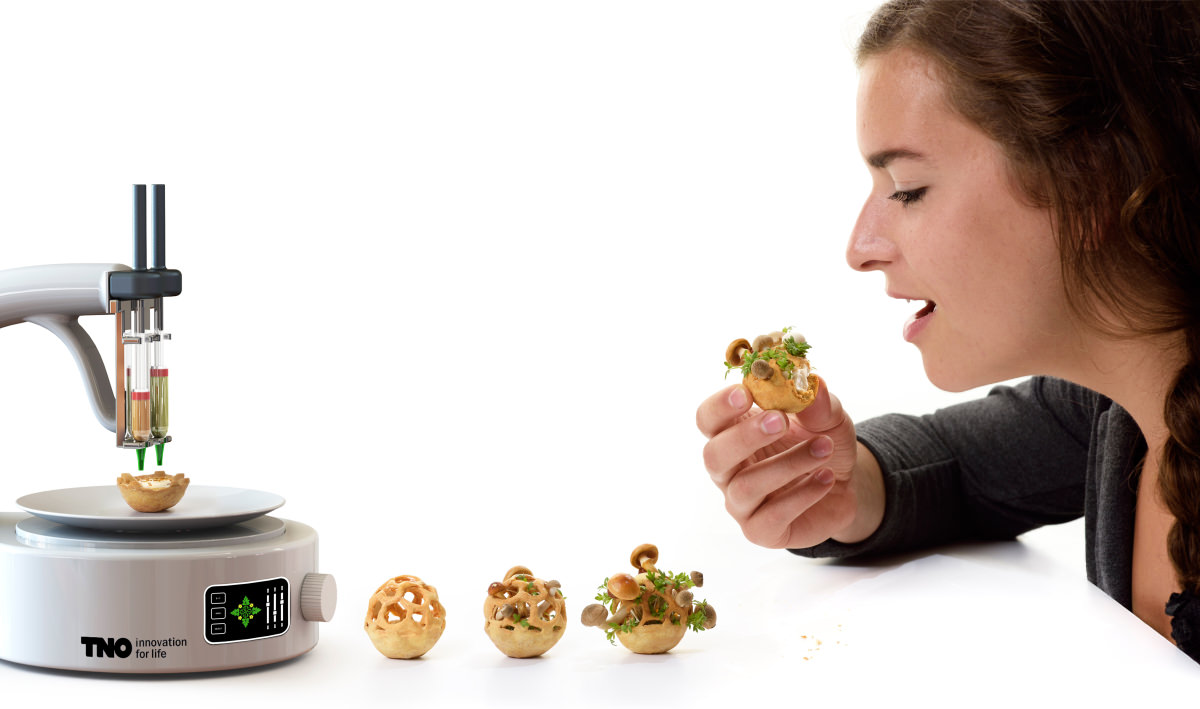
You start with a shell. This can be printed from nuts, dried fruit or vegetables, or gelatinous agar-agar paste. For her original prototypes, Rutzerveld actually used insect flour!
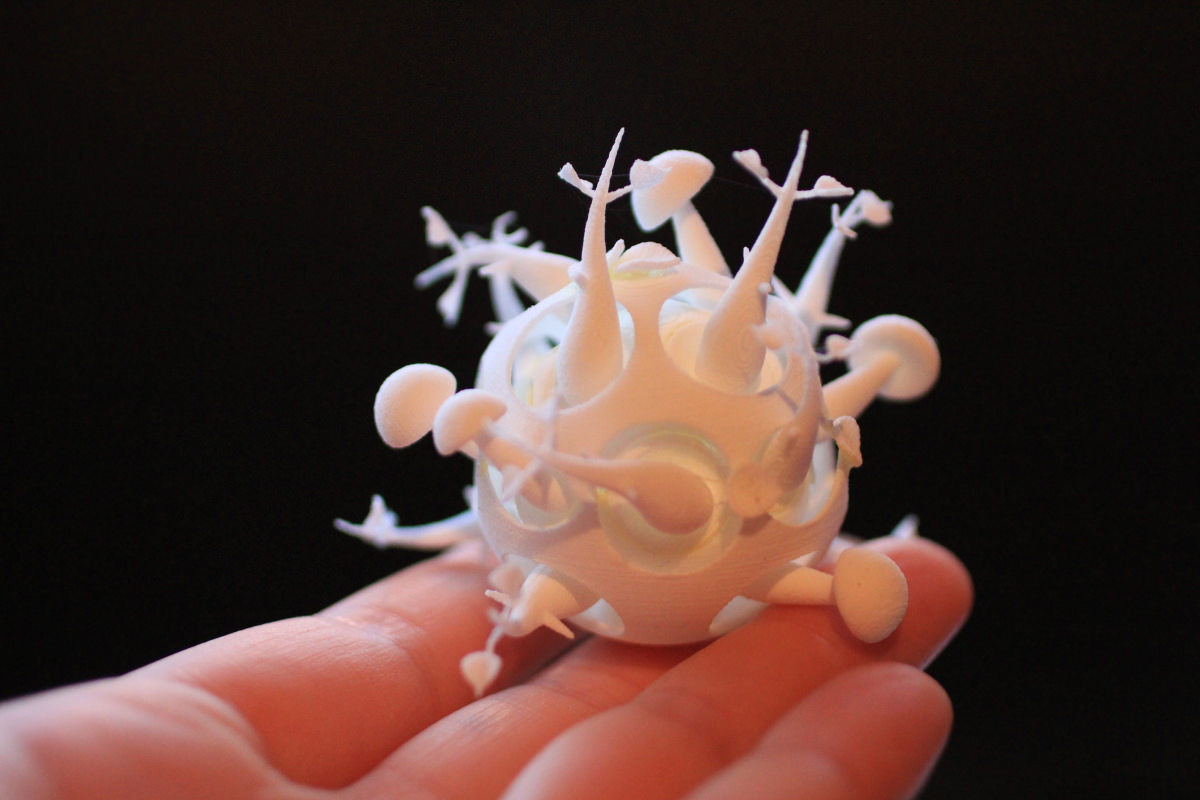
A printed nylon demo of the Edible Growth. Photo: Chloé Rutzerveld
This base is then infused with a variety of microorganisms: Yeast, bacteria, fungi, seeds, and spores are all available for development. These ingredients are all live cultures, in the same vein as what you’d find in good yogurt.
Finally, another layer of crust is added on top to create a unified structure.
Holes are left in the upper lid to allow the internal components somewhere to grow. Theoretically, users would be able to alter the design to suit their (visual) tastes.
Now you just leave the snack to germinate for a few days, and
then chow down once it smells good to you! The longer the spores and seeds are given to develop, the more pungent the treat will become, sort of like a plant and fungus version of maturing cheese.
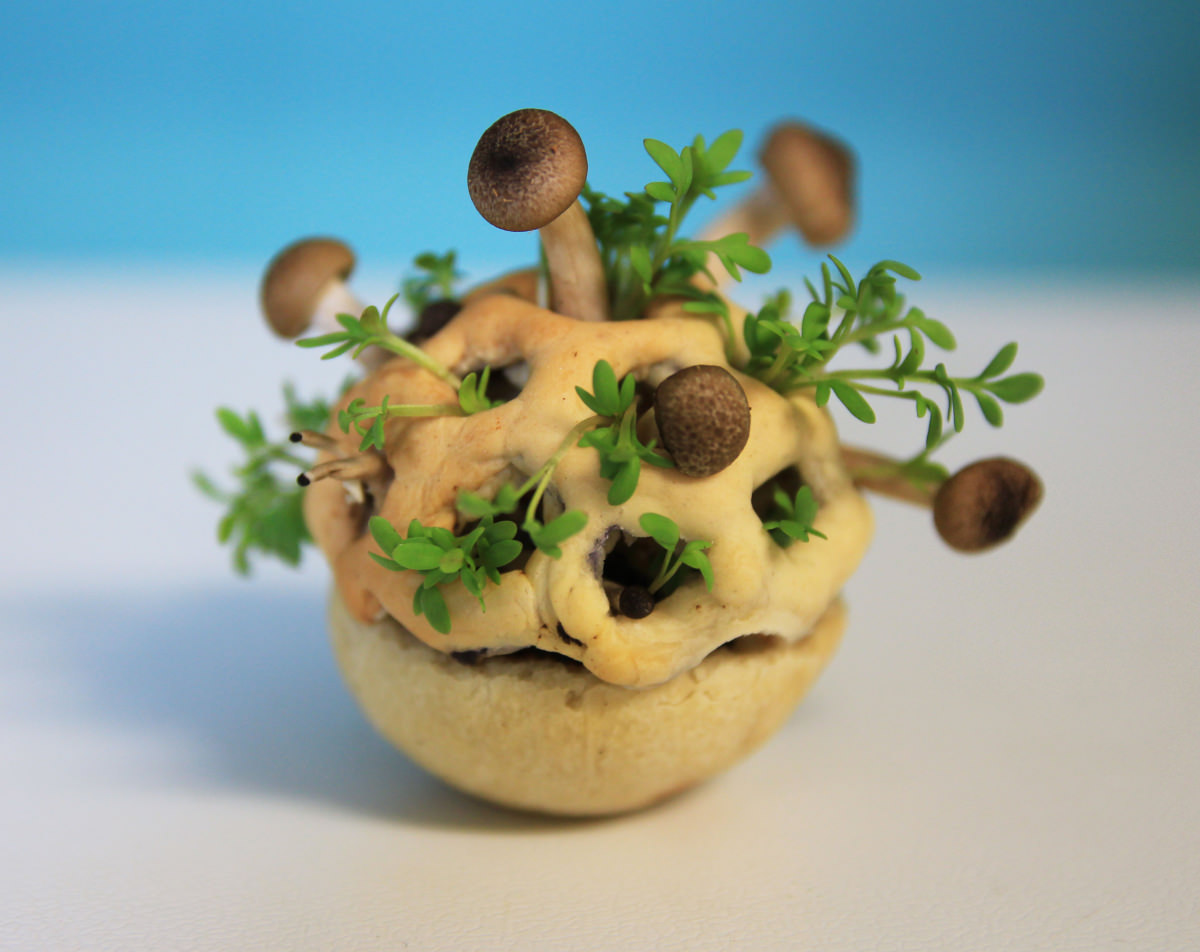
A test using sprouts that germinated in gel. Photo: Chloé Rutzerveld
A second growth test using sprouts embedded in gel. Photo: Chloé Rutzerveld
Without their caps, the Edible Growth looks like a really tiny planter pot. Photo: Chloé Rutzerveld
You can see the final product here in different lengths of incubation. Photo: Chloé Rutzerveld
For our more technically-oriented readers, Rutzerveld provided us with some more details: “The dough—which will not be dough in the final product—should be printed with a powder bed printer, otherwise the dome will collapse. The inside... can best be printed with FDM techniques. So a new type of printer should contain multiple printing techniques, and the software should be able to locate the organisms at very precise places so they don’t interfere with each other.”
The Edible Growth in all its glory. Photo: Chloé Rutzerveld
Now, as great as this may sound, don’t start clearing cupboard space just yet. Edible Growth is still very much in the prototype phase. Rutzerveld explains that more time and money need to be invested to fine-tune the printing process, and to make the whole endeavor more practical for consumers.
Instead, she views this project as something designed to “inspire scientists, technologists, designers, and chefs... and it did! It’s an example of one possible way to create healthy food that is natural and sustainable.”
There are many questions yet to answer about the Edible Growth, but one thing’s for certain: Like the world of 3D printing, the possibilities this little ball of deliciousness opens up are nigh endless.
From the printer to your mouth, here are the stages of Edible Growth. Photo: Chloé Rutzerveld




 ABOUT THE AUTHOR