Mostrando entradas con la etiqueta Extremófilos. Mostrar todas las entradas

viernes, 12 de diciembre de 2014

Medellín ingresó bien a la era espacial


300 millones de pesos más o menos, contando todo, puede ser el costo de la misión

No estuvieron involucrados Cabo Cañaveral ni el cosmódromo de Baikonur, tampoco el puerto espacial de Kourou en la Guayana Francesa. Su lugar lo tomó Cerro Verde en Santa Elena y el centro de control estuvo en un edificio de la calle 67.

Desde ese corregimiento comenzó con éxito ayer casi al mediodía la carrera espacial de Medellín. Dos globos aerospaciales llegaron a la estratosfera como primer paso de un programa que busca llevar en un comienzo nanosatélites al espacio.

Esta es una oportunidad que abre una ventana al desarrollo de la sociedad. Es solo el comienzo”, expresó Elkin Echeverrí, director de Inteligencia y Planeación CTI de Ruta N.

El lanzamiento es un paso adelante de la empresa Ideatech, que emprendió el camino de la conquista del espacio con el fin de brindar alternativas de información útil no solo a empresas, entidades y personas del país sino de otras naciones.

Y hace parte de Medellín espacial, iniciativa de Ruta N que busca mostrar a los ciudadanos que se tienen capacidades para abordar el tema aerospacial y desarrollarlo.

Las fronteras son mentales”, enfatizó, tras destacar que a bordo de uno de los globos iban tres experimentos presentados por niños de la Institución Educativa Kennedy sección Minerva.

Estaba previsto que los globos fueran lanzados a las 10 de la mañana, pero mientras se esperaba una mejor ventana y se organizaban algunos detalles se retrasó un poco.

En el Vivelab de la sede de Ruta N estuvo el Centro de Control, con las dos primeras filas reservadas para personal de Ideatech y otros participantes en la misión.

El resto lleno de periodistas ansiosos de tener la noticia. Al lugar del lanzamiento no se permitió el acceso de nadie ajeno al proyecto.

Primero se informó que poco después de las 10 se lanzarían. Luego que a las 11. Pero pasaron los minutos y no se tenían noticias.

Cuando iban a ser las 12 llegó lo esperado: Aurora A (de austral) había salido hacia el espacio.

En una de las pantallas dispuestas en el Vivelab comenzaron a recibirse los datos vía telemetría: altura, velocidad, temperatura. Todo según lo esperado.

Minutos después llegó la otra noticia: el segundo globo, Aurora B (de boreal) había partido también con los cuatro experimentos de la misión y un prototipo de nanosatélite. El A llevaba la cámara para registrar el vuelo.

¿Qué llevaba el B? Diego Jiménez, gerente de Ideatech, explicó los experimentos:

  • Un paquete con microalgas para estudiar su resistencia y comportamiento en el espacio, diseñado por el grupo de Biotecnología de Lucía Atehortúa.
  • Un paquete con tardígrados, los minúsculos osos de agua, organismos extremófilos, para analizar los mismos parámetros.
  • El detector de rayos cósmicos del profesor Jorge Iván Zuluaga (ver recuadro), y los experimentos de los niños del grado cuarto de la Kennedy-Minerva.
Se probaban además los sistemas de comunicaciones, según indicó Julián Arenas, de Ideatech, y componentes del prototipo de nanosatélite.

En este se buscaba analizar el sistema de imágenes, el control y el funcionamiento energético con los paneles solares dijo Jiménez.

Los resultados preliminares de estas experiencias podrían tenerse en unos pocos días, pero el examen detallado tomará más.

Los detalles
Los dos globos de látex, inflados con helio, iniciaron vuelo poco antes de las 12. Primero el A, a los pocos minutos el B.

En el Centro de Control se observó la transmisión originada desde el A. Y los datos del vuelo. Entre los asistentes llamó la atención cómo hacia los 18.000 metros de altura la temperatura era de unos -60 grados, pero pasados los 25.000 era de -20.

El aire se calienta a medida que se sube a partir de los 15.000-20.000 metros. Esa es la estratosfera, una región casi seca, sin vapor de agua.

Jorge Iván Zuluaga, quien siguió la misión desde Harvard y la comentó a través de Twitter explicó que la luz ultravioleta se absorbe continuamente en esa capa y calienta el aire.

A la 1:44 de la tarde se reportó el estallido de Aurora A cuando estaba a 26.490 metros de altura.

En ese momento su velocidad alcanzó los 180 kilómetros por hora, reveló Zuluaga.

Cuando se esperaba que Aurora B estallara a los pocos minutos, continuó ascendiendo, sobrepasando la meta inicial de los 30.000 metros.

Cuando estaba en los 31.630 metros reventó e inició el descenso. Eran las 2;38.


El temor era que los paracaídas no funcionaran, pero pronto se disipó.

Los datos de telemetría mostraban que el desplazamiento había sido hacia el oriente, a la jurisdicción de Guarne. Según la planeación inicial se esperaba que cayeran en una zona entre Ebéjico y Heliconia en el occidente, pero eso dependía del comportamiento de los vientos.

A las 3:05 de la tarde la empresa Ideatech confirmó que el segundo globo había tocado tierra, muy cerca del A.

La misión de rescate estaba ya en marcha, con personal y equipos de la Fuerza Aérea y Defensa Civil, y a las 4:46 reportó la recuperación del primero, Aurora A.

Las góndolas que descendieron en los paracaídas transmitían datos de ubicación.

Un camino
Podría parecer simple enviar globos a la estratosfera, pero el significado para la ciudad puede ser prometedor: mostrarles a más emprendedores que pueden comenzar el camino de la conquista espacial no solo como fuente de ingresos económicos sino para el desarrollo de la región.

En el Centro de Control había alegría por la forma como transcurrió la jornada. Cerca de 160 minutos entre el inicio del vuelo y el final fueron poco frente a lo que puede venir en materia espacial.

Los niños de la Minerva, que siguieron la jornada desde el Vivelab, entraron en la historia local al ser los primeros escolares de Medellín en enviar experimentos al espacio.

Lo que sigue será también aprendizaje. Hasta que se convierta en rutina creativa .

CONTEXTO DE LA NOTICIA
ANÉCDOTA: NIÑOS IDEARON TRES EXPERIMENTOS
En la I. E. Kennedy-Minerva existe un semillero de astronomía, IE Cosmos Kennedy Minerva, con los estudiantes del grado 4° liderados por la profesora Claudia Emilsen Vera. Al recibir invitación a participar con ideas para los globos se lo comunicó a sus alumnos. Estos idearon tres experimentos (botella de agua para ver qué le pasaba, una manzana para ver su reacción en el espacio y un reloj para ver si se modificaba el tiempo). Cuando los escogieron, la profe les dijo: -Se metieron en un gran problema.

LA DETECCIÓN DE RAYOS CÓSMICOS Y SU APLICACIÓN CLIMÁTICA
Los temas de la ciencia, la astronomía y el medio ambiente con énfasis en cambio climático son mis campos de acción periodística. Con vocación por el mundo de los pequeños felinos y la defensa animal.

ORIGINAL: El Colombiano
Por Ramiro Velásquez Gómez 

lunes, 16 de diciembre de 2013

Terrifying Facts About the World's Deepest Gold Mine

Photo of Mponeng via AngloGold
Oh, the things humans will do to get their grubby hands on gold—a metal mostly prized for its ornamental use, hoarded in bank vaults and jewelry boxes, though we've arbitrarily decided it's worth, uh, its weight in gold.* The deepest gold mine in the world is Mponeng, a 2.5-mile hole in the ground in South Africa. A whole underground city—lightless and lawless—lives inside the mine.

The mine is as deep as 10 Empire State Buildings, and its 236 miles of tunnels are longer than the New York subway.

Every day, 4,000 workers descend into the mine through elevators—or, as they're called in mining parlance, cages. These triple-decked cages fit 120 people at a time, and the first 1.6-mile shaft takes only 6 minutes to descend. A second shaft takes workers deeper down, and the last part is only accessible by foot or vehicle.

The whole, mind-bogglingly huge structure mines a seam of ore only 30 inches wide.

Seriously: the depths humans will do to get to their hands on gold.

The rock is so hot underground that ice has to be pumped down to cool the tunnels.

Because temperatures increase the closer we get to the earth's core, the rock faces in the mine can get as hot as 140º F. "You can imagine what it's like to crawl into a cavity there," Hart said to NPR. "It's like crawling into a pizza oven."

To keep those super-temperatures from becoming deadly, an ice-slurry mixed with salt is pumped down from the surface; huge fans then blow air over the ice, forming a controlled cold-air system within the mine—its own internal weather system. The above-ground ice-making plant goes through 6,000 tons of ice a day. 

Ultimately, this means that many tunnels can be kept at an almost bearable 85 degrees.

Illegal "ghost" miners live, eat, and even visit prostitutes right in the mines.

At least 10% of the gold in South African mines is stolen. Criminal syndicates help illegal "ghost" miners sneak into the mineshaft, where they then hide out for months at a time, turning ghostly from the lack of sunlight. Security guards also tend to let these ghost miners be: the illegal miners are often armed with AK-47s and beer bottle grenades, and it's all too easy to hear someone coming from far off in the mine. The mine is so big, it's difficult to police anyways.

There's also a whole, well, underground economy where legal miners help out their illegal brethren. Since bread, for example, costs twelve time as much in the illegal economy, packing some extra lunch can get you much more than lunch money.

Gold is so expensive, the mine only needs to extract 0.35 ounces from a ton of rock to be profitable.

Mponeng excavates 6,000 tons of rock per day. You do the math.

The world's loneliest ecosystem was discovered in Mponeng.

The rod-shaped bacterium Desulforudis audaxviator lives alone in the dark, hot waters of Mponeng; it is the sole member of the only single-species ecosystem discovered. All life forms need basic nutrients like carbon, hydrogen, nitrogen, and, usually, different bacteria pull different nutrients from the environment to form an ecosystem. But D. audaxviator is self-reliant, capable of producing everything itself. Scientists think the bacterium has not seen the surface of the earth in millions of years.

Bacteria that live in remote places like the depths of the Mponeng mine are called extremophiles for their ability to withstand seemingly impossible conditions. When motivated by money—out of greed or basic economic necessity—humans can do the same, it seems. [National Public Radio via Nature]

*Update: This article originally called gold "mostly useless," which was a reference to the fact that most gold is not used at all except for in cases of personal ornamentation or financial investment. Approximately 12% of the world's gold stocks are used in electronics and industry.

ORIGINAL: Gizmodo

viernes, 8 de marzo de 2013

Russia finds 'new bacteria' in Antarctic lake

ORIGINAL: Physorg
March 7, 2013

Russian researchers pose for a picture after reaching the subglacial Lake Vostok in Antarctica on February 5, 2012. Russian scientists believe they have found a wholly new type of bacteria in the mysterious subglacial Lake Vostok in Antarctica.
Russian scientists believe they have found a wholly new type of bacteria in the mysterious subglacial Lake Vostok in Antarctica, the RIA Novosti news agency reported on Thursday. 
he samples obtained from the underground lake in May 2012 contained a bacteria which bore no resemblance to existing types, said Sergei Bulat of the genetics laboratory at the Saint Petersburg Institute of Nuclear Physics.

"After putting aside all possible elements of contamination, DNA was found that did not coincide with any of the well-known types in the global database," he said.

"We are calling this life form unclassified and unidentified," he added.

The discovery comes from samples collected in an expedition in 2012 where a Russian team drilled down to the surface of Lake Vostok, which is believed to have been covered by ice for more than a million years but has kept its liquid state.

Lake Vostok is the largest subglacial lake in Antarctica and scientists have long wanted to study its eco-system. The Russian team last year drilled almost four kilometres (2.34 miles) to reach the lake and take the samples.

Bulat said that the interest surrounded one particular form of bacteria whose DNA was less than 86 percent similar to previously existing forms.

"In terms of work with DNA this is basically zero. A level of 90 percent usually means that the organism is unknown."

He said it was not even possible to find the genetic descendants of the bacteria.

"If this had been found on Mars everyone would have undoubtedly said there is life on Mars. But this is bacteria from Earth."

Bulat said that new samples of water would be taken from Lake Vostok during a new expedition in May.

"If we manage to find the same group of organisms in this water we can say for sure that we have found new life on Earth that exists in no database," Bulat said.

Exploring environments such as Lake Vostok allows scientists to discover what life forms can exist in the most extreme conditions and thus whether life could exist on some other bodies in the solar system.

There has long been excitement among some scientists that life theoretically could exist on Saturn's moon Enceladus and the Jupiter moon Europa as they are believed to have oceans, or large lakes, beneath their icy shells.

The possibility that the lake existed had first been suggested by a Soviet scientist in 1957. Scientific research drilling in the area started in 1989 and the lake's existence was confirmed only in 1996.

The drilling project is of major importance for the prestige of science in Russia and Russian leader Vladimir Putin was given a sample of water from Lake Vostok last year when the expedition began.

(c) 2013 AFP

miércoles, 6 de febrero de 2013

Bacteria Found Deep Under Antarctic Ice, Scientists Say

ORIGINAL: NYTimes
Published: February 6, 2013

For the first time, scientists report, they have found bacteria living in the cold and dark deep under the Antarctic ice, a discovery that might advance knowledge of how life could survive on other planets or moons and that offers the first glimpse of a vast ecosystem of microscopic life in underground lakes in Antarctica.

Dr. Alberto Behar, JPL/ASU; underwater camera funded by NSF and NASA. The first view of the bottom of subglacial Lake Whillans in Antarctica.

This week: Antarctica’s buried lakes may yield clues to extraterrestrial life; passionate love beyond the first sparks; and the science behind why we slack off until the last minute.

A network of hundreds of lakes lies sandwiched between the continent’s land and the ice that covers it, and scientists had thought that it could harbor life. The discovery is the first confirmation.

It transforms the way we view the Antarctic continent,” said John Priscu of Montana State University, a leader of the scientific expedition.

After drilling through a half-mile of ice into the 23-square-mile, 5-foot-deep Lake Whillans, the expedition scientists recovered water and sediment samples that showed clear signs of life, Dr. Priscu said, speaking from McMurdo Station in Antarctica on Tuesday. They saw cells under a microscope, and chemical tests showed that the cells were alive and metabolizing energy.

Dr. Priscu said that every precaution had been taken to prevent contamination of the lake with bacteria from the surface or the overlying ice. In addition, he said, the concentrations of life were higher in the lake than in the borehole, and there were signs of life in the lake bottom’s sediment, which would be sealed off from contamination.

Much more study, including DNA analysis, is needed to determine what kind of bacteria have been found and how they live, Dr. Priscu said. There is no sunlight, so the bacteria must depend on organic material that has drifted into the lake from other sources — for instance, decaying microbes from melting glaciers — or on minerals in the rock of the Antarctic continent.

Chris McKay, a NASA senior scientist, said in an e-mail that such analysis could determine if the bacteria in Lake Whillans have implications for the possible discovery of extraterrestrial life. “If it was using a local energy source, it would be interesting," he said. "If it's just consuming organics carried in from elsewhere, it is of much less interest.” The reason, he said, is that elsewhere in the solar system where there is good evidence of liquid water under thick ice sheets, life would have to depend on minerals alone. "There is not going to be oxygen on other worlds,” Mr. McKay said.

Slawek Tulaczyk of the University of California, Santa Cruz, another leader of the science expedition, said that samples were drawn from as deep as four feet in the sediment, and that oxygen decreased with the depth of the sample.

The scientific project, called Wissard, for Whillans Ice Stream Subglacial Access Research Drilling, was years in the planning and is one of three efforts to investigate the lakes that lie under the Antarctic ice.

A year ago, a Russian expedition penetrated the surface of Lake Vostok, under two miles of ice. They found hints of life on samples from the drill bit, but contamination from the kerosene drilling fluid was a possibility. This year they recovered samples of frozen lake water that are yet to be analyzed.

A British effort to reach Lake Ellsworth, under a mile of ice, was called off in December because of equipment problems.

The American effort, supported by $10 million from the National Science Foundation and other grants, focused on Lake Whillans, which is quite different from the other two lakes. It lies under a half-mile of ice, less than the others, and its water is replenished in about a decade, scientists believe, with meltwater from overlying ice. Lake Vostok is much more sealed off from the surface and is thought to take 10,000 years for its waters to renew. Lake Ellsworth may turn over in about 700 years.

Although Lake Whillans may be more reachable than the other two, doing anything in Antarctica is enormously difficult. It took a tractor convoy 12 days to take the drill and other equipment more than 500 miles over the Ross Ice Shelf to the drilling site from the American research station at McMurdo.

The scientists had four days to collect samples and obtain images of the lake. Several lines of evidence convinced them that they had found microbial life in the lake. First, they saw cells under the microscope and confirmed that DNA was present.

Then they measured evidence of an enzyme that is important in metabolism and a chemical called ATP, for adenosine triphosphate. Molecules of ATP are essentially packets of energy, and their presence was a further indication that the bacteria were living. Further, they found that concentrations of ATP were higher in the lake water than in the water in the borehole, which, Dr. Priscu said, meant that there was more life in the lake and argued against any contamination.

Much further study will be done before scientific results are published and other scientists can look at all the data. Dr. Priscu said that new tests were being done each day, but that DNA tests would have to wait until the scientists returned to the United States.

Our stateside DNA sequence work will tell us who they are,” he said of the microbes, “and, together with other experiments, tell us how they make a living.

But he said he was confident that the researchers had achieved the first glimpse of an ecosystem that had been completely unknown. “It’s the world’s largest wetland,” Dr. Priscu said.

sábado, 29 de diciembre de 2012

Descubren en Siberia una bacteria que podría vivir en Marte

by +Verde
29 Dec 2012


Un equipo de científicos descubrió en el suelo permanentemente congelado siberiano bacterias capaces de vivir en un ambiente como el del planeta Marte, publicó esta semana a revista especializada Proceedings of the National Academy of Science (PNAS).

El hallazgo de los organismos que viven en condiciones hostiles se realizó en la península de Taimir, en el norte de Siberia, lugar donde expertos de la Universidad estadounidense de la Florida perforaron 40 metros de profundidad en el suelo helado.


Al analizar la arena cernida encontraron a las bacterias del género carnobacterium, una de las cuales fue resucitada en 2005 luego de permanecer congelada por 300 mil años. Los científicos lograron multiplicar estos microorganismos en laboratorio y los sometieron a un ambiente que reproducía las condiciones que tiene Marte.

Para sorpresa de los expertos dirigidos por Wayne L. Nicholson, los microorganismos pasaron con éxito la prueba, lo que constituye un estímulo para que los astrobiólogos busquen vida fuera de la Tierra.

Fuente: Prensa Latina, Agencias

jueves, 27 de diciembre de 2012

Lake Ellsworth Antarctic drilling project called off

ORIGINAL: BBC
Analysis David Shukman Science editor, BBC News

The team burned much of its fuel in a bid to connect the under-ice boreholes

Related Stories

An ambitious mission to drill through 3km (1.8 miles) of Antarctic ice to a lake that has been sealed off for thousands of years has been cut short.

The team at Lake Ellsworth decided to call off the mission in the early hours of Christmas Day UK time.

They were unable to join the main borehole with a parallel hole that was to be used to recover drilling water.

The team is now "weatherising" the equipment and it is unclear when they will be able to resume the project.

The £8m ($13m) project, headed by the British Antarctic Survey (Bas), aimed to drill carefully down using near-boiling water to pierce the lake, which has been untouched for as much as half a million years.

The hope had been to find hints of simple life forms existing in the extreme conditions of pressure and temperature, and to find a record of climate in the lake's sediments.

Searching for life in the hidden waters of Lake Ellsworth was one of the most ambitious British science projects of recent years, so this failure in the drilling programme will come as a huge blow.

The team knew that the risks were high, but the idea of exploring an ancient and mysterious body of water isolated for hundreds of thousands of years had inspired passion and determination.

The challenge of designing and engineering equipment that could remain sterilised on the long journey to Antarctica, and then down through the 3km of ice-sheet, was immense and involved hundreds of people.

So the disappointment will be felt far beyond the 12 men at their remote camp on the ice. Engineers, technicians, support staff - and researchers eager for the results - will feel heavy disappointment. They may try again next year. But this was frontier science, a gamble, and it did not pay off.

The programme ran into trouble last week as the main boiler used to heat drilling water broke down, with a replacement part being flown from the UK reaching the remote site last Friday.

With the boiler working, the team aimed to make two parallel boreholes, intended to join 300m below the surface.

A first borehole was drilled and left for 12 hours to create a hot-water cavity. This was to be used to re-circulate drilling water and to balance pressures when the sequestered lake was finally breached.

However, the team were unable to reach the cavity during the course of drilling the second, main borehole.

"We kept trying for over 24 hours to reach that connection but we couldn't do it," said principal investigator of the project Martin Siegert, from the University of Bristol.

"All that time we were losing fuel and water from the ice sheet surface and we got to a critical condition where our calculations showed us we simply didn't have enough fuel to continue any further down into the ice sheet to hit the top of the lake," he told BBC News.

The team is now starting the long process of gathering up its equipment for eventual return to the UK, where it will be serviced.

Once back on UK soil, the team will have to develop a report on what went wrong, and only then can the thought of a return trip be considered.

"It will take a season or two to get all of our equipment out of Antarctica and back to the UK, so at a minimum we're looking at three to four, maybe five years I would have thought," Prof Siegert said.

But he remained hopeful about the future, and said that this year's mission was far from a complete loss.

"We still want to do that testing, they were compelling scientific drivers a few years ago and they remain so. It's very important that we take stock of what we achieved here," he said.

Given the long time that it may take to fund and mount another mission to Ellsworth, it may be that other nations aim for other sealed-off Antarctic lakes in the nearer term.

"We have never depicted it as a race, but it may well happen that others get there first," Audrey Stevens, Bas spokesperson, told BBC News.

More on This Story

Related Stories
Lake Ellsworth: Mission to the Antarctic's lost world19 DECEMBER 2012, SCIENCE & ENVIRONMENT
Antarctic lake bid set to restart21 DECEMBER 2012, SCIENCE & ENVIRONMENT
Antarctic lake drilling is halted17 DECEMBER 2012, SCIENCE & ENVIRONMENT
Images emerge from polar drilling13 DECEMBER 2012, SCIENCE & ENVIRONMENT

jueves, 13 de diciembre de 2012

Old Ocean Mold

ORIGINAL: The Scientist
By Beth Marie Mole
December 12, 2012

Fungi in 100 million year-old seafloor sediments could possess novel antibiotics.
microscopic image of Penicillium sp.Wikimedia, Y_tambe
Digging 127 meters below the Pacific Ocean floor, into 100 million year-old sediments, researchers have discovered flourishing fungi, including some that belong to the genus Penicillium—the source of penicillin. The discovery, reported last week (December 6) at the meeting of the American Geophysical Union in San Francisco, California, provides hope of finding novel antibiotics deep below the ocean, as well as understanding how life can thrive in such a nutrient-poor environment.

[The study] extends what we understand about the limits of life on the planet,” molecular geo­microbiologist Heath Mills of the Texas A&M University in College Station, who studied the fungi, told Nature. Moreover, “this is adding a new family of potential drugs,” added biogeochemist Brandi Reese, of the University of Southern California in Los Angeles, who collaborated with Mills on the study.

The researchers isolated the fungi from sediments collected on a South Pacific drilling expedition in 2010. Back in the lab, they found genetic sequences from at least eight groups of fungi, and were able to grow four fungi from the sediments.

Mills and Reese hypothesize that the fungi may play critical roles in the deep-sea sediment ecosystems, such as deconstructing organic matter in the ancient sediment for other organisms to use. Moreover, the remote fungi may have evolved unique biological weapons—antibiotics—to defeat competing microbes in its unique environment. “What if this is a new version of penicillin?” Mills posed to Nature—one that may be effective against pathogens that have grown resistant to traditional antibiotics “That’s one of the benefits of going to the deep biosphere.

lunes, 13 de agosto de 2012

Deep Sea Vents: Science at the Extreme

´
Deep sea vents in the Atlantic Ocean’s Mid-Atlantic Ridge support tubeworms, eelpout fish, and crabs. The Mid-Atlantic Ridge is an underwater mountain chain that extends about 10,000 miles (16,000 kilometers) from the Arctic Ocean to the southern tip of Africa. Photograph by Emory Kristof
Republished from the pages of National Geographic magazine

With a mile and a half (two and a half kilometers) of Pacific Ocean sitting on their shoulders, ghost-pale crabs and fish forage among blood-red tube worms. Such communities flourish where super-heated water gushes from seafloor springs. Advances in the tools that scientists use to investigate deep-sea ecosystems are expanding knowledge of these creatures and their hostile environment.

Strange Life Clearly Seen
Water heated as high as 760°F (404°C) by magma from Earth's interior billows from a seafloor chimney. The surrounding ocean is just a few degrees above freezing. When the two fluids meet, iron sulfide precipitates, giving the "black smoker" its color. In these dark depths, chemosynthesis—based on thermal and chemical energy from the vents—is the primary mechanism sustaining life.

A living cloud flecks the water around a clump of limpet-encrusted tube worms and mustard-yellow mussels in the high-definition image at far right. With a magnifying lens on another camera the cloud resolves into a crowd of flea like crustaceans called amphipods. Amphipod swarms like this one—observed at 9° N on the East Pacific Rise—may be the densest concentrations of invertebrate life on Earth.

High-intensity lighting and high-resolution imaging technologies provide researchers with the equivalent of a microscope to examine life in the deep sea. These tools can reveal organisms that have always been part of vent communities but have been hidden until now.

Timothy Shank, a marine ecologist at Woods Hole Oceanographic Institution, calls the array of previously unknown species found at vents "mind-boggling." He has calculated that, on average, a new species has been described every week and a half since biologists first visited the Galápagos Rift vents in 1979. "More than 20 years later," he says, "we're still on the tip of the iceberg. We're trying to understand relationships among vent animals—and we're still discovering new species!"

Evaluating an Arctic Oasis

sábado, 28 de julio de 2012

Scientists use microbes to make 'clean' methane

ORIGINAL: Science Daily

ScienceDaily (July 27, 2012) — Microbes that convert electricity into methane gas could become an important source of renewable energy, according to scientists from Stanford and Pennsylvania State universities. 


Researchers at both campuses are raising colonies of microorganisms, called methanogens, which have the remarkable ability to turn electrical energy into pure methane -- the key ingredient in natural gas. The scientists' goal is to create large microbial factories that will transform clean electricity from solar, wind or nuclear power into renewable methane fuel and other valuable chemical compounds for industry.

"Most of today's methane is derived from natural gas, a fossil fuel," said Alfred Spormann, a professor of chemical engineering and of civil and environmental engineering at Stanford. "And many important organic molecules used in industry are made from petroleum. Our microbial approach would eliminate the need for using these fossil resources."

While methane itself is a formidable greenhouse gas, 20 times more potent than CO2, the microbial methane would be safely captured and stored, thus minimizing leakage into the atmosphere, Spormann said.

"The whole microbial process is carbon neutral," he explained. "All of the CO2 released during combustion is derived from the atmosphere, and all of the electrical energy comes from renewables or nuclear power, which are also CO2-free."

Methane-producing microbes, he added, could help solve one of the biggest challenges for large-scale renewable energy: What to do with surplus electricity generated by photovoltaic power stations and wind farms.

"Right now there is no good way to store electricity," Spormann said. "However, we know that some methanogens can produce methane directly from an electrical current. In other words, they metabolize electrical energy into chemical energy in the form of methane, which can be stored. Understanding how this metabolic process works is the focus of our research. If we can engineer methanogens to produce methane at scale, it will be a game changer."

'Green' methane

Burning natural gas accelerates global warming by releasing carbon dioxide that's been trapped underground for millennia. The Stanford and Penn State team is taking a "greener" approach to methane production. Instead of drilling rigs and pumps, the scientists envision large bioreactors filled with methanogens -- single-cell organisms that resemble bacteria but belong to a genetically distinct group of microbes called archaea.

By human standards, a methanogen's lifestyle is extreme. It cannot grow in the presence of oxygen. Instead, it regularly dines on atmospheric carbon dioxide and electrons borrowed from hydrogen gas. The byproduct of this microbial meal is pure methane, which methanogens excrete into the atmosphere.

The researchers plan to use this methane to fuel airplanes, ships and vehicles. In the ideal scenario, cultures of methanogens would be fed a constant supply of electrons generated from emissions-free power sources, such as solar cells, wind turbines and nuclear reactors. The microbes would use these clean electrons to metabolize carbon dioxide into methane, which can then be stockpiled and distributed via existing natural gas facilities and pipelines when needed.

When the microbial methane is burnt as fuel, carbon dioxide would be recycled back into the atmosphere where it originated from -- unlike conventional natural gas combustion, which contributes to global warming.

"Microbial methane is much more ecofriendly than ethanol and other biofuels," Spormann said. "Corn ethanol, for example, requires acres of cropland, as well as fertilizers, pesticides, irrigation and fermentation. Methanogens are much more efficient, because they metabolize methane in just a few quick steps."

Microbial communities

For this new technology to become commercially viable, a number of fundamental challenges must be addressed.

"While conceptually simple, there are significant hurdles to overcome before electricity-to-methane technology can be deployed at a large scale," said Bruce Logan, a professor of civil and environmental engineering at Penn State. "That's because the underlying science of how these organisms convert electrons into chemical energy is poorly understood."

In 2009, Logan's lab was the first to demonstrate that a methanogen strain known as Methanobacterium palustre could convert an electrical current directly into methane. For the experiment, Logan and his Penn State colleagues built a reverse battery with positive and negative electrodes placed in a beaker of nutrient-enriched water.

The researchers spread a biofilm mixture of M. palustre and other microbial species onto the cathode. When an electrical current was applied, the M. palustre began churning out methane gas.

"The microbes were about 80 percent efficient in converting electricity to methane," Logan said.

The rate of methane production remained high as long as the mixed microbial community was intact. But when a previously isolated strain of pure M. palustre was placed on the cathode alone, the rate plummeted, suggesting that methanogens separated from other microbial species are less efficient than those living in a natural community.

"Microbial communities are complex," Spormann added. "For example, oxygen-consuming bacteria can help stabilize the community by preventing the build-up of oxygen gas, which methanogens cannot tolerate. Other microbes compete with methanogens for electrons. We want to identify the composition of different communities and see how they evolve together over time."

Microbial zoo

To accomplish that goal, Spormann has been feeding electricity to laboratory cultures consisting of mixed strains of archaea and bacteria. This microbial zoo includes bacterial species that compete with methanogens for carbon dioxide, which the bacteria use to make acetate -- an important ingredient in vinegar, textiles and a variety of industrial chemicals.

"There might be organisms that are perfect for making acetate or methane but haven't been identified yet," Spormann said. "We need to tap into the unknown, novel organisms that are out there."

At Penn State, Logan's lab is designing and testing advanced cathode technologies that will encourage the growth of methanogens and maximize methane production. The Penn State team is also studying new materials for electrodes, including a carbon-mesh fabric that could eliminate the need for platinum and other precious metal catalysts.

"Many of these materials have only been studied in bacterial systems but not in communities with methanogens or other archaea," Logan said. "Our ultimate goal is to create a cost-effective system that reliably and robustly produces methane from clean electrical energy. It's high-risk, high-reward research, but new approaches are needed for energy storage and for making useful organic molecules without fossil fuels."

The Stanford-Penn State research effort is funded by a three-year grant from the Global Climate and Energy Project at Stanford.

domingo, 8 de julio de 2012

Los Tardígrados, seres casi 'inmortales'

ORIGINAL: Muy Tranquilo


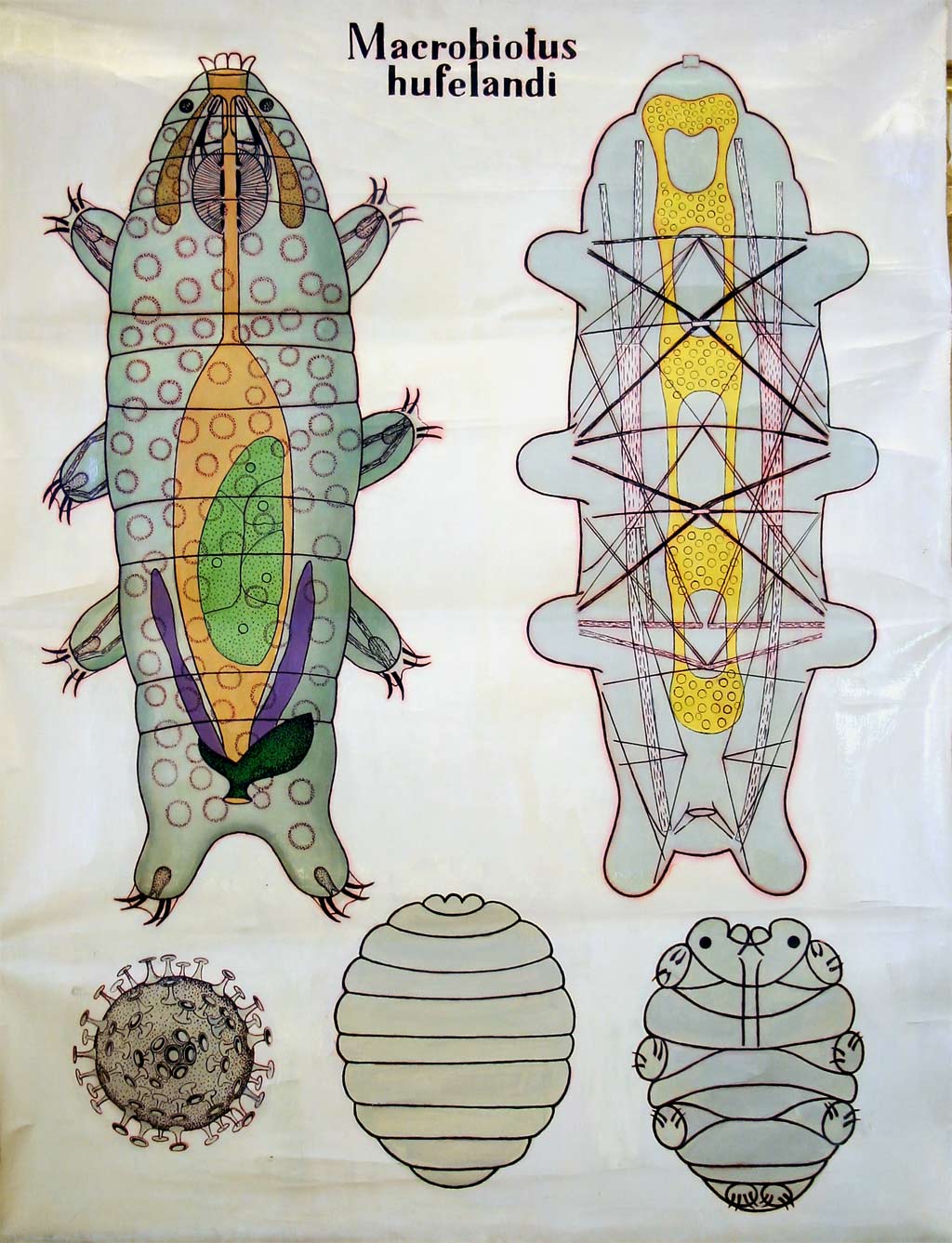
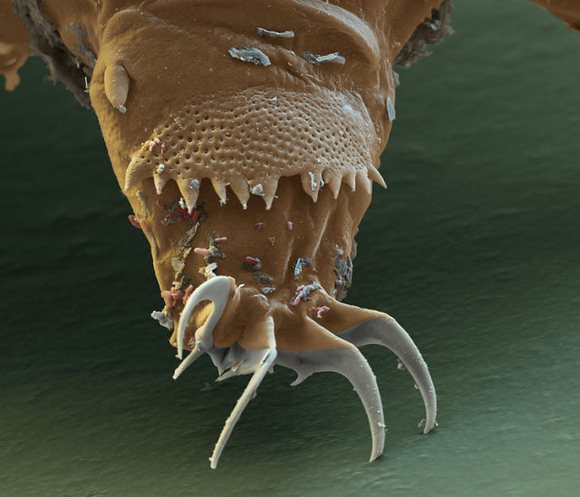
El animal más difícil de morir de la Tierra es el llamado Oso de agua o tardígrado. Son invertebrados microscópicos de 0,1 ó 0,2 mm de largo con ocho patas regordetas, garras y cabeza a modo de pequeña sonda.

Fueron descritos por primera vez por Johann August en 1773. El nombre Tardígrado significa 
“de paso lento” y fue dado por Lazzaro Spallanzani en 1777 debido a la lentitud de este animal.

Características:
  • No envejecen
  • Carecen de sistema circulatorio
  • Soportan temperaturas de -272 y 149ºC
  • Entran en estado de hibernación cientos de años, hibernando hasta 20 veces en su vida
  • Despiertan de la hibernación con una sóla gota de agua
  • Aguantan 100 veces más radiación que los seres humanos
Ningún animal había sobrevivido antes al espacio abierto. En septiembre de 2007 se lanzó la nave rusa FOTON-M3 de la ESA, y en ella fueron colocados un grupo de tardígrados. Se comprobó que no sólo sobrevivieron a las condiciones del espacio exterior, sino que incluso mantuvieron su capacidad reproductiva. Además, pueden soportar 100 veces más radiación que los seres humanos y vivir hasta 120 años en un estado de hibernación sin agua, y reactivarse en cuanto se les suministre.


Podría ayudarnos a tratar el cáncer 
Lo de la radiación es importante, a juicio del Dr. Jonsson y sus colegas, quienes publicaron los resultados del estudio en la revista Current Biology: esta tolerancia excepcional a la radiación podría ayudar a los científicos a aprender cómo tratar el cáncer.


Estructura
Dotados de simetría bilateral, con la zona ventral aplanada y la dorsal convexa, los tardígrados constan de cinco segmentos no diferenciados. Un segmento cefálico de forma roma contiene la boca y, en ocasiones, puntos oculares y cirros sensoriales. 

Los cuatro segmentos restantes tienen cada uno un par de patas ventrolaterales terminadas con garras (entre cuatro y ocho) o con ventosas; normalmente los primeros tres pares se destinan a la locomoción mientras que el cuarto sirve para anclarse al sustrato dado que los tardígrados son extremadamente ligeros e incluso una leve brisa puede arrastrarlos fácilmente.

La cutícula exterior que los recubre puede ser de una gran variedad de colores. Los tardígrados son ovíparos y experimentan un desarrollo directo, sin fases larvarias. Carecen de aparato circulatorio, respiratorio y excretor. Poseen unas células (matoxistemas) que les permiten sobrevivir en cualquier medio ya sea : agua, aire, vacío, etc.

Aparato digestivo
Lo más destacado es su estructura bucal. Se caracteriza por una abertura bucal formada por unos tres anillos de cutícula embebida hacia la cavidad interior. Se continua de una faringe tubular y después una succionadora, en la que hay unos potentes músculos circulares que hacen los movimientos de succión. En esta musculatura hay unas estructuras esclerotizadas denominadas macroplacoides, que dan rigidez a la estructura y además suponen un punto de inserción para los músculos suctores. 

Los tardígrados se alimentan de bacterias, algas, criptógamas, rotíferos, nemátodos y otros invertebrados microscópicos. Normalmente sorben sus células pero en ocasiones ingieren los organismos completos. 


Criptobiosis Tal vez la cualidad más fascinante de los tardígrados es su capacidad, en situaciones medioambientales extremas, de entrar en estados de animación suspendida conocidos como criptobiosis. Mediante un proceso de deshidratación, pueden pasar de tener el habitual 85% de agua corporal a quedarse con tan solo un 3%. En este estado el crecimiento, la reproducción y el metabolismo se reducen o cesan temporalmente y así pueden pasar cientos, quizás miles, de años. 

A mediados de siglo XX, un científico holandés [¿por quién?] añadió agua a algunos tardígrados secos que estaban sobre la hoja de un helecho que llevaba seca en un museo desde el siglo XVII y, tras 120 años, se despertaron y continuaron su vida normalmente. 

Esta resistencia permite a los tardígrados sobrevivir a temporadas de frío y sequedad extremos, radiorresistencia a la radiación ionizante y resistencia al calor y la polución. Existen estudios que demuestran que, en estado de metabolismo indetectable, pueden sobrevivir a temperaturas extremas que oscilan entre los -272º C y los 149º C, así como a la inmersión en alcohol puro y en éter. 

Científicos rusos afirman haber encontrado tardígrados vivos en la cubierta de los cohetes recién llegados de vuelta del espacio exterior. Recientes investigaciones demuestran que son capaces de sobrevivir en el espacio exterior. Otra posible faceta sorprendente de estos invertebrados es que existen indicios importantes de que son eutélicos, es decir que el número de células de su cuerpo sería fijo para cada especie, como les ocurre a los nemátodos. 


Filogenia y sistemática
El filo de los tardígrados se compone de tres clases: Heterotardígrados, Eutardígrados y Mesotardígrados, aunque este último taxón se basa en una sola descripción de Thermozodium esakii (Rahn, 1937) de un manantial japonés de agua caliente cerca de Nagasaki. Los especímenes y el manantial fueron destruidos por un terremoto de modo que la clase y la especie es dudosa (nomen dubius). Las relaciones filogenéticas de los tardígrados no están claras. Considerados a veces un filo pseudocelomado, o miembros de un grupo denominado Pararthropoda (grupo en el que también se incluían los onicóforos y que se ha demostrado parafilético), la tendencia actual es la de situarlos junto a onicóforos y artrópodos en un clado denominado Panarthropoda dentro de Ecdysozoa, aunque algunas filogenias recientes los consideran más próximos a los nematodos que a onicóforos y artrópodos. 

Conociéndolos en Cuarto Milenio( Programa TV)

Si volviese a caer en la tierra un segundo asteroide que lo destruya todo, tened por seguro que aparte de las cucarachas los tardígrados también sobrevivirían.

ESCRITO POR Dryken 
Mi nombre es Felipe, 19 años, y soy administrador de Muy Tranquilo. Actualmente me encuentro estudiando Ingeniería Informática. Dedico principalmente mi tiempo a la tecnología.

domingo, 10 de junio de 2012

CU-Boulder-led team finds microbes in extreme environment on South American volcanoes

ORIGINAL: esciencenews
June 9, 2012

A team led by the University of Colorado Boulder looking for organisms that eke out a living in some of the most inhospitable soils on Earth has found a hardy few. A new DNA analysis of rocky soils in the Martian-like landscape on some volcanoes in South America has revealed a handful of bacteria, fungi and other rudimentary organisms called archaea, which seem to have a different way of converting energy than their cousins elsewhere in the world.

"We haven't formally identified or characterized the species," said Ryan Lynch, a CU-Boulder doctoral student involved in the study. "But these are very different than anything else that has been cultured. Genetically, they're at least 5 percent different than anything else in the DNA database of 2.5 million sequences."

Life gets little encouragement on the incredibly dry slopes of the tallest volcanoes in the Atacama region, where CU-Boulder Professor Steve Schmidt and his team collected soil samples. Much of the sparse snow that falls on the terrain sublimates back to the atmosphere soon after it hits the ground, and the soil is so depleted of nutrients that nitrogen levels in the scientists' samples were below detection limits.

Ultraviolet radiation in the high-altitude environment can be twice as intense as in a low-elevation desert, said Schmidt of CU-Boulder's ecology and evolutionary biology department. While the researchers were on site, temperatures dropped to 14 degrees Fahrenheit (-15°C) one night and spiked to 133 F (56°C) the next day.

How the newfound organisms survive under such circumstances remains a mystery. Although Ryan, Schmidt and their colleagues looked for genes known to be involved in photosynthesis and peered into the cells using fluorescent techniques to look for chlorophyll, they couldn't find evidence that the microbes were photosynthetic.

Instead, they think the microbes might slowly generate energy by means of chemical reactions that extract energy and carbon from wisps of gases such as carbon monoxide and dimethylsulfide that blow into the desolate mountain area. The process wouldn't give the bugs a high-energy yield, Lynch said, but it could be enough as it adds up over time. A paper on the findings has been accepted by the Journal of Geophysical Research-Biogeosciences, published by the American Geophysical Union.

While normal soil has thousands of microbial species in just a gram of soil, and garden soils even more, remarkably few species have made their home in the barren Atacama mountain soil, the new research suggests. "To find a community dominated by less than 20 species is pretty amazing for a soil microbiologist," Schmidt said.

He has studied sites in the Peruvian Andes where, four years after a glacier retreats, there are thriving, diverse microbe communities. But on these volcanoes on the Chile-Argentina border, which rise to altitudes of more than 19,685 feet and which have been ice-free for 48,000 years, the bacterial and fungal ecosystems have not undergone succession to more diverse communities. "It's mostly due to the lack of water, we think," he said. "Without water, you're not going to develop a complex community."

"Overall, there was a good bit lower diversity in the Atacama samples than you would find in most soils, including other mountainous mineral soils," Lynch said. That makes the Atacama microbes very unusual, he added. They probably had to adapt to the extremely harsh environment, or may have evolved in different directions than similar organisms elsewhere due to long-term geographic isolation.

Growth on the mountain might be intermittent, Schmidt suggested, especially if soils only have water for a short time after snowfall. In those situations, there could be microbes that grow when it snows, then fall dormant, perhaps for years, before they grow again. High-elevation sites are great places to study simple microbial communities, ecosystems that haven't evolved past the very basics of a few bacteria and fungi, Schmidt said.

"There are a lot of areas in the world that haven't been studied from a microbial perspective, and this is one of the main ones," he said. "We're interested in discovering new forms of life, and describing what those organisms are doing, how they make a living."

Schmidt's lab, along with others, is studying how microorganisms travel from one site to another. One common method of microbe transport is through the air -- they're caught up in winds, sucked up into clouds, form rain droplets and then fall back to the ground somewhere else as precipitation.

But on mountains like Volcán Llullaillaco and Volcán Socompa, the high UV radiation and extreme temperatures make the landscape inhospitable to outside microbes. "This environment is so restrictive, most of those things that are raining down are killed immediately," Schmidt said. "There's a huge environmental filter here that's keeping most of these things from growing."

The next steps for the researchers are laboratory experiments using an incubator that can mimic the extreme temperature fluctuations to better understand how any organism can live in such an unfriendly environment. Studying the microbes and finding out how they can live at such an extreme can help set boundaries for life on Earth, Schmidt said, and tells scientists what life can stand. There's a possibility that some of the extremophiles might utilize completely new forms of metabolism, converting energy in a novel way.

Schmidt also is working with astrobiologists to model what past conditions were like on Mars. With their rocky terrain, thin atmosphere and high radiation, the Atacama volcanoes are some of the most similar places on Earth to the Red Planet.

"If we know, on Earth, what the outer limits for life were, and they know what the paleoclimates on Mars were like, we may have a better idea of what could have lived there," he said.

Other paper authors included Andrew King of Ecosystem Sciences, CSIRO Black Mountain in Acton, Australia; Mariá Farías of Laboratorio de Investigaciones Microbiologicas de Lagunas Andinas, Planta Piloto de Procesos Industriales Microbiologicos, CCT, CONICET in Tucuman, Argentina; Preston Sowell of Geomega, an environmental consulting firm in Boulder; and Christian Vitry of Museo de Arqueologia de Alta Montana in Salta, Argentina.