Mostrando entradas con la etiqueta Origen. Mostrar todas las entradas

sábado, 22 de marzo de 2014

Discovering Archaea, 1977

Ribosomal RNA fingerprints reveal the three domains of life. 
FINGERPRINT: X-ray film “fingerprints” of digested small subunit ribosomal RNAs, such as this one annotated by Carl Woese, led Woese to the discovery of the three domains of life.
COURTESY OF NORMAN R. PACE, JAN SAPP, AND NIGEL GOLDENFELD. PNAS, 109:1011–18, 2012
In a letter to Francis Crick dated June 24, 1969, Carl Woese, a microbiologist at the University of Illinois, wrote that he wanted to use “the cell’s ‘internal fossil record’”— specifically, the RNA of the cell’s translation machinery—“to extend our knowledge of evolution backward in time by a billion years or so.” Soon enough, Woese’s team had RNA sequencing up and running in the lab.

The protocol consisted of digestion and two-dimensional electrophoresis of radioactive small-subunit (16S or 18S) ribosomal RNA. When exposed to X-ray film, the separated fragments generated a unique fingerprint, which Woese interpreted based on the position of the spots.

Literally every single day he sat in front of those fingerprints and analyzed them,” says George Fox, a postdoctoral fellow in the Woese lab from 1973 to 1977 and now a professor of biology and biochemistry at the University of Houston. After secondary and tertiary digestion of the spots, Woese and Fox determined the sequences of the oligonucleotide fragments—each about 6 to 14 nucleotides long—and recorded them on 80-column IBM punch cards. The team then compared the catalog of sequences from each organism using a computer program developed by Fox.

Each one of those spots was a puzzle,” explains Fox. “If you do the same puzzle many times, you start to recognize it. Initially, the researchers sequenced ribosomal RNA from readily available laboratory strains of bacteria, and Woese grew to expect the same spots that appeared over and over again on the film. But later, the lab’s ability to grow methanogens—microorganisms that produce methane and were not well-studied at the time—led to a eureka moment.

When we did that first methanogen catalog, he started analyzing the data and all of a sudden the things he expected to find weren’t there,” says Fox. Woese immediately noticed that the fingerprints of two methanogen species, then referred to as bacteria, were missing two distinct spots. Upon secondary examination, these species also lacked fragments universal to previously examined bacteria. It became clear these organisms belonged to a distinct group.

In 1977, Woese and Fox published a landmark paper in PNAS containing just one table illustrating the relationships between the fragment catalogs of 13 species. The data revealed three distinct groups, which Woese and Fox described as “urkingdoms”: eubacteria, archaebacteria, and urkaryotes—their name for the presumed ancestor of the eukaryotes. Though some scientists balked at the idea of three urkingdoms replacing the conventional two, the three domains of life—archaea, bacteria, and eukarya—eventually became widely accepted.

With the more recent availability of vast amounts of genomic data, some now challenge the three-domain tree of life, and instead support a tree where bacteria and archaea are the sole domains, with eukaryotes branching from the archaea. But Woese’s three domains have not lost their stronghold in biology dogma just yet.

Fox wonders if the archaea would have been missed if a different technique had been employed. Fingerprinting gave “a much more black-and-white outcome than you would have if you were actually using modern sequencing,” he says. With the percent identity comparisons that scientists use today, “archaea would probably just be considered an odd niche of bacteria.
ORIGINAL: The Scientist
By Abby Olena
March 1, 2014

lunes, 17 de marzo de 2014

Witness the joy of the man who predicted today's Big Bang discovery as they tell him the news


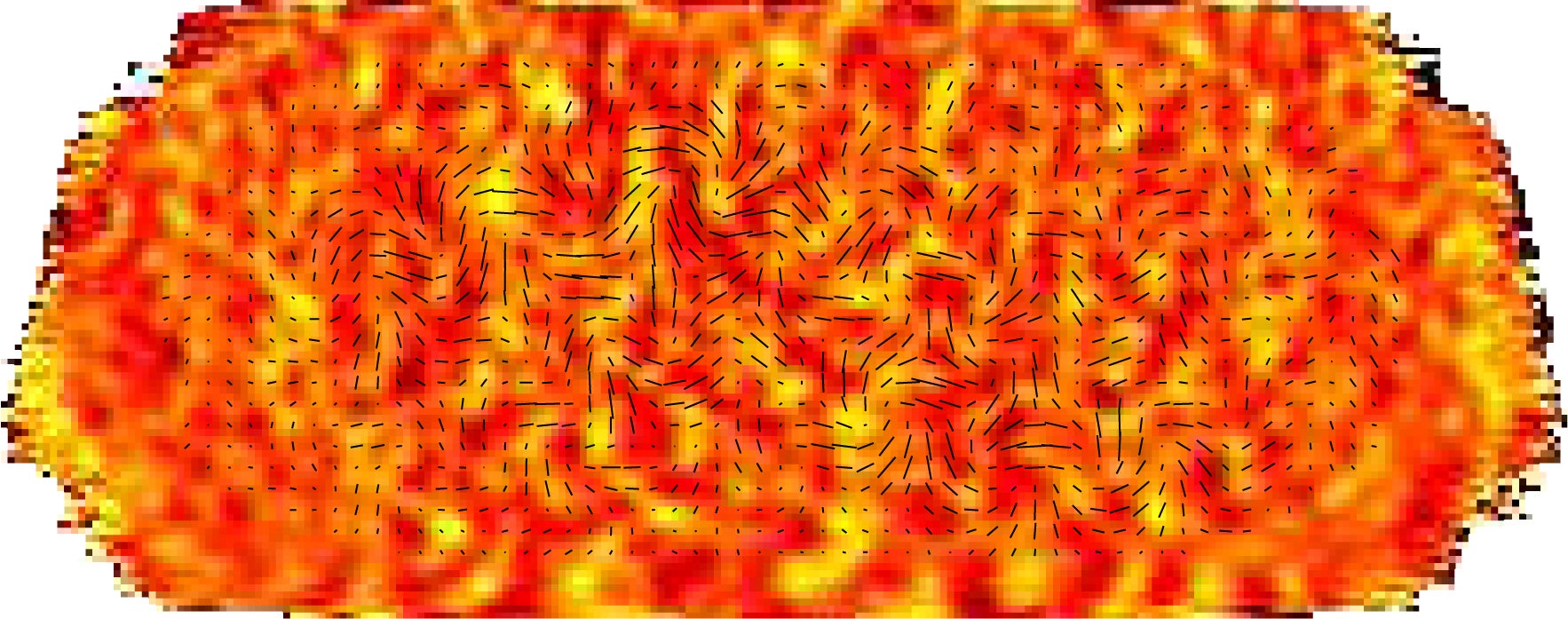
It looks like an explosion from an 80s game, but you're looking at the first direct proof of the event that started the Universe—the Big Bang. Those black lines represent the polarization of the Cosmic Microwave Background, which "could have been produced by gravitational waves created by inflation" as predicted by Einstein. If confirmed, it could be one of the biggest scientific discoveries in history.…

Scientists capture first ever signal from the beginning of the Universe


Today is a great day for science, Humanity and Andrei Dmitriyevich Linde—one of the main authors of the inflationary universe theory that was confirmed today. Watch his emotions as assistant Professor Chao-Lin Kuo surprises him with the news of the evidence that supports his theoretical work.

Kuo and his colleagues were the ones who got "the first images of gravitational waves, or ripples in space-time—the "first tremors of the Big Bang."


ORIGINAL: Sploid


sábado, 15 de marzo de 2014

RNA World 2.0

Most scientists believe that ribonucleic acid played a key role in the origin of life on Earth, but the versatile molecule isn’t the whole story.

© KEVIN HAND
The ubiquity and diverse functionality of ribonucleic acid (RNA) in today’s world suggest that the information polymer could well have been the leading player early on in the establishment of life on Earth, and, in theory, it’s a logical basis for primitive life. One can readily imagine that RNA, as a catalytic molecule capable of serving as a template for its own replication, might have reproduced itself and grown exponentially in the primordial environment. Perhaps such an RNA-based proto–life-form even replicated with an appropriate level of fidelity to allow natural selection to begin directing its evolution.

But there’s a snag: “The odds of suddenly having a self-replicating RNA pop out of a prebiotic soup are vanishingly low,” says evolutionary biochemist Niles Lehman of Portland State University in Oregon.

For decades, researchers from diverse fields have theorized—and argued—about how early life might have begun, and about what sparked the 3.5 billion years of evolution that led to the plethora of cell-based life that occupies almost every nook and cranny of modern Earth. Different camps emerged. So-called “metabolism first” researchers focus on understanding chemical cycles that may have materialized in a prebiotic environment and could have led to the synthesis of nucleotides and other organic molecules. Those subscribing to the theory of “genetics first” want to identify the first information molecule and understand how it arose, replicated, and evolved.

The RNA world, first posited by Francis Crick1 and others in the late 1960s, remains an attractive hypothesis. Many of the chemical hurdles that once challenged the laboratory synthesis of the molecule under presumed primordial conditions are being overcome, and in vitro evolution experiments are yielding RNA molecules that perform numerous functions, including copying themselves or other RNAs. “I don’t think there can be much doubt that RNA was a major central player as both a catalyst and an early replicator,” says Nick Lane, a biochemist at the University College London whose research falls under the “metabolism first” label. “So the RNA world is absolutely correct, as far as I’m concerned, in that.”

But the notion that RNA, on its own, spontaneously assembled and evolved on early Earth has fallen out of favor. More likely, whatever conditions spawned compounds as complex as nucleotides also generated other organics, perhaps early forms of modern amino acids and fatty acids, the constituent parts of proteins and membranes. “I’m not sure how many people anymore believe in a pure RNA world. I certainly don’t,” says Lane. “I think the field has drifted away from that, and there’s now an acknowledgment it had to be ‘dirty.’ ”

“I think most people would argue that there’s . . . more than just RNA,” agrees Matthew Powner, a “genetics first” origins-of-life researcher, also at University College London. (See “Matthew Powner: Origin Solver,” The Scientist, March 2014) “People have relaxed their opinions of the RNA world . . . from its original inception where RNA was fundamental to all parts of biology in the earliest form of life.”

martes, 25 de febrero de 2014

Celebrate this week for Life’s Birthday!

Life has an incredible amount to teach us about living sustainably, in no small part due to the fact that organisms have been surviving and thriving on Earth for 3.85 billion years. But, how long is that really? If we take the age of Earth (4.5 billion years) and compress it into one year, we can better grasp the time-tested wisdom our fellow planet-mates can bring to the design table. And referencing this compressed calendar (see below), February 25, is life’s birthday!

To celebrate, for this week only we are offering a 38% discount on the following biomimicry resources:

Biomimicry Resource Handbook: A Seed Bank of Best Practices
Reg. $69.00 now for only $42.00. Promo code: BookBDay2014

Introduction to Biomimicry Online Foundational Course
Reg. $99.00, now for only $62.00. Promo code: CourseBDay2014

In addition, 38% of the proceeds will go directly to the Biomimicry 3.8 Institute to provide biomimicry education tools to students, educators, and practitioners around the world.

This birthday party ends on Friday, February 28 at 11:59 p.m. MST, so take advantage of the special now. To get your 38% discount, please follow these steps:

Click “Enroll” to sign up for a new account or log in


In the shopping cart enter the promo code(s)
Click “Checkout” to complete the process


Earth’s Calendar


ORIGINAL: Biomimicry.net

domingo, 23 de febrero de 2014

This is the oldest fragment of Earth ever found


You're looking at the oldest fragment of Earth ever found: a zircon 4.375 billion years old, something that has deep implications in our understanding of the planet's formation. While some scientists said other samples weren't genuine, new research just published in the journal Nature Geoscience proves that this is the real McCoy.

John Valley—a geochemist at the University of Wisconsin, Madison—and his colleagues, used a new technique called atom-probe tomography. This technology allowed the scientists to count individual lead atoms within the zircons found in Jack Hills, a range in the midwest of Western Australia.

The previous method—which counted the number of lead isotopes—was imperfect because the radioactive uranium trapped inside the zircons moves lead isotopes around as it decays. According to Valley, "if there's a process by where lead can move from one part of the crystal to another place, then the place where lead is concentrated will have an older apparent age and the place from where it moves will have a younger apparent age."

Valley claims that atom-probe tomography doesn't suffer from this defect, something that has allowed them to obtain the definitive age: "We've proved that the chemical record inside these zircons is trustworthy."

Their research demonstrates that these zircons were formed only 100 million years after the massive cosmic impact that smashed Earth to create the Moon as we know it today. Since they think the crystals formed from granodiorite or tonalite—materials that are rich in water—this means that Earth cooled down really quickly. So fast, in fact, that it's possible there was water on its surface, says Valley:

The zircons show us the earliest Earth was more like the Earth we know today. It wasn't an inhospitable place.

ORIGINAL: Sploid

jueves, 13 de febrero de 2014

Fox Networks Group To Launch ‘Cosmos: A Spacetime Odyssey’ In 181 Countries, 220 Channels

Fox Networks Group today announced its first ever cross-network global premiere event — for Seth MacFarlane‘s passion project, Cosmos: A Spacetime Odyssey, on Sunday, March 9, 9-10 PM ET/PT. In addition to premiering on the 10 U.S. networks simulcasting the premiere episode — Fox Broadcasting Company, National Geographic Channel, FX, FXX, FXM, FOX Sports 1, FOX Sports 2, Nat Geo Wild, Nat Geo Mundo and FOX Life — and on the Fox International Channels and National Geographic Channels International, as previously announced, Cosmos will premiere on all 90 National Geographic Channels in 180 countries, as well as 120 Fox-branded channels in 125 countries, making this the largest global launch ever for a television series. Rolling out immediately after the U.S. premiere, international markets will begin airing the premiere episode day and date on both Fox-branded and National Geographic Channels, concluding within one week of the domestic premiere event. The additional 12 episodes will air exclusively on National Geographic Channels outside the U.S.


TV Trailer: Seth MacFarlane’s ‘Cosmos’

This first multi-network launch event for Fox Networks Group, along with the series debut on Fox International Channels and National Geographic Channels International, will make Cosmos: A Spacetime Odyssey available on 220 channels in 181 countries, with an overall footprint of more than half a billion homes.

In today’s announcement, Fox Networks Group chairman and CEO Peter Rice called it “one of the most incredible experiences ever imagined for television.” From the announcement:

After the cross-network premiere event, COSMOS: A SPACETIME ODYSSEY will continue its epic 13-episode run, airing Sundays (9:00-10:00 PM ET/PT) on FOX, and Mondays – with all-new bonus footage and behind-the-scenes content – on the National Geographic Channel (NGC) (10:00-11:00 PM ET/PT).

More than three decades after the debut of “Cosmos: A Personal Voyage,Carl Sagan’s stunning and iconic exploration of the universe as revealed by science, Seth MacFarlane has teamed with Sagan’s original creative collaborators – writer/executive producer Ann Druyan and co-writer, astronomer Steven Soter – to conceive the 13-part series that will serve as a successor to the Emmy and Peabody Award-winning original series.

COSMOS: A SPACETIME ODYSSEY is hosted by renowned astrophysicist Dr. Neil deGrasse Tyson. As with the legendary original series, the new COSMOS is the saga of how we discovered the laws of nature and found our coordinates in space and time. The series brings to life never-before-told stories of the heroic quest for knowledge, transporting viewers to new worlds and across the universe for a vision of the cosmos on the grandest – and the smallest – scale. The series invents new modes of scientific storytelling to reveal the grandeur of the universe and re-invent celebrated elements of the original series, including the Cosmic Calendar and the Ship of the Imagination. The most profound scientific concepts are presented with stunning clarity, uniting skepticism and wonder, and weaving rigorous science with the emotional and spiritual into a transcendent experience.

ORIGINAL:
Deadline
By THE DEADLINE TEAM
February 13, 2014

miércoles, 4 de diciembre de 2013

Scientists Just Sequenced the DNA From A 400,000-Year-Old Early Human

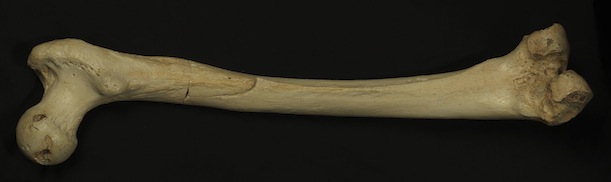
DNA from a group of ancient human fossils found in Spain (above), has been mysteriously related to an ancient lineage called the Denisovans, previously found only in Siberia. Photo by Javier Trueba, Madrid Scientific Films
Since its discovery in 1990, La Sima de los Huesos, an underground cave in Northern Spain’s Atapuerca Mountains, has yielded more than 6,000 fossils from 28 individual ancient human ancestors, making it Europe’s most significant site for the study of ancient humans. But despite years of analysis, the exact age and even the species to which these individuals belonged has been in doubt.

Now, though, an international group of scientists has extracted and sequenced DNA from the fossilized femur of one of these individuals for the first time. The resulting data—which represent the oldest genetic material ever sequenced from a hominin, or ancient human ancestor—finally give us an idea of the age and lineage of these mysterious individuals, and it’s not what many scientists expected.

The fossilized bone tested, a femur, is roughly 400,000 years old. But the big surprise is that, although scientists had previously believed the fossils belonged to Neanderthals because of their anatomical appearance, the DNA analysis actually shows they’re more closely related to Denisovans, a recently-discovered third lineage of human ancestors known only from DNA isolated from a few fossils found in Siberia in 2010. The findings, published today in Nature, will force anthropologists to further reconsider how the Denisovans, Neanderthals and the direct ancestors of modern-day humans fit together in a complicated family tree.

The femur from which DNA was extracted for analysis. Photo by Javier Trueba, Madrid Scientific Films
The analysis was enabled by recent advances in methods for recovering ancient DNA fragments developed at the Max Planck Institute for Evolutionary Anthropology in Germany, previously used to analyze the DNA of a cave bear fossil found in the same cave. “This wouldn’t have been possible just two years ago,” says Juan Luis Arsuaga, a paleontologist at the University of Madrid who led the initial excavations of the cave and collaborated on the new study. “And even given these new methods, we still didn’t expect these bones to preserve DNA, because they’re so old—ten times older than some of the oldest Neanderthals from whom we’ve taken DNA.

After extracting a two grams of crushed bone from the femur, a group of scientists led by Matthias Meyer isolated the mitochondrial DNA (mtDNA), a pool of genetic material that’s distinct from the DNA in the chromosomes located in our cells’ nuclei. Instead, this mtDNA lives in our cells’ mitochondria—microscopic organelles responsible for cellular respiration—and is much shorter in length than nuclear DNA.

There’s another quirk of mtDNA that makes it especially valuable as a means of studying the evolution of ancient humans: Unlike your nuclear DNA, which is a mix of DNA from both your parents, your mtDNA comes solely from your mother, because most of a sperm’s mitochondria are found in its tail, which it sheds after fertilization. As a result, mtDNA is nearly identical from generation to generation, and a limited number of distinct sequences of mtDNA (called haplogroups) have been observed in both modern humans and ancient human ancestors. Unlike anatomical characteristics and nuclear DNA, which can vary within a group and make it difficult to confidently distinguish one from another, mtDNA is generally consistent, making it easier to link a particular specimen with a lineage.

Which is why, when the researchers compared the femur’s mtDNA to previously sequenced samples from Neanderthals, from a Denisovan finger bone and tooth found in Siberia and from many different modern humans, they found it so surprising that it more closely resembled the Denisovans. “This was really unexpected,” Arsuaga says. “We had to think really hard to come up with a few scenarios that could potentially explain this.

Anthropologists had already known that all three lineages (humans, Neanderthals and Denisovans) shared a common ancestor, but it’s far from clear how all three groups fit together, and the picture is further clouded by the fact that interbreeding may have occurred between them after they diverged. Helpfully, comparing the femur’s mtDNA to the Neanderthal, Denisovan and modern human samples allowed the researchers to estimate its age—based upon known rates of mtDNA mutation, the previously established ages of the other samples, and the degree of difference between them—leading to the 400,000 year figure.

To explain how a Neanderthal-looking individual could come to have Denisovan mtDNA during this time period, the scientists present several different hypothetical scenarios. It’s possible, for instance, that
  • the fossil in question belongs to a lineage that served as ancestors of both Neanderthals and Denisovans, or more likely, one that came after the split between the two groups (estimated to be around 1 million years ago) and was closely related to the latter but not the former. 
  • It’s also a possibility that the femur belongs to a third, different group, and that its similarities to Denisovan mtDNA are explained by either interbreeding with the Denisovans or the existence of yet another hominin lineage that bred with both Denisovans and the La Sima de los Huesos population and introduced the same mtDNA to both groups.
If this sounds like a complicated family tree to you, you’re not alone. This analysis, along with earlier work, adds further mystery to an already puzzling situation. Initial testing on the Denisovan finger bone found in Siberia, for instance, found that it shared mtDNA with modern humans living in New Guinea, but nowhere else. Meanwhile, it was previously thought that Neanderthals had settled in Europe and Denisovans further east, on the other side of the Ural Mountains. The new analysis complicates that idea.

For now, the researchers believe the most plausible scenario (illustrated below) is the femur belongs to a lineage that split off from Denisovans sometime after they diverged from the common ancestor of both Neanderthals and modern humans. But perhaps the most exciting conclusion to come out of this work is that it proves that genetic material can survive for at least 400,000 years, and can be analyzed even after that amount of degradation. Armed with this knowledge and the new techniques, anthropologists can now attempt to genetically survey many other ancient specimens in hopes of better understanding our family tree.
Image via Nature/Meyer et. al.
December 4, 2013

sábado, 21 de septiembre de 2013

Did a hyper-black hole spawn the Universe?

ORIGINAL: Nature
Zeeya Merali
13 September 2013

Big Bang was mirage from collapsing higher-dimensional star, theorists propose. 
The event horizon of a black hole — the point of no return for anything that falls in — is a spherical surface. In a higher-dimensional universe, a black hole could have a three-dimensional event horizon, which could spawn a whole new universe as it forms.  ARTIST'S IMPRESSION BY VICTOR DE SCHWANBERG/SCIENCE PHOTO LIBRARY

It could be time to bid the Big Bang bye-bye. Cosmologists have speculated that the Universe formed from the debris ejected when a four-dimensional star collapsed into a black hole — a scenario that would help to explain why the cosmos seems to be so uniform in all directions.

The standard Big Bang model tells us that the Universe exploded out of an infinitely dense point, or singularity. But nobody knows what would have triggered this outburst: the known laws of physics cannot tell us what happened at that moment.

For all physicists know, dragons could have come flying out of the singularity,” says Niayesh Afshordi, an astrophysicist at the Perimeter Institute for Theoretical Physics in Waterloo, Canada.

Related storiesTheoretical physics: The origins of space and time
Big Bang light reveals minimum lifetime of photons
Polarization detected in Big Bang's echo

More related stories

It is also difficult to explain how a violent Big Bang would have left behind a Universe that has an almost completely uniform temperature, because there does not seem to have been enough time since the birth of the cosmos for it to have reached temperature equilibrium.

To most cosmologists, the most plausible explanation for that uniformity is that, soon after the beginning of time, some unknown form of energy made the young Universe inflate at a rate that was faster than the speed of light. That way, a small patch with roughly uniform temperature would have stretched into the vast cosmos we see today. But Afshordi notes that “the Big Bang was so chaotic, it’s not clear there would have been even a small homogenous patch for inflation to start working on”.

On the brane

In a paper posted last week on the arXiv preprint server1, Afshordi and his colleagues turn their attention to a proposal2 made in 2000 by a team including Gia Dvali, a physicist now at the Ludwig Maximilians University in Munich, Germany. In that model, our three-dimensional (3D) Universe is a membrane, or brane, that floats through a ‘bulk universe’ that has four spatial dimensions.

Ashfordi's team realized that if the bulk universe contained its own four-dimensional (4D) stars, some of them could collapse, forming 4D black holes in the same way that massive stars in our Universe do: they explode as supernovae, violently ejecting their outer layers, while their inner layers collapse into a black hole.

In our Universe, a black hole is bounded by a spherical surface called an event horizon. Whereas in ordinary three-dimensional space it takes a two-dimensional object (a surface) to create a boundary inside a black hole, in the bulk universe the event horizon of a 4D black hole would be a 3D object — a shape called a hypersphere. When Afshordi’s team modelled the death of a 4D star, they found that the ejected material would form a 3D brane surrounding that 3D event horizon, and slowly expand.

The authors postulate that the 3D Universe we live in might be just such a brane — and that we detect the brane’s growth as cosmic expansion. “Astronomers measured that expansion and extrapolated back that the Universe must have begun with a Big Bang — but that is just a mirage,” says Afshordi.

Model discrepancy

The model also naturally explains our Universe’s uniformity. Because the 4D bulk universe could have existed for an infinitely long time in the past, there would have been ample opportunity for different parts of the 4D bulk to reach an equilibrium, which our 3D Universe would have inherited.

The picture has some problems, however. Earlier this year, the European Space Agency's Planck space observatory released data that mapped the slight temperature fluctuations in the cosmic microwave background — the relic radiation that carries imprints of the Universe’s early moments. The observed patterns matched predictions made by the standard Big Bang model and inflation, but the black-hole model deviates from Planck's observations by about 4%. Hoping to resolve the discrepancy, Afshordi says that his is now refining its model.

Despite the mismatch, Dvali praises the ingenious way in which the team threw out the Big Bang model. “The singularity is the most fundamental problem in cosmology and they have rewritten history so that we never encountered it,” he says. Whereas the Planck results “prove that inflation is correct”, they leave open the question of how inflation happened, Dvali adds. The study could help to show how inflation is triggered by the motion of the Universe through a higher-dimensional reality, he says. Naturedoi:10.1038/nature.2013.13743

References
Pourhasan, R., Afshordi, N. & Mann, R. B. Preprint available at http://arxiv.org/abs/1309.1487 (2013).
PubMed Show context

Dvali, G., Gabadadze, G. & Porrati, M. Phys. Lett. B 485, 208–214 (2000).
Article
ISI
ChemPort Show context

viernes, 30 de agosto de 2013

Are We Martians After All?

ORIGINAL: Science
2013-08-29

NASA/JPL-Caltech/MSSS. Life’s cradle? According to biochemist Steven Benner, life on Earth may have originated in martian rock samples like these.
If you looked in a mirror this morning, you may have seen a descendant of creatures from Mars. That is, if biochemist Steven Benner of the Westheimer Institute of Science and Technology in Gainesville, Florida, is right. “Life started on Mars and came to Earth on a rock,” Benner declares. Today, at the European Association of Geochemistry’s Goldschmidt Conference in Florence, Italy, Benner made what many in the origin-of-life debate call an interesting, but not convincing, new case for our martian heritage.

However and wherever life began, one thing is sure: Its first organic building blocks, called hydrocarbons, had a number of hurdles to clear before evolving into living cells. Fed with heat or light and left to themselves, hydrocarbons tend to turn into useless tarlike substances. And even when complex molecules like RNA (most biologists' best guess for the first genetic molecule) arise, water quickly breaks them down again.

Benner argues that those chemical hurdles would have been lower on early Mars than on young Earth. To begin with, early Earth was probably a water world, completely covered by oceans, but water covered only parts of Mars’s surface. Moreover, he notes, rocks on Mars had a stronger oxidizing effect than rocks on Earth, so oxygen-bearing molecules would have formed more easily there. "This is established by observations today on both planets, as well as by models for how planets form," he says.

As a result, molybdates—molecules that contain molybdenum and oxygen—could have existed on Mars, but probably not on Earth. Like oxidized boron (which occurs in dry regions and would also have been rare on a water-covered early Earth), molybdates tend to prevent organic materials from turning into tar. Benner says laboratory experiments show that molybdates can convert certain organic molecules into ribose—an important component of DNA. “This is a fact,” he says.

That would make it more likely that life originated on our planetary neighbor, Benner says. Martian microorganisms could have reached Earth on meteorites, flung away from the Red Planet’s surface by cosmic impacts.

Benner’s hypothesis “is a neat idea, but not yet proven,” says biochemist William Bains of the Massachusetts Institute of Technology in Cambridge. Some theories for the origin of life do not need molybdenum at all, Bains says, and scientists don’t know for sure whether early Earth was completely covered in water while early Mars was not.

Astrobiologist Paul Davies of Arizona State University, Tempe, agrees that Benner’s argument “greatly strengthens the case” for Mars as the first home of terrestrial life. But, he adds, “It comes down to probabilities. The case is suggestive but not overwhelming.” Even if early life existed on Mars, he says, it would be hard to prove that those life forms planted the seeds of our own existence. “In fact, because the traffic of [meteoritic] material between Earth and Mars is so prolific, once life gets going on one it will be transferred to the other very quickly, making the place of origin almost impossible to discern.

Astrochemist Pascale Ehrenfreund of George Washington University in Washington, D.C., is a bit more optimistic about resolving the issue. Laboratory experiments under conditions that resemble early Mars might lead to realistic answers, she says. But she doesn’t find Benner’s “interesting idea” convincing.

Benner himself concedes that scientists may never know how and where life emerged. "We will likely need to be satisfied with answers to a more indirect question: How might life have emerged?” Finding martian life, either extant or extinct, could help by revealing information about ancient martian biochemistry. “This could lead to an ‘Aha!’ moment that opens new thinking relevant to the historical question.

As for pinpointing the location of the origin of life once and for all, Benner quips, “Building a time machine will help.

miércoles, 28 de agosto de 2013

La gran Titanoboa recorre el mundo

ORIGINAL: El Colombiano
Por Ramiro Velázquez Gómez
4 de abril de 2012

Una réplica, película y videojuegos reconstruyen la mayor serpiente del planeta que habitó en Colombia.
A 60 millones de años de haber desaparecido asombra al mundo. Lo hizo ya en Nueva York, sigue en Washington y se paseará por otras regiones. Hasta a Colombia, su casa, vendrá.

Se tragaba cocodrilos, enormes tortugas, lo que encontrara a su paso en ese antiguo y tupido bosque sudamericano: La Guajira.

Titanoboa cerrejonensis cobró vida. Esta serpiente, la más grande que jamás existió sobre la Tierra, de casi 15 metros y 1.250 kilos, se paseó por la Gran Estación Central en Nueva York, donde sorprendió a los visitantes. "¿Era un animal, un animal real? ¡Es enorme!" balbuceó Chris Wood citado por Jennifer Welsh en LiveScience.

Sí, esta enorme serpiente volvió a la vida. Hallada por un grupo de científicos del Smithsonian Tropical Research Institute en la mina de El Cerrejón, equipo encabezado por el colombiano Carlos Jaramillo , fue mostrada al mundo en un artículo en la revista Nature en febrero de 2009.

En ese rico yacimiento fosilífero donde se han encontrado otras enormes criaturas que vivieron en el Paleoceno medio a tardío, se halló una vértebra cloacal casi completa y decenas de otras vértebras y costillas de la enorme criatura.

Ahora, el Museo Smithsonian de Historia Natural la recreó. No solo mediante descomunales modelos, uno de ellos tragándose un cocodrilo, sino que produjo una película que es presentada en el canal del Smithsonian.

El trabajo continúa
"Todo esto es parte de nuestro trabajo", dijo Jaramillo al periódico. "El Smithsonian hizo una película cuya premiere fue el miércoles 28, junto con una exhibición de Titanoboa que estará en el Museo de Historia Natural en Washington por varios meses, y luego viajará a varios museos en el mundo".

La serpiente de El Cerrejón va más allá. También se publicó un extenso artículo en el Smithsonian Magazine sobre la manera como se hallaron los restos, se creó un videojuego para iphone y ipad (se llama Titanoboa) y juguetes y hasta dulces con su forma, dijo Jaramillo, geólogo de la Nacional y doctor de la Universidad de Florida.

La película, Titanoboa Monster Snake, también será presentada en Colombia, en unión con Maloka y el Instituto Von Humboldt. Se está subtitulando en español para que pueda ser proyectada en aquel auditorio. "Espero que en algún momento en abril".

Entre la bruma de una selva muy húmeda, Titanoboa se mueve con rapidez para sumergirse en el agua, donde quieta detrás de la flora marina espera. Un enorme cocodrilo se acerca y el movimiento ágil de la serpiente no le permite escapar. Una escena de la película que recrea esos ambientes cálidos de hace 58 a 60 millones de años en una Tierra en la que las concentraciones de dióxido de carbono eran cinco o seis veces mayores que las actuales, calentando el aire de tal manera que esta serpiente, de sangre fría, pudo encontrar las condiciones adecuadas para alcanzar semejante tamaño.

Titanoboa, la serpiente monstruo, la antigua habitante de El Cerrejón y La Guajira, camina de nuevo.

domingo, 23 de diciembre de 2012

Origin of Life: Hypothesis Traces First Protocells Back to Emergence of Cell Membrane Bioenergetics

ORIGINAL: Science Daily

Dec. 20, 2012 — A coherent pathway -- which starts from no more than rocks, water and carbon dioxide and leads to the emergence of the strange bio-energetic properties of living cells -- has been traced for the first time in a major hypothesis paper in Cell this week.

A major new hypothesis outlines a coherent pathway that starts from no more than rocks, water and carbon dioxide and leads to the emergence of the strange bio-energetic properties of living cells. (Credit: iStockphoto/Henrik Jonsson)
At the origin of life the first protocells must have needed a vast amount of energy to drive their metabolism and replication, as enzymes that catalyse very specific reactions were yet to evolve. Most energy flux must have simply dissipated without use.

So where did it all that energy come from on the early Earth, and how did it get focused into driving the organic chemistry required for life?

The answer lies in the chemistry of deep-sea hydrothermal vents. In their paper Nick Lane (UCL, Genetics, Evolution and Environment) and Bill Martin (University of Dusseldorf) address the question of where all this energy came from -- and why all life as we know it conserves energy in the peculiar form of ion gradients across membranes.

"Life is, in effect, a side-reaction of an energy-harnessing reaction. Living organisms require vast amounts of energy to go on living," said Nick Lane.

Humans consume more than a kilogram (more than 700 litres) of oxygen every day, exhaling it as carbon dioxide. The simplest cells, growing from the reaction of hydrogen with carbon dioxide, produce about 40 times as much waste product from their respiration as organic carbon (by mass). In all these cases, the energy derived from respiration is stored in the form of ion gradients over membranes.

This strange trait is as universal to life as the genetic code itself. Lane and Martin show that bacteria capable of growing on no more than hydrogen and carbon dioxide are remarkably similar in the details of their carbon and energy metabolism to the far-from-equilibrium chemistry occurring in a particular type of deep-sea hydrothermal vent, known as alkaline hydrothermal vents.

Based on measured values, they calculate that natural proton gradients, acting across thin semi-conducting iron-sulfur mineral walls, could have driven the assimilation of organic carbon, giving rise to protocells within the microporous labyrinth of these vents.

They go on to demonstrate that such protocells are limited by their own permeability, which ultimately forced them to transduce natural proton gradients into biochemical sodium gradients, at no net energetic cost, using a simple Na+/H+ transporter. Their hypothesis predicts a core set of proteins required for early energy conservation, and explains the puzzling promiscuity of respiratory proteins for both protons and sodium ions.

These considerations could also explain the deep divergence between bacteria and archaea (single celled microorganisms) . For the first time, says Lane, "It is possible to trace a coherent pathway leading from no more than rocks, water and carbon dioxide to the strange bioenergetic properties of all cells living today."


sábado, 1 de diciembre de 2012

Atom Smasher Creates New Kind of Matter

ORIGINAL: Space
Clara Moskowitz, LiveScience Senior Writer
27 November 2012

A proton collides with a lead nucleus, sending a shower of particles through the CMS detector.
CREDIT: CERN 
Collisions between particles inside the Large Hadron Collider atom smasher have created what looks like a new form of matter.

The new kind of matter is called color-glass condensate, and is a liquidlike wave of gluons, which are elementary particles related to the strong force that sticks quarks together inside protons and neutrons (hence they are like "glue").

Scientists didn't expect this kind of matter would result from the type of particle collisions going on at the Large Hadron Collider at the time. However, it may explain some odd behavior seen inside the machine, which is a giant loop where particles race around underneath Switzerland and France.

When scientists sped up protons (one of the building blocks of atoms) and lead ions (lead atoms, which contain 82 protons each, stripped of their electrons), and crashed them into each other, the resulting explosions liquefied those particles and gave rise to new particles in their wake. Most of these new particles, as expected, fly off in all directions at close to the speed of light. [Photos: The World's Largest Atom Smasher (LHC)]

But recently scientists noticed that some pairs of particles were flying off from the collision point in correlated directions.

"Somehow they fly at the same direction even though it's not clear how they can communicate their direction with one another. That has surprised many people, including us," MIT physicist Gunther Roland, whose group led the analysis of the collision data along with Wei Li of Rice University, said in a statement.

A similar flight pattern is seen when two heavy particles, such as lead and lead, crash into each other. In this case, the collisions create what's called quark-gluon plasma — a superhot soup of particles similar to the state of the universe just after the Big Bang. This soup can sweep particles in the same direction, explaining why their flight directions would be correlated.

But quark-gluon plasma isn't possible with lead-proton collisions, like the ones in the new study. Now researchers think a different state of matter, the color-glass condensate, may act in a similar way. The color-glass condensate's dense swarm of gluons may also sweep particles off in the same direction, suggested Brookhaven National Laboratory physicist Raju Venugopalan, who first predicted the substance, which may also be seen after proton-proton collisions.

The mechanism may depend on a weird quirk of particles called quantum entanglement. Two particles can be entangled so that they retain a connection even after they are separated, and an action on one reverberates on the other.

Entangled gluons in the color-glass condensate could explain how particles flying away from the collision point might share information about their flight direction with each other, Venugopalan said.

The intriguing phenomenon was not expected to result from the LHC's run of proton-lead collisions, which was meant to serve as a reference point for comparison to other types of collisions.

"You don't expect quark-gluon plasma effects" with lead-proton collisions, Rolandsaid. "It was supposed to be sort of a reference run — a run in which you can study background effects and then subtract them from the effects that you see in lead-lead collisions.

The findings will be detailed in an upcoming issue of the journal Physical Review B.

This story was provided by LiveScience, a sister site to SPACE.com. Follow Clara Moskowitz on Twitter @ClaraMoskowitz or LiveScience @livescience. We're also on Facebook & Google+.

sábado, 29 de septiembre de 2012

Did Slow Space Rocks Seed Life on Earth?

September 28, 2012

New model yields better odds for transfer of organisms among planetary systems.
Planets coalesce and rocky bodies collide in an artist's conception of a young planetary system. Illustration courtesy Lynette Cook, FUSE/NASA
If microorganisms could survive a journey through space inside meteoroids, could life from Earth be transferred to planets in other solar systems—or even vice versa? A new study suggests the possibility is much higher than scientists once thought.

Using computer simulations involving slow-moving rocks, scientists from Princeton University, the University of Arizona, and the Centro de Astrobiología (CAB) in Spain concluded that Earth could have exchanged rocks trillions of times with planets from other planetary systems during the solar system's infancy.


At the time—several billion years ago—the sun would have been in its native star cluster, with Earth and nearby planetary systems under heavy meteorite bombardment, said study co-author Amaya Moro-Martin, an astrophysicist at CAB.

The research, published in the journal Astrobiology, was presented this week at the European Planetary Science Congress in Madrid.

Scientists had previously considered the possibility that meteorites could escape from our solar system and land on a terrestrial planet in another system. But they had concluded that the chances were extremely slim because of the speeds of the objects involved.

"Everyone assumed the rocks would be ejected very fast—so fast they couldn't be captured by the next star. They were flying right by," said study leader Edward Belbruno, a Princeton mathematician.

Space Rocks Sneaking Up on Stars

Belbruno, Moro-Martin, and colleagues considered a new scenario: a low-velocity process called weak transfer.

When they factored in much slower speeds of around 100 meters (330 feet) per second, along with other considerations, the researchers found a strong case for lithopanspermia—the idea that biologic material can be spread through pieces of planetary rock hurled into space by collisions and other events. (Also see: "Life Ingredients Found in Superhot Meteorites—A First.")

"Our idea is that, instead of leaving Earth fast, you leave slowly and sort of sneak up on the next star," said Belbruno, who demonstrated the principles of weak transfer in 1991 with a Japanese probe trying to enter the moon's orbit.

In its youth, the solar system would have still been embedded in the sun's native stellar cluster, when the stars were close together and moving very slowly relative to each other. Before the cluster slowly dispersed, the research suggests, a window of opportunity had opened up for lithopanspermia to occur.

Did Life on Earth Come From Other Planets?

Rocks have already intermingled within our solar system: A number of meteorites found on Earth originate from Mars, others from the moon. This new model opens up the possibility of large rock quantities being exchanged between different planetary systems within a star cluster.

Under the weak-transfer scenario, as many as 12 out of 10,000 rocks cast off by our solar system and its closest neighbor in the sun's birth cluster could have been captured by the other. Earlier simulations put the odds at around one in a million.

The model also boosts the odds that life-bearing rocks could seed other worlds under certain conditions.

For one, microorganisms like bacterial spores would have to survive a journey fraught with hazards. "Things like UV radiation and cosmic rays would basically fry the poor guys," Moro-Martin said.

The bigger the rock, however, the better the chances that the life-forms could hide long enough to survive an interstellar journey, she noted. (Related: " Space Poison Helped Start Life on Earth?")

Although life on Earth is largely thought to have originated here, the notion that it could have spread to other worlds via weak transfer leaves open the intriguing, opposite scenario.

"It's possible the reverse process is true—that life on Earth was seeded from other places," Moro-Martin said. "The mechanism operates both ways. Given how many extrasolar planetary systems we know are out there and how diverse they are, this opens a new world of possibilities to dream about."

lunes, 10 de septiembre de 2012

How To Grow a Planet (BBC Documentary 2012)

ORIGINAL: YouTube

Broadcast 2012. How To Grow A Planet: We might think humans are the most powerful living thing on Earth, but it's plants that time and again have set the agenda for life. All animals rely on plants for their survival. This is not an accident - they are the most powerful evolutionary force on Earth. Plants enabled amphibians to leave the water, they had a hand in the rise and fall of the dinosaurs, and they ensured the ultimate triumph of insects, mammals, birds and even us - all for their own benefit. Because plants have only ever had one goal - the total domination of the planet. It is a story of ruthless ingenuity, seduction and deception; of unimaginable power and ambition. An epic tale, How to Grow a Planet offers a stunning new perspective on Earth history.

Life from Light: In this first episode Iain journeys from the spectacular caves of Vietnam to the remote deserts of Africa. He sees how plants first harnessed light from the sun and created our life-giving atmosphere. He uncovers the epic battle between the dinosaurs and the tallest trees on the planet. And, using remarkable imagery, he shows plants breathing - and for the first time talking to each other.

The Power of Flowers: In the second episode, Iain discovers how flowers have transformed our planet. He journeys to the remote islands of the South Pacific to track down the earliest flowers. In the deserts of Africa and rainforests of Vietnam, he sees how they brought brilliant colour to the most barren landscapes and sculpted the earth itself. And he learns how they drove the evolution of all animals - kick-starting our human story.

The Challenger: In the third episode, Iain discovers the remarkable impact of just one plant: grass. On the savannah of South Africa he sees how grass unleashed a firestorm to fight its greatest enemy, the forests. He shows how cutting your finger on a blade of grass shows us how it transformed life in the oceans. In Senegal, he meets the cleverest chimps in the world. And, in the ruins of the oldest temple on Earth, he tells the extraordinary story of how grass triggered human civilisation.

martes, 21 de agosto de 2012

"Esta generación encontrará vida extraterrestre"

ORIGINAL: La Vanguardia
21/08/2012 - 00:00

Victoria Meadows, astrobióloga y astrónoma planetaria. Foto: Llibert Teixidó
Directora feliz
La astrobiología es el estudio del origen, evolución, distribución y futuro de la vida en el universo, y esta doctora es la investigadora que dirige el Laboratorio Planetario Virtual de la NASA desde el 2000. Su misión es encontrar vida en la galaxia fuera de nuestro sistema solar y lo hace con buen humor y mucha energía: "Me pregunto por qué me pagan por hacerlo... ¡Es tan divertido!" Su acierto fue crear un grupo de científicos multidisciplinar y dinámico. Ha participado en el foro Cambridge Workshops on Cool Stars, Stellar Systems and the Sun. Nacido hace 30 años, reúne a los mayores expertos en estrellas frías, y este año lo ha organizado el Institut d'Estudis Espacials de Catalunya.

Cuándo fue la primera vez que se fijó en las estrellas?
Lo recuerdo muy bien porque yo tenía problemas de vista y a los once años mi madre me compró una gafas, miré hacia el cielo y me quedé maravillada.

Contágieme.
Yo dedico mi vida a estudiar los planetas que orbitan alrededor de las estrellas frías, en concreto las M, porque la posibilidad de que haya planetas habitables a su alrededor es muy alta.

Si no cualquier tipo de vida se asaría.
Exacto, si la estrella es muy caliente y el planeta está muy cerca, su agua se evapora, y el agua es esencial para la vida, y si está demasiado lejos, se congela. Las estrellas M son reactores nucleares muy pequeñitos.

¿Cómo buscan la vida?
A través de modelos teóricos que comprobamos con observaciones; estudiamos la interacción de la estrella y el planeta para ver cómo le afecta la radiación y la gravedad.

¿Hay muchos sistemas planetarios en nuestra galaxia?
Muchísimos, aunque con agua líquida sobre la superficie creemos que debe de haber poquísimos. Pero hay muchas lunas con agua en las que podemos encontrar vida bacteriana. El problema es que cuando lancemos el James Webb tendremos que elegir un solo candidato.

¿Cuántos planetas hay en la galaxia?
Sabemos de la existencia de 777 planetas extrasolares dentro de nuestra galaxia, de ellos un pequeño porcentaje son planetas rocosos como la Tierra, y ese es nuestro objetivo. Debe de haber muchísimos más, pero son muy pequeños y difíciles de detectar.

¿Y por qué tiene que ser rocoso?
Porque pueden albergar océanos sobre su superficie.

¿No sería posible que la vida en otros planeta no haya surgido del mar?
Para generar vida tiene que haber agua líquida, pero es una molécula muy común en el universo.

¿Y puede haber vida inteligente en esos planetas rocosos?
Creo que sí, pero lo que nosotros buscamos es vida microbiana, que es relativamente fáciles de ver a gran distancia porque sus efectos sobre el planeta son mucho más significativos que los de seres como nosotros.

Curioso.
Los microbios son pequeñitos, pero hay millones y millones de ellos. De hecho el oxígeno que respiramos viene de los microbios, que lo han ido produciendo a lo largo de dos mil millones de años. Y podemos observar ese oxígeno a grandes distancias. Se ve antes los efectos de los microbios que los de un elefante.

Da que pensar.
Los microbios pueden cambiar un ecosistema, incluso se ha estudiado la posibilidad de crear atmósfera en otro planeta.

Jugar a ser dioses.
El proyecto Terraforming pretende llevar microorganismos a Marte y crear las condiciones de evolución terrestres. Hay mucho interés, pero es tan a largo plazo que han optado por otras opciones por el momento.

¿Por ejemplo?
Llevar a la superficie el agua de Marte y traer muestras para estudiar la posible colonización del planeta.

¿Ha visto Avatar de James Cameron?
Sí, una luna rocosa habitada (lo que puede ser profético) por seres inteligentes (eso ya es más difícil) que viven en comunión con la naturaleza y que los humanos invaden para extraer minerales que, tal como nos comportamos, sería muy probable.

¿Paraísos verdes sin extraterrestres?
La fotosíntesis en planetas que tienen océanos se va a producir porque es una evolución natural, así que se generará toda la flora, sucederá y en abundancia.

Entonces, ¿cree que nosotros somos los más evolucionados?
La paradoja de Fermi dice que si existiese vida inteligente en otro sistema solar ya nos habrían encontrado, pero hay muchas soluciones a esta paradoja, como la ecuación de Drake's que demuestra la posibilidad de vida, así que a su pregunta mi respuesta es no lo sé.

¿Qué otras misiones hay en marcha en busca de vida en el universo?
La NASA tiene la misión Kepler, en órbita actualmente, que esta buscando la fracción de estrellas que puede albergar planetas en la zona de habitabilidad. El James Webb será lanzado en el 2018 o 2019 y el Terrestrial Planet Finder se lanzará en veinte años.

¿Qué ha descubierto sobre los seres humanos mirando las estrellas?
Cómo manejarlos, ja, ja. Controlar a mis científicos es como controlar un rebaño de gatos.

¿...?
No saben recibir órdenes. Hace millones de años mirábamos a las estrellas y nos preguntábamos si seríamos los únicos en el universo, esta generación tiene las capacidades tecnológicas para averiguarlo.

¿Cómo llega una mujer a ser una alta directiva de la NASA?
Presenté una propuesta sobre modelos teóricos para el observatorio planetario virtual y fuimos seleccionados, llevamos once años trabajando, ese laboratorio es mi criatura.

¿Qué les distingue?
La interdisciplinariedad, científicos de muy distinta calaña, desde biólogos moleculares hasta físicos estelares, trabajamos juntos.