martes, 28 de mayo de 2013

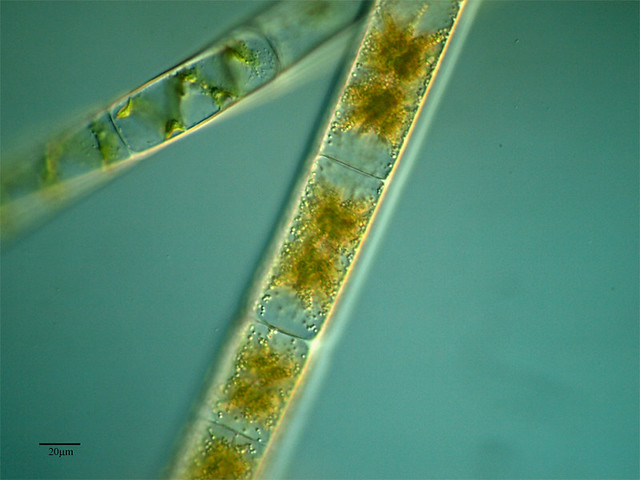
Can plastic be made from algae?

ORIGINAL: Youris
by Thijs Westerbeek
27 May 2013

Photo: Antonio Guillén PROYECTO AGUA

Algae offer many advantages, for the production of precursor molecules used to produce plastics. But these solutions are still quite a long way away

Algae are an interesting natural resource because they proliferate quickly. They are not impinging on food production. And they need nothing but sunlight and a bit of waste water to grow on. Scientists working for the SPLASH research project, funded by the EU, are now addressing the challenge of making high-quality, affordable plastics from algae. They need to demonstrate that this new type of bioplastic —namely used to produce polyesters and polyolefins— can be of the same quality as traditional plastic. And they need to show whether it can be produced in an economically viable way.

“We need a new species of algae which not only produces the right kind of hydrocarbons and sugars, but also does it fast,” explains says Maria Barbosa, SPLASH’s scientific coordinator and a researcher at Wageningen UR Food & Biobased Research unit, in the Netherlands. She believes that genetic engineering can provide the solution to this problem. “Believe it or not, that’s the easy part,” she adds. But then “we need a way to ‘milk’ the new algae, to take the desired components from the broth without killing it,” she points out. However, this is the challenge that remains to be addressed.

Once the project produces the right kind of molecules in a credible amount, Barbosa deems it fairly straightforward to make high-quality plastics of any kind. The resulting plastic precursor, made of long chain hydrocarbons, will be chemically identical to naphtha—a raw material, or feedstock, that is already used in plastic production today so quality will be no issue. She and her team hope that within four years she will be in a position to present a piece of rope made from plastic fibers produced from algae.

Experts in the field expect that quality is not going to be a problem. “There is absolutely no reason why bio-based plastics should be of inferior quality,” says Krijn de Jong, professor of inorganic chemistry and catalysis at the University of Utrecht in the Netherlands. He and his team developed a ferro-nano catalyst which produces syngas--a fuel gas mixture consisting of hydrogen and carbon monoxide and -dioxide-- from wood waste. He add: “Syngas, just like naphtha, is an existing feedstock in the plastics industry.”

Other experts think algae-based bio plastics are interesting, but really far from practical application. “The idea itself is very nice, but first the perfect algae doesn’t exist yet, then nobody knows how to get these molecules out of the broth, and scaling this up to industrial levels is going to be very difficult” says Michael O’Donohue, research manager and deputy head of the Biocatalysis Team of CEPIA in Toulouse, France. He and his team are currently focusing on yeast as a microorganism for the production of the desired long chain hydrocarbons, to be used as precusors for bioplastics. “These yeast cells are really good at producing [the desired hydrocarbons]. The stuff is literally pouring out of the individual cells. That’s why we nicknamed them ‘obese cells,” notes O’Donohue, adding: “What’s more, the cells themselves are almost identical to baking yeast, and we already have the knowledge to modify it, to fine-tune it to perfection.”

Image credits to: Antonio Guillén

Las plantas que revivieron después de 400 años

ORIGINAL: BBC
BBC Mundo
28 de mayo de 2013

Foto: Catherine La Farge
Los glaciares en esta región se han estado desvaneciendo aceleradamente desde 2004, a un ritmo de unos tres o cuatro metros al año.


Un equipo científico observó cómo unas plantas que quedaron congeladas bajo un glaciar durante la llamada Pequeña Edad de Hielo, hace siglos, volvieron a germinar.

Muestras de plantas de 400 años de antigüedad brotaron de nuevo en condiciones de laboratorio.

Según los investigadores de la Universidad de Alberta, en Canadá, esta "resurrección" es significativa para entender cómo se recuperan los ecosistemas del planeta tras los ciclos periódicos de temperaturas heladas.

Los resultados del estudio fueron publicados en la revista científica Proceedings of the National Academy of Sciences. 

La Pequeña Edad de Hielo fue un período frío que abarcó aproximadamente de 1550 a 1850, y puso fin a una era calurosa llamada "óptimo climático medieval".

Musgos latentes bajo el glaciar

El equipo científico exploraba la zona en torno del glaciar Teardrop, en el Paso de Sverdrup, en lo alto del ártico canadiense, cuando notó un inusual manto de vegetación.

"Caminábamos por el borde del glaciar cuando vimos estas grandes colonias saliendo de debajo del glaciar, que tenían un tinte verdoso", describió Catherine La Farge, la investigadora líder del estudio.

"Los glaciares están desapareciendo realmente rápido y van a exponer toda esta vegetación terrestre, y eso va a tener un gran impacto"

Catherine La Farge, Universidad de Alberta

Los glaciares en esta región se han estado desvaneciendo aceleradamente desde 2004, a un ritmo de unos tres o cuatro metros al año.

Ese proceso está dejando a la vista terrenos que no han visto la luz del día desde la Pequeña Edad de Hielo.

Las plantas observadas, conocidas como briofitas, son plantas terrestres no vasculares, como los musgos. Carecen de tejidos vasculares que hacen bombear los fluidos por las distinatas partes del organismo.

Estas plantas pueden sobrevivir a los duros inviernos del Ártico completamente disecadas, volviendo a germinar cuando suben las temperaturas.

Pero lo que sorprendió a la doctora La Farge fue le garminación de briofitas que permanecieron bajo el hielo durante tanto tiempo.

Nuevas especies

El retroceso Glaciar Teardrop ha revelado la existencia de nuevas especies.

"Cuando las trajimos al laboratorio y las observamos en detalle pude ver que de algunos de los tallos habían brotado nuevas ramas laterales verdes y esto me dio a entender que estos especímenes se están regenerando sobre el terreno. Eso me dejó atónita", explicó La Farge.

"En un paisaje cubierto por capas de hielo, siempre hemos pensado que las plantas vienen de algún refugio en los márgenes del sistema de hielo, nunca consideramos que las plantas terrestres podrían venir de debajo de un glaciar", declaró.

El retroceso del glaciar Teardrop está poniendo al descubierto una gran variedad de biodiversidad, que incluye cianobacterias, bacterias capaces de realizar fotosíntesis oxigénica, y algas verdes terrestres. Muchas de las especies observadas son totalmente nuevas para la ciencia.

"Es todo un mundo nuevo que está emergiendo de debajo de los glaciares que realmente debe ser estudiado", dijo La Farge.

"Los glaciares están desapareciendo realmente rápido y van a exponer toda esta vegetación terrestre, y eso va a tener un gran impacto", añadió.

lunes, 27 de mayo de 2013

Guitar in the OR

ORIGINAL: UCLAHealth
May 26, 2013

UCLA
Neurosurgeon Nader Pouratian, MD, and the Deep Brain Stimulation team at UCLA celebrated their 500th patient implanted with a brain pacemaker to cease tremors with a concert in the OR.
Scrub in with us today for a Deep Brain Stimulation surgery today #DBS#500thDBS#UCLAORLive… instagram.com/p/ZqFrTORIyG/
UCLA Health @UCLAHealth
·3 days ago
ReplyRetweetFavorite
Dr. Pouratain talks about the surgery #UCLAORLive vine.co/v/b9l0BUKwKlz
UCLA Health @UCLAHealth
·3 days ago
ReplyRetweetFavorite
Today's #UCLAORLive patient getting ready for today's surgery vine.co/v/b9lJz71TFVO
UCLA Health @UCLAHealth
·3 days ago
ReplyRetweetFavorite
What song will he playing in the OR today? #UCLAORLive vine.co/v/b9lnzbX6iQJ
UCLA Health @UCLAHealth
·3 days ago
ReplyRetweetFavorite
Our patient shows off the guitar he will be playing in the OR #UCLAORLive vine.co/v/b9l3Jj2AmxY
UCLA Health @UCLAHealth
·3 days ago
ReplyRetweetFavorite
Surgery Prep #UCLAORLive #DBS #Tremors vine.co/v/b9llre0OOPb
UCLA Health @UCLAHealth
·3 days ago
ReplyRetweetFavorite
Putting on the head frame #UCLAORLive #500DBS #Tremors vine.co/v/bVBuMiMH2P6
UCLA Health @UCLAHealth
·3 days ago
ReplyRetweetFavorite
Getting the patient ready with the frame  
#UCLAORLive#500DBS#nomoretremorinstagram.com/p/ZqIso9xI1T/
UCLA Health @UCLAHealth
·3 days ago
ReplyRetweetFavorite
The CT Scan will be used to target the implants #UCLAORLive #DBS #Tremors #Nomoretremors vine.co/v/bVBmrlFLm0E
UCLA Health @UCLAHealth
·3 days ago
ReplyRetweetFavorite
They are taking a look at the CT Scan to see where the implant will be placed #UCLAORLive #DBS #Tremors vine.co/v/bVBhtll3VQE
UCLA Health @UCLAHealth
·3 days ago
ReplyRetweetFavorite
Taking a look at the CT Scan to see where the implants should be placed. #UCLAORLive#500thDBS#DBS… instagram.com/p/ZqL-Y6xI5C/
UCLA Health @UCLAHealth
·3 days ago
ReplyRetweetFavorite
X marks the location where the electrode will be place #UCLAORLive#DBS#tremorinstagram.com/p/ZqNYu4RI63/
UCLA Health @UCLAHealth
·3 days ago
ReplyRetweetFavorite

CNN Health@cnnhealth
Cool! @UCLAHealth is live tweeting an awake brain surgery this morning... and the patient is playing a guitar. Follow #UCLAORLive
3 days ago
ReplyRetweetFavorite

UCLA Health @UCLAHealth
Learn more about the #DBS at UCLA ucla.in/119C0ut#UCLAORLive
3 days ago
ReplyRetweetFavorite

Josh Levs@joshlevscnn
What?!! MT "@cnnhealth: Cool! @UCLAHealth is live tweeting an awake brain surgery. The patient is playing a guitar. Folo #UCLAORLive"
3 days ago
ReplyRetweetFavorite

UCLA Health @UCLAHealth
Deep Brain Stimulation treats symptoms. It is not a cure. #UCLAORLive
3 days ago
ReplyRetweetFavorite
Prepping the site #UCLAORLive ##DBS #Tremorsinstagram.com/p/ZqORB-RI8D/
UCLA Health @UCLAHealth
·3 days ago
ReplyRetweetFavorite
Surgical TimeOut Time #UCLAORLive#DBS#tremorinstagram.com/p/ZqO2IlxI83/
UCLA Health @UCLAHealth
·3 days ago
ReplyRetweetFavorite

José García@jjgar_rodriguez
Wanna see this!!! #UCLAORLive.
3 days ago
ReplyRetweetFavorite
More prep! #UCLAORLive#DBS#tremorsinstagram.com/p/ZqQVCuxI_E/
UCLA Health @UCLAHealth
·3 days ago
ReplyRetweetFavorite
Dialing in the targets on the head frame for electrode. #UCLAORLive vine.co/v/bVBp5A3AbEr
UCLA Health @UCLAHealth
·3 days ago
ReplyRetweetFavorite
Alright....here we go! #UCLAORLive vine.co/v/bVBDvgE5ULl
UCLA Health @UCLAHealth
·3 days ago
ReplyRetweetFavorite

UCLA Health @UCLAHealth
Deep Brain Stimulation surgery is usually done in 2 stages #UCLAORLive#DBS#Tremors
3 days ago
ReplyRetweetFavorite
Removing the skin and drilling through the skull for electrode placement #UCLAORLive #DBS #tremors vine.co/v/bVBI7uMgQ7J
UCLA Health @UCLAHealth
·3 days ago
ReplyRetweetFavorite
This is the stimloc. It is place on the #skull and will secure the lead in place. #UCLAORLive#dbsinstagram.com/p/ZqR5J7RIxh/

Brad Carter Plays Guitar During Brain Surgery To Treat Parkinson's

LOS ANGELES -- It was an uncomplicated brain surgery the hospital had performed hundreds of times before (499 times, to be exact). But to celebrate Ronald Reagan UCLA Medical Center's 500th deep brain stimulation operation Thursday, surgeons performed the world's first live-Vined brain surgery.
The operation, which lead neurologist Dr. Nader Pouratian described as "textbook" brain pacemaker implant surgery, was documented with Vine, a six-second video medium, and with Instagram photos on the hospital's Twitter account (@UCLAhealth) in real time on patient Brad Carter, an actor diagnosed with the progressive neurological disorder essential tremor in 2006.
"Not everyone gets to experience a surgery, and more specifically an awake brain surgery," Pouratian said in a phone interview with The Huffington Post. "I thought it was a great opportunity to share with the world."

Deep brian stimulation is a therapy for people with Parkinson's disease, estimated to affect more than 1 million Americans, or essential tremors, which affects about 10 million Americans. It involves inserting a pacemaker that emits electronic impulses to affected areas of the brain, lessening tremor symptoms. At UCLA, the patient is conscious during the surgery and is asked to perform tests so that doctors can ensure the pacemaker is properly placed.
Carter's disease made his hands shake and his eyes twitch, affecting his ability to play the guitar. He had asked that he be allowed to strum his guitar during the operation to see if the pacemaker improved his playing ability.
Lo and behold, Vine videos from the surgery show Carter's guitar skills get stronger as physicians located the best place to leave the pacemaker. Vine videos also show Carter perform more routine tests, like extending his arms forward.


Bio-Hackers, Get Ready

ORIGINAL: TechCrunch
By Kim-Mai Cutler

When I speak to technical founders, they often look back with fondness to days of tinkering with a Commodore 64 or Hypercard.

But perhaps tomorrow’s founders will experiment with a very different kind of code — the genetic code that underlies how everything from one-celled organisms to humans develop and behave.

A pair of companies in San Francisco’s SOMA neighborhood and Tel Aviv are positioning themselves as the “Wintel” of the bio-hacking era. One company, called Genome Compiler, builds software for designing synthetic life forms, while the other, Cambrian Genomics, is experimenting with ways to cheaply laser print DNA.

Like the old Microsoft-Intel relationship of the PC era, they believe they have the symbiotic relationship necessary to usher in a new era where anybody can inexpensively create their own life forms. Genome Compiler is backed with $3 million in funding, including $2 million from Autodesk. Cambrian is funded by Founders Fund, Felicis Ventures and Draper Associates.

“We are democratizing creation,” said Genome Compiler co-founder Omri Amirav-Drory. “Cells are nothing more than a computer, running a program and the program is the genetic code. The code is DNA. The software are the chromosomes. The hardware is the wetware.”

Using Drory’s software, a person can load up existing sequences for different life forms like plants and then manipulate them by inserting or taking out various genes. It corrects the code for basic errors like not having three codes for an amino acid or having a stop and a start code in the wrong place.

“Wouldn’t it be nice in the future if someone could just load up a tree’s genetic code, drag another app from a file and make it glow in the dark?” said Amirav-Drory, who was a post-doc at Stanford University after completing a Ph.D. in biochemistry at Tel Aviv University in Israel.

In theory they could eventually build an app store where a Genome Compiler user could buy access to genetic code that might make a plant sells like a banana. One Kickstarter project which I wrote about last month is already using the software to create a glow-in-the-dark plant. The seemingly far-fetched aspiration is to eventually replace street lights with the more renewable solution of glowing trees.

Environmental considerations were what originally drew Amirav-Drory toward starting Genome Compiler.

“We live in a civilization that is totally dependent on finite resources like oil and coal to produce everything around us…. It’s unsustainable and dangerous. What will our children have?” he said in a talk at the Las Vegas Downtown Project earlier this year. “We should had look at life — living things have been around for at least 4 billion years. They can produce everything we get from fossil fuels.”

He hopes that people will use Genome Compiler to create bacteria or plants that could solve energy sustainability issues. Drory says the Genome Compiler software is free and that he has a little more than 3,000 users. He said a person would probably need at least a bachelor’s degree in a biology-related field to effectively used Genome Compiler.

One you’ve designed and the compiled the genetic code, however, you’ve got to print it and insert it into existing cells.

That’s where Cambrian Genomics comes in. While Amirav-Drory is a bit more buttoned-down, Cambrian’s CEO Austen Heinz is the rebel.

While his day-to-day considerations are about running his startup and perfecting techniques like laser pulse catapulting strands of DNA, he’ll make off-hand comments about a not-too-distant future where the technology’s he’s developing could help people design humans or help gay couples have their own genuine biological children by mixing and matching their DNA in software.

“Our pricing is designed to change behavior,” Heinz said. “Every biology lab in the world will become more virtualized. They’ll design code on a computer and then print out DNA. A biologist on a small budget should be able to design 50,000 different constructs at a time.”

Heinz didn’t offer more details on current pricing though, except to say that he has some early paying clients.

While he does use genome sequencers that you can buy from companies like Illumina, he’s also built his own sequencer that allows you to recover the underlying DNA instead of destroying it in the sequencing process. Then he uses an older technique called laser-pulse catapulting to eject copies of DNA. A client can then use time-tested and older techniques like PCR (Polymerase chain reaction) to copy this new synthetic DNA and then insert it into cells.

The advantage of using lasers over more conventional techniques like chemical synthesis is that the error rate should be a lot lower.

“Cameras, lasers, computers and software are reliable,” he said. “Those things can all break. But if anything breaks, it’s easy for us to change the part or to just fix it and get it back up and running. Their failure modes are predictable.”

Both Genome Compiler and Cambrian Genomics tie into a broader trend affecting the entire field around genetic data. Sequencing costs are falling faster than Moore’s Law, and so there are a host of companies and VCs that are betting that this new wealth of data could lend itself to all sorts of new innovations around software meeting genetic code.

“Sequencing a whole human genome cost $3 billion and took 15 years to complete just 10 years ago,” said Amirav-Drory. “Today you can do it in an afternoon for a few thousand dollars. More and more, we’re digitizing biology. We’re reading the genome and putting it in a computer.”

When he started his post-doctoral fellowship, it was $2 per base pair to print DNA. But by the time he left four years later, it had fallen by about 75 percent to 25 cents a pair.

Amirav-Drory is hoping that these lower costs will lead to all sorts of new kinds of bacteria or plants to could be used to solve the world’s ecological problems.

“The best thing about living things is that they can scale to meet the magnitude of our challenges,” he said in a recent talk.

But what about the regulatory concerns around unleashing a whole new host of synthetic bacteria and life forms into the environment?

As of now, projects like the Kickstarter glowing plant are covered by one or more of three U.S. regulatory agencies. The FDA would oversee anything digestible while the USDA and the EPA would look for organisms that would have properties of pests and could potentially crowd out more natural, beneficial plants or animals. Cambrian and other DNA printing companies already screen out incoming orders for ones that contain harmful sequences from the known library of viruses and bacteria.

It is a brave new world, though.


domingo, 26 de mayo de 2013

Conozca la 'kriptonita' contra el cáncer

ORIGINAL: Semana
24 mayo 2013

Las células cancerígenas podrían ser 'reeducadas' gracias a un componente de la dieta mediterránea.
La apigenina está en el perejil, el apio y la manzanilla, entre otras frutas y vegetales.
Investigadores de la Universidad de Ohio, en Estados Unidos, descubrieron que esta especie de "kriptonita" llamada apigenina -presente en el perejil, el apio y la manzanilla, entre otras frutas y vegetales- debilita las células del cáncer.

Al alterar un paso específico en la regulación del gen, este compuesto reeduca las células cancerígenas en células normales que eventualmente mueren.

"Creo que lo más importante de nuestro trabajo es que a diferencia de un fármaco, los compuestos que están en una dieta ayudan a restablecer un balance en la célula dirigiéndose a muchos compuestos celulares", explicó Andrea Doseff, codirectora del estudio.

El equipo pudo identificar 160 moléculas dentro de una célula humana asociadas a la apigenina. Esto permite, según el estudio publicado en la revista especializada Proceedings of the National Academy of Sciences (PNAS), restablecer un balance que hace que una célula cancerígena sea susceptible a fármacos que posiblemente antes no podían ser efectivos.


Buenas y malas Este hallazgo representa un avance en lo que sabemos sobre los beneficios de los micronutrientes, pues mucho de lo que se conoce hasta ahora está basado en estudios epidemiológicos que muestran una relación positiva entre ingerir comidas específicas y una vida más saludable.

La apigenina afecta a un repertorio de proteínas de una célula humana y las hace más accesibles. "Lo que no se sabía hasta ahora es que un compuesto en una comida puede cambiar qué tipo de proteínas expresamos en una célula".

"Tienes proteínas que pueden estar en una forma buena, y las mismas proteínas pueden tener diferencias que la hacen malas. Lo que descubrimos es que esta apigenina se une a la ribonucleoproteína y cambia el repertorio de las proteínas, convirtiendo a una célula con repertorios cancerígenos a lucir como una célula con repertorios no cancerígenos", explicó Doseff.

La experta aclara que su estudio de laboratorio no quiere decir que con comer apio o perejil se pueden matar a las células cancerígenas.

"Lo que nos permite es cambiar la forma en la que pensamos los compuestos de las comidas y sus diferencias con un fármaco", agrega.

Súper compuesto

El equipo de Doseff decidió investigar este compuesto porque sabían que era un potente antiinflamatorio y anteriormente habían determinado sus beneficios para las leucemias.

"La ventaja es que este compuesto ya está presente en dietas que la gente está comiendo mucho porque tiene beneficios cardiovasculares", explica la especialista.

A partir de esta investigación, expertos podrían determinar cómo se pueden modificar las comidas de una manera funcional para poder incrementar la cantidad de apigenina accesible para nuestro cuerpo.

"¿Cómo hacemos para que algo que sabemos que es bueno lo podamos tener en una cantidad que realmente llegue grado de hacerlo eficaz para nuestra salud?", se pregunta la especialista.

Los suplementos podrían ser una manera, aunque cabría determinar si se metaboliza de la misma forma que un alimento.

La investigadora explica que en la nutrición hay un balance, por lo que "la apigenina es una criptonita que necesita nuevas criptonitas que están por descubrirse".

Doseff considera que al saber cómo actúan los compuestos, se puede acelerar la implementación de mejores terapias y realizar una intervención preventiva.

COMENTARIO:
Señores Semana les falto colocar que en el grupo de investigación esta un Colombiano. Daniel Arango. 
http://researchnews.osu.edu/archive/apigenin.htm

sábado, 25 de mayo de 2013

The 10 healthiest foods on the Planet

ORIGINAL: My Amazing Earth
by Amazing Earth
May 25, 2013


These 10 super-foods are proven disease fighters and energy boosters according to our pals at fitnessmagazine.com.

Lemons: Just one lemon has more than 100 per cent of your daily intake of vitamin C, which may help increase ‘good’ HDL cholesterol levels and strengthen bones. And the citrus flavonoids found in lemons may help inhibit the growth of cancer cells and act as an anti-inflammatory.

Broccoli: One medium stalk of broccoli contains more than 100 per cent of your daily vitamin K requirement and almost 200 per cent of your recommended daily dose of vitamin C — two essential bone-building nutrients. The same serving also helps stave off numerous cancers.

Dark chocolate: Just one-fourth of an ounce daily can reduce blood pressure in otherwise healthy individuals. Cocoa powder is also rich in flavonoids, antioxidants shown to reduce ‘bad’ LDL cholesterol and increase ‘good’ HDL levels.

Potatoes: One red potato contains 66 micrograms of cell-building folate — about the same amount found in one cup of spinach or broccoli. One sweet potato has almost eight times the amount of cancer-fighting and immune-boosting vitamin A you need daily.

Salmon: A great source of omega-3 fatty acids, which have been linked to a reduced risk of depression, heart disease and cancer. A three-ounce serving contains almost 50 per cent of your daily dose of niacin, which may protect against Alzheimer’s disease and memory loss.

Walnuts: Contain the most omega-3 fatty acids, which may help reduce cholesterol, of all nuts. Omega-3s have been shown to improve mood and fight cancer; they may protect against sun damage, too (but don’t skip the SPF!).

Avocados: Rich in healthy, satisfying fats proven in one study to lower cholesterol by about 22 percent. One has more than half the fiber and 40 percent of the folate you need daily, which may reduce your risk of heart disease.

Garlic: Garlic is a powerful disease fighter that can inhibit the growth of bacteria, including E. coli. Allicin, a compound found in garlic, works as a potent anti-inflammatory and has been shown to help lower cholesterol and blood-pressure levels.

Spinach: Spinach contains lutein and zeaxanthin, two immune-boosting antioxidants important for eye health. Recent research found that among cancer-fighting fruits and veggies, spinach is one of the most effective.

Beans: Eating a serving of legumes (beans, peas, and lentils) four times a week can lower your risk of heart disease by 22 percent. That same habit may also reduce your risk of breast cancer.

Please Share!

Creativity Requires TIME

ORIGINAL: SimplyBest007

Shows how something extraordinary can be achieved, provided we have some more time.


Scientists offer first definitive proof of bacteria-feeding behavior in green algae

ORIGINAL: RD Mag | Cell
05/23/2013
The green alga used in this study and shown here is from the genus Cymbomonas, which presumably resembles early ancestors of the group. The scale bar represents 10 micrometers. Credit: AMNH/E. Kim
A team of researchers has captured images of green alga consuming bacteria, offering a glimpse at how early organisms dating back more than 1 billion years may have acquired free-living photosynthetic cells. This acquisition is thought to have been a critical first step in the evolution of photosynthetic algae and land plants, which, in turn, contributed to the increase in oxygen levels in Earth's atmosphere and ocean and provided one of the conditions necessary for animal evolution.

In a paper that appears in the June 17 issue of Current Biology and is available online today, researchers identify a mechanism by which a green alga that resembles early ancestors of the group engulfs bacteria, providing conclusive evidence for a process that had been proposed but not definitely shown.

"This behavior had previously been suggested but we had not had clear microscopic evidence until this study," said Eunsoo Kim, assistant curator in the Museum's Division of Invertebrate Zoology and corresponding author on the paper. "These results offer important clues to an evolutionary event that fundamentally changed the trajectory of the evolution of not just photosynthetic algae and land plants, but also animals."

In green algae and land plants, photosynthesis, or the conversion of light into food, is carried out by a specialized cell structure known as a chloroplast. The origin of chloroplast is linked to endosymbiosis, a process in which a single-celled eukaryote—an organism whose cells contain a nucleus—captures a free-living photosynthetic cyanobacterium but does not digest it, allowing the photosynthetic cell to eventually evolve into a chloroplast. The specific feeding mechanisms for this process, however, have remained largely unknown until now.

In this study, researchers used transmission electron microscopy and feeding and staining experiments to take conclusive images showing how a basic green alga from the genus Cymbomonas feeds on bacteria. The alga draws bacterial cells into a tubular duct through a mouth-like opening and then transports these food particles into a large, acidic vacuole where digestion takes place. The complexity of this feeding system in photosynthetic modern alga suggests that this bacteria-feeding behavior, and the unique feeding apparatus to support it, descend from colorless ancestors of green algae and land plants and may have played important roles in the evolution of early photosynthetic eukaryotes, the precursors to plants like trees and shrubs that cover the Earth today.

Eunsoo Kim joined the Museum in 2012 as curator of the protist collection, which includes algae, protozoa, and fungus-like protists. A native of South Korea, Kim received her Ph.D. in botany from the University of Wisconsin-Madison and conducted postdoctoral research at Dalhousie University in Halifax, Nova Scotia. She works closely with associate curator Susan Perkins and curator Rob DeSalle as part of one of the first natural history museum microbial research programs.

Shinichiro Mauyama, currently a postdoctoral researcher at the Division of Environmental Photobiology at the National Institute for Basic Biology in Okazaki, Japan, is a co-author on this paper. In addition to Kim's laboratory at the Museum, this work was conducted in John Archibald's laboratory at Dalhousie University. Funding was provided by the American Museum of Natural History and Japan Society for the Promotion of Science.


Source: American Museum of Natural History

A Modern Descendant of Early Green Algal Phagotrophs

  To view the full text, please login as a subscribed user or purchase a subscription. Click here to view the full text on ScienceDirect.
Current Biology, 23 May 2013
Copyright © 2013 Elsevier Ltd All rights reserved.
10.1016/j.cub.2013.04.063

Authors

  • Highlights
  • We present microscopic evidence for phagocytosis in an early-diverging green alga
  • A nonphotosynthetic ancestor of plants possessed a distinct phagocytotic apparatus

Summary

Green algae, land plants, and other photosynthetic eukaryotes possess plastids, such as chloroplasts, which have evolved from cyanobacterial ancestors via endosymbiosis [1]. An early evolutionary merger between heterotrophic eukaryotes and cyanobacteria called primary endosymbiosis gave rise to the first photosynthetic eukaryotes. A series of plastid acquisitions involving engulfment of eukaryotic phototrophs, known as secondary or tertiary endosymbiosis, followed [2]. Through these repeated symbiotic events, photosynthesis spread across a number of eukaryotic lineages [2,3]. While the origin of eukaryotic photosynthesis was undoubtedly a fundamentally important evolutionary event in Earth’s history, without which much of the modern marine phytoplankton would not exist, the cellular processes that shaped this initial plastid genesis remain largely unknown. Here, we report ultrastructural evidence for bacterial phagocytosis in a primary plastid-bearing alga. This mixotrophic green alga utilizes a mouth-like opening, a tubular channel, and a large permanent vacuole to engulf, transport, and digest bacterial cells. This mode of phagocytosis, likely inherited from its plastid-lacking ancestor, differs from those displayed by many other eukaryotes, including animals, amoebas, and ciliates. These results provide insight into the key phagocytosis step during the origin of the first photosynthetic eukaryotes.

Birds-of-Paradise Project

ORIGINAL: Birds of Paradise Project

It took 8 years and 18 expeditions to New Guinea, Australia, and nearby islands, but Cornell Lab scientist Ed Scholes and National Geographic photographer Tim Laman succeeded in capturing images of all 39 species in the bird-of-paradise family for the first time ever. This video gives a sense of their monumental undertaking and the spectacular footage that resulted

viernes, 24 de mayo de 2013

How Girls Should Serve Raspberry Pi: Tom Dubick at TEDxCharlotteED

ORIGINAL: TEDxCharlotteED
Mar 16, 2013

Imagine a classroom as a sandbox in which middle school girls can play with ideas and be creative. Does that sound like an engineering course? It is at Charlotte Latin School, where students are using the affordable Raspberry Pi open-source computer to explore programming, design, and technology concepts without fear of damaging expensive equipment.