Mostrando entradas con la etiqueta LBNL. Mostrar todas las entradas

miércoles, 15 de marzo de 2017

New Materials Could Turn Water into the Fuel of the Future

High-throughput materials discovery approach puts solar fuels on the fast track to commercial viability

Scientists at the Department of Energy’s Lawrence Berkeley National Laboratory (Berkeley Lab) and the California Institute of Technology (Caltech) have—in just two years—nearly doubled the number of materials known to have potential for use in solar fuels.

They did so by developing a process that promises to speed the discovery of commercially viable generation of solar fuels that could replace coal, oil, and other fossil fuels.
Researchers are using a new high-throughput method of identifying new materials. (Photo Credit: Caltech)
Solar fuels, a dream of clean-energy research, are created using only sunlight, water, and carbon dioxide. Researchers are exploring a range of possible target fuels, but one possibility is to produce hydrogen by splitting water.

Each water molecule is comprised of an oxygen atom and two hydrogen atoms. Pure hydrogen is highly flammable, making it an ideal fuel. If you could find a way to extract that hydrogen from water using sunlight, then, you would have a plentiful and renewable energy source. The problem, however, is that water molecules do not simply break down when sunlight shines on them—if they did, the oceans would not cover three-fourths of the planet. Instead, they need a little help from a solar-powered catalyst.

To create practical solar fuels, scientists have been trying to develop low-cost and efficient materials that perform the necessary chemistry using only visible light as an energy source.

Over the past four decades, researchers identified only 16 of these “photoanode” materials. Now, using a new high-throughput method of identifying new materials, a team of researchers led by Caltech’s John Gregoire and Berkeley Lab’s Jeffrey Neaton, Kristin Persson, and Qimin Yan have found 12 promising new photoanodes.

A paper about the method and the new photoanodes appears the week of March 6 in the online edition of the Proceedings of the National Academy of Sciences.


The new method was developed through a partnership between the Joint Center for Artificial Photosynthesis (JCAP) and Berkeley Lab’s Materials Project, using resources at the Molecular Foundry and the National Energy Research Scientific Computing Center (NERSC). JCAP is a DOE Energy Innovation Hub focused on developing a cost-effective method of turning sunlight, water, and carbon dioxide into fuel. It is led by Caltech with Berkeley Lab as a major partner. The Materials Project is a DOE program based at Berkeley Lab that aims to remove the guesswork from materials design in a variety of applications. The Molecular Foundry and NERSC are both DOE Office of Science User Facilities located at Berkeley Lab.
The Molecular Foundry at Berkeley Lab 
(Photo by Roy Kaltschmidt, Berkeley Lab)


“What is particularly significant about this study, which combines experiment and theory, is that in addition to identifying several new compounds for solar fuel applications, we were also able to learn something new about the underlying electronic structure of the materials themselves,” says Neaton, the director of the Molecular Foundry.

Gregoire, JCAP coordinator for Photoelectrocatalysis and leader of the High Throughput Experimentation group, adds “It’s exciting to find 12 new potential photoanodes for making solar fuels, but even more so to have a new materials discovery pipeline going forward.”

Previous materials discovery processes relied on cumbersome testing of individual compounds to assess their potential for use in specific applications. Instead, the scientists combined computational and experimental approaches by first mining a materials database for potentially useful compounds, and then rapidly test the most promising candidates using high-throughput experimentation.

In the work described in the PNAS paper, they explored 174 metal vanadates—compounds containing the elements vanadium and oxygen along with one other element from the periodic table. The research reveals how different choices for this third element can produce materials with different properties, and reveals how to “tune” those properties to make a better photoanode.

Computational resources at NERSC performed hundreds of comprehensive high-throughput theoretical calculations, and software and expertise at the Molecular Foundry enabled the scientists to analyze and understand the most promising photoanode materials candidates.

Through analysis of nearly 200 compounds in the Materials Project database, the scientists found that compounds composed of vanadium, oxygen, and a third element possess a highly tunable electronic structure with band gaps in the visible light range that is uniquely favorable for water oxidation.

“Importantly, we were able to explain the origin of their tunability, and identify several promising vanadate photoanode compounds,” says Neaton.

Added Gregoire, “The key advance made by the team was to combine the best capabilities enabled by theory and supercomputers with novel high throughput experiments to generate scientific knowledge at an unprecedented rate.”

The study is titled “Solar fuels photoanode materials discovery by integrating high-throughput theory and experiment.” This research was funded by the Department of Energy’s Office of Science.

###

Lawrence Berkeley National Laboratory addresses the world’s most urgent scientific challenges by advancing sustainable energy, protecting human health, creating new materials, and revealing the origin and fate of the universe. Founded in 1931, Berkeley Lab’s scientific expertise has been recognized with 13 Nobel Prizes. The University of California manages Berkeley Lab for the U.S. Department of Energy’s Office of Science. For more, visit www.lbl.gov.

DOE’s Office of Science is the single largest supporter of basic research in the physical sciences in the United States, and is working to address some of the most pressing challenges of our time. For more information, please visit science.energy.gov.

ORIGINAL: Berkeley Lab
By Dan Krotz 510-486-4019
MARCH 6, 2017

martes, 28 de abril de 2015

Artificial Photosynthesis Yields Valuable Chemicals


photo credit: Berkeley Lab. These nanowire superconductors don't look like much even under a scanning electron microscope, but in combination with bacteria, they could turn carbon dioxide into useful products
Tiny semiconductors and bacteria have been combined to create a system that uses sunlight to turn carbon dioxide into valuable chemicals.

Photosynthesis forms the basis of most life on Earth. However, it cannot draw carbon dioxide out of the atmosphere fast enough to match the rate at which we are releasing what was stored over millions of years. This has led to a quest to produce an artificial and more efficient version – ideally one that would turn the carbon into something we can easily use.

Recently, there has been a lot of work based around the idea of combining bacteria with manufactured materials. The Lawrence Berkeley National Laboratory has announced what team leader Professor Peidong Yang calls “a revolutionary leap forward” in this area.

"Our system has the potential to fundamentally change the chemical and oil industry in that we can produce chemicals and fuels in a totally renewable way, rather than extracting them from deep below the ground,” says Yang.

The work, described in Nano Letters, combines an array of semiconductor nanowires with Sporomusa ovata to turn carbon dioxide into acetate (C2H3O2−) using just sunlight and water.

The silicon and titanium dioxide wires use sunlight to produce a flow of electrons and have a large surface area for the bacteria to colonize. Using the electron's flow, the bacteria turn carbon dioxide to acetate. Genetically engineered E. coli exist that can turn the acetate into a variety of valuable products, including the fuel butanol, the pharmaceutical precursor amorphadiene and the biodegradable plastic PHB. 

"In natural photosynthesis, leaves harvest solar energy and carbon dioxide is reduced and combined with water for the synthesis of molecular products that form biomass," says co-author Chris Chang. "In our system, nanowires harvest solar energy and deliver electrons to bacteria, where carbon dioxide is reduced and combined with water for the synthesis of a variety of targeted, value-added chemical products."

Credit: Berkeley Lab. Schematic of the four-step process to turn waste carbon dioxide into useful products through artificial photosynthesis.

The carbon dioxide would be sourced from the exhaust of coal or gas-fired power stations. Unlike some plans for making use of power station waste, the wires offer protection to the normally oxygen-phobic bacteria, removing the need to separate the waste carbon dioxide from oxygen.

The water is slightly salty and contains trace vitamins for the bacteria, both of which are not in short supply. Likewise, the use of readily available raw materials for the wires indicates that the process should be able to be conducted very cheaply once mass production is under way. The authors add that by combining the two bacterial species, costs could be reduced further.

The conversion efficiency of the acetate to valuable chemicals is already between 25 and 52%, but the wires are currently only turning 0.38% of sunlight to electric charge, a 50th of good commercial solar cells.

"We are currently working on our second generation system which has a solar-to-chemical conversion efficiency of three-percent," Yang says. "Once we can reach a conversion efficiency of 10-percent in a cost effective manner, the technology should be commercially viable."


ORIGINAL: IFL Science
by Stephen Luntz
April 20, 2015

miércoles, 18 de septiembre de 2013

On the Road to Fault-Tolerant Quantum Computing:

ORIGINAL: Lawrence Berkeley National Laboratory
Lynn Yarris
September 16, 2013
Collaboration at Berkeley Lab’s Advanced Light Source Induces High Temperature Superconductivity in a Toplogical Insulator
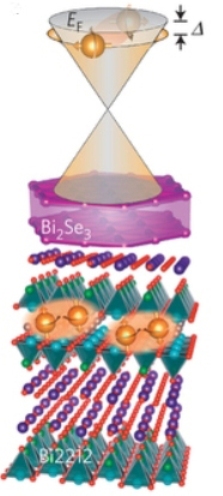
This schematic of a bismuth selenide/BSCCO cuprate (Bi2212)
heterostructure shows a proximity-induced high-temperature superconducting gap on the surface states of the bismuth selenide topological insulator.

Reliable quantum computing would make it possible to solve certain types of extremely complex technological problems millions of times faster than today’s most powerful supercomputers. Other types of problems that quantum computing could tackle would not even be feasible with today’s fastest machines. The key word is “reliable.” If the enormous potential of quantum computing is to be fully realized, scientists must learn to create “fault-tolerant” quantum computers. A small but important step toward this goal has been achieved by an international collaboration of researchers from China’s Tsinghua University and the U.S. Department of Energy (DOE)’s Lawrence Berkeley National Laboratory (Berkeley Lab) working at the Advanced Light Source (ALS).

Using premier beams of ultraviolet light at the ALS, a DOE national user facility for synchrotron radiation, the collaboration has reported the first demonstration of high-temperature superconductivity in the surface of a topological insulator – a unique class of advanced materials that are electrically insulating on the inside but conducting on the surface. Inducing high-temperature superconductivity on the surface of a topological insulator opens the door to the creation of a pre-requisite for fault-tolerant quantum computing, a mysterious quasiparticle known as the “Majorana zero mode.”

“We have shown that by interfacing a topological insulator, bismuth selenide, with a high temperature superconductor, BSCCO (bismuth strontium calcium copper oxide), it is possible to induce superconductivity in the topological surface state,” says Alexei Fedorov, a staff scientist for ALS beamline 12.0.1, where the induced high temperature superconductivity of the topological insulator heterostructure was confirmed. “This is the first reported demonstration of induced high temperature superconductivity in a topological surface state.”

The results of this research are presented in the journal Nature Physics in a paper titled “Fully gapped topological surface states in Bi2Se3 induced by a d-wave high temperature superconductor.” The corresponding authors are Shuyun Zhou and Xi Chen of Tsinghua University in Beijing, China. The lead authors are Eryin Wang and Hao Ding, also with Tsinghua University. Wang is currently an ALS Doctoral fellow in residence.

For all of its boundless potential, quantum computing faces a serious flaw. The quantum data bit or “qubit” used to process and store information is fragile and easily perturbed by electrons and other elements in its surrounding environment. Utilizing topological insulators is considered one promising approach for solving this “decoherence” problem because qubits in a topological quantum computer would be made from Majorana zero modes, which are naturally immune from decoherence. Information processed and stored in such topological qubits would always be preserved. While the ALS collaboration has not yet identified a Majorana zero mode in their bismuth selenide/BSCCO heterostructures, they believe their material is fertile ground for doing so.

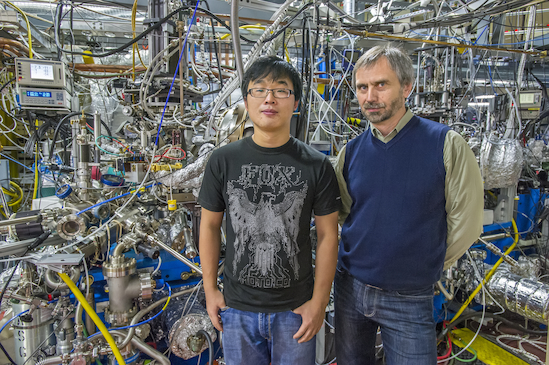
Eryin Wang (left)and Alexei Fedorov at ALS Beamline 12.0.1 where the induced high temperature superconductivity in a topological insulator was confirmed. (Photo by Roy Kaltschmidt)


“Our studies reveal a large superconducting pairing gap on the topological surface states of thin films of the bismuth selenide topological insulator when grown on BSCCO,” Fedorov says. “This suggests that Majorana zero modes are likely to exist, bound to magnetic vortices in this material, but we will have to do other types of measurements to find it.”

The high quality bismuth selenide/BSCCO topological thin film heterostructure was made at Tsinghua University in the laboratory of Xi Chen and Qi-Kun Xue using molecular beam epitaxy.

“Our study was made possible by the high quality topological insulator film heterostructure that the Chen and Xue groups managed to grow,” says Zhou, who did much of her research at the ALS before returning to China. “Bismuth selenide and the BSSCO ceramic have very different crystal structures and symmetries, which made the growth of such a heterostructure particularly challenging.”

Says Chen, “By controlling the growth kinetics carefully using molecular beam epitaxy, we managed to grow a topological insulator film with controlled thickness on a freshly cleaved BSCCO surface. This provided a cleaner and better-controlled interface, and also opened up opportunities for surface sensitive measurements.”

The bismuth selenide/BSCCO material was brought to the ALS to study the electronic states on its surface using a technique known as ARPES, for angle-resolved photoemission spectroscopy. In ARPES, a beam of X-ray photons striking the material’s surface causes the photoemission of electrons. The kinetic energy of these photoelectrons and the angles at which they are ejected are then measured to obtain an electronic spectrum.

“Previous work on topological insulators revealed superconductivity at only a few Kelvin with a gap of about one milli-electron volt,” Fedorov says. “Such a small energy scale and ultra-low temperature makes it particularly challenging to realize Majorana zero modes experimentally, and to distinguish these modes from other states. Using ARPES, we show evidence of a superconducting gap persisting in the surfaces of our material up to the transition temperature of BSCCO. As the gap and transition temperature in our heterostructure reflect almost an order of magnitude increase over previous work, we believe ours is a better system to search for Majorana zero modes.”

This research was primarily supported by the National Natural Science Foundation of China.

# # #

Lawrence Berkeley National Laboratory addresses the world’s most urgent scientific challenges by advancing sustainable energy, protecting human health, creating new materials, and revealing the origin and fate of the universe. Founded in 1931, Berkeley Lab’s scientific expertise has been recognized with 13 Nobel prizes. The University of California manages Berkeley Lab for the U.S. Department of Energy’s Office of Science. For more, visit www.lbl.gov.

The Advanced Light Source is a third-generation synchrotron light source producing light in the x-ray region of the spectrum that is a billion times brighter than the sun. A DOE national user facility, the ALS attracts scientists from around the world and supports its users in doing outstanding science in a safe environment. For more information visit www-als.lbl.gov/.The Advanced Light Source is a third-generation synchrotron light source producing light in the x-ray region of the spectrum that is a billion times brighter than the sun. A DOE national user facility, the ALS attracts scientists from around the world and supports its users in doing outstanding science in a safe environment. For more information visit http://www.als.lbl.gov/. TAGS: Advanced Light Source, computational research, computing, materials, quantum computing, superconductors

viernes, 26 de abril de 2013

DNA tool kit goes live online

ORIGINAL: Nature
12 March 2013
 Corrected: 13 March 2013

Standard control sequences aim to make genetic engineering more predictable.

BIOFAB’s directors Drew Endy (left) and Adam Arkin hope that their facility will help to industrialize synthetic biology. MARGOT HARTFORD

The latest shopping website is open for business, offering unusual wares: DNA tools to help biologists to engineer life.

The DNA sequences — which allow precise control of gene activity in the bacterium Escherichia coli — are the first output of BIOFAB, based in Emery­ville, California, which calls itself “the world’s first biological design-build facility”. Launched in 2009 with a US$1.4-million grant from biological ‘parts’ in the form of DNA sequences that control gene expression. These standard sequences should allow biologists to engineer cells that can make medicines and perform other useful tasks simply by plugging in various sets of genes.

The sequences are meant to overcome a key barrier to synthetic biology: genes inserted into an organism do not behave predictably, even in such a well-understood workhorse as E. coli. “You would think after a generation of genetic engineering, expressing genes with precision in an organism as well utilized as E. coliwould be pretty straightforward. It turns out it’s not,” says BIOFAB co-director Drew Endy, a synthetic biologist at Stanford University in California.

Related stories


For a cell to express a gene — that is, transcribe it into an RNA molecule and then translate that RNA into a protein — other sequences recognized by the cell’s machinery must precede it. A promoter sequence is needed to make an RNA transcript, and a ribosome binding site (RBS) is crucial for protein translation.

Over the past three decades, scientists have amassed collections of these sequences and used them to express genes in which they are interested. Some sequences tend to be ‘strong’ and others ‘weak’, resulting in varying levels of RNA and protein being produced.

But a team led by Endy and BIOFAB co-director Adam Arkin, of Lawrence Berkeley National Laboratory in Berkeley, California, has found that the activities of those sequences are far from predictable. In two papers published online this week in Nature Methods1, 2, the team reports inserting many different combinations of promoters and RBS sequences in front of genes encoding fluorescent proteins, and then measuring the level of protein that was made. “It was a bloody mess,” says Arkin, with each promoter–RBS combination having varying effects depending on the gene.

He and Endy also cite an earlier finding that a scientist hoping to express a protein at a particular level has just a 50% chance of producing the required amount within a factor of two. Such hit-or-miss expression poses a major challenge to synthetic biologists who would like to create genetic circuits involving dozens of genes.

As a solution, the BIOFAB team designed promoter and RBS sequences for E. coli that do not interfere with downstream DNA, so that their effects are independent of the specific gene they are paired with. The sequences should provide scientists with a much tighter grip on gene expression, offering around a 93% chance of hitting a desired level of expression within a factor of two2. Researchers can obtain the sequences for free online (see http://www.biofab.org/data), and Arkin says that some of his colleagues are already finding them useful.

Endy and Arkin’s team also devised a statistical method1 to measure the variability in the performance of their promoter and RBS sequences, and indeed any genetic part to be used in synthetic-biology applications. The method should allow researchers to create a kind of specification sheet for each biological part, making it easier for scientists to develop and share their work.

Randy Rettberg, a synthetic biologist at the non-profit organization the iGEM Foundation in Cambridge, Massachusetts, who has worked with Endy on similar projects, says that more labs should follow BIOFAB’s lead and industrialize the production of biological parts. And synthetic biologist Alistair Elfick of the University of Edinburgh, UK, says that the BIOFAB products should help synthetic biologists to design bigger and more complicated circuits.

“I think the community is very aware that we’ve got a long way to go before we can fulfil our dream of in silico design of genetic circuits we can just pop into a cell and run like an app,” Elfick says.Nature 495, 150–151 (14 March 2013) doi:10.1038/495150a

Corrected:

This article gave the wrong affiliation for Randy Rettberg – he is at the iGEM Foundation not the Massachusetts Institute of Technology. The text has been corrected to reflect this.

Mutalik, V. K. et al. Nature Meth. http://dx.doi.org/10.1038/nmeth.2403 (2013).Show context
Mutalik, V. K. et al. Nature Meth. http://dx.doi.org/10.1038/nmeth.2404 (2013).Show context

martes, 28 de agosto de 2012

Multiband Solar Cell

ORIGINAL: LBNL
Ene 28, 2011

It was recognized over thirty years ago that the introduction of states in a semiconductor band gap presents an alternative to multijunction designs for improving the power conversion efficiency of solar cells. The intermediate band acts as a “stepping stone,” allowing absorption of photons at three different energy levels, corresponding to the three different band gaps. In particular, low-energy photons are captured that would pass through a conventional solar cell (Fig. 1). Detailed theoretical calculations indicated that a single junction cell with a properly located band of intermediate states could achieve power conversion efficiencies up to 62% - i.e. higher than those for optimized double-junction tandem cells (Fig. 2). Even higher efficiencies of up to 71.7% were predicted for materials with two bands of intermediate states. 
Figure 1 A schematic of an intermediate band solar cell
Until very recently, practical realization of semiconductors with this multi-band structure had not been achieved. We have designed and synthesized a new class of semiconductor alloys with an intermediate band within the energy gap. The design of our material is based on the recently introduced band anticrossing (BAC) model of highly mismatched semiconductor alloys (HMAs). Group III-N-V alloys in which group V anions are partially replaced with N or group II-O-VI alloys in which column VI element is replaced with O are the well known examples of the HMAs. The electronic structure of the HMAs is determined by the interaction between localized states associated with N or O atoms and the extended states of the host semiconductor. As a result the conduction band splits into two subbands (E- and E+) with non-parabolic dispersion relations.
In most instances, e.g. N in GaAs or O in CdTe, the localized states are located within the conduction band and consequently a relatively wide lower subband is formed. A narrow band can be formed only if the localized states occur well below the conduction band edge. 

Figure 2 Comparison of the maximum power conversion efficiency of an intermediate band solar cell, a single gap solar cell, and a double junction tandem cell. The higher gap values for the tandem cell and the IBSC are indicated on the plot. (after Luque et. al. PRL, 78, 5014(1997)) 
In this case the E- subband states are of highly localized character and the E+subband states become more extended. This situation occurs for O in ZnTe, MnTe, MgTe. Figure 3 illustrates the formation of a narrow intermediate band by the incorporation of O into ZnTe. In addition to the O content, Mn alloying can also be used to adjust the energy level positions. Thus, band locations corresponding to those that are optimal for a multiband solar cell can be produced in ZnTeO and ZnMnTeO. With multiple band gaps that fall within the solar energy spectrum, Zn1-xMnxOyTe1-y is well suited for the proposed high efficiency intermediate band solar cells (IBSCs). This new II-VI oxide multi-band semiconductor was synthesized using the combination of oxygen ion implantation and pulsed laser melting. This highly non-equilibrium technique allowed for the synthesis of ZnMnOTe alloys with up to 3% of Te replaced with O atoms. Fig. 4 shows PR spectra from a Zn0.88Mn0.12Te substrate and two Zn0.88Mn0.12Te samples implanted with 3.3% of O followed by PLM with laser energy fluence of 0.15 and 0.3 J/cm2. Two optical transitions occurring at energies distinctly different from the fundamental band gap transition EM (=2.31 eV) of the Zn0.88Mn0.12Te matrix can be clearly observed at ~1.8 and 2.6 eV from the samples after PLM.

Fig. 3. Band anticrossing and formation of an intermediate band in Zn1-yMnyTe1-xOx.
Fig. 4. Photomodulated reflectance (PR) spectra obtained from Zn0.88Mn0.12Te samples as-grown and implanted with 3.3% O+followed by PLM with energy fluence of 0.15 and 0.3 J/cm2

These two optical transitions can be attributed to transitions from the valence band to the two conduction subbands, E+ (~2.6 eV) and E- (~1.8 eV) formed as a result of the hybridization of the localized O states and the extended conduction band states of ZnMnTe.

Our results from optical transitions clearly demonstrate that three types of optical transitions are possible in this band structure; (1) the transitions from the valence band to the E+subband with the absorption edge at EV+=E+(k=0)-EV(k=0)=2.56 eV, (2) transitions from the valence band to E- subband with the edge at EV-=E-(k=0)-EV(k=0)=1.83 eV and (3) the low energy transitions from E- to E+ with the absorption edge atE_+=E+(k=0)-E_(k=0)=0.73 eV. The three absorption edges span much of the solar spectrum, demonstrating that these alloys are good candidates for the multi-band semiconductors envisioned for high efficiency photovoltaic devices.

Detailed balance calculations of the power conversion efficiency for a intermediate band solar cell based on this material is shown in Fig. 5. Even for this non-optimal band gap configuration we calculate a power conversion efficiency of 45%, which is higher than the ideal efficiency of any solar cell based on a single junction in a single-gap semiconductor and is comparable to the efficiency of double-junction cells.

The potential technological importance of the multiband semiconductors raises the question if they can also be realized in group III-Nx-V1-x HMAs as well. In most III-V compounds the localized N level lies above the conduction band edge. An exception is the GaAs1-yPy alloy system in which N-level falls below the conduction band edge for y>0.3. Consequently the anticrossing interaction of the N states with the extended conduction band states in these GaAsP alloys is expected to result in the formation of a narrow band of intermediate states. Recently we have also synthesized GaNxAs1-yPy with y=0 to 0.4 using N+-implantation followed by PLM and RTA techniques. With an implanted N concentration of 2%, the N concentration incorporated in the As sublattice amounts to about 1% and 0.3% for films with y≤0.12 and y>0.12, respectively. GaNxAs1-yPy with y>0.2 clearly shows strong optical transitions corresponding to both the lower (E-) and upper (E+) conduction subbands. GaNxAs1-yPy alloys with y>0.3 have a three band structure making them suitable for testing the theoretical predictions of the highly-efficient intermediate band solar cell concept. Theoretical ideal efficiency for IBSC using the GaN0.02As0.58P0.4 is calculated to be >55%.
Fig. 5: The calculated power conversion efficiency for a solar cell fabricated from a Zn0.88Mn0.12OxTe1-x alloy as a function of O content. The solid line is an empirical polynomial fit of the calculated data. 
Selected References:
  • A. Luque, A. Marti., Phys. Rev. Lett., 78, 5014 (1997).
  • K. M. Yu, W. Walukiewicz, J. Wu, W. Shan, and J. W. Beeman, M. A. Scarpulla, O. D. Dubon, and P. Becla, “Diluted II-VI Oxide Semiconductors with Multiple Band Gaps,” Phys. Rev. Lett. 91, 246203 (2003).
  • W. Shan, K. M. Yu, W. Walukiewicz, J. Wu, J. W. Beeman, and J.W. Ager III, M.A. Scarpulla, O.D. Dubon, and E. E. Haller, “Effects of Pressure on the Band Structure of Highly Mismatched Zn1-yMnyOxTe1-x Alloy,” Appl. Phys. Lett. 84, 924 (2004).
  • K. M. Yu, W. Walukiewicz, J.W. Ager III, D. Bour, R. Farshchi, O. D. Dubon, S. X. Li, I. D. Sharp, and E. E. Haller, “Multiband GaNAsP Quaternary Alloys,” Appl. Phys. Lett. 88, 092110 (2006).
  • K. M. Yu, W. Walukiewicz, M. A. Scarpulla, O. D. Dubon, W. Shan, J. Wu, J. W. Beeman, and P. Becla, “Synthesis and Properties of Highly Mismatched II-O-VI Alloys,” invited paper, pres. at E-MRS 2004 SPRING MEETING, Symposium M: Dilute nitride and related mismatched semiconductor alloys, Palais de la Musique et des Congres, Strasbourg, France, May 24-28, 2004. IEE Proceedings-Optoelectronics 151 (5): 452-459, Oct. 2004 (IEE-Inst. Elec. Emg., Michael Faraday House, Six Hills Way, Stevenage, Hertford, SG1 2AY, ENGLAND).

ORIGINAL: Ecoosfera

Nuevos paneles solares capturan más energía de los rayos solares no visibles


En un invento que podría revolucionar a corto plazo la generación de energía alternativa a través del sol, un grupo de investigadores del Lawrence Berkeley National Laboratory anunció la creación de páneles solares que cargan energía aún en la oscuridad. La relevancia de este invento resulta evidente ya que permitiría eficientar radicalmente la creación de energía aprovechable a través del sol.

Actualmente uno de los grandes problemas de la energía solar es que depende de las horas de sol a las que esten expuestas los páneles. Esto quiere decir que en latitudes del norte, donde existen temporadas en las que el sol escacea, a veces resulta poco rentable la instalación de una infraestructura. Lo mismo sucede en días nublados y en promedio la mitad del tiempo no estarás produciendo energía por medio de esta vía.

Pero estas nuevas celdas solares permitirán la generación de energía aun durante la noche ya que están diseñadas para aprovechar casi la totalidad del espectro del sol, incluso cuando este no es visible en un lugar durante la noche. Pero el otro aspecto fundamental para considerar esta invención como algo energéticamente esperanzador es el hecho de que su costo será bastante accesible lo cual permitirá que su aprovechamiento se popularize y en este sentido es un real candidato a mejorar las expectativas frente a las energías alternativas con miras a emanciparnos de nuestra histórica dependencia de los hidrocarburos

lunes, 11 de junio de 2012

Warming Will Unlock Carbon in Forests, Study Warns


Will Owens. Franceska Hopkins, the lead author of the study on the release of carbon from soil in forests.
Climate scientists have long been concerned about the possibility that warming temperatures will speed changes on the earth’s surface that will in turn accelerate global warming. The best illustration of such a feedback loop involves the melting of sea ice in the Arctic. The ice reflects solar radiation back into space rather than absorbing it. When it melts, it leaves open water that absorbs the heat rather than reflecting it. The more warm water there is, the more ice melts, and so on.

Now scientists have identified another feedback loop that may be accelerating the loss of carbon dioxide from the topsoil of forests in the United States, contributing to climate change. In a study published online on Monday, researchers at the University of California, Irvine and the Lawrence Berkeley National Laboratory found that the warmer it gets, the more active are the microbes that eat the topsoil and exhale carbon dioxide afterward.

While that finding is not surprising, said the lead author, Francesca Hopkins, a doctoral researcher in the Department of Earth System Science at Irvine, she and her collaborators also found that in warmer temperatures the microbes are better able to digest decades-old carbon stored in the soils. Scientists had previously that the old carbon was inaccessible because it had become fixed in the soil.

The study was published online in the Proceedings of the National Academy of Sciences.

“This has been really hotly debated in the past decade or so,” Ms. Hopkins said in an interview. “Some people think the older soil carbon would decompose more quickly” as temperatures increase, “and some think it wouldn’t decompose at all, because it had stabilized.” The mechanisms by which carbon is stabilized in the soil are poorly understood, although it is clear that some carbon molecules bind to mineral particles in the soil, she said.

But after collecting soils from woodlands in North Carolina and Wisconsin and putting them in mason jars, then storing the jars in incubators at different temperatures, “we saw that the microbes could access some carbon that is at least a decade old,” she said.

The age of the carbon was determined by the isotopes in the carbon dioxide exhaled by the microbes; carbon older than a decade has a distinctive isotope signature. The scientists were able to pinpoint the age of the carbon that had been stored for less than a decade more precisely by measuring a different set of isotopes.

The study reported an eightfold increase in carbon dioxide production when temperatures were increased by 20 degrees Celsius (36 degrees Fahrenheit). This is far in excess of the range of temperature increases predicted to occur by the end of the century under existing climate models. Under the moderate warming scenario predicted by the Intergovernmental Panel on Climate Change, Ms. Hopkins’s experiment indicated that the respiration rates of the microbes — and the amount of carbon-dioxide they exhale — would roughly double by 2100.

The ability to measure the age of the carbon in the soil could be an increasingly useful tool for scientists, although the measurements are still being refined. The components of soil, including decaying leaves, roots and other vegetable matter, store at least twice as much carbon as the chemicals in the atmosphere, according to United Nations climate reports.

The findings of the new study further complicate the dynamics underlying forests’ role in carbon storage. Forests are widely known as repositories of carbon — about 104 billion tons of it worldwide — but the role they will play in a warming world is less understood. If they become carbon emitters rather than carbon sinks as temperatures warm, projections of how fast climate change will occur may have to be adjusted.

jueves, 17 de mayo de 2012

Lawrence Berkeley National Lab: Oil from Tobacco Leaves

ORIGINAL: UC ARPA-E


FOLIUM is a collaborative project between LBNL, UC Berkeley, JGI and The Kentucky Tobacco Research & Development Center (KTRDC) at Univ. of Kentucky and is funded by ARPA-E. The FOLIUM team, which consists of a bunch of unusually attractive people, can be viewed on the here. 

Other FOLIUM team members are:
  • Ling Meng, Postdoc in the Jansson lab
  • Hanwool Park, Research Assistant in the Jansson lab
  • Hsu-Ching Winz, Molecualr Biology Specialist in the Melis lab
  • Tamara Miller Lab assistant in the Lemaux lab
  • Judith Adhiambo-Otwi, Postdoc in the Lemaux lab
  • Lauriebeth Leonelli, Postdoc in theNiyogi lab
  • Fei Cai, Postdoc in the Kerfeld lab
  • Barunava Patra, Postdoc in the Chamber/ Yuan lab
  • Yongmei Wu, Visiting Scholar in the Chamber/Yuan lab
The FOLIUM concept is to develop tobacco as a platform for foliar production of advanced hydrocarbon fuels. This involves: 
  1. Installing pathways for alkane and isoprenoid biosynthesis and accumulation in tobacco leaves via chloroplast and nuclear transformation. 
  2. Optimize carbon flux toward hydrocarbon biosynthesis. 
  3. Enhance photosynthetic light efficiency and CO2 uptake. 
  4. Improve planting, cultivation and harvesting practices of tobacco. 
In the context of foliar production of oil and oil-based biofuels, tobacco (Nicotiana tabacum) emerges as a system of great potential: 
  1. Tobacco is an outstanding industrial biomass crop with large leaf surface area, and a high leaf-to-stem ratio. 
  2. It can be coppiced to generate multiple harvests per year. 
  3. Large-scale agricultural infrastructure for planting, growing, harvesting and handling tobacco leaves is in place. 
  4. The tobacco farmers would benefit by using tobacco as a biofuel crop plant. 
  5. Tobacco is already cultivated in large land tracts of the US and many countries overseas. It is grown in over 100 countries worldwide, can be cultivated on marginal land unsuitable for food crops, and has a wider geographic geographic range than either corn or sugar cane. 
  6. Tobacco is not part of the food supply chain. Thus biosynthesis of oil-based biofuels in tobacco leaves, as opposed to oil seeds in soybean or canola, avoids the potential problem of competition with the food/feed sector. 
  7. Tobacco is highly amenable to genetic and molecular manipulations of both the nuclear and plastid genomes. With 500 to 10,000 copies of the plastome per cell in tobacco leaves, the possibility exist for very high overexpression of selected genes. 
  8. Sequencing and annotation of the tobacco nuclear genome is currently in progress. The work in my group has a dual focus: 
    1. Introduce the alkane biosynthesis pathway from cyanobacteria into tobacco chloroplasts (Fig. 1). 
    2. Enhance CO2 uptake in tobacco by introduction of bicarbonate transporters from cyanobacteria into tobacco chloroplasts.

Scientists at UC Berkeley and Lawrence Berkeley National Laboratory's FOLIUM Project, funded by ARPA-E, use light to convert the carbon in tobacco leaves into biofuels.

LAWRENCE BERKELEY NATIONAL LAB: OIL FROM TOBACCO LEAVES

CRITICAL NEED
Traditional biofuels production is limited by the small amount of solar energy plants convert by photosynthesis into plant material that is readily processed into fuels and by inefficient fuel conversion techniques. New robust, farm-ready crops are needed that produce more easily convertible fuel precursors per acre at dramatically lower costs. If successful, advanced biofuels would offer a renewable alternative to petroleum-based fuels that produces nearly zero net greenhouse gas emissions. Biofuels must be produced at close to half their current cost to make them cost-competitive with petroleum-based fuels.

PROJECT INNOVATION + ADVANTAGES
LBNL is modifying tobacco to enable it to directly produce fuel molecules in its leaves for use as a biofuel. 
Tobacco is a good crop for biofuels production because it is an outstanding biomass crop, has a long history of cultivation, does not compete with the national food supply, and is highly responsive to genetic manipulation. LBNL will incorporate traits for hydrocarbon biosynthesis from cyanobacteria and algae, and enhance light utilization and carbon uptake in tobacco, improving the efficiency of photosynthesis so more fuel can be produced in the leaves. The tobacco-generated biofuels can be processed for gasoline, jet fuel or diesel alternatives. LBNL is also working to optimize methods for planting, cultivating and harvesting tobacco to increase biomass production several-fold over the level of traditional growing techniques.

IMPACT
If successful, LBNL’s project would genetically engineer tobacco to enable it to produce oil directly from its leaves. This could enable large scale production of oils, which could eventually begin to replace petroleum-based fuels.

SECURITY: The transportation sector accounts for nearly all of our petroleum imports. Providing an advanced biofuels alternative to petroleum will allow the U.S. to reduce these imports, improving our energy independence.
ENVIRONMENT: More than 25% of all greenhouse gas emissions in the U.S. come from the transportation sector. Because plants naturally absorb carbon dioxide as they grow, the level of greenhouse gas emissions from biofuels is less than half that of petroleum fuels.
ECONOMY: The U.S. imports nearly $1 billion in petroleum each day, accounting for the single largest factor in our trade balance with the rest of the world. Biofuels can be produced domestically, allowing us to keep more dollars at home.
JOBS: A self-sustaining biofuels industry that is cost-competitive with oil is well-positioned to see job growth in the agricultural, engineering, and research sectors.

CONTACTS
ARPA-E Program Director:
Dr. Jonathan Burbaum,
jonathan.burbaum@hq.doe.gov
Project Contact:
Dr. Christer Jansson,
cgjansson@lbl.gov