Shell is getting ready to Drill in the Arctic and assures us not to worry as it can capture 95 % of the oil when it Spills. How will an Oil Spill effect Arctic Wildlife? "The impact of even a small oil spill will be devastating." Click LIKE if u agree > 95% Shell? Really? NOT!
Join over 50,000 Sign PETITION to Stop SHELL
"The oil will accumulate between and under ice floes where sea mammals must pass in order to reach air. Even a very small patch of oil on the fur of a polar bear will poison it by destroying its liver when the oil is ingested while grooming fur. Oil will blind Arctic animals and kill by hypothermia even if only a small patch of fur or feathers are oiled. These are sentient creatures suffering agonizing deaths inflicted by industrial activity."
Article On Action Questioning Shell's safety Claims!
Shell in Nigeria: "
I want to make an appeal to the World. We've no water no hospital no electricity, but Shell keep telling the world that they done so much. Tell the World We are suffering.." WATCH New Video 'Its WORSE Than Bad'
http://worsethanbad.org/
'Shell is the vortex destroying the Delta. The vortex will continue until enough pressure is put on Shell to clean up its mess.' Click LIKE if you agree that SHELL should clean UP! But Most of all Sign the Petition to Put PRESSURE on Shell.
Game over will be the end of the discussion.
Says NASA Goddard Institute director James Hansen, "If Canada proceeds, and we do nothing, it will be game over for the climate. Canada’s tar sands, deposits of sand saturated with bitumen, contain twice the amount of carbon dioxide emitted by global oil use in our entire history. If we were to fully exploit this new oil source, and continue to burn our conventional oil, gas and coal supplies, concentrations of carbon dioxide in the atmosphere eventually would reach levels higher than in the Pliocene era, more than 2.5 million years ago, when sea level was at least 50 feet higher than it is now."
Click 'LIKE' if you and your family a) would rather not be 50 feet under water and b) will do your best to prevent it from happening.
“We know that pumping oil out of the ground does not create many jobs. It does not foster an entrepreneurial spirit, nor does it sharpen critical faculties.” -- Saudi Arabia’s Oil Minister Ali Al-Naimi
Oil-rich Saudi Arabia is ambitiously planning to source 41,000 Megawatts of solar projects over the next two decades to support one third of its electricity production by 2032. Solar will be directly replacing the oil used by desalination plants and reduce domestic consumption of oil by 520,000 barrels per day.
The plan is part of a larger strategy to scale up various sources of renewable energy, build a new domestic industry, and reduce oil consumption. The $100 Billion program aims to “catapult Saudi Arabia into the group of global leaders in renewable-energy development.”
If the world's largest oil exporter Saudi Arabia can do it, why not the world's largest importer?
[M]
The Energy Revolution is not just coming, it's here: California alone currently has 524 solar projects over 1 megawatt (MW) — and an incredible 17,707 such solar projects will be on the grid by 2017 (3,373 now under construction, plus 14,334 in the approval process). The latest update from the Bureau of Land Management (BLM) counts an extraordinary 17,298 MW of just solar projects on public lands. The growth rate is simply staggering. Let's keep it that way !
Read more here:
[M]
ALERT!> While the Energy revolution is coming there are some that would like to Stop it. Today ALEC Brings Lawmakers from 15 States & Big Oil Together To Undermine Clean Energy Initiatives in the US!
"Today, behind CLOSED doors in Charlotte NC, legislators from 15 states will meet with the oil & gas industry to discuss “model legislation” as part of the American Legislative Exchange Council (ALEC). The result could be laws that handicap renewable energy targets — while creating Loopholes for fossil fuels, written directly by the oil and gas industry itself." Exxon, Chevron, Shell, and BP, are part of ALEC. (Never hear of ALEC? No surprise "ALEC has attracted a wide range of (corporate) supporters in part because it’s done its work behind closed doors. Membership lists were secret. The origins of the bills were secret." Bloomberg)
Click >>LIKE<< if you AGREE that there be a separation of OIL & State- Naysayers need to get out of the way- and Let the Energy (R)Evolution Happen!
"Leave us in peace. We want to live free, breathe pure air. The Creator made this land here so we could live peacefully." -- Pitiur Unti Saant, Achuar elder and leader
Disrespecting local indigenous peoples two North American companies are drilling exploratory wells in the Peruvian Amazon, one of the world's most biodiverse ecosystems and home to a number of indigenous tribes - who don't want any of the oil contaminating their lands and hence the companies to leave.
Wouldn't you want the same for your clean home?
Support the campaigns against drilling by
ConocoPhillips and Canada's Talisman Energy corporation:
[M]
Indep. Sen. Bernie Sanders has stayed true to his word and just Launched a bill to END FOSSIL FUEL Subsidies with a new legislation that would repeal $113 BILLION of tax-breaks, & handouts for the fossil fuel industry over the next 10 yrs..
The fossil fuel industry is the RICHEST corporate industry on planet Earth, and yet the US tax payer is handing them hefty checks each year...The fossil fuel industry is going to fight back hard using their big $$$. ALL hands on deck! Click LIKE and Share if you agree that Enough is Enough! AND JOIN IN with others to Voice your support:
Fracking? Nein, danke (No, thanks) !
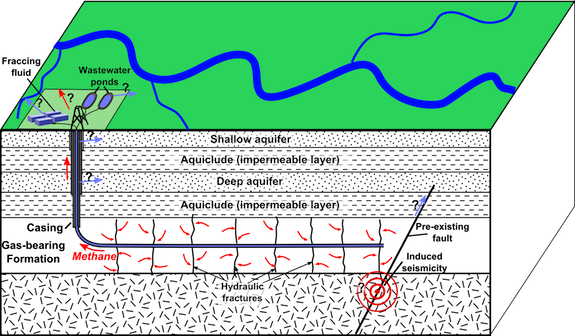
Germany has put the brakes on plans to use hydraulic fracturing, a.k.a. fracking, to extract natural gas in places where it is difficult to access, such as shale or coal beds. Environment Minister Norbert Röttgen and Economy Minister Philipp Rösler have agreed to oppose the controversial process for the time being. Local environmental groups in the affected regions fear that the fracking chemicals will pollute the local groundwater and have already set up citizens' initiatives to collect signatures for petitions and organize protests in a bid to block the fracking plans.
News- Another Ocean being open for Deep Sea Drilling. China Begins First Deep Sea Drilling in South China Sea. Philippines claims territorial rights to areas as well.
“The South China Sea has the potential to become the world’s fourth-largest deep-water drilling region, after the so-called ‘GOLDEN Triangle’ of the Gulf of Mexico, Brazil & West Africa,” said a member of Chinese Acad. of Engineering.'
Stay TUNED... Territorial Conflicts? Accidents? the fight for scarcer fossil fuel escalates while the dangers of deep sea drilling rise. Click LIKE if you agree that Drilling for Yet More OIL is NOT the Solution!
At this very moment Shell's Fleet of Oil Rigs -Ships are on their way to the ARCTIC to begin drilling in July. Shell's Response plan? Calling in the Oil sniffing DOGS!
"This is an ex. of how we do not have adequate technology to drill in the icey Arctic Ocean - " says Heiman, US Arctic Programme "It is embarrassing that using dogs to sniff out oil is the best technology we have to track oil under ice. Industry needs to invest in research, as well as significantly improve spill response capability in ice, before allowed to drill in ice conditions."
Click LIKE if you agree -- that Big Oil should not EVEN be thinking about drilling in the Arctic while their answer is to call Upon Dogs & sniff tests! AND since-- it seems this is impossible --demand Big Oil forgo drilling in the Arctic all together!
Action- Please sign the petition to demand that legislature be passed by Congress that mandates enforceable regulation on response and safety plan to prevent the BP disaster from happening again in the Arctic!!
www.change.org/petitions/prevent-the-bp-oil-disaster
UK taking steps to meet its Renewable Energy Goal of producing 20 % of electricity via Renewables-by 2020 The government has approved plans for the largest onshore windfarm in England and Wales. With 76 turbines is expected to produce enough energy to power 206,000 homes a year.
What has the US done lately to meet its Renewable Energy Goals? The US has NO official Renewable Energy Goals.
Click>> LIKE<< if you agree that its high time the US join other developed countries in articulating a Renewable Energy Policy with Clearly Set Goals!
"The UK Energy Minister Hendry said "Onshore wind plays an important role in enhancing our energy security. It is the cheapest form of renewable energy and reduces our reliance on foreign fuel. This project will generate homegrown renewable electricity & provide a significant benefits package for the local community,"
Call to Action: NEW YORKERS AGAINST FRACKING
Rally and All-Star Concert in Albany, NY on Tuesday, May 15, 2012, 4:00pm until 7:00pm
Hosted by Oscar-winner Melissa Leo and "The Avengers" star Mark Ruffalo. Official Facebook event and RSVP:
Rally at 4:30pm - West Capitol Lawn
Concert at 7pm- The Egg
A stunning image from a multi-institutional study led by Eric Kort of NASA’s Jet Propulsion Laboratory shows methane, a greenhouse gas 20+ times more potent than CO2, seeping in between the melting Arctic ice cap. Three huge reservoirs of methane hide in the sea, in its marine sediments and in the Arctic tundra. As Earth’s climate warms, all this methane will increasingly be released into the atmosphere. No Wall Street investments, no drilling scheme, no gating of one's community will then be able to save us and future generations: the positive feedback loops triggered will make Earth's climate, biological systems and, way before that, financial markets, completely spin out of control.
The writing is on the wall. Click 'LIKE' if you'd rather see it and act towards its reversal by going for renewables, energy efficiency, and environmental restoration.
“Oregon and Washington leaders are faced with a choice between healthy communities with a clean energy future or becoming tied to trafficking coal, the most toxic fuel on earth.”-- Robert F. Kennedy, Jr.
According to Power Past Coal, Oregon and Washington could become the largest coal traffickers in North America with 150 million tons of coal per year passing through the Pacific Northwest for shipment to Asia. One proposal would send a dozen dirty coal trains through Portland neighborhoods each day. The Columbia River Gorge alone faces up to 30 dirty coal trains per day. Proposed coal export terminals include: Boardman, Clatskanie and Coos Bay in Oregon, and Longview, Grays Harbor and Bellingham in Washington, as well as Alaska.
Click 'LIKE' if you don't think that that 'clean' and 'coal' are compatible.
Exxon--A Kingdom & ‘PRIVATE Empire’ within the United States. A Biography of “A Corporate state within the American state"
'It's not an understatement to describe EXXON as an INDEPENDENT sovereign" ..It has to a large extent become a finance arm of the Republican Party.."When it wants something from the American govt, it asks, cajoles, bullies, and THREATENS."
But its A US Company right??-- CEO doesnt seem to think so--- CEO Raymond was once asked whether Exxon would build more domestic refineries to protect the U.S. from shortages. “Why would I want to do that?” he said. “I’m not a U.S. company and I don’t make decisions based on what’s good for the U.S.”
The Fate of the BP OIL???A STAGGERING amount of BP Oil- SIXTY % --remains unaccounted for says M. Huettel,a benthic ecologist at FLA State Univ.
"It's still just a lot of arm-waving, unfortunately, at this point," Heuttel said "That oil is SOMEWHERE, but nobody knows where, and nobody knows how much has settled on the SEAFLOOR. We really only know the oil we have in hand, that 17 % captured at the wellhead....All the other categories—like oil burned, skimmed, chemically dispersed, or evaporated—are guesses that could change by a factor or two or even more in some cases."
It can be done! - The first trip around the world powered entirely by solar energy was completed on Saturday. No oil needed nor spilled (a.k.a. "operational discharge") . [M]
Q: What is the biggest company pushing for more and unregulated fracking in the U.S. ???
A: ExxonMobil, which in 2010 bought XTO, the largest natural gas company engaged in fracking in the U.S. for $40 billion. Now the biggest player in the industry, EM is seeking to control the emerging regulatory regime for fracking.
Watch the interview with Steve Coll, Pulitzer prize winning journalist and author of "Private Empire: ExxonMobil and American Power". All you will hear from EM is "No Comment". [M]
Breaking! Not pertaining to Off-shore drilling-- but rather In-land drilling----Fracking and Drilling for Gas. Vermont did Not just vote for a Moratorium-- it voted for a BAN! (pending approval of the Gov of Vermont) If Vermont can do it-- Can and Will other States follow? " Click LIKE if you agree that until proven SAFE - fracking should not be allowed.... or in other words >>Banned!
"Fracking has caused water and air pollution in other states, Lyons a Vermonter said. She says the Vermont ban could be lifted someday if studies show fracking is safe. "But right now the industry is not forthcoming with the process and the chemicals that are used. So until we have total knowledge, I think we ought to err on the side of caution," Sounds reasonable.
BP & the Govt have been hiding the truth about the Deepwater Horizon Disaster in the Gulf. Unpublished BP Oil disaster Images Reveal Destruction- Come to Light--- BP needs to be held accountable for the ONGOING death of marine life in the Gulf---over 100 endangered turtles stranded since January 2012 in the state of Mississippi alone! Where the Media?
Click LIKE if you are tired of the Cover up -and SHARE to help continue to expose the truth of the BP oil Disaster in the Gulf.
New rules on procedures of the fracking industry and oversight on public lands were proposed by the Obama administration. Environmental groups say that, unfortunately, outdated regulations have been replaced with 'out of touch' regulations, failing to protect communities and their water from toxic pollution.
For example, companies would get approval before fracking, and be required to reveal the chemicals they use, however, only AFTER they are done. Also, the rules only apply to public lands and would not affect drilling on private land, where the vast bulk of fracking occurs.
Click 'LIKE' if you think the Dept. of the Interior could do much better. [M]
"Connect the Dots" happened yesterday - and the pictures are in! The creativity of thousands of fellow human beings addressing the serious issue of climate change is truly amazing. Take a look at the image gallery for yourselves here:
http://www.climatedots.org/.
Off Shore Drilling Cuba--100 miles south of the Florida KEYS
'A giant floating rig hunting for OIL north of CUBA is now farther west to dig an exploratory well closer to the Gulf Stream that rushes along the S. Florida coast, which would carry an oil slick toward the Keys & Florida's beachfront raising alarms of a threat to Florida's delicate environment & $60-billion tourism industry.'
But Don't Worry NOAA-and the Coast Guard know all about it and are "Getting Ready for Offshore Oil Drilling in Cuba and the Bahamas" (See NOAA link) Click>> LIKE<< if you are more than a little WORRIED!
Japan says SAYONARA to Nuclear! Click>> LIKE <<if you wish Japan a Successful Journey Towards a SAFE Clean Renewable energy future!!
May 5th.... "Thousands of Japanese marched to CELEBRATE the switching OFF of the last of Japan's FIFTY nuclear reactors, waving banners shaped as giant fish that have become a potent anti-nuclear symbol.... the Fukushima nuclear catastrophe shattered plans & forced the government to rethink its energy policy, now that the public has become well AWARE of the hazards of atomic power."
ECOCIDE--There is a growing Movement to Consider Destroying an Ecosystem a Crime. "The Earth Needs a Good Lawyer...the Earth Must have the right to Life --to Well being...." says Polly Higgins. a UK Lawyer who has devoted her life to Make Ecocide a Crime. "If Genocide is a Crime-- Why isn't Ecocide?" She asks.
Watch Intriguing Ted Talk by Higgins where she proposes a new Legal framework to holdCorporations, Govts & those in Decision Making Positions Accountable...
Click >>LIKE<< if you agree that Wiping Out or Severely Damaging an Ecosystem (Ecocide) should have Potent Legal Consequences- Beyond a Fine!
Jobs, jobs, jobs? It turns out that counties with high levels of land conservation create way more jobs than those without. In the last four decades Western non-metro counties with more than 30% of lands federally protected increased jobs by 344%, compared to 80% in counties without. This data contradicts the false assertion of many Western Republican lawmakers that protected public lands are “locked up” by the government and have no value - except for mining, fracking, and clearcutting.
Click 'LIKE' if you support protection of public lands for all of us and future generations to enjoy.
“In the North Sea alone we have a potential to economically exploit the offshore resources to cover seven times Europe’s total energy consumption. We wouldn’t have to import fuel if we can tap into that.” No, this statement did not come from an oil 'n gas executive, but from Christian Kjaer, chief executive at European Wind Energy Association. Yes, we can do it - if we insist on change that's good for us, future generations, and the Planet's biosphere!! [M]
Amory Lovins, energy pioneer and president of the Rocky Mountain Institute (rmi.org) wants us to "Reinvent Fire". The technology for a clean energy future already exists, but its implementation cannot be left to those benefitting from the old system. Listen to his fascinating TED talk and then join the conversation and action. [M]
Fact- There WERE Tens of thousands of People marching down Broadway in NYC, on May Day!
"Our best hope for real change is a movement created by a fusion of people concerned about environment, social justice, true democracy, and peace into one powerful progressive force. We have to recognize that we are all communities of a shared fate...In the end, the most meaningful changes will almost certainly require a large-scale rebirth of marches, protests, demonstrations, direct action, and nonviolent civil disobedience. Protests are important to dramatize issues, show the depth of concern, raise public consciousness, and put issues on the agenda"
From great article America the Possible: A manifesto by J. G. Speth...link to read more:
Chemicals from hydraulic fracturing a.k.a. “fracking” (some of them carcinogens and/or toxic) have contaminated groundwater in the U.S., 2 studies by the EPA and by an independent hydrology expert have shown. California Assembly Bill 591 would lay the groundwork for protecting Californians. As written, however, a huge loophole would allow the withholding of important information on the chemicals used arguing that such information constitutes a "trade secret."
Click 'LIKE' if you think your drinking water should not contain "trade secrets".
Big Profiteers Bribing Politicians and Bringing Pollution to Biosphere and People: Two years after the Deepwater Horizon disaster, BP is reporting profits of $5.9 billion for the Q1 of 2012, 18.5% less than last year, however, a major reversal from 2010. BP has also returned to pre-disaster levels for campaign contributions, with $122,410 in political contributions so far this cycle, 65% of which has gone to Republicans. Its lobbying is much more expansive, with $8.1 million in 2011, and nearly $2.2 million so far this year.
Click 'LIKE' if you agree with Marcellus (in Shakespeare's 'Hamlet') that "something is rotten". [M]
Links:
BREAKING NEWS: another spill in Louisiana, this time 80,000 gallons from one of ExxonMobile's crude oil pipelines. Meanwhile, Exxon posted first quarter profits of $9.45 billion. Any fine is going to be meaningless. [M]
"We will be known by the tracks we leave behind."
-- Dakota proverb
ANOTHER WORLD IS POSSIBLE!
Mayday! Dancing in the Streets!
"Hundreds of thousands of people across the globe have taken to the streets to mark May Day...In Athens, Jakarta, Madrid, Tunis and beyond...." In the US too-- see below 4 Occupy places--times--4 Stories- to share your own! Click LIKE if you agree that the time is NOW!
Are right whales starving? and hence not reproducing? The many possible effects of Climate change... 'The right whales in Cape Cod Bay show signs of malnourishment ...Aerial survey teams have counted only 6 new calves, including one that likely died, apparently from malnutrition. According to scientists, the disappointing numbers could be linked to changes in the animals’ northern feeding groundsbrought on by water that is warmer but also less salty because of melting Arctic sea ice."
The only way to stop these effects is to stop the use of fossil fuels and sprint towards changing to alternative renewable energy...Please Click LIKE if you agree.
'If you don't like the news, go out and make some of your own.' -- Bay Area news commentator Wes Nisker
Chances are slim for Occupy May Day events, oil spills, and fracking protests to make it into the 22 SECONDS of real news submerged in the average 30 min. "news" show on the "mainstream media" (see link to Bill Moyers interview below).
Thus, make your own news tomorrow and share your photos and videos. Think random acts of kindness and butterfly effects. [M]
"Why aren’t you young people out protesting the mess that’s being made of the planet?" asks 82 year old conservationist Wilson ...
“Why are you not repeating what was done in the ‘60s? (maybe referring to the 20 Million ppl that showed up for the first Earth Day) Why aren’t you in the streets? And what in the world has happened to the green movement that used to be on our minds and accompanied by outrage and high hopes? What went wrong?”
....Are we really going to let greed destroy the planet? Click LIKE if your answer is NO! See below for Occupy enviro and other actions tomorrow May first!
May First--tomorrow--Occupy Wall Street is calling for a General Strike--no shopping- no working- no banking--- but rather a Day of Learning- and Sharing! OWS is concerned about the environment. There are workshops being organized in Sustainable living. Click >>LIKE<< if you agree that together we must and can find Solutions!
Parts of the Gulf have been found to have eyeless shrimp with blackened gills.......Are they safe to eat?
they dont call oil compounds and chemicals carcinogenic or mutagenic for nothing.. Click LIKE if you think maybe the chief concern should be to find out why they are deformed in the first place... and for testing to be done esp on dispersants-- their effect on marine life BEFORE using them on massive levels.
Two Worldwatch Institute researchers advising the World Bank claim that 51% of global emissions are caused by meat production. They say that past United Nation's studies have severely underestimated the greenhouse gases caused by tens of billions of farm animals in three main areas: methane, land use and respiration." In the meantime, the number of farm animals has doubled between 1970 and 2010, and keeps growing!
Click 'LIKE' if you'd rather reduce your meat consumption than suffer extreme weather and ocean acidification. [M]
Assemblyman John F. McKeon (D-Essex) is the first state lawmaker to publicly urge President Obama to call off his Administration's plans, announced in March 2010, to open up the Atlantic Ocean to offshore drilling and oil exploration.
""The Jersey shore is the lifeblood of our state's more than $2.5 billion tourism and recreation industry that generates about 72,000 jobs. Seismic surveys and the resultant offshore drilling in the Atlantic seaboard would put our coastal economy in peril."
Clicl 'LIKE' if you agree with assemblyman McKeon. [M]
More here:
P.S.: An extra 'brownie point' to everyone who can identify the two Atlantic shore inhabitants in the photo.
Seismic Oil exploration to Start Off Atlantic Coast! Public hearing filled with protesters. The objectors said the use of undersea air guns would KILL marine mammals, chase away fish stocks, & threaten endangered Atlantic right whales. Some likened the testing procedures to undersea WARFARE. Offshore drilling sure to follow. Click LIKE-- if you are OPPOSED to Sonar Booming- & to Opening up the Entire East Coast from Delaware to Florida to Big OIL. It wont be Turbines blocking the View-- it will be OIL Rigs!
The "Big Six Energy Bash" in London on May 3 will protest the Energy Summit of the U.K.'s biggest six energy companies that are monopolizing the market with dirty fossil fuels while leaving the poor in the cold. "The way the energy system is run in this country only works to line the pockets of the big corporations," says organizer Robert Davies of the the Climate Change Collective that seeks to highlight fuel poverty and promote energy democracy.
Click 'LIKE' if you support their protest. [M]
For more info see:
"If only dolphins could vote! So it is up to us to act on their behalf --and for the rest of the voiceless vote-less vital living world." Dr.
Sylvia Earle
ACT FOR THE DOLPHINS! Help Restore Dolphin Habitat by sending a message to your members of Congress, urging them to pass legislation $$ 4 Gulf restoration! Let them know we CARE! If not us -who? Sign and Share!
Trump is upset b/c Off Shore Wind turbines may block the View of his fancy new Golf Course. He told MP's "Scotland, if you pursue this policy of these monstrous turbines, Scotland will go broke...They are ugly, they are noisy and they are dangerous!"
Protesters didn't agree- floating balloons saying: 'Wind power, NOT Wind Bags!" Click LIKE if you agree with the Scottish Protesters! Enough with the Wind bags! GO Wind Power!
National Geographic has beautifully summarized 10 new scientific studies that document the ongoing ugly impact of the Gulf oil spill on its coastal communities, and its flora and fauna. The findings are ranging from outright disastrous (corals) to slightly less than feared decline (bluefin tuna). Marine biologist Carl Safina judges the situation to be getting worse. [M]
Alabama to Officially CLOSE Its Gulf Coast Waters to Shrimpers due to recent reports of deformities, eyeless shrimp-a drastic decrease in population and the 'small size of shrimp'... To be closed for scientific testing. Note-update--- officials are now saying due only to size of shrimp not b/c of lesions as they first reported.
"We're continuing to pull up oil in our nets. People who live here know better than to swim in or eat what comes out of our waters." says a Gulf Fisherman.
Click >>LIKE<<to applaud Alabama officials for putting safety and health of people and the fisheries first.
Unfortunately, U.S. leaders are not making the choices necessary for a non-polluting 21st century energy infrastructure. Earth scientist Richard Alley looked at the renewable options incl. the lower costs compared to the current fossil fuel regime. Meanwhile, Denmark, Brazil, China, and even U.S. regions like West Texas and Vermont are moving forward fast on the path of Thomas Edison. Go figure why. [M]
Earth Operator's Manual "Powering the Planet" with Dr. Richard Alley:
http://bit.ly/IbsOfK
www.facebook.com/EarthTheOperatorsManual.Page
____________________________________________________
"We are like tenant farmers chopping down the fence around our house for fuel when we should be using Nature's inexhaustible sources of energy — sun, wind and tide. ... I'd put my money on the sun and solar energy. What a source of power! I hope we don't have to wait until oil and coal run out before we tackle that." -- Thomas A. Edison, 1931
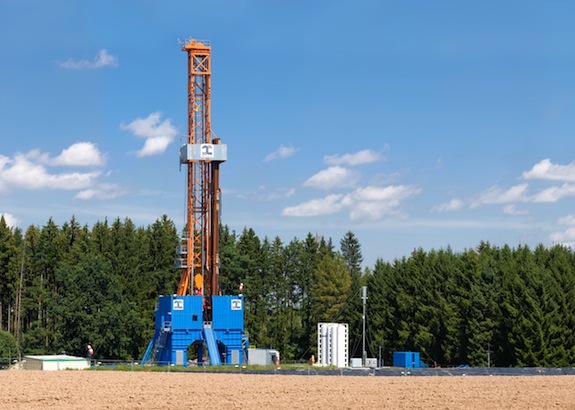
This summer, exploratory drilling will begin in the Arctic Ocean unless we stop it. The Arctic must be off limits to oil drilling, for the simple reason that a spill would be impossible to clean up there. The Arctic is home to polar bears, walruses, bowhead whales and other endangered and highly sensitive wildlife; oil drilling in its remote, ice-choked waters would carry unacceptably high risks of environmental destruction and loss of life.
President Obama has given approval to Shell to drill for oil this summer in the vulnerable Arctic. In hopes of uncovering new sources of dirty fossil fuels, Arctic drilling could also unleash more than 11 billion tons of carbon pollution -- making it ever more difficult to stave off devastating climate change.
We have a powerful opportunity now to stop drilling before it spoils the Arctic and its wildlife. Take action now to help us send 1 million messages to Obama asking him to protect one of America's last, best wildernesses and stop Shell's reckless drilling plans.
Dear President Obama,
Oil drilling in our oceans won't solve the climate crisis. Protect polar
bears, whales, and sea turtles from oil spills. Plan for our future:
-- Stop Shell from risky drilling this summer where oil spill response
is non-existent in the remote, frozen Arctic waters.
-- Cancel lease sales proposed for Alaska's Beaufort and Chukchi Seas.
Risky drilling is not the answer.
http://www.facebook.com/photo.php?fbid=411289252235427&set=a.107283912635964.9154.107279015969787&type=1&theater
http://www.facebook.com/photo.php?fbid=410627772301575&set=a.107283912635964.9154.107279015969787&type=1&theater
http://www.facebook.com/photo.php?fbid=410486895648996&set=a.107283912635964.9154.107279015969787&type=1&theater
http://www.facebook.com/photo.php?fbid=410462985651387&set=a.107283912635964.9154.107279015969787&type=1&theater
http://www.facebook.com/photo.php?fbid=410174805680205&set=a.107283912635964.9154.107279015969787&type=1&theater
http://www.facebook.com/photo.php?fbid=410035012360851&set=a.107283912635964.9154.107279015969787&type=1&theater
http://www.facebook.com/photo.php?fbid=409807455716940&set=a.107283912635964.9154.107279015969787&type=1&theater
http://www.facebook.com/photo.php?fbid=409514952412857&set=a.107283912635964.9154.107279015969787&type=1&theater
http://www.facebook.com/photo.php?fbid=408999442464408&set=a.107283912635964.9154.107279015969787&type=1&theater
http://www.facebook.com/photo.php?fbid=408235625874123&set=a.107283912635964.9154.107279015969787&type=1&theater
http://www.facebook.com/photo.php?fbid=408005055897180&set=a.107283912635964.9154.107279015969787&type=1&theater
http://www.facebook.com/photo.php?fbid=407883302576022&set=a.107283912635964.9154.107279015969787&type=1&theater
http://www.facebook.com/photo.php?fbid=407409069290112&set=a.107283912635964.9154.107279015969787&type=1&theater
http://www.facebook.com/photo.php?fbid=407338272630525&set=a.107283912635964.9154.107279015969787&type=1&theater
http://www.facebook.com/photo.php?fbid=407309812633371&set=a.107283912635964.9154.107279015969787&type=1&theater
http://www.facebook.com/photo.php?fbid=407251102639242&set=a.107283912635964.9154.107279015969787&type=1&theater
http://www.facebook.com/photo.php?fbid=407134345984251&set=a.107283912635964.9154.107279015969787&type=1&theater
http://www.facebook.com/photo.php?fbid=406713769359642&set=a.107283912635964.9154.107279015969787&type=1&theater
http://www.facebook.com/photo.php?fbid=406559876041698&set=a.107283912635964.9154.107279015969787&type=1&theater
http://www.facebook.com/photo.php?fbid=405481632816189&set=a.107283912635964.9154.107279015969787&type=1&theater
http://www.facebook.com/photo.php?fbid=405326686165017&set=a.107283912635964.9154.107279015969787&type=1&theater
http://www.facebook.com/photo.php?fbid=405160662848286&set=a.107283912635964.9154.107279015969787&type=1&theater
http://www.facebook.com/photo.php?fbid=404940729536946&set=a.107283912635964.9154.107279015969787&type=1&theater
http://www.facebook.com/photo.php?fbid=404904112873941&set=a.107283912635964.9154.107279015969787&type=1&theater
http://www.facebook.com/photo.php?fbid=403579103006442&set=a.107283912635964.9154.107279015969787&type=1&theater
http://www.facebook.com/photo.php?fbid=403537106343975&set=a.107283912635964.9154.107279015969787&type=1&theater
http://www.facebook.com/photo.php?fbid=402592093105143&set=a.107283912635964.9154.107279015969787&type=1&theater