jueves, 14 de marzo de 2013

Berkeley creates the first graphene earphones, and (unsurprisingly) they’re awesome

ORIGINAL: Berkeley
March 13, 2013


Researchers at the University of Berkeley in California have created the first ever graphene audio speaker (earphone). In its raw state, without any kind of optimization, the researchers show that graphene’s superior physical and electrical properties allow for an earphone with frequency response comparable to or better than a pair of commercial Sennheiser earphones.

A loudspeaker (or earphone or headphone) works by vibrating a (usually) paper diaphragm (aka a cone), creating pressure waves in the air around you. Depending on the frequency of these waves, different sounds are created. Human ears, depending on their age, can usually hear frequencies between 20Hz (very low pitch) and 20KHz (very high). Generally, the quality of a speaker is defined by how flat its frequency response is — in other words, whether it produces sounds equally well, no matter where they fall on the 20Hz to 20KHz scale. A poor speaker, or, say, a bassy set of headphones, might be very strong in the lower ranges, but weaker at the top. (See: In search of the perfect headphones.)


In Berkeley’s graphene earphone, the diaphragm is made from a 30nm-thick, 7mm-wide sheet of graphene. This diaphragm is then sandwiched between two silicon electrodes, which are coated with silicon dioxide to prevent any shorting if the diaphragm is driven too hard. By applying power to the electrodes, an electrostatic force is created, which causes the graphene diaphragm to vibrate, creating sound. By oscillating the electricity, different sounds are created.
Graphene earphone frequency response (top), vs. Sennheiser MX-400 earphones (bottom)
Given graphene’s status as a wonder material we shouldn’t really be surprised, but it turns out that this graphene speaker — the first of its kind — has intrinsically excellent performance. As you can see in the graph above, the graphene earphone’s frequency response is superb. The reason for this is down to the graphene diaphragm’s simplicity: Whereas most diaphragms/cones must be damped (padded, restricted) to prevent undesirable frequency responses, the graphene diaphragm requires no damping. This is because graphene is so strong that the diaphragm can be incredibly thin — and thus very light. Instead of being artificially damped, the graphene diaphragm is damped by air itself. As a corollary, the lack of damping means that the graphene diaphragm is also very energy efficient — which could be important for reducing the power usage of smartphone and tablet speakers.

Remember, we are talking about a completely untuned, unoptimized earphone, and yet its frequency response is superior to a magnetic coil speaker that has been the target of decades of research and development. If that wasn’t exciting enough, the researchers say that their method of growing graphene with chemical vapor deposition can easily be scaled to produce larger diaphragms and thus larger speakers. In all likelihood, following some more research, graphene will go on to become the material of choice for studio speakers — and hopefully, cost permitting, consumer speakers and earphones as well.


Research paper: arXiv:1303.2391 - “Electrostatic Graphene Loudspeaker”

New results indicate that particle discovered at CERN is a Higgs boson

ORIGINAL: CERN / CMS
Candidate events in the CMS SM Higgs Search. CMS, 13 May 2012, 21.08.
A typical candidate event including two high-energy photons.

HIG-13-002 Event 1: Event recorded with the CMS detector in 2012 at a proton-proton centre-of-mass energy of 8TeV. The event shows characteristics expected from the decay of the SM Higgs boson to a pair of Z bosons, one of which subsequently decays to a pair of electrons (green lines and green towers) and the other Z decays to a pair of muons (red lines). The event could also be due to known Standard Model background processes. Image 1 of 16. HIG-13-002 Event 1: Event recorded with the CMS detector in 2012 at a proton-proton centre-of-mass energy of 8 TeV. The event shows characteristics expected from the decay of the SM Higgs boson to a pair of Z bosons, one of which subsequently decays to a pair of electrons (green lines and green towers) and the other Z decays to a pair of muons (red lines). The event could also be due to known Standard Model background processes. Image: CERN, CMS
Geneva, 14 March 2013. At the Moriond Conference today, the ATLAS and CMS collaborations at CERN1’s Large Hadron Collider (LHC) presented preliminary new results that further elucidate the particle discovered last year. Having analysed two and a half times more data than was available for the discovery announcement in July, they find that the new particle is looking more and more like a Higgs boson, the particle linked to the mechanism that gives mass to elementary particles. It remains an open question, however, whether this is the Higgs boson of the Standard Model of particle physics, or possibly the lightest of several bosons predicted in some theories that go beyond the Standard Model. Finding the answer to this question will take time. 

Whether or not it is a Higgs boson is demonstrated by how it interacts with other particles, and its quantum properties. For example, a Higgs boson is postulated to have no spin, and in the Standard Model its parity – a measure of how its mirror image behaves – should be positive. CMS and ATLAS have compared a number of options for the spin-parity of this particle, and these all prefer no spin and positive parity. This, coupled with the measured interactions of the new particle with other particles, strongly indicates that it is a Higgs boson. 

“The preliminary results with the full 2012 data set are magnificent and to me it is clear that we are dealing with a Higgs boson though we still have a long way to go to know what kind of Higgs boson it is.” said CMS spokesperson Joe Incandela. 

"The beautiful new results represent a huge effort by many dedicated people. They point to the new particle having the spin-parity of a Higgs boson as in the Standard Model. We are now well started on the measurement programme in the Higgs sector," said ATLAS spokesperson Dave Charlton. 

Image 4 of 16. HIG-13-004 Event 1: Event recorded with the CMS detector in 2012 at a proton-proton centre-of-mass energy of 8 TeV. The event shows characteristics expected from the decay of the SM Higgs boson to a pair of τ leptons. Such an event is characterised by the production of two forward-going jets, seen here in opposite endcaps. One of the τs decays to a muon (red lines on the right) and neutrinos, while the other τ decays into a charged hadron and a neutrino
To determine if this is the Standard Model Higgs boson, the collaborations have, for example, to measure precisely the rate at which the boson decays into other particles and compare the results to the predictions. The detection of the boson is a very rare event - it takes around 1 trillion (1012) proton-proton collisions for each observed event. To characterize all of the decay modes will require much more data from the LHC. 

Footnote(s): 
1. CERN, the European Organization for Nuclear Research, is the world's leading laboratory for particle physics. It has its headquarters in Geneva. At present, its member states are Austria, Belgium, Bulgaria, the Czech Republic, Denmark, Finland, France, Germany, Greece, Hungary, Italy, the Netherlands, Norway, Poland, Portugal, Slovakia, Spain, Sweden, Switzerland and the United Kingdom. Romania is a candidate for accession. Cyprus, Israel and Serbia are associate members in the pre-stage to membership. India, Japan, the Russian Federation, the United States of America, Turkey, the European Commission and UNESCO have observer status.

miércoles, 13 de marzo de 2013

Polar insects help scientists make gene expression discovery

ORIGINAL: RD Mag
03/13/2013


Although they live in similarly extreme ecosystems at opposite ends of the world, Antarctic insects appear to employ entirely different methods at the genetic level to cope with extremely dry conditions than their counterparts that live north of the Arctic Circle, according to National Science Foundation- (NSF) funded researchers.

Writing in the Proceedings of the National Academy of Sciences, the researchers concluded, "Polar arthropods have developed distinct... mechanisms to cope with similar desiccating conditions."

The researchers noted that aside from the significance of the specific discovery about the genetics of how creatures cope in polar environments, the new finding is important because it shows how relatively new and developing scientific techniques, including genomics, are opening new scientific vistas in the Polar Regions, which were once thought to be relatively uniform and, relatively speaking, scientifically sterile environments.

"It's great to have an Antarctic animal that has entered the genomic era," said David Denlinger, a distinguished professor of entomology at Ohio State University and a co-author of the paper. "This paper, which analyzed the expression of thousands of genes in response to the desiccating environment of Antarctica, is just one example of the power that the genomic revolution offers for advancing polar science. "

The collaborative research—which included contributions from scientists at Ohio State University, the Centre National de la Recherche Scientifique (National Center for Scientific Research) in France, Catholic University of Louvain in Belgium, Stanford University, and Miami University in Ohio—was supported in part by the Division of Polar Programs in NSF's Geosciences Directorate.

Polar Programs manages the U.S. Antarctic Program, through which it coordinates all U.S. research on the southernmost continent and aboard ships in the Southern Ocean as well as providing the necessary logistical support.

The finding also adds to the developing picture of the Polar Regions as having similarities and yet subtle and perhaps very important differences, previously undetected by science. NSF-funded scientists late last year, for example, published research indicating that differing contributions of freshwater from glaciers and streams to the Arctic and Southern oceans may be responsible for the fact that the majority of microbial communities that thrive near the surface of the Polar oceans share few common members.

Although Antarctica's surrounding oceans and coastal margins are home to a variety of large creatures such as seals, penguins and whales, insect life is rare, except on the Antarctic Peninsula.

There, the Antarctic midge, Belgica antarctica, occupies its unique ecological niche.

The research team that produced the new findings collected specimens for their research from offshore islands near NSF's Palmer Station on Anvers Island in the Peninsula region.

Surrounded by an ocean, the Antarctic continent is a polar desert where creatures have adapted to life with infrequent access to liquid water. The researchers note that Antarctic midge larvae, for example, "are remarkably tolerant of dehydration, surviving losses of up to 70% of their body water."

The larvae of Belgica antarctica, a flightless midge and Antarctica's only indigenous insect. Credit: Photograph by Richard E. Lee, Jr., NSF

Among Antarctic insects, the ability to tolerate dehydration is an important evolutionary development, allowing the creatures to successful survive the cold and dry southern winter.

"The loss of water enhances acute freezing tolerance," they write. "In addition, overwintering midge larvae are capable of undergoing another distinct form of dehydration, known as cryoprotective dehydration.

Cryoprotective dehydration is a mechanism in which a gradual decrease in temperature in the presence of environmental ice "creates a vapor pressure gradient that draws water out of the body, thereby depressing the body fluid melting point and allowing larvae to remain unfrozen at subzero temperatures". They also note that, in general, "insects, in particular, are at high risk of dehydration because of their small body size and consequent high surface-area-to-volume ratio."

The researchers compared the midge's strategy to those of other terrestrial arthropods that cope with prolonged periods when water is lacking, including the Arctic springtail, Megaphorura arctica and Folsomia candida, which are more widely distributed across the globe; both species are members of a group of arthropods, which are closely related to insects, known as Collembola.

The differences, they concluded, lie in the way that various genes express themselves.

After a detailed analysis of gene expression in the various species, the researchers concluded that "although B. antarctica and M. arctica are adapted to similar environments, our analysis indicated very little overlap in expression profiles between these two arthropods."

They add that "these differences in expression patterns may reflect different strategies for combating dehydration; whereas B. antarctica shuts down metabolic activity and waits for favorable conditions to return, F. candida [instead] relies on active water-vapor absorption to restore water balance during prolonged periods of desiccation."

They further add that because of the taxonomic difference between the Antarctic midge and the collembolan species with which gene expression was compared, more work is needed "to better understand the evolutionary physiology of dehydration tolerance in this taxonomic family."


These Machines Made Out Of Molecules Could Be A Manufacturing Revolution

ORIGINAL: FastCoExist

IMAGE: Cells via Shutterstock
Imagine that instead of making drugs in a lab, we had atomic-sized machines that could do it for us. Those tiny machines are on their way.

Nature is a veritable machine shop. In the cells and structures of every living organism lie motors, pumps, assembly lines, tiny vehicles, and other far more sophisticated versions of the machinery we have created for ourselves to do work.

Now we’re mimicking nature’s 4 billion years of evolution to manufacture on the scale of atoms. Chemistry typically takes a brute force approach to make molecules: mix and isolate compounds, add catalysts and chemicals, then wait until the right chemicals have formed. 

It’s difficult and inefficient compared to the elegant molecular machines that biology has designed to manufacture its exotic compounds for life. Individual molecules are being designed to serve as primitive nano-machines.

Now, scientists are taking the cue. Individual molecules are being designed to serve as primitive nano-machines whose shape and properties allow them to venture out into a chemical solution, or living cells, and repeatedly perform tasks. Eventually, it is hoped, these new molecules will lead to more efficient and cost-effective manufacturing systems at the atomic level.

One of the latest breakthroughs, published this month in the journal Nature is a nanorobot that grabs six amino acids, similar to how robotic arms manipulate parts in car factories, and reassembles these in a sequence known as a peptide. The team, drawn from the universities of Manchester and Edinburgh in the U.K., relied on a structure similar to a molecular axle with a ring threaded on it--known as a rotaxane--to let a molecular machine travel along the axle, grab each amino acid and then chain them together.

The machine, says David Leigh of the University of Manchester and co-author of the study, is a very primitive version of the ribosome, the protein manufacturing center of the cell, and is the first step to start making a machine that can manufacture complex custom molecules such as the drug penicillin. But for now, it is barely functional compared to the speed and sophistication of its biological inspiration. Leigh’s team needed 12 hours and a billion squared molecular machines (that’s 1 with 18 zeros) to make just a few milligrams of peptide. Compared to the ribosome, the artificial machines take hours instead of seconds, can only make simple proteins, and destroy the underlying molecule in the process.

Yet scientists are making rapid progress. In the last few years, synthetic molecular machines are starting to adapt mechanical principles from rotors, gyroscopes, scissors, wheelbarrows, and cars, as well as cribbing off the blueprint proved by nature by using the principles of biochemistry and physics.


Michael Coren covers science, economics and the environment. He is the cofounder of the multimedia production studio + newsroom MajorPlanet Studios. 

IFLS Last Week In Science


Bee venom and HIV: http://bit.ly/XYpZaw
Breath test for cancer: http://bit.ly/10h011w
3D printed skull: http://bit.ly/12zk93V
Child cured of HIV: http://bit.ly/Xo4T5P
Space invader shaped galaxy: http://slate.me/Zg9yTT

ALMA, el gran trampolín hacia el Universo

ORIGINAL: DiCyT

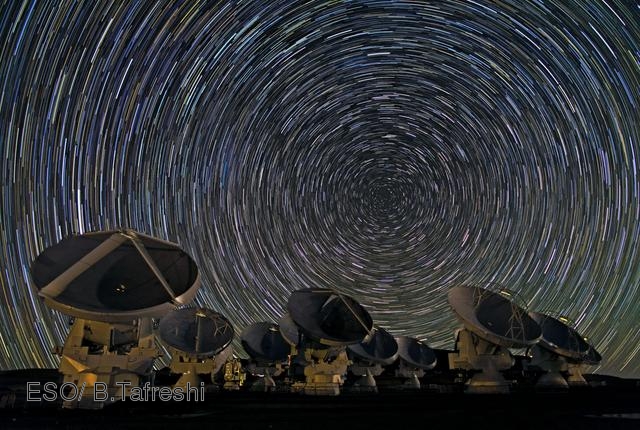
Huellas de estrellas sobre las antenas de ALMA. ESO
En el desierto chileno de Atacama se inaugura hoy el mayor proyecto astronómico existente

AFM/DICYT A 5.000 metros de altitud, con temperaturas que oscilan entre los –30 Cº y los 40 Cº y niveles de humedad que en ocasiones son del 0%. En estas condiciones tan extremas tiene lugar el nacimiento del mayor complejo astronómico construido hasta ahora: ALMA (Atacama Large Millimeter/ submillimeter Array), que se inaugura hoy en el desierto de Atacama, al Norte de Chile, con 66 grandes antenas.

El origen de este proyecto se remonta un siglo atrás, cuando un grupo de astrónomos europeos, norteamericanos y japoneses jugaban con la idea de construir los telescopios más revolucionarios, pero un proyecto tan ambicioso era difícil de materializar sin una gran colaboración mundial.

El día 13 de marzo de 2013 será recordado, en el ámbito astronómico, como el día en que se hace evidente que la idea de estos investigadores no era imposible, puesto que se inaugura el ALMA en el Llano de Chajnantor, a poco más de 50 kilómetros de San Pedro de Atacama, aunque desde el año pasado está en funcionamiento con 16 antenas, es lo que se conoce como Fase de Ciencia Temprana.

El español Xavier Barcons, físico y presidente del Observatorio Europeo Austral (ESO, por sus siglas en inglés), explica en declaraciones a DiCYT que en dicha fase se ha descubierto una forma muy simple de un azúcar en el espacio y la estructura en forma de espiral de una estrella que está terminando sus días.

Una asociación internacional firmada en septiembre de 2004 entre Europa (representada por el ESO y con una participación del 37,5%), Norteamérica (Estados Unidos y Canadá, 37,5%) y Asia (Japón y Taiwán, 25%), en colaboración con la República de Chile, ha sido la responsable de crear el mayor proyecto astronómico que existe: un telescopio de diseño revolucionario, compuesto de 66 antenas de alta precisión ubicado en el norte de Chile.

Para este representante de Europa en ALMA lo más difícil fue poner de acuerdo a las tres culturas ya que la forma de trabajo y de gestión en estos proyectos es muy dispar en cada ámbito. “Ahora creo que es justo reconocer que hemos aprendido a convivir con esta diversidad, y que esto ha redundado en un claro beneficio para el proyecto”, asevera Barcons.

ALMA, un proyecto sin precedentes con un coste de 1.200 millones de euros, se traduce en el mejor ejemplo en cuanto a colaboración mundial se refiere al contar con el respaldo de cuatro continentes. Este elevado número de antenas y su configuración han hecho de ese desierto un área gigantesca donde se reciben constantemente señales extremadamente débiles. Esto permitirá investigar el Universo más cercano y conocer el más lejano, que antes no se podía acceder con ninguna otra tecnología.

Resultados esperados e inesperados
El polvo cósmico, el gas molecular, el origen de las estrellas y los planetas o comprobar la radiación residual del Big Bang son algunos de los muchos sueños que se persiguen y que se harán realidad gracias a ALMA.

Xavier Barcons destaca que ”todas las infraestructuras científicas como ALMA tienen detrás unos objetivos científicos, y se diseñan para poder abordarlos, aunque una vez construidas los resultados más espectaculares aparecen siempre por donde uno menos lo espera. Así que ALMA cubrirá los dos flancos, avanzando en lo esperado y en lo inesperado”. 

Los objetivos de ALMA son observar cualquier aspecto visible creado después del Big Bang, corroborar si el Universo se formó tal y como se piensa o si, por el contrario, se encuentran muchas sorpresas. “Esencialmente gas frío y moléculas en el Universo” es lo que se espera encontrar gracias a ALMA, afirma. A partir de ese gas se forman las estrellas en las galaxias más tempranas y alejadas del Universo. Esta tecnología ofrecerá imágenes totalmente revolucionarias y dentro de poco ofrecerá información sobre las primeras estrellas y sobre cómo se originaron los primeros rastros de vida.

Todo ello será posible a través de la observación de ondas milimétricas y submilimétricas, es decir, gracias a la tecnología de la interferometría, técnica utilizada en Astronomía que consiste en combinar una señal usando dos o más antenas y obtener información sobre la fuente de emisión (ya sea una estrella, planeta, o galaxia) a través de la cual será posible obtener imágenes de muchísima precisión.

Sincronización de las 66 antenas
Pero el correcto funcionamiento de ALMA depende de la perfecta sincronización entre sus 66 antenas que deberán hacer frente al desafío de apuntar simultáneamente todas a un mismo punto del cielo, captar individualmente la señal astronómica, convertirla a formato digital y transmitir toda la información recogida a un ordenador que combinará las señales recibidas para transformarlas en datos.

Antenas de ALMA. ESO
De estas, 50 antenas son de 12 metros de diámetro con separaciones que van de 150 metros a 16 kilómetros simulando un telescopio gigante. Otras 4 antenas de la misma medida junto con 12 de 7 metros formarán el Conjunto Compacto Atacama (ACA, por sus siglas en inglés). Debido a la forma en que funcionan los interferómetros, esta disposición y separación entre ellas les permitirá proporcionar una imagen más general de los objetos astronómicos que se observen.

Proyecto internacional
Los astrónomos tendrán a su disposición instalaciones de investigación de vanguardia gracias al apoyo de 16 países, la mayoría europeos a través del ESO. La sede central de este organismo (que incluye el centro científico, técnico y administrativo de la organización) se encuentra en Garching, cerca de Munich (Alemania), pero cuenta con otra en Santiago de Chile y telescopios en tres centros de observación en el desierto chileno de Atacama: el observatorio de La Silla, el Very Large Telescope (Telescopio óptico terrestre más avanzado del mundo) y el telescopio submilimétrico APEX.

Además de esta tecnología, ESO está trabajando en diseño de un telescopio de 40 metros, el E-ELT (European Extremely Large Telescope), que trabajará en los rangos óptico e infrarrojo cercano. Este último telescopio será la mayor ventana a través de la cual podremos observar el cielo.

Dentro de estas aportaciones europeas destaca, por ejemplo, la inversión de infraestructuras por parte de España, que se encargó de la fabricación de 25 antenas de acero, así como el equipo de producción de energía, algo que para Xavier Barcons fue “un quebradero de cabeza” y un asunto vital en un complejo localizado a 5.000 metros de altura. Los amplificadores de bajo ruido que se encuentran en el interior de cada telescopio también se fabricaron en España.

NASA Rover Finds Conditions Once Suited for Ancient Life on Mars

ORIGINAL: NASA
March 12, 2013

PASADENA, Calif. -- An analysis of a rock sample collected by NASA's Curiosity rover shows ancient Mars could have supported living microbes. 

Scientists identified sulfur, nitrogen, hydrogen, oxygen, phosphorus and carbon -- some of the key chemical ingredients for life -- in the powder Curiosity drilled out of a sedimentary rock near an ancient stream bed in Gale Crater on the Red Planet last month. 

"A fundamental question for this mission is whether Mars could have supported a habitable environment," said Michael Meyer, lead scientist for NASA's Mars Exploration Program at the agency's headquarters in Washington. "From what we know now, the answer is yes." 

Clues to this habitable environment come from data returned by the rover's Sample Analysis at Mars (SAM) and Chemistry and Mineralogy (CheMin) instruments. The data indicate the Yellowknife Bay area the rover is exploring was the end of an ancient river system or an intermittently wet lake bed that could have provided chemical energy and other favorable conditions for microbes. The rock is made up of a fine-grained mudstone containing clay minerals, sulfate minerals and other chemicals. This ancient wet environment, unlike some others on Mars, was not harshly oxidizing, acidic or extremely salty. 

The patch of bedrock where Curiosity drilled for its first sample lies in an ancient network of stream channels descending from the rim of Gale Crater. The bedrock also is fine-grained mudstone and shows evidence of multiple periods of wet conditions, including nodules and veins. 

Curiosity's drill collected the sample at a site just a few hundred yards away from where the rover earlier found an ancient streambed in September 2012. 

"Clay minerals make up at least 20 percent of the composition of this sample," said David Blake, principal investigator for the CheMin instrument at NASA's Ames Research Center in Moffett Field, Calif. 

These clay minerals are a product of the reaction of relatively fresh water with igneous minerals, such as olivine, also present in the sediment. The reaction could have taken place within the sedimentary deposit, during transport of the sediment, or in the source region of the sediment. The presence of calcium sulfate along with the clay suggests the soil is neutral or mildly alkaline. 

Scientists were surprised to find a mixture of oxidized, less-oxidized, and even non-oxidized chemicals, providing an energy gradient of the sort many microbes on Earth exploit to live. This partial oxidation was first hinted at when the drill cuttings were revealed to be gray rather than red. 

"The range of chemical ingredients we have identified in the sample is impressive, and it suggests pairings such as sulfates and sulfides that indicate a possible chemical energy source for micro-organisms," said Paul Mahaffy, principal investigator of the SAM suite of instruments at NASA's Goddard Space Flight Center in Greenbelt, Md. 

An additional drilled sample will be used to help confirm these results for several of the trace gases analyzed by the SAM instrument. 

"We have characterized a very ancient, but strangely new 'gray Mars' where conditions once were favorable for life," said John Grotzinger, Mars Science Laboratory project scientist at the California Institute of Technology in Pasadena, Calif. "Curiosity is on a mission of discovery and exploration, and as a team we feel there are many more exciting discoveries ahead of us in the months and years to come." 

Scientists plan to work with Curiosity in the "Yellowknife Bay" area for many more weeks before beginning a long drive to Gale Crater's central mound, Mount Sharp. Investigating the stack of layers exposed on Mount Sharp, where clay minerals and sulfate minerals have been identified from orbit, may add information about the duration and diversity of habitable conditions. 

NASA's Mars Science Laboratory Project has been using Curiosity to investigate whether an area within Mars' Gale Crater ever has offered an environment favorable for microbial life. Curiosity, carrying 10 science instruments, landed seven months ago to begin its two-year prime mission. NASA's Jet Propulsion Laboratory in Pasadena, Calif., manages the project for NASA's Science Mission Directorate in Washington. 

For more about the mission, visit: http://www.jpl.nasa.gov/msl , http://mars.jpl.nasa.gov/msl/ and http://www.nasa.gov/msl . You can follow the mission on Facebook and Twitter at: http://www.facebook.com/marscuriosity and http://www.twitter.com/marscuriosity

DC Agle 818-393-9011
Jet Propulsion Laboratory, Pasadena, Calif.
agle@jpl.nasa.gov 

Dwayne Brown 202-358-1726
NASA Headquarters, Washington
Dwayne.c.brown@nasa.gov


Two Different Aqueous Environments
This set of images compares rocks seen by NASA's Opportunity rover and Curiosity rover at two different parts of Mars. On the left is " Wopmay" rock, in Endurance Crater, Meridiani Planum, as studied by the Opportunity rover. 

First Curiosity Drilling Sample in the Scoop. This image from NASA's Curiosity rover shows the first sample of powdered rock extracted by the rover's drill. Image credit: NASA/JPL-Caltech/MSSS 

Minerals at 'Rocknest' and 'John Klein' 
This side-by-side comparison shows the X-ray diffraction patterns of two different samples collected from the Martian surface by NASA's Curiosity rover. These images, made from data obtained by Curiosity's Chemistry and Mineralogy instrument (CheMin), show the patterns obtained from a drift of windblown dust and sand called "Rocknest" and from a powdered rock sample drilled from the "John Klein" bedrock.

The presence of abundant clay minerals in the John Klein drill powder and the lack of abundant salt suggest a fresh water environment. The presence of calcium sulfates rather than magnesium or iron sulfates (as found at Meridiani Planum by NASA's Mars Exploration Rover Opportunity) suggests a neutral to mildly alkaline pH environment. The Rocknest sand shadow mineralogy suggests a dry, aeolian (wind-shaped) environment with low water activity. The John Klein mineralogy suggests a lacustrine (lakebed) environment with high water activity.

As seen on the left, the Rocknest data reveal abundant plagioclase feldspar, pyroxene and olivine minerals. The data also indicate reveal small amounts of magnetite and anhydrite. In addition, the Rocknest sample contains 25 to 35 percent amorphous, or non-crystalline, material.

X-ray diffraction analysis of the John Klein drill powder reveals abundant phyllosilicate (a class of clay minerals called smectites that form by the action of relatively pure and neutral pH water on source minerals), plagioclase feldspar, pyroxene, magnetite and olivine. Alternatively, the clay minerals could have been transported by water from sources higher up the sediment fan to form the John Klein mineral assemblage. The region of the pattern indicating the phyllosilicates is labeled in the annotated version of this image. The data also show minor amounts of anhydrite and bassanite. The John Klein sample also contains about 20 percent amorphous material.

NASA's Jet Propulsion Laboratory, a division of Caltech in Pasadena, manages the project for NASA's Science Mission Directorate, Washington, and built Curiosity and CheMin.


An Earth Analog to Mars' Yellowknife Bay. This set of images shows a modern terrestrial analog to the "Yellowknife Bay" area that NASA's Curiosity rover is exploring. At left is a sampling pit exposing clay-bearing lake sediments, deposited in a basaltic basin in southern Australia. Image Credit: NASA/JPL-Caltech/Ames 


Location of John Klein Drill Site 

Studying Habitability in Ancient Martian Environments
This set of images shows the results from the rock abrasion tool from NASA's Mars Exploration Rover Opportunity (left) and the drill from NASA's Curiosity rover (right). Note how the rock grindings from Opportunity are brownish red, indicating the presence of hematite, a strongly oxidized iron-bearing mineral. Such minerals are less supportive of habitability and also may degrade organic compounds. The diameter of the abraded circle is 1.8 inches (4.5 centimeters). The image was cropped from an image
taken on Sol 35 (the 35th Martian day of Opportunity's operations, or Feb. 28, 2004, on Earth) by Opportunity's panoramic camera at a target called "Guadalupe" inside Eagle Crater.

On the right is the hole produced by Curiosity during the first drilling into a rock on Mars to collect a sample from inside the rock. In this case, the rock produced gray tailings -- not red -- suggesting the presence of iron that is less oxidized. One possibility is magnetite, which was determined to be present by Curiosity's Chemistry and Mineralogy instrument. Magnetite has less oxygen than hematite and would be more compatible with habitability and the preservation of organics, all other factors being equal. These other factors would include the primary concentration of organics in the sedimentary environment, in addition to later exposure of rock to surface radiation. The diameter of the hole is 0.63 inch (1.6 centimeters), which is approximately 1/3 of that on the left-hand image. The image was cropped fromPIA16726. It was taken on Sol 182 (the 182d Martian day of Curiosity's operations, or Feb. 8, 2013, on Earth) by the Mars Hand Lens Imager on Curiosity's arm after that day's drilling at a target rock called "John Klein."

JPL manages the Mars Science Laboratory/Curiosity for NASA's Science Mission Directorate in Washington. The rover was designed, developed and assembled at JPL, a division of the California Institute of Technology in Pasadena.

For more about NASA's Curiosity mission, visit: http://www.jpl.nasa.gov/msl, http://www.nasa.gov/mars, andhttp://mars.jpl.nasa.gov/msl.

Major Gases Released from Drilled Samples of the 'John Klein' Rock
An analysis of a drilled rock sample from NASA's Curiosity rover shows the presence of water, carbon dioxide, oxygen, sulfur dioxide, and hydrogen sulfide released on heating. The results analyzing the high temperature water release are consistent with smectite clay minerals.

Curiosity's Sample Analysis at Mars (SAM) instrument suite conducted the analysis. The first step in the analysis of a portion of this drilled sample was to heat the sample in a quartz oven to 1,535 degrees Farenheit (835 degrees Celsius) and analyze the gases as they were released using SAM's quadrupole mass spectrometer (QMS). The signatures of more than five hundred mass values were sampled during the heating of this drilled sample and analyzed by the QMS. Five are shown in the graph. These traces are diagnostic of water, carbon dioxide, oxygen, and two forms of sulfur (sulfur dioxide, the oxidized form, and hydrogen sulfide, the reduced form) measured by the QMS.

The second step in the analysis was to send a portion of the gas released from the sample to the tunable laser spectrometer (TLS) to measure isotopes of carbon, oxygen and hydrogen, in both water and carbon dioxide. The ratio of deuterium (a heavy form of hydrogen) to the lighter, more abundant form of hydrogen was lower than the deuterium-to-hydrogen ratio measured by SAM in more loosely bound water in the sample from the "Rocknest" drift. The high deuterium-to-hydrogen ratio in water in the Mars atmosphere is a signature of the lighter hydrogen more rapidly escaping to space over geological time. Therefore, measuring the deuterium-to-hydrogen in water released from rocks is one tool that can be used to explore ancient reservoirs of water on Mars.

The third step in the analysis was to inject gas trapped during the heating process into SAM's third instrument, the gas chromatograph. Individual compounds separate out in time in a long capillary column in this instrument and are then introduced into the QMS. The gas chromatograph mass spectrometer is a prime tool in the SAM search for organic compounds.

The ratio of reduced species to oxidized species released by the SAM ovens is significantly higher in this drilled bedrock than in the previously scooped dust samples. These results indicate a significant amount of available chemical energy because oxidized and less oxidized versions of molecules are present. This result, combined with suitable aqueous conditions at this site in the distant past, made this a potentially habitable environment.

The SAM analysis was conducted on Sol 200 (the 200th Martian day of Curosity's operations, which was Feb. 27, 2013, on Earth).

JPL manages the Mars Science Laboratory/Curiosity for NASA's Science Mission Directorate in Washington. The rover was designed, developed and assembled at JPL, a division of the California Institute of Technology in Pasadena.

For more about NASA's Curiosity mission, visit: http://www.jpl.nasa.gov/msl, http://www.nasa.gov/mars, andhttp://mars.jpl.nasa.gov/msl.


Chlorinated Forms of Methane at 'John Klein' Site
NASA's Curiosity rover has detected the simple carbon-containing compounds chloro- and dichloromethane from the powdered rock sample extracted from the "John Klein" rock on Mars. These species were detected by the gas chromatograph mass spectrometer (GCMS) on Curiosity's Sample Analysis at Mars instrument (SAM).

The blue peak on the left shows the presence of chloromethane and the two red peaks on the right show the presence of dichloromethane. The powdered rock sample from John Klein was heated and some of the gas released was injected into the capillary column of the GCMS. The time at which different compounds exited the gas chromatograph column and entered the mass spectrometer, and the patterns produced in the mass spectrometer indicated molecular identity.

This chart also indicates "blank runs," which were conducted on Mars prior to delivery of this drilled sample to SAM. The runs helped to insure that signals from the gases released from the John Klein sample were above background levels. Curiosity began drilling at John Klein in February 2013. The SAM analysis was conducted on Sol 200 (the 200th Martian day of Curosity's operations, which was Feb. 27, 2013, on Earth).

Both chloro- and dichloromethane were also detected earlier by SAM at the "Rocknest" drift. It is possible that these simple carbon-containing compounds were produced by the reaction between Martian carbon and chlorine released when this sample was heated in the SAM oven. However, analysis of an additional drilled sample is required to help scientists understand if instead any residual terrestrial carbon from the drill, or perhaps chlorine left over from the Rocknest sample, is responsible for the generation of some or all of these compounds. In any case, these detections demonstrate clearly that the SAM GCMS is performing as designed and ready to continue the search for organic compounds in Gale Crater.

JPL manages the Mars Science Laboratory/Curiosity for NASA's Science Mission Directorate in Washington. The rover was designed, developed and assembled at JPL, a division of the California Institute of Technology in Pasadena.

For more about NASA's Curiosity mission, visit: http://www.jpl.nasa.gov/msl, http://www.nasa.gov/mars, andhttp://mars.jpl.nasa.gov/msl.

lunes, 11 de marzo de 2013

'Blood test' for coral reefs

ORIGINAL: Science Alert
ARC CENTRE OF EXCELLENCE FOR CORAL REEF STUDIES 
WEDNESDAY, 27 FEBRUARY 2013

A new test that monitors hemoglobin levels in the microalgae that live symbiotically with coral may help measure how climate change and human activity affects coral reefs. Image: littlesam/Shutterstock
Using a world-first scientific discovery, Australian researchers are developing a stress-test for coral, to measure how coral reefs are being impacted by pressures from climate change and human activity.

The scientists have found hemoglobin genes in the microalgae which live symbiotically with coral, which may provide a readout on how stressed a particular coral is – and how likely it is to bleach and die.

Coral bleaching occurs when the symbiotic algae abandon the coral due to changes happening in the environment such as high water temperatures or pollution and, deprived of their main energy source, the corals whiten and potentially perish. Bleaching has hit more than half of the Great Barrier Reef in recent years, as well as a majority of coral reefs around the world.

“Despite the importance of coral reefs to hundreds of millions of people worldwide, we still do not clearly understand how well they can cope with changed conditions of climate and environment they now face,” explains Professor Ove Hoegh-Guldberg of the ARC Centre of Excellence for Coral Reef Studies (CoECRS).

“In exploring the genetic make-up of both corals and their symbiotic algae, we have found hemoglobin-like proteins that respond rapidly and dramatically to temperature and nutrient stresses,” says lead author Dr Nela Rosic of The University of Queensland.

Most people know hemoglobin as the red material that carries oxygen around the body in our blood supply, but in plants and algae it serves a slightly different function, mopping up spare oxygen and toxic gases before they can harm the plant. In corals and their algae it may also form a vital part of their day-night energy storage system.

“When the coral undergo temperature stress, this system goes into overdrive and hemoglobin genes are expressed at a higher level. Due to its sensitive nature, hemoglobin has a potential to be used as a stress biomarker. This, for the first time, gives us a clear readout of stress levels in the corals and their symbiotic algae,” Dr Rosic explains. 

Professor Hoegh-Guldberg says the discovery allows crucial new insights into the physiology of bleaching at the molecular level.

“Potentially this can also be used by coral managers and even industries which depend on coral, to monitor the condition of their reefs,” he explains. “By monitoring stress levels in the coral’s symbiotic relationship, we can potentially explore whether a coral is more vulnerable to bleaching and death. There may then be strategies we can pursue to reduce the pressure.”

However both scientists caution that the primary stress on corals is coming from high ocean temperatures due to global warming – and this can only be addressed by humans cutting their carbon emissions.

Prof. Hoegh-Guldberg adds that the test could also be used to monitor the success of improved management of catchments and other human impacts, in terms of its effect on the corals. “It will be one of a range of measures we can use to understand whether steps taken to improve conditions surrounding coral reefs are really working or not. This can have a number of potential uses as we strive to reduce stress through better management of coral reefs.”

The scientists say that the existence of hemoglobin-like proteins in coral zooxanthellae (the symbiotic algae) highlights the common evolutionary ancestry of single-celled plants and higher animals, including humans.

Their paper “New-old hemoglobin-like proteins of symbiotic dinoflagellates” by Nedeljka N. Rosic, William Leggat, Paulina Kaniewska, Sophie Dove and Ove Hoegh-Guldberg appears in the journal Ecology and Evolution.
Editor's Note: Original news release can be found here.

End Ecocide in Europe in a Nutshell


Help us to reach 1 Million signatures at http://www.endecocide.eu

Credits for this Fantastic Video go to http://www.polifilm.co.uk
Drawings - Oliver Pidanti
Video - Tomás Sheridan

Scientists to simulate human brain inside a supercomputer

ORIGINAL: CNN
By Barry Neild, CNN 
October 12, 2012 -- Updated 1313 GMT (2113 HKT) | 

Researchers say building a computer simulation could improve understanding and treatments of brain diseases like Alzheimer's. 
STORY HIGHLIGHTS 
  • Human Brain Project will use supercomputers to mimic tangle of neurons and synapses that power our thoughts 
  • Scientists say the simulator could offer new insight into the treatment of brain disease like Parkinson's and Alzheimer's 
  • "Brain in a box" is unlikely to transform into sci-fi-style computer bent on world domination, scientists say 

(CNN) -- There's no escaping the fact that the Human Brain Project, with its billion-dollar plan to recreate the human mind inside a supercomputer, sounds like a science fiction nightmare. 

But those involved hope their ambitious goal of simulating the tangle of neurons and synapses that power our thought processes could offer solutions to tackling conditions such as depression, Parkinson's disease and Alzheimer's. 

The Human Brain venture is the next step in a long-running program that has already succeeded in using computers to create a virtual replica of part of a rat's neocortex -- a section of the brain believed to control higher functions such as conscious thought, movement and reasoning. 

Scientists at its forerunner, the Switzerland-based Blue Brain Project, have been working since 2005 to feed a computer with vast quantities of data and algorithms produced from studying tiny slivers of rodent gray matter. 

"This is a tool for research, not a giant simulated brain that is going to rule the world
Sean Hill, neuroscientist 

Last month they announced a significant advancement when they were able to use their simulator to accurately predict the location of synapses in the neocortex, effectively mapping out the complex electrical brain circuitry through which thoughts travel. 

Henry Markram, the South African-born neuroscientist who heads the project, said the breakthrough would have taken "decades, if not centuries" to chart using a real neocortex. He said it was proof their concept, dubbed "brain in a box" by Nature magazine, would work. 


Now the team are joining forces with other scientists to create the Human Brain Project. As its name suggests, they aim to scale up their model to recreate an entire human brain. 

It is a step that will need both a huge increase in funding and access to computers so advanced that they have yet to be built. 

If their current bid for €1 billion ($1.3 billion) of European Commission funding over the next 10 years is successful, Markram predicts that his computer neuroscientists are a decade away from producing a synthetic mind that could, in theory, talk and interact in the same way humans do. 

His bold claims have inevitably fueled comparisons to doom-laden popular fiction in which conscious machines turn on their creators and wreak havoc. 

The project's scientists have been referred to as "team Frankenstein" and their computer likened to "Skynet," the virtual intelligence that unleashes a robot war on humanity in the "Terminator" films. 

Sean Hill, a senior computational neuroscientist on the project, laughs at such comparisons. 

He says the computer will primarily become a repository for knowledge about the brain that will allow scientists to conduct experiments without the need to probe inside people's skulls. 


"This is a tool for research, not a giant simulated brain that is going to rule the world," he said. 

"Right now, we're in a crisis in neuroscience. There's a lot of wonderful data being gathered but we don't have a place where we can put those experimental results together and understand their implications. 

"We are just beginning to appreciate how complex our brains are, far beyond any other device in the known universe
Terry Sejnowski, Salk Institute for Biological Studies 

"The benefit of having this facility is you have a place to integrate the data into a model where you can test predictions and start to learn principles of how the brain operates." 

The computing power needed to build the model is phenomenal. Simply to replicate one of the 10,000 neuron brain cells involved in the rat experiment took the processing capacity usually found in a single laptop. To simulate a fully functioning human brain, it would take billions. 

Hill says that such computational power -- known as exascale -- will be available by the end of the decade. The Human Brain Project's scientists are hoping to work with supercomputer developers to ensure future machines match their requirements. 

But, even as the team touts its experiments as a possible solution to the brain diseases that affect about two billion people worldwide, they have attracted critics who say their work is far too broad in scope to achieve usable results. 

Professor Terry Sejnowski, head of the Computational Neurobiology Laboratory at the Salk Institute for Biological Studies in San Diego, has been quoted as saying the Blue Brain project is "bound to fail." 


He told CNN via email that "progress is being made but there is still a long way to go before we will understand the computational capabilities of cortical circuits." 

He added: "We are just beginning to appreciate how complex our brains are, far beyond any other device in the known universe." 

Sean Hill said the team hoped it was answering skeptics with its achievements so far. 

"It's just a matter of keeping on doing it. Let's keep improving these tools and open them up so that many scientists are engaged and collaborating and using it as common point to bring the data together," he said. 

"The only way to address the critics is to keep working, showing the positive results and do the best we can -- and that is starting to happen."