Mostrando entradas con la etiqueta Derrame. Mostrar todas las entradas

jueves, 26 de julio de 2012

The Long Shadow of the BP Oil Spill Keeps Killing Baby Birds

ORIGINAL: The Atlantic
Julie Dermansky
JUL 12 2012

A Louisiana official says the state's barrier islands are vanishing "like sugar in coffee." That's bad news for the waterfowl whose newly hatched chicks are being washed away.

This common tern chick was washed away by the rising tides of Hurricane Debbie. Many baby birds died during the storm.   Photo: The Atlantic. Julie Dermansky 
Two years after the BP oil spill, Louisiana is still grappling with its aftermath. I saw this firsthand during a recent visit to Cat Island, a barrier island in Plaquemeins Parrish. The oil spill killed the much of the vegetation that serves as a nesting ground for pelicans and other migrating waterfowl. 

A waterlogged barrier island East of Cat Island.   Photo: The Atlantic Julie Dermansky   
P.J. Hahn, coastal zone manager for Plaquemines Parish, prepares to take a sick egret to the Audubon Zoo to see if it can be saved.   Photo: The Atlantic Julie Dermansky   
Cat Island's mangrove forests used to be impenetrably dense. You can walk through them with little effort now. Most of the island is underwater. Tree roots used to prevent waves from sweeping away the sand that holds the sediment in place, but with the death of many trees and marsh grasses, there's little habitat left for the nesting birds.

Brown pelicans nestle among the mangrove trees. Photo: The Atlantic Julie Dermansky
According to P.J. Hahn, coastal zone manager for Plaquemines Parish, Cat Island is disappearing like sugar in coffee. The island rookery serves as a nesting ground to seagulls, spoonbills, and egrets, but it is primarily populated by brown pelicans, Louisiana's state bird. The bird was only recently taken off the endangered species list; now, tragically, its numbers will again dwindle. Hahn estimates that the island has shrunk from four acres to one since the 2010 oil spill.

A project to save Cat Island and Cat Island East will cost the parish at least $1.4 million. The plan is to fortify the island by adding landmass and mangrove trees and protect it with a new 40-acre circular barrier. Shell Oil will provide the bulk of the funding, and Hahn is still actively soliciting donations.

I joined Hahn as he took a geologist and a Manchac Consulting Group team out to survey the area before implementing their plans in September. After tropical storm Debbie blew over, Hahn found only one baby pelican on Cat Island East. The high waters had destroyed many of the nests, killing most of the newly hatched baby birds I had photographed the week before. If a hurricane hits the area this season, it is possible there will be nothing left to protect by the time the barrier is scheduled to be built.

On June 29, Congress passed the Restore Act, which earmarks 80 percent of BP's Clean Water Act fines for Gulf Coast restoration. The federal penalties BP faces range from $5 billion to $20 billion, according to the Times Picayune. Even though the president signed the bill quickly, the funds will come too late to save many birds. But perhaps they will jump-start the fight against coastal erosion elsewhere.

A nest is inundated by the rising waters. Photo: The Atlantic Julie Dermansky
The brown pelican, Louisiana's state bird, was only recently taken off the endangered species list. Because of the erosion of these sanctuaries, it may soon end up there again. Photo: The Atlantic Julie Dermansky
Reddish egrets find sanctuary among the thinning reeds.   Photo: The Atlantic Julie Dermansky   
A great egret perches on a high branch. Photo: The Atlantic Julie Dermansky
Baby great egrets huddle together in a nest. Cat Island has been named a bird sanctuary and is a nesting ground for many types of migrating water fowl.    Photo: The Atlantic Julie Dermansky
Baby great egrets huddle together in a nest. Cat Island has been named a bird sanctuary and is a nesting ground for many types of migrating water fowl.

domingo, 22 de abril de 2012

Earth Day: 9 Films That Will Change the Way You Think About the World

ORIGINAL: ALTERNET
April 19, 2012 |

This Earth Day consider adding a few of these these mainstream and indie documentaries to your must-see list.

Photo Credit: Surviving Progress Poster
In an apocalyptic 2012, is there a better time than Earth Day to remind ourselves just how lucky we are to be spinning through the void of space on this life-giving rock? From rapidly acidifying oceans and shortsighted deforestation to perpetually pollutive wars and the propping up of obsolete markets, Earth is taking killer blows that we're going to seriously regret delivering.

Like the worsening news about the future of our planet, the following films have recently arrived in short bursts. They deal out often visually spectacular but emotionally devastating losses of sea ice, as well as the unheard voices of nations beneath the rising waves. Some consider the double-edged sword of technological innovation, whose parasitic profit motive has compromised its earthly host. Others analyze those natural resources that so-called progress continues to exhaust in search of the new shiny.

But these Earth Day offerings are timely snapshots, because the slow-dawning realization that we've unplugged from a lethal, consensual hallucination can be screened far and wide in our pop-cultural productions. You've seen it in the post-apocalyptic allegory of The Hunger Games, last seen slaying the box office, whose forthcoming king will no doubt be The Hobbit, which takes place in a bucolic Middle-Earth bouncing its way toward an epochal world war. You can throw in Game of Thrones' murderous power grabs, Don Draper's advertising fetishism and plenty more.

But the mainstream and indie documentaries below pull away that fictional prism for convincing think pieces on sustainability and survival. Thanks to the death of appointment viewing, you'll get to watch them anytime, most likely on any platform, sometime this year.

1. Surviving Progress

Co-executive produced by Martin Scorsese and co-directed by Mathieu Roy and Harold Crooks, this meditative documentary examines humanity's currently crucial crossroads between self-wrought runaway consumption, rapacious economics and natural resource exhaustion through the prism of so-called technological progress. Anchored in author Ronald Wright's 2004 Massey Lectures series A Short History of Progress and fleshed out by theoretical physicist cyborg Stephen Hawking, dystopian sci-fi author Margaret Atwood, famed primatologist Jane Goodall and others, the visually impressive Surviving Progress analyzes what it will take to dodge a global collapse that is priced into the future thanks to short-sighted past and present mistakes.

It's a poetic analysis, with a spare score that cedes ground to its visionary subjects, and their destabilizing subject matter. But it's also an optimistic exploration, holding out hope that humanity's exponential technological development can discover solutions to stave off what Hawking calls the next two centuries of natural and social disasters we'll have to negotiate to survive as a species. Some answers come from Craig Venter's Synthetic Genomics, which is scouring the planet's oceans for microbes whose genes can help us "write software for life." Others can be found in the internet, which Surviving Progress posits as our interconnected planetary brain. If you're looking for a fiery polemic, Surviving Progress, opening in April, is not the film for you. But if you're looking for a sweeping think piece, welcome to the machine.

2. The Island President

Earlier this February, Mohammed Nasheed -- the Mandela of the Maldives, who like his forebear has spent much of his life being tortured in prison -- was allegedly forced from his presidency by gunpoint. A month later, The Island President, a documentary exploring Nasheed's campaign to reverse climate change in order to save the low-lying Maldives from being swallowed by inevitable sea rise, finally debuted in a United States that probably couldn't even locate his country on a Google map. Even so, The Island President's award-winning political and environmental intrigue still managed to capture the consciences of its viewers, critics and even his own country. 

Although director Jon Shenk's documentary takes place in a remote corner of climate change's evolving dystopia, it remains a cautionary tale for any nation that thinks its elections are clean and its political and economic priorities are being properly addressed and administered. And the show goes on with Nasheed's one-time ally, vice-president and Stanford graduate Mohammed Hassan -- whose own brother fingered him for helping oust Nasheed in a coup -- now sweating uncomfortably in global warming's hot seat. He'll soon be joined by politicians at the center of power webs in places Americans do know, like Miami, New York and others subject to the ravages of sea rise.

3. Bidder 70

After bidding on 14 parcels of pristine Utah public land near national parks and landmarks during a Bureau of Land Management oil and gas lease auction, Tim DeChristopher was taken into custody by federal agents and sentenced to two years in prison by judge Dee Benson, a controversial George H.W. Bush appointee. 

Award-wininng director team Beth and George Gage's Bidder 70 tells the compelling, infuriating tale of DeChristopher's conscientious civil disobedience, and the ludicrous legal ruling that has kept him behind bars for longer than anyone involved in the Deepwater Horizon spill or the global economic recession, tragedies much more deserving of judicial overreach. Despite the fact that his brilliant stunt allowed the incoming Obama administration to invalidate the auction altogether in lieu of adequate environmental review, the uncompromising DeChristopher is still unfairly incarcerated, awaiting his moment of triumphant redemption. One fervently hopes that Bidder 70 brings that moment much closer than his scheduled release date of April 21, 2013, which is perhaps not accidentally a day shy of Earth Day.

4. Chasing Ice

You'll have a hard time finding the sobering Chasing Ice in the malls, as it's still on the competitive documentary circuit. But one thing is for sure: There'll be even less ice to find when director Jeff Orlowski's documentary about climate change and vanishing glaciers finds foreign and domestic theatrical distribution later this year. Chasing Ice is produced by the team that brought you the dolphin horror documentary The Cove, and it's just as arresting, as it follows acclaimed National Geographic photographer James Balog to the Arctic in search of something that won't melt away before our eyes.

Balog's project to photograph the region's warming climate is not called the Extreme Ice Survey for nothing. For the last five years, it has mounted 30 time-lapse cameras across three continents to chronicle the jaw-dropping loss of Arctic sea ice, drawing a sharp, immediate focus on the ramifications of that nearly unprecedented warming. The EIS has published these results in National Geographic, but the still photographs are nothing compared to the existential terror and environmental beauty of Chasing Ice, one of 2012's most important documentaries. Watch it by any means necessary.

5. To the Arctic

Chasing Ice may be a more wide-ranging documentary analysis of the entire Arctic region, but it is To the Arctic's tale of a mother polar bear and her twin cubs that is getting the 70mm IMAX treatment this April. It's also boasting narration from Meryl Streep, as well as songs from Paul McCartney, in case you were looking for further pop crossovers. But this is not to say that To the Arctic is a lightweight crowd-pleaser.

Directed by outdoor IMAX filmmaker Greg MacGillivray, To the Arctic is an eye-popping exploration that hangs its environmental message on three live animal leads, hoping their modest story of solitary survival can teach us all a lesson about living in an interdependent system at the mercy of the natural world's disruptively real-time changes. That it does so in stunning visual fashion doesn't derail that message, so much as couch it in an empathy perhaps more suitable to a much less cynical era. But if every parent in the world took their kids to see To the Arctic instead of The Lorax, the world might be in a lot less of a mess.

6. Facing the Storm: Story of the American Bison

Being extraordinarily large nomads who like to graze on open land, bison stick out of our light-speed 21st-century technopolis like sore reminders of times long past. For this reason and others, we haven't been able to stop killing them. Or worse, privileging the unsustainable factory-farming of cattle, consumption of which drastically raises our chances of illness and death, all while hypocritically crying about the tragic loss of the West in the process. This April, Public Broadcasting System's Independent Lens series airs High Plains Films' Facing the Storm: Story of the American Bison as a timely remainder of this historically problematic human-animal relationship. 

It's an intricate analysis, brought to life by archival imagery, original animation and wildlife photography that will hopefully compel its viewers to get out of their cubicles into open spaces where existence takes on more dimensional meaning.Facing the Storm also examines not just the ages-old battle between cattle ranchers and Native Americans and like-minded conservationists, but also suspicious domestication strategies designed to strip bison of their nomadic instincts altogether, so that we may better contain and eat them.

7. The Pruitt-Igoe Myth

A long-time poster child for the failure of public-policy planning and urban renewal, St. Louis' ambitious Pruitt-Igoe housing project opened its doors in the mid-'50s and was spectacularly demolished by 1968. (That iconic demolition was included in the cult film Koyaanisqatsi.) But now that our new century has experienced the ravages of unsustainable suburban sprawl and a predictably collapsed housing market, Pruitt-Igoe's primary example of modernism's architectural death is undergoing a suitably postmodern reevaluation.

Director Chad Friedrichs' The Pruitt-Igoe Myth arrived on the festival circuit in 2011, but premieres theatrically in April and will no doubt head to on-demand alternatives shortly after. For good reason: It examines the white flight, political opposition and economic decline that doomed its "poor man's penthouse" to controlled demolition and historical scorn. With the help of Pruitt-Igoe residents and a desire to rid urban renewal of its arguably undeserved stigma, Friedrichs' award-winning documentary is a compelling interpretive history reminding us that a planet with a population of seven billion and counting, is eventually going to have to learn to live in closer quarters than ever before. 

8. Windfall

Given all of the fearsomely mounting resource shortages we're facing, alternative energy should instead be called necessary energy. And wind power is one of its promising components, despite the fact that it's capable of tearing communities apart, for good and bad reasons. Released in February, Laura Israel's visually impressive feature documentary Windfall analyzes its potential for profit at the expense of the people it is purportedly trying to wean off of fossil fuels with no future. Thanks, of course, to out-of-town investors with ties to Wall Street financial stratagems.

Israel focuses on two upstate New York towns, Meredith and Tug Hill, whose turbine farms, and their startling sounds and strobing effects, cause all kinds of problems for residents invested in renewable energy for one reason or another. But it's ultimately a dispiriting affair, given that wind farming and solar arrays will inevitably claim not just the bucolic pastures of upstate New York but territories across the world as the fossil fuel industry inevitably collapses. If anything,Windfall calculates the human costs of renewable energy, which should be mandatory math for greens worldwide.

9. Dirty Energy

The irony that the devastating Deepwater Horizon oil spill occurred two days shy of Earth Day in 2010 is so perverse as to seem purposeful. But while we know that none of its major-failure players are innocent -- from Transocean to Halliburton to British Petroleum to the Gulf region power players whose deregulated framework allowed it all to happen -- there are plenty of dirty hands. Director Bryan D. Hopkins' independent documentary Dirty Energy attempts to examine the spill's human aftermath by watching as the region's inhabitants struggle to put their lives and livelihoods back together in the shadow of economic turmoil and health risks the rest of us too easily ignore.

Unlike most of the films on this list, Dirty Energy is a resolutely indie affair that wouldn't have happened were it not for the galvanized activism of Hopkins and the Facebook donations that kept his film alive. The fact that he didn't find the alternative energy happy ending he had originally envisioned illustrates just how far off the deep end we have gone in the name of the status quo. As such, Dirty Energy is a localized dystopia lost in a sea of macro-environmental messaging. Here's hoping its personal message gets heard, and seen.


Scott Thill runs the online mag Morphizm.com. His writing has appeared on Salon, XLR8R, All Music Guide, Wired and others.

miércoles, 18 de abril de 2012

Gulf of Mexico seafood deformities alarm scientists

ORIGINAL: AlJazzera
Dahr Jamail Last Modified: 18 Apr 2012 03:16

Eyeless shrimp and fish with lesions are becoming common, with BP oil pollution believed to be the likely cause.


New Orleans, LA - "The fishermen have never seen anything like this," Dr Jim Cowan told Al Jazeera. "And in my 20 years working on red snapper, looking at somewhere between 20 and 30,000 fish, I've never seen anything like this either."

Dr Cowan, with Louisiana State University's Department of Oceanography and Coastal Sciences started hearing about fish with sores and lesions from fishermen in November 2010.

Cowan's findings replicate those of others living along vast areas of the Gulf Coast that have been impacted by BP's oil and dispersants.

Gulf of Mexico fishermen, scientists and seafood processors have told Al Jazeera they are finding disturbing numbers of mutated shrimp, crab and fish that they believe are deformed by chemicals released during BP's 2010 oil disaster.

Along with collapsing fisheries, signs of malignant impact on the regional ecosystem are ominous: horribly mutated shrimp, fish with oozing sores, underdeveloped blue crabs lacking claws, eyeless crabs and shrimp - and interviewees' fingers point towards BP's oil pollution disaster as being the cause.

Eyeless shrimp

Tracy Kuhns and her husband Mike Roberts, commercial fishers from Barataria, Louisiana, are finding eyeless shrimp.

"At the height of the last white shrimp season, in September, one of our friends caught 400 pounds of these," Kuhns told Al Jazeera while showing a sample of the eyeless shrimp.

According to Kuhns, at least 50 per cent of the shrimp caught in that period in Barataria Bay, a popular shrimping area that was heavily impacted by BP's oil and dispersants, were eyeless. Kuhns added: "Disturbingly, not only do the shrimp lack eyes, they even lack eye sockets."
Eyeless shrimp, from a catch of 400 pounds of eyeless shrimp, said to be caught September 22, 2011, in Barataria Bay, Louisiana [Erika Blumenfeld/Al Jazeera]
"Some shrimpers are catching these out in the open Gulf [of Mexico]," she added, "They are also catching them in Alabama and Mississippi. We are also finding eyeless crabs, crabs with their shells soft instead of hard, full grown crabs that are one-fifth their normal size, clawless crabs, and crabs with shells that don't have their usual spikes … they look like they've been burned off by chemicals."

On April 20, 2010, BP's Deepwater Horizon oilrig exploded, and began the release of at least 4.9 million barrels of oil. BP then used at least 1.9 million gallons of toxic Corexit dispersants to sink the oil.

Keath Ladner, a third generation seafood processor in Hancock County, Mississippi, is also disturbed by what he is seeing.

"I've seen the brown shrimp catch drop by two-thirds, and so far the white shrimp have been wiped out," Ladner told Al Jazeera. "The shrimp are immune compromised. We are finding shrimp with tumors on their heads, and are seeing this everyday."

While on a shrimp boat in Mobile Bay with Sidney Schwartz, the fourth-generation fisherman said that he had seen shrimp with defects on their gills, and "their shells missing around their gills and head".

"We've fished here all our lives and have never seen anything like this," he added.

Ladner has also seen crates of blue crabs, all of which were lacking at least one of their claws.

Darla Rooks, a lifelong fisherperson from Port Sulfur, Louisiana, told Al Jazeera she is finding crabs "with holes in their shells, shells with all the points burned off so all the spikes on their shells and claws are gone, misshapen shells, and crabs that are dying from within … they are still alive, but you open them up and they smell like they've been dead for a week".

Rooks is also finding eyeless shrimp, shrimp with abnormal growths, female shrimp with their babies still attached to them, and shrimp with oiled gills.

"We also seeing eyeless fish, and fish lacking even eye-sockets, and fish with lesions, fish without covers over their gills, and others with large pink masses hanging off their eyes and gills."

Rooks, who grew up fishing with her parents, said she had never seen such things in these waters, and her seafood catch last year was "ten per cent what it normally is".

"I've never seen this," he said, a statement Al Jazeera heard from every scientist, fisherman, and seafood processor we spoke with about the seafood deformities.

Given that the Gulf of Mexico provides more than 40 per cent of all the seafood caught in the continental US, this phenomenon does not bode well for the region, or the country.

BP's chemicals?

"The dispersants used in BP's draconian experiment contain solvents, such as petroleum distillates and 2-butoxyethanol. Solvents dissolve oil, grease, and rubber," Dr Riki Ott, a toxicologist, marine biologist and Exxon Valdez survivor told Al Jazeera. "It should be no surprise that solvents are also notoriously toxic to people, something the medical community has long known".

The dispersants are known to be mutagenic, a disturbing fact that could be evidenced in the seafood deformities. Shrimp, for example, have a life-cycle short enough that two to three generations have existed since BP's disaster began, giving the chemicals time to enter the genome.

Pathways of exposure to the dispersants are inhalation, ingestion, skin, and eye contact. Health impacts can include headaches, vomiting, diarrhea, abdominal pains, chest pains, respiratory system damage, skin sensitisation, hypertension, central nervous system depression, neurotoxic effects, cardiac arrhythmia and cardiovascular damage. They are also teratogenic - able to disturb the growth and development of an embryo or fetus - and carcinogenic.

Cowan believes chemicals named polycyclic aromatic hydrocarbons (PAHs), released from BP's submerged oil, are likely to blame for what he is finding, due to the fact that the fish with lesions he is finding are from "a wide spatial distribution that is spatially coordinated with oil from the Deepwater Horizon, both surface oil and subsurface oil. A lot of the oil that impacted Louisiana was also in subsurface plumes, and we think there is a lot of it remaining on the seafloor".

Marine scientist Samantha Joye of the University of Georgia published results of her submarine dives around the source area of BP's oil disaster in the Nature Geoscience journal.

Her evidence showed massive swathes of oil covering the seafloor, including photos of oil-covered bottom dwelling sea creatures.

While showing slides at an American Association for the Advancement of Science annual conference in Washington, Joye said: "This is Macondo oil on the bottom. These are dead organisms because of oil being deposited on their heads."

Dr Wilma Subra, a chemist and Macarthur Fellow, has conducted tests on seafood and sediment samples along the Gulf for chemicals present in BP's crude oil and toxic dispersants.

"Tests have shown significant levels of oil pollution in oysters and crabs along the Louisiana coastline," Subra told Al Jazeera. "We have also found high levels of hydrocarbons in the soil and vegetation."

According to the US Environmental Protection Agency, PAHs "are a group of semi-volatile organic compounds that are present in crude oil that has spent time in the ocean and eventually reaches shore, and can be formed when oil is burned".

"The fish are being exposed to PAHs, and I was able to find several references that list the same symptoms in fish after the Exxon Valdez spill, as well as other lab experiments," explained Cowan. "There was also a paper published by some LSU scientists that PAH exposure has effects on the genome."

The University of South Florida released the results of a survey whose findings corresponded with Cowan's: a two to five per cent infection rate in the same oil impact areas, and not just with red snapper, but with more than 20 species of fish with lesions. In many locations, 20 per cent of the fish had lesions, and later sampling expeditions found areas where, alarmingly, 50 per cent of the fish had them.

"I asked a NOAA [National Oceanic and Atmospheric Administration] sampler what percentage of fish they find with sores prior to 2010, and it's one tenth of one percent," Cowan said. "Which is what we found prior to 2010 as well. But nothing like we've seen with these secondary infections and at this high of rate since the spill."

"What we think is that it's attributable to chronic exposure to PAHs released in the process of weathering of oil on the seafloor," Cowan said. "There's no other thing we can use to explain this phenomenon. We've never seen anything like this before."

Official response

Questions raised by Al Jazeera's investigation remain largely unanswered.

Al Jazeera contacted the office of Louisiana governor Bobby Jindal, who provided a statement that said the state continues to test its waters for oil and dispersants, and that it is testing for PAHs.

"Gulf seafood has consistently tested lower than the safety thresholds established by the FDA for the levels of oil and dispersant contamination that would pose a risk to human health," the statement reads. "Louisiana seafood continues to go through extensive testing to ensure that seafood is safe for human consumption. More than 3,000 composite samples of seafood, sediment and water have been tested in Louisiana since the start of the spill."
Signs of the impact on the regional ecosystem are ominous: mutated shrimp, fish with oozing sores, underdeveloped blue crabs lacking claws, eyeless crabs and shrimp - and scientists and fishermen point fingers towards BP's oil as being the cause [Keath Ladner]
At the federal government level, the Food and Drug Administration and Environmental Protection Agency - both federal agencies which have powers in the this area - insisted Al Jazeera talk with the National Oceanic and Atmospheric Administration (NOAA)

NOAA won't comment to the media because its involvement in collecting information for an ongoing lawsuit against BP.

BP refused Al Jazeera's request to comment on this issue for a television interview, but provided a statement that read:

"Seafood from the Gulf of Mexico is among the most tested in the world, and, according to the FDA and NOAA, it is as safe now as it was before the accident."

BP claims that fish lesions are common, and that prior to the Deepwater Horizon accident there was documented evidence of lesions in the Gulf of Mexico caused by parasites and other agents.

The oil giant added: 

"As part of the Natural Resource Damage Assessment, which is led by state and federal trustees, we are investigating the extent of injury to natural resources due to the accident".

"BP is funding multiple lines of scientific investigation to evaluate potential damage to fish, and these include: extensive seafood testing programs by the Gulf states; fish population monitoring conducted by the Louisiana Department of Wildlife and Fisheries, Auburn University and others; habitat and water quality monitoring by NOAA; and toxicity tests on regional species. The state and federal Trustees will complete an injury assessment and the need for environmental restoration will be determined."

Before and after

But evidence of ongoing contamination continues to mount.

Crustacean biologist Darryl Felder, in the Department of Biology with the University of Louisiana at Lafayette is in a unique position.

Felder has been monitoring the vicinity of BP's blowout Macondo well both before and after the oil disaster began, because, as he told Al Jazeera, "the National Science Foundation was interested in these areas that are vulnerable due to all the drilling".

"So we have before and after samples to compare to," he added. "We have found seafood with lesions, missing appendages, and other abnormalities."

Felder also has samples of inshore crabs with lesions. "Right here in Grand Isle we see lesions that are eroding down through their shell. We just got these samples last Thursday and are studying them now, because we have no idea what else to link this to as far as a natural event."

According to Felder, there is an even higher incidence of shell disease with crabs in deeper waters.

"My fear is that these prior incidents of lesions might be traceable to microbes, and my questions are, did we alter microbial populations in the vicinity of the well by introducing this massive amount of petroleum and in so doing cause microbes to attack things other than oil?"

One hypothesis he has is that the waxy coatings around crab shells are being impaired by anthropogenic chemicals or microbes resulting from such chemicals.

"You create a site where a lesion can occur, and microbes attack. We see them with big black lesions, around where their appendages fall off, and all that is left is a big black ring."

Felder added that his team is continuing to document the incidents: "And from what we can tell, there is a far higher incidence we're finding after the spill."

"We are also seeing much lower diversity of crustaceans," he said. "We don't have the same number of species as we did before [the spill]."

[Continues below the slideshow]
Felder has tested his samples for oil, but not found many cases where hydrocarbon traces tested positive. Instead, he believes what he is seeing in the deepwater around BP's well is caused from the "huge amount" of drilling mud used during the effort to stop the gushing well.

"I was collecting deepwater shrimp with lesions on the side of their carapace. Under the lesions, the gills were black. The organ that propels the water through the gills, it too was jet-black. That impairs respiratory ability, and has a negative effect on them. It wasn't hydrocarbons, but is largely manganese precipitates, which is really odd. There was a tremendous amount of drilling mud pumped out with Macondo, so this could be a link."

Some drilling mud and oil well cement slurries used on oil extraction rigs contains up to 90 per cent by weight of manganomanganic (manganese) oxide particles.

Felder is also finding "odd staining" of animals that burrow into the mud that cause stain rings, and said: "It is consistently mineral deposits, possibly from microbial populations in [overly] high concentrations."

A direct link

Dr Andrew Whitehead, an associate professor of biology at Louisiana State University, co-authored the report Genomic and physiological footprint of the Deepwater Horizon oil spill on resident marsh fishes that was published in the journal Proceedings of the National Academy of Sciences in October 2011.

Whitehead's work is of critical importance, as it shows a direct link between BP's oil and the negative impacts on the Gulf's food web evidenced by studies on killifish before, during and after the oil disaster.

"What we found is a very clear, genome-wide signal, a very clear signal of exposure to the toxic components of oil that coincided with the timing and the locations of the oil," Whitehead told Al Jazeera during an interview in his lab.

According to Whitehead, the killifish is an important indicator species because they are the most abundant fish in the marshes, and are known to be the most important forage animal in their communities.

"That means that most of the large fish that we like to eat and that these are important fisheries for, actually feed on the killifish," he explained. "So if there were to be a big impact on those animals, then there would probably be a cascading effect throughout the food web. I can't think of a worse animal to knock out of the food chain than the killifish."

But we may well be witnessing the beginnings of this worst-case scenario.

Whitehead is predicting that there could be reproductive impacts on the fish, and since the killifish is a "keystone" species in the food web of the marsh, "Impacts on those species are more than likely going to propagate out and effect other species. What this shows is a very direct link from exposure to DWH oil and a clear biological effect. And a clear biological effect that could translate to population level long-term consequences."

Back on shore, troubled by what he had been seeing, Keath Ladner met with officials from the US Food and Drug Administration and asked them to promise that the government would protect him from litigation if someone was made sick from eating his seafood.

"They wouldn't do it," he said.

"I'm worried about the entire seafood industry of the Gulf being on the way out," he added grimly.

'Tar balls in their crab traps'

Ed Cake, a biological oceanographer, as well as a marine and oyster biologist, has "great concern" about the hundreds of dolphin deaths he has seen in the region since BP's disaster began, which he feels are likely directly related to the BP oil disaster.

"Adult dolphins' systems are picking up whatever is in the system out there, and we know the oil is out there and working its way up the food chain through the food web - and dolphins are at the top of that food chain."

Cake explained: "The chemicals then move into their lipids, fat, and then when they are pregnant, their young rely on this fat, and so it's no wonder dolphins are having developmental issues and still births."

Cake, who lives in Mississippi, added: "It has been more than 33 years since the 1979 Ixtoc-1 oil disaster in Mexico's Bay of Campeche, and the oysters, clams, and mangrove forests have still not recovered in their oiled habitats in seaside estuaries of the Yucatan Peninsula. It has been 23 years since the 1989 Exxon Valdez oil disaster in Alaska, and the herring fishery that failed in the wake of that disaster has still not returned."

Cake believes we are still in the short-term impact stage of BP's oil disaster.

"I will not be alive to see the Gulf of Mexico recover," said Cake, who is 72 years old. "Without funding and serious commitment, these things will not come back to pre-April 2010 levels for decades."

The physical signs of the disaster continue.

"We're continuing to pull up oil in our nets," Rooks said. "Think about losing everything that makes you happy, because that is exactly what happens when someone spills oil and sprays dispersants on it. People who live here know better than to swim in or eat what comes out of our waters."

Khuns and her husband told Al Jazeera that fishermen continue to regularly find tar balls in their crab traps, and hundreds of pounds of tar balls continue to be found on beaches across the region on a daily basis.

Meanwhile Cowan continues his work, and remains concerned about what he is finding.

"We've also seen a decrease in biodiversity in fisheries in certain areas. We believe we are now seeing another outbreak of incidence increasing, and this makes sense, since waters are starting to warm again, so bacterial infections are really starting to take off again. We think this is a problem that will persist for as long as the oil is stored on the seafloor."

Felder wants to continue his studies, but now is up against insufficient funding.

Regarding his funding, Cowan told Al Jazeera: "We are up against social and economic challenges that hamper our ability to get our information out, so the politics have been as daunting as the problem [we are studying] itself. But my funding is not coming from a source that requires me to be quiet."

Follow Dahr Jamail on Twitter: @DahrJamail


Read more about the scientists in this article, and their findings:

Dr Darryl Felder, Department of Biology, University of Louisiana, Lafayette. Runs a research lab that studies the biology of marine crustaceans. Dr Felder has been monitoring the seafloor in the vicinity of BP's blow-out Macondo oil-well both before and after the oil disaster began. He was studying samples from the seafloor in the Macondo area pre-spill via funding from the National Science Foundation, which provided him a grant to log the effects of all the drilling in the area. His funding now comes from the Gulf Research Initiative (GRI), which is funded by BP. Read his full biography here.

Dr Jim Cowan with Louisiana State University's Department of Oceanography and Coastal Sciences has been studying Gulf seafood, specifically red snapper, for more than 20 years. Funding is primarily via LSU, although LSU has also received funding via GRI. Read his full biography here.

Dr Andrew Whitehead, LSU, his lab conducts experiments and studies on Evolutionary and Ecological Genomics. He recently published "Genomic and physiological footprint of the Deepwater Horizon oil spill on resident marsh fishes" in the National Academy of Sciences. Much of his funding also comes from the Gulf Research Initiative. Read his full biography here.

Brief summary of scientists' findings/studies:

Felder: Studies carried out from January 2010 to present in BP's Macondo well area. Found abnormalities in shrimp post-spill, whereas pre-spill found none.

Cowan: Studies carried out from Nov 2010-present, from west Louisiana to west Florida, from coast to 250km out. Found lesions/sores/infections in 20 species of fish, as many as 50 per cent fish in some samples impacted. Pre spill levels were 1/10 of one per cent of fish.

Whitehead: Species such as the Gulf Killifish, in and around the Gulf of Mexico, will continue to be subject to negative effects of the BP oil spill disaster of 2010. The Killifish, which researchers consider a good indicator of water quality in the Gulf of Mexico, is showing signs that the oil spill is having a negative impact on its health. Tracked killifish for the first four months after spill across oil-impacted areas of Louisiana and Mississippi.


jueves, 12 de abril de 2012

La fiebre por el petróleo del Ártico arruinará sus ecosistemas, advierte Lloyd's en Londres

ORIGINAL: The Guardian
Julia Kollewe y Terry Macalister
12 de abril 2012

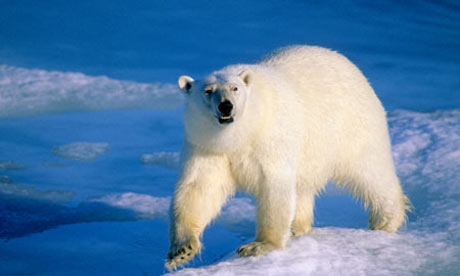
El informe, elaborado por Chatham House analistas, advierte: "Aparte de la emisión directa de contaminantes ... hay múltiples maneras en que los ecosistemas podrían ser perturbados". Foto: Alamy

El gremio de aseguradoras se une a los ambientalistas para poner de relieve los riesgos de la perforación en la frágil región en la cual se prevén inversiones por $ 100.000 millones de dólares

La londines Lloyd's, el mayor asegurador mundial del mercado, se ha convertido en la primera organización comercial importante en elevar su voz sobre la enorme daño ambiental potencial de la extracción de petróleo en el Ártico.

La institución de la City estima que $ 100 mil millones (£ 63 mil millones) de inversión nueva se dirigen hacia el norte durante la próxima década, pero cree que la limpieza de cualquier derrame de petróleo en el Ártico, especialmente en zonas cubiertas de hielo, se presentan "múltiples obstáculos, que juntos constituyen un riesgo único y difíciles de manejar-".

Richard Ward, director ejecutivo de Lloyd, instó a las empresas a "no precipitarse [sino que] den un paso atrás y piensen cuidadosamente acerca de las consecuencias de esa acción" antes de que la investigación se lleve a cabo y las medidas de seguridad apropiadas sean puestas en marcha.

Las preocupaciones principales, resumidas en un informe elaborado con la ayuda del centro de estudios Chatham House, ven como el futuro del Ártico es revisado por un comité de selecto de la Cámara de los Comunes tan sólo dos años después de la devastadora explosión de BP en el Golfo de México.

El extremo norte se ha convertido en un centro de atención comercial a medida que aumentan las temperaturas globales, haciendo que el hielo se derrita en una región que podría contener hasta un cuarto de las reservas mundiales de hidrocarburos restantes.

Cairn Energy y Shell se encuentran entre las compañías petroleras que han comenzado o están planeando nuevos pozos frente a las costas de lugares como Groenlandia y Canadá, mientras que Total - en la actualidad en medio de un problema con una fuga de gas del Mar del Norte - quiere desarrollar el campo Shtokman en Rusia.

Shtokman es el mayor potencial de un solo proyecto en el mar Ártico, 350 millas dentro de la parte controlada por Rusia del Mar de Barents, donde la inversión podría alcanzar los $ 50 mil millones.

Un consorcio liderado con BP está planeando gastar hasta $ 10 mil millones en el desarrollo de campos petroleros en tierra en la zona autónoma de Yamal-Nenets de Rusia, a pesar de sus experiencias con el derrame de petróleo de Macondo en las aguas relativamente benignas del Golfo de México. Una serie de planes de minería en tierra también están previstos, con Lakshmi Mittal, el hombre más rico de Gran Bretaña, con ganas de desarrollar una nueva mina a cielo abierto a 300 millas en el interior del Círculo Polar Ártico, en un intento de extraer hasta 14 mil millones de libras de mineral de hierro.

Pero el nuevo informe de Lloyd, escrito por Charles Emmerson y Glada Lahn de Chatham House, dice que es "altamente probable" que la actividad económica futura en el Ártico comprometa más a los ecosistemas ya alterados por las consecuencias del cambio climático.

"Los patrones de migración de los caribús y ballenas en las áreas costeras abiertas pueden verse afectados. Aparte de la emisión directa de contaminantes en el medio ambiente del Ártico, hay múltiples maneras en que los ecosistemas podrían ser alterados, tales como la construcción de gasoductos y carreteras, la contaminación acústica por la perforación dee las instalaciones marítimas, la actividad de prospección sísmica o de tráfico marítimo adicional, así como la ruptura del hielo marino. "

Los autores señalan que el Ártico no es uno sino varios ecosistemas, y es "altamente sensibles a los daños" que tendría un impacto a largo plazo. Están haciendo solicitando "conocimientos básicos sobre el medio natural y la vigilancia ambiental constante". Las fuentes de contaminación incluyen las minas, el petróleo y las instalaciones de gas, instalaciones industriales y, en la zona ártica de Rusia, los residuos nucleares de las instalaciones civiles y militares, y de pruebas de armas nucleares en Nueva Zembla. El informe destaca que un derrame de petróleo potencial como el "mayor riesgo en términos de daños al medio ambiente, los posibles costos y seguros" - pero dice que hay importantes vacíos de conocimiento en esta área.

Las tasas de biodegradación natural del petróleo en el Ártico se podría esperar que sea menor que en ambientes más templados, como el Golfo de México, aunque en la actualidad existe falta de comprensión de cómo el petróleo se degrada en el largo plazo en el Ártico. El hielo marino podría ayudar a algunas de las técnicas de respuesta a derrames de petróleo, como la quema in situ y la aplicación de dispersantes químicos, pero esto podría conducir a la contaminación del aire y la liberación de sustancias químicas en el medio marino, sin saber que el hielo se mueve con el tiempo se los llevará.

La falta de claridad de los límites legales planteados por un mosaico de regulaciones y de los gobiernos en el Ártico son un reto adicional. El informe de la Lloyd señala que no existe una responsabilidad internacional ni un régimen de compensación por los derrames de petróleo. Una propuesta de la UE en discusión se aplicará a los proyectos petroleros costa afuera en el territorio ártico de Noruega y Dinamarca, y posiblemente a todas las empresas de la UE en cualquier lugar en que operan.

Mientras tanto, un grupo de trabajo está en la elaboración de recomendaciones para el Consejo Intergubernamental del Ártico en un instrumento internacional sobre la contaminación marina por petróleo diseñada para acelerar el proceso de pagos de limpieza y la indemnización, que se estrenará el próximo año. Esto puede incluir una responsabilidad internacional y el instrumento de compensación. Groenlandia ha argumentado que "los distintos sistemas nacionales puede dar lugar a ambigüedades y retrasos innecesarios en las respuestas de contaminación por hidrocarburos y los pagos de compensación" y que todo régimen debe adaptarse a medida que la comprensión de la peor de los casos en los cambios en el Ártico.

El informe de la Lloyd dice que las "insuficiencias" de la compañía y del gobierno en el caso de un desastre se demostró después de la explosión de Macondo. "Una empresa más pequeña que BP, frente a un estimado de $ 40 mil millones en costos de limpieza e indemnizaciones, podría haber ido a la quiebra, dejando al Estado una factura a pagar", señala el informe.

Lloyd's dice que es fundamental que exista una mayor inversión en ciencia y la investigación para "cerrar las brechas de conocimiento, reducir la incertidumbre y manejar los riesgos". Se exige una inversión considerable en infraestructura y la vigilancia para que "la actividad económica segura" y argumenta que "las empresas deben llevar a cabo ejercicios a gran escala basados ​​en los peores escenarios de desastre ambiental".

El medio ambiente vulnerable del Ártico, el clima impredecible y la falta de un precedente sobre el cual basar las evaluaciones de costos han llevado a algunas organizaciones no gubernamentales ambientales para argumentar que ninguna compensación valdría la pena el riesgo de permitir que la perforación llegue a tener lugar en prístinas áreas del mar abiero. Otros están haciendo campaña por las regulaciones más estrictas y la eliminación del límite de responsabilidad para los inversores.


Ver el ebook "Polos Opuestos" de Terry Macalister en www.guardian.co.uk/info/2012/mar/14/arctic-ebook


Polos opuestos: Oportunidades y amenazas en el Ártico. libro electrónico

A medida que las grandes empresas compiten por ser las primeras en explotar los ricos recursos naturales del Ártico, ¿qué significa la industrialización del extremo norte significa para la región?

Este libro analiza las oportunidades comerciales que se esperan de las llanuras heladas del Ártico, junto con las amenazas que conllevan para el medio ambiente y los desafíos a la forma tradicional de vida de los pueblos indígenas de la región. Las frías aguas de Alaska, Siberia y Groenlandia han sido destinados para la exploración de nuevas energías. Se están preparando para la explotación mega-minas, tales como los depósitos de mineral de Mary River en Canadá y a 300 millas en el interior del Círculo Polar Ártico,.

Este es un tema que sólo puede volverse más títular y controversia, esta colección escrita por Tutor proporciona una visión general indispensable de un asunto cada vez más acuciante.

"La investigación de Terry Macalister detallada en los ensayos es una llamada real a las armas para aquellos conmocionados por la complacencia de nuestros líderes políticos y la incapacidad para detener el saqueo corporativo de los recursos naturales". Caroline Lucas MP

Polos opuestos: Oportunidades y amenazas en el Ártico está disponible para Kindle a un precio de £ 2.56 y como un iBook por £ 2.99.