Mostrando entradas con la etiqueta Golfo de México. Mostrar todas las entradas

lunes, 25 de noviembre de 2013

Alien Squid Footage Surfaces

(ANIMAL NEWS/OCEANS DISCOVERY) Rare video footage (from 2007) of an unusual squid has the Internet in a frenzy over alien conspiracy theories. The squid in question is a 26-foot-long Magnapinna squid, one of the most curious-looking ocean dwellers.

The squid was recorded by a remotely-operated underwater vehicle (ROV) in the Gulf of Mexico. The footage shows the rarely seen mysterious squid displaying its floor-length tentacles. Read on to find out more about this fascinating alien-like creature and watch the footage in the video clip below. — Global Animal
The Magnapinna squid was recorded by a remotely operated
underwater vehicle in the Gulf of Mexico. Photo credit: Shell Oil

Daily Mail, Victoria Woollaston

Lurking deep beneath the Gulf of Mexico is a species of squid that wouldn’t look out of place in a sci-fi thriller.

The Mangapinna squid, sometimes referred to as the bigfin or long-arm squid, is around 26ft in length with thin elastic tentacles thought to be between 15 to 20 times larger than the squid’s body.

Adult bigfins have never been captured or sampled but rare video footage recorded by the Shell Oil company reveals their alien-like behaviour.

The footage was captured using a remotely operated underwater vehicle known as an ROV.

Shell Oil, along with other companies, uses the vehicles to study the water around its oil rigs and this particular recording was filmed in the Gulf of Mexico in the Perdido Area of Alaminos Canyon.

The rare sighting of the squid was discovered at a depth of more than 7,800 ft back in November 2007.

Shell oil has a rig located 200 miles off the coast of Houston, Texas.

Mangapinna squids were first discovered in 1907 but it wasn’t until 1988 that the first footage of the bizarre creatures were caught on camera by a submersible off the coast of Brazil.

Ten years later a Japanese submersible called Shinkai 6500 filmed another long-armed squid in the Indian Ocean south of Mauritius.

Photo credit: Shell Oil
The majority of other sightings have been in various canyons in the Gulf of Mexico.

A squid spotted in 2000 was thought to have been around 23ft long.

However, more recent sightings have estimated lengths in excess of 26ft.

Aside from their overall lengths, the arms and the tentacles of the Mangapinna squid are the same length and look identical.

Squids traditionally have two shorter arms and eight longer tentacles.
These ten appendages of the Mangapinna are also often held at right angles to the body, or mantle, which gives them the appearance of having elbows.

The arms and tentacles are said to stretch up to 20 times longer than the mantle while the fins are larger than other species and in some sightings were around 90 per cent as big.

It is thought the squids use their long arms to grab or trap food along the floor of the ocean, although this has never been seen in action.

Watch the squid footage in the video below.


ORIGINAL: Global Animal
By Sonia Horon 
November 21, 2013

jueves, 26 de julio de 2012

The Long Shadow of the BP Oil Spill Keeps Killing Baby Birds

ORIGINAL: The Atlantic
Julie Dermansky
JUL 12 2012

A Louisiana official says the state's barrier islands are vanishing "like sugar in coffee." That's bad news for the waterfowl whose newly hatched chicks are being washed away.

This common tern chick was washed away by the rising tides of Hurricane Debbie. Many baby birds died during the storm.   Photo: The Atlantic. Julie Dermansky 
Two years after the BP oil spill, Louisiana is still grappling with its aftermath. I saw this firsthand during a recent visit to Cat Island, a barrier island in Plaquemeins Parrish. The oil spill killed the much of the vegetation that serves as a nesting ground for pelicans and other migrating waterfowl. 

A waterlogged barrier island East of Cat Island.   Photo: The Atlantic Julie Dermansky   
P.J. Hahn, coastal zone manager for Plaquemines Parish, prepares to take a sick egret to the Audubon Zoo to see if it can be saved.   Photo: The Atlantic Julie Dermansky   
Cat Island's mangrove forests used to be impenetrably dense. You can walk through them with little effort now. Most of the island is underwater. Tree roots used to prevent waves from sweeping away the sand that holds the sediment in place, but with the death of many trees and marsh grasses, there's little habitat left for the nesting birds.

Brown pelicans nestle among the mangrove trees. Photo: The Atlantic Julie Dermansky
According to P.J. Hahn, coastal zone manager for Plaquemines Parish, Cat Island is disappearing like sugar in coffee. The island rookery serves as a nesting ground to seagulls, spoonbills, and egrets, but it is primarily populated by brown pelicans, Louisiana's state bird. The bird was only recently taken off the endangered species list; now, tragically, its numbers will again dwindle. Hahn estimates that the island has shrunk from four acres to one since the 2010 oil spill.

A project to save Cat Island and Cat Island East will cost the parish at least $1.4 million. The plan is to fortify the island by adding landmass and mangrove trees and protect it with a new 40-acre circular barrier. Shell Oil will provide the bulk of the funding, and Hahn is still actively soliciting donations.

I joined Hahn as he took a geologist and a Manchac Consulting Group team out to survey the area before implementing their plans in September. After tropical storm Debbie blew over, Hahn found only one baby pelican on Cat Island East. The high waters had destroyed many of the nests, killing most of the newly hatched baby birds I had photographed the week before. If a hurricane hits the area this season, it is possible there will be nothing left to protect by the time the barrier is scheduled to be built.

On June 29, Congress passed the Restore Act, which earmarks 80 percent of BP's Clean Water Act fines for Gulf Coast restoration. The federal penalties BP faces range from $5 billion to $20 billion, according to the Times Picayune. Even though the president signed the bill quickly, the funds will come too late to save many birds. But perhaps they will jump-start the fight against coastal erosion elsewhere.

A nest is inundated by the rising waters. Photo: The Atlantic Julie Dermansky
The brown pelican, Louisiana's state bird, was only recently taken off the endangered species list. Because of the erosion of these sanctuaries, it may soon end up there again. Photo: The Atlantic Julie Dermansky
Reddish egrets find sanctuary among the thinning reeds.   Photo: The Atlantic Julie Dermansky   
A great egret perches on a high branch. Photo: The Atlantic Julie Dermansky
Baby great egrets huddle together in a nest. Cat Island has been named a bird sanctuary and is a nesting ground for many types of migrating water fowl.    Photo: The Atlantic Julie Dermansky
Baby great egrets huddle together in a nest. Cat Island has been named a bird sanctuary and is a nesting ground for many types of migrating water fowl.

domingo, 8 de julio de 2012

Navy to deafen 15,900 whales and dolphins and kill 1,800 more

By Lyndia Storey (Contact)

To be delivered to: U.S. Navy EIS Comments
Stop the killing of 1,800 whales and dolphins and the deafening of 15,900 more by ceasing the operation of the Navy's underwater sound system in the Hawaiian Islands, the California and Atlantic Coasts, and the Gulf of Mexico.

The Navy is required to include comments on their Environmental Impact Statement (EIS) re: the use of high frequency underwater sound for testing in Hawaii, the California and Atlantic Coasts, and the Gulf of Mexico. According to their estimates it will deafen more than 15,900 whales and dolphins and kill 1,800 more over the next 5 years. Whales and dolphins depend on sound to navigate and live. Your signature and comment will have to be included in the EIS and could stop this Naval program, potentially saving the lives of these ocean creatures. The comments must be in by July 10, 2012.


NEW goal - We need 375,000 signatures
There are currently 373,920 signatures

viernes, 6 de julio de 2012

Help Protect Delicate Dwarf Seahorses


SAVING THE DWARF SEAHORSE

Photo courtesy of Jeff Jeffords,
With adults only about an inch tall, the dwarf seahorse is the smallest of the four seahorse species found in U.S. waters. This dainty, curly-tailed fish occurs only in shallow seagrass areas in the Gulf of Mexico, along the Atlantic Coast of Florida and in the Caribbean. Unfortunately, this seahorse now faces numerous threats to its existence, and the best available science shows that it’s in decline. Widespread loss of the species’ seagrass habitat due to pollution, damage from boats and trawls and global warming is hurting the minuscule creature — which is further endangered by collection for use in the aquarium trade, as curios, and for prepackaged traditional medicines. After the catastrophic 2010 Gulf of Mexico oil spill degraded much of its range, this seahorse is more threatened than ever and could disappear forever without the protection of the Endangered Species Act.

Soon after the Deepwater Horizon oil spill, the Center leapt into action to fight dangerous offshore oil drilling that threatens the survival of the dwarf seahorse and countless other animal and plant species. A year later, with pollution still persisting in the Gulf and the seahorse in dangerous decline, we filed a scientific petition to federally protect the species. In 2012, the National Marine Fisheries Service announced that the dwarf seahorse may warrant protection.

Seahorses’ unique life-history characteristics and habitat specificity make them particularly vulnerable when faced with exploitation and habitat degradation. Seahorses have elaborate social and reproductive behaviors, with males giving live birth and partners forming monogamous bonds that are reinforced each morning with a greeting ritual. The imperiled dwarf seahorse is too special to abandon to extinction.

In response to a petition from the Center for Biological Diversity, the National Marine Fisheries Service has agreed that the dwarf seahorse may warrant protection under the Endangered Species Act and was accepting comments until July 3 before making a decision. We will compile and submit these comments then, but please continue to sign and share after this comment period because it's important to show the decision makers that people are keeping an eye on this issue.

The smallest seahorse in America, the dwarf seahorse faces big problems:
  • water quality degradation in the Gulf of Mexico, 
  • pollution from the Deepwater Horizon oil spill and cleanup and, 
  • most importantly, loss of their seagrass habitat.
Dwarf seahorses are habitat specialists, so as seagrasses disappear the seahorses vanish with them. More than 50 percent of Florida seagrasses have been destroyed since 1950, and in some areas losses are as steep as 90 percent. These one-inch-long fish are not the only wildlife that depends on seagrass to survive, but they are the cutest.

Dwarf seahorses form monogamous pair bonds, and every morning they meet to perform a greeting dance. As with other seahorses, females place scores of eggs inside the males’ pouches, and the males then give birth to even tinier versions of adults. Boat propellers, shrimp trawlers and ocean acidification are all harming the seagrass these delicate animals need to survive.

Please take a moment right now to write to the Fisheries Service and tell it to grant dwarf seahorses the protection they so dearly need. 

You can learn more about dwarf seahorses and the challenges they face here . Photo courtesy of Jeff Jeffords, find more at divegallery.com .


Why People Are Signing

Grant Dwarf Seahorses Protection, Doc ID: NOAA-NMFS-2012-0101-0001

Greetings,

I am writing to express my support for protecting the dwarf seahorse under the Endangered Species Act, our nation’s most powerful law for protecting wildlife. Only an inch long, these seahorses are the smallest in the United States and are a unique part of our natural heritage -- one that is now hanging on by a thread.

Because they are habitat specialists, the dwarf seahorses’ fate is directly tied to the seagrass habitat they depend on to survive. Find one in the Gulf fof Mexico, and you find the other; but since 1950 Florida has lost more than half its seagrass habitat, with losses in some areas surpassing 90 percent. There has also been dramatic seagrass loss in Alabama, Mississippi, Louisiana, Texas and the Bahamas. 

Dwarf seahorses and seagrass -- already in decline before the 2010 Deepwater Horizon oil spill -- have been pushed to the brink by the oil and toxic dispersants used in the cleanup. Pollution from the spill continues to linger and impede recovery.

The seahorses’ seagrass habitat is threatened by declining water quality, damage from boat propellers and shrimp trawlers, and ocean acidification from global climate change. The fish are directly threatened by collectors who capture them for sale in the aquarium trade, as curios and as traditional medicine.

Dwarf seahorses are a national treasure and an important component of our coastal ecosystems. Please ensure their survival and grant them the protections they need to recover and thrive.

Thank you for your consideration.

miércoles, 16 de mayo de 2012

BP Oil Spill Photos Posted By Greenpeace Following Freedom Of Information Request

ORIGINAL: HuffingtonPost
05/08/2012


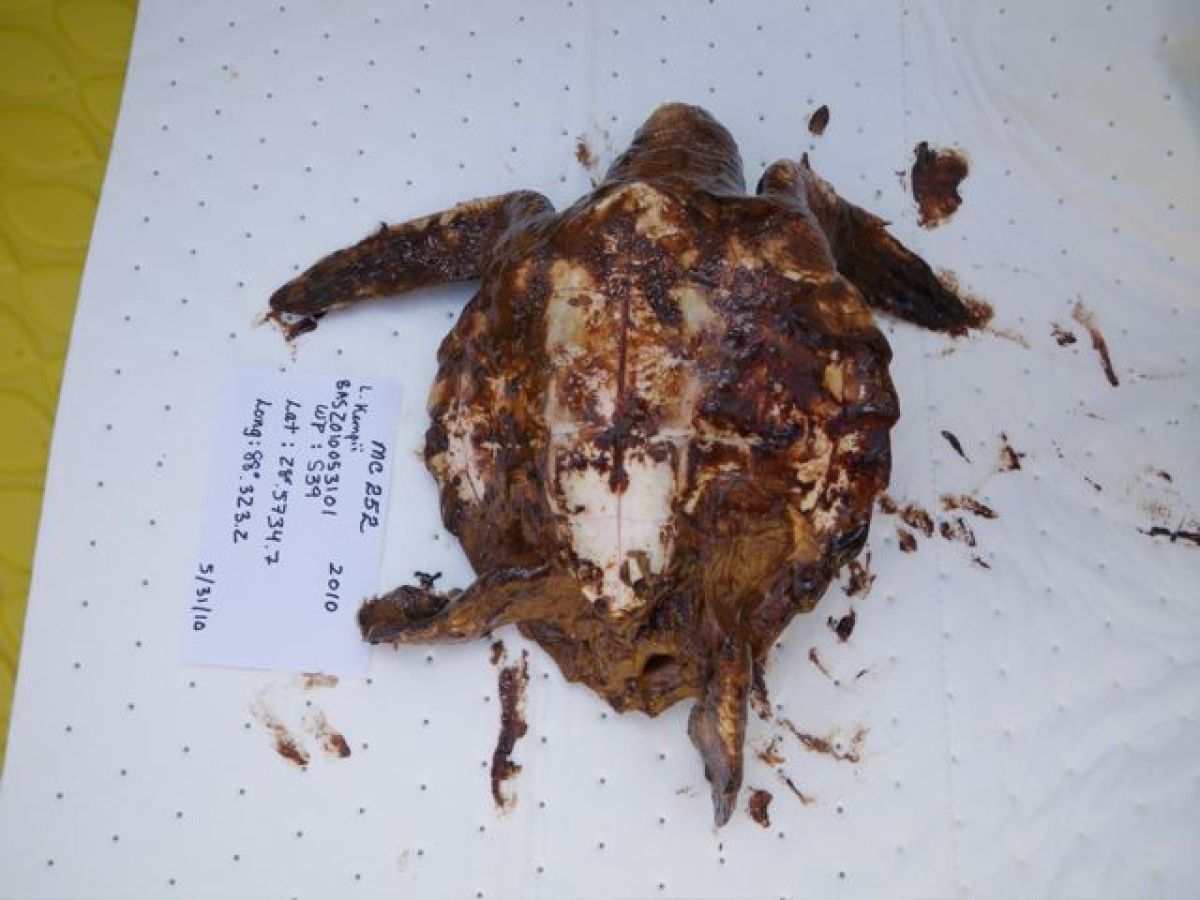
BP oil spill wreaked havoc on the Gulf, Greenpeace has received photos of the destruction inflicted on marine life in the area.

According to a Greenpeace press release, the environmental group filed a Freedom of Information request in 2010 for the photos -- their request was one of over 50 FOIA requests submitted by Greenpeace to various agencies regarding the oil spill.

The spill occurred after an explosion on the Deepwater Horizon drilling rig killed 11 workers on April 20, 2010. Far surpassing BP's initial estimates, about 50,000 barrels per day flowed from the well over the course of three months, according to a government-organized scientific team.

The Greenpeace press release states that the photos, many focused on oil-covered sea turtles, "appear to be part of the effort to collect evidence for the prosecution of BP and others."

The trial to assign damages for the oil spill has been delayed until January 2013. Last month, former BP engineer Kurt Mix became the first to face criminal charges from the disaster. HuffPost's John Rudolf reported that more arrests related to spill estimates are likely, according to legal experts.

The Deepwater Horizon Natural Resource Damage Assessment (NRDA) Trustee Council recently announced that they were kicking off a $60 million series of early restoration projects along the Gulf Coast.

Of the five turtle species in the Gulf of Mexico, four are endangered and the fifth species is threatened.

Greenpeace's John Hocevar stated in the organization's press release, "While the White House was trying to keep the emphasis on rosy stories of rescued animals being released back into the wild, they were sitting on these images of garbage bags full of Kemp’s Ridley sea turtles.


BP Oil Spill

1 of 35