Mostrando entradas con la etiqueta mobile. Mostrar todas las entradas

miércoles, 15 de marzo de 2017

The future of AI is neuromorphic. Meet the scientists building digital 'brains' for your phone

Neuromorphic chips are being designed to specifically mimic the human brain – and they could soon replace CPUs
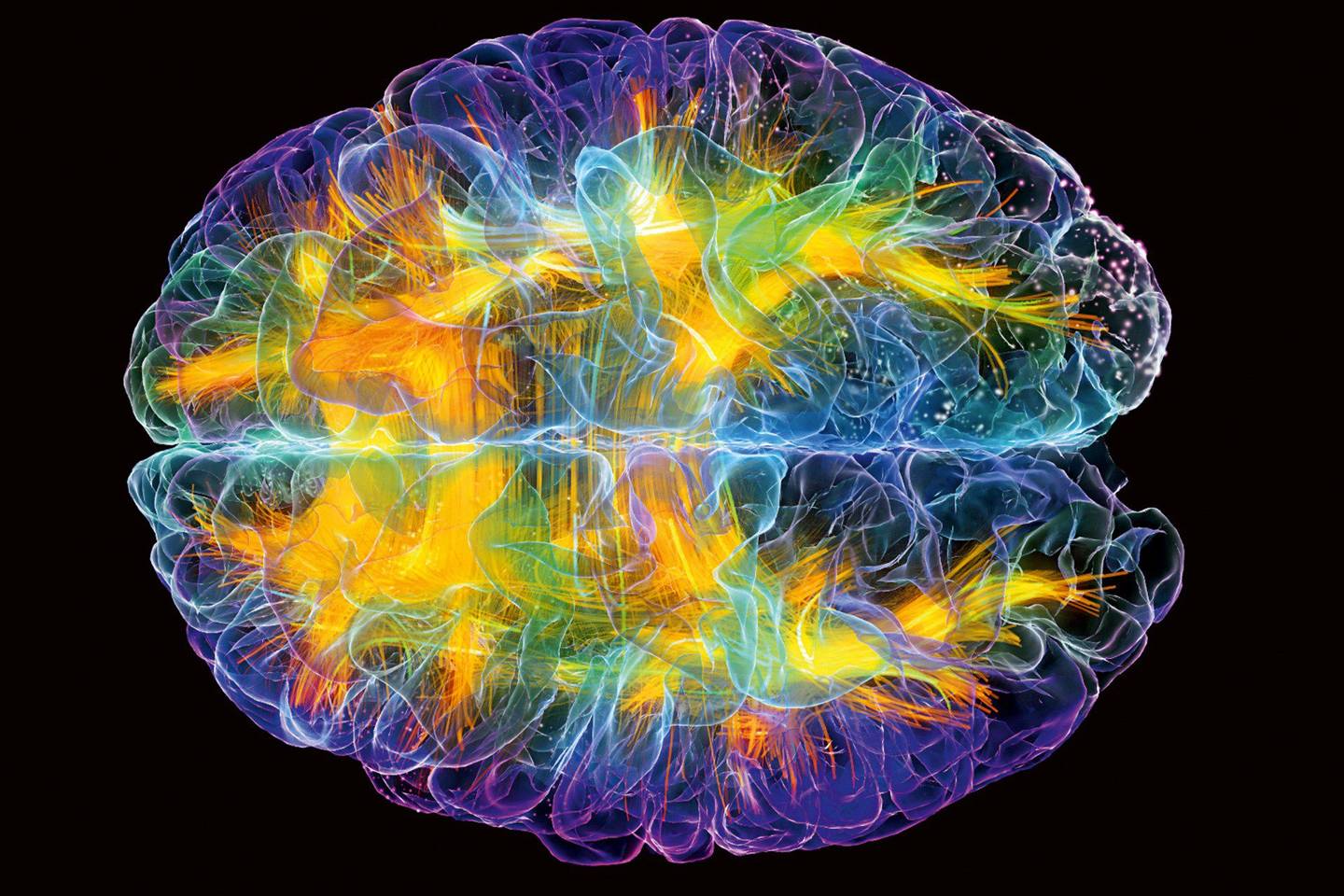
BRAIN ACTIVITY MAP
Neuroscape Lab
AI services like Apple’s Siri and others operate by sending your queries to faraway data centers, which send back responses. The reason they rely on cloud-based computing is that today’s electronics don’t come with enough computing power to run the processing-heavy algorithms needed for machine learning. The typical CPUs most smartphones use could never handle a system like Siri on the device. But Dr. Chris Eliasmith, a theoretical neuroscientist and co-CEO of Canadian AI startup Applied Brain Research, is confident that a new type of chip is about to change that.

Many have suggested Moore's law is ending and that means we won't get 'more compute' cheaper using the same methods,” Eliasmith says. He’s betting on the proliferation of ‘neuromorphics’ — a type of computer chip that is not yet widely known but already being developed by several major chip makers.

Traditional CPUs process instructions based on “clocked time” – information is transmitted at regular intervals, as if managed by a metronome. By packing in digital equivalents of neurons, neuromorphics communicate in parallel (and without the rigidity of clocked time) using “spikes” – bursts of electric current that can be sent whenever needed. Just like our own brains, the chip’s neurons communicate by processing incoming flows of electricity - each neuron able to determine from the incoming spike whether to send current out to the next neuron.

What makes this a big deal is that these chips require far less power to process AI algorithms. For example, one neuromorphic chip made by IBM contains five times as many transistors as a standard Intel processor, yet consumes only 70 milliwatts of power. An Intel processor would use anywhere from 35 to 140 watts, or up to 2000 times more power.

Eliasmith points out that neuromorphics aren’t new and that their designs have been around since the 80s. Back then, however, the designs required specific algorithms be baked directly into the chip. That meant you’d need one chip for detecting motion, and a different one for detecting sound. None of the chips acted as a general processor in the way that our own cortex does.

This was partly because there hasn’t been any way for programmers to design algorithms that can do much with a general purpose chip. So even as these brain-like chips were being developed, building algorithms for them has remained a challenge.

Eliasmith and his team are keenly focused on building tools that would allow a community of programmers to deploy AI algorithms on these new cortical chips.

Central to these efforts is Nengo, a compiler that developers can use to build their own algorithms for AI applications that will operate on general purpose neuromorphic hardware. Compilers are a software tool that programmers use to write code, and that translate that code into the complex instructions that get hardware to actually do something. What makes Nengo useful is its use of the familiar Python programming language – known for it’s intuitive syntax – and its ability to put the algorithms on many different hardware platforms, including neuromorphic chips. Pretty soon, anyone with an understanding of Python could be building sophisticated neural nets made for neuromorphic hardware.

Things like vision systems, speech systems, motion control, and adaptive robotic controllers have already been built with Nengo,Peter Suma, a trained computer scientist and the other CEO of Applied Brain Research, tells me.

Perhaps the most impressive system built using the compiler is Spaun, a project that in 2012 earned international praise for being the most complex brain model ever simulated on a computer. Spaun demonstrated that computers could be made to interact fluidly with the environment, and perform human-like cognitive tasks like recognizing images and controlling a robot arm that writes down what it’s sees. The machine wasn’t perfect, but it was a stunning demonstration that computers could one day blur the line between human and machine cognition. Recently, by using neuromorphics, most of Spaun has been run 9000x faster, using less energy than it would on conventional CPUs – and by the end of 2017, all of Spaun will be running on Neuromorphic hardware.


Eliasmith won NSERC’s John C. Polyani award for that project — Canada’s highest recognition for a breakthrough scientific achievement – and once Suma came across the research, the pair joined forces to commercialize these tools.

While Spaun shows us a way towards one day building fluidly intelligent reasoning systems, in the nearer term neuromorphics will enable many types of context aware AIs,” says Suma. Suma points out that while today’s AIs like Siri remain offline until explicitly called into action, we’ll soon have artificial agents that are ‘always on’ and ever-present in our lives.

Imagine a SIRI that listens and sees all of your conversations and interactions. You’ll be able to ask it for things like - "Who did I have that conversation about doing the launch for our new product in Tokyo?" or "What was that idea for my wife's birthday gift that Melissa suggested?,” he says.

When I raised concerns that some company might then have an uninterrupted window into even the most intimate parts of my life, I’m reminded that because the AI would be processed locally on the device, there’s no need for that information to touch a server owned by a big company. And for Eliasmith, this ‘always on’ component is a necessary step towards true machine cognition. “The most fundamental difference between most available AI systems of today and the biological intelligent systems we are used to, is the fact that the latter always operate in real-time. Bodies and brains are built to work with the physics of the world,” he says.

Already, major efforts across the IT industry are heating up to get their AI services into the hands of users. Companies like Apple, Facebook, Amazon, and even Samsung, are developing conversational assistants they hope will one day become digital helpers.

ORIGINAL: Wired
Monday 6 March 2017

miércoles, 1 de marzo de 2017

Google Unveils Neural Network with “Superhuman” Ability to Determine the Location of Almost Any Image

Guessing the location of a randomly chosen Street View image is hard, even for well-traveled humans. But Google’s latest artificial-intelligence machine manages it with relative ease.
Here’s a tricky task. Pick a photograph from the Web at random. Now try to work out where it was taken using only the image itself. If the image shows a famous building or landmark, such as the Eiffel Tower or Niagara Falls, the task is straightforward. But the job becomes significantly harder when the image lacks specific location cues or is taken indoors or shows a pet or food or some other detail.

Nevertheless, humans are surprisingly good at this task. To help, they bring to bear all kinds of knowledge about the world such as the type and language of signs on display, the types of vegetation, architectural styles, the direction of traffic, and so on. Humans spend a lifetime picking up these kinds of geolocation cues.

So it’s easy to think that machines would struggle with this task. And indeed, they have.

Today, that changes thanks to the work of Tobias Weyand, a computer vision specialist at Google, and a couple of pals. These guys have trained a deep-learning machine to work out the location of almost any photo using only the pixels it contains.

Their new machine significantly outperforms humans and can even use a clever trick to determine the location of indoor images and pictures of specific things such as pets, food, and so on that have no location cues.

Their approach is straightforward, at least in the world of machine learning. 
  • Weyand and co begin by dividing the world into a grid consisting of over 26,000 squares of varying size that depend on the number of images taken in that location.
    So big cities, which are the subjects of many images, have a more fine-grained grid structure than more remote regions where photographs are less common. Indeed, the Google team ignored areas like oceans and the polar regions, where few photographs have been taken.

  • Next, the team created a database of geolocated images from the Web and used the location data to determine the grid square in which each image was taken. This data set is huge, consisting of 126 million images along with their accompanying Exif location data.
  • Weyand and co used 91 million of these images to teach a powerful neural network to work out the grid location using only the image itself. Their idea is to input an image into this neural net and get as the output a particular grid location or a set of likely candidates. 
  • They then validated the neural network using the remaining 34 million images in the data set. 
  • Finally they tested the network—which they call PlaNet—in a number of different ways to see how well it works.
The results make for interesting reading. To measure the accuracy of their machine, they fed it 2.3 million geotagged images from Flickr to see whether it could correctly determine their location. “PlaNet is able to localize 3.6 percent of the images at street-level accuracy and 10.1 percent at city-level accuracy,” say Weyand and co. What’s more, the machine determines the country of origin in a further 28.4 percent of the photos and the continent in 48.0 percent of them.

That’s pretty good. But to show just how good, Weyand and co put PlaNet through its paces in a test against 10 well-traveled humans. For the test, they used an online game that presents a player with a random view taken from Google Street View and asks him or her to pinpoint its location on a map of the world.

Anyone can play at www.geoguessr.com. Give it a try—it’s a lot of fun and more tricky than it sounds.
GeoGuesser Screen Capture Example

Needless to say, PlaNet trounced the humans. “In total, PlaNet won 28 of the 50 rounds with a median localization error of 1131.7 km, while the median human localization error was 2320.75 km,” say Weyand and co. “[This] small-scale experiment shows that PlaNet reaches superhuman performance at the task of geolocating Street View scenes.

An interesting question is how PlaNet performs so well without being able to use the cues that humans rely on, such as vegetation, architectural style, and so on. But Weyand and co say they know why: "We think PlaNet has an advantage over humans because it has seen many more places than any human can ever visit and has learned subtle cues of different scenes that are even hard for a well-traveled human to distinguish.

They go further and use the machine to locate images that do not have location cues, such as those taken indoors or of specific items. This is possible when images are part of albums that have all been taken at the same place. The machine simply looks through other images in the album to work out where they were taken and assumes the more specific image was taken in the same place.

That’s impressive work that shows deep neural nets flexing their muscles once again. Perhaps more impressive still is that the model uses a relatively small amount of memory unlike other approaches that use gigabytes of the stuff. “Our model uses only 377 MB, which even fits into the memory of a smartphone,” say Weyand and co.

That’s a tantalizing idea—the power of a superhuman neural network on a smartphone. It surely won’t be long now!

Ref: arxiv.org/abs/1602.05314 : PlaNet—Photo Geolocation with Convolutional Neural Networks

ORIGINAL: TechnoplogyReview
by Emerging Technology from the arXiv
February 24, 2016

viernes, 3 de julio de 2015

One of the Most Important Tools in Science Now Fits Inside Your Phone

A spectrometer that fits in your mobile devices could let you scan yourself for skin cancer.

Illustration by Mary O'Reilly
We use them to spy on exoplanets, diagnose skin-cancer, and ID the makeup of unknown chemicals. They're on NASA spacecraft flying around Saturn's moons right now. Yes, right alongside the microscope, the optical spectrometeran instrument that breaks down the light that something reflects or emits, telling you what its made of—is one of the most ubiquitous tools in all of science. Today, Jie Bao, a physicist at Tsinghua University in Beijing, China, has just discovered a fascinating way to make them smaller, lighter, and less expensive than we ever thought possible.

By using tiny amounts of strange, light-sensitive inks, Bao and his colleague Moungi Bawendi—a chemist at MIT—have designed a working spectrometer that's small enough to fit on your smartphone. Because of the tool's simple design and its need for only an incredibly small amount of the inks, Bao says, his spectrometer only requires a few dollars worth of materials to make. They report the research today in the journal Nature.

"THAT'S WHAT I'M REALLY HOPING FOR, SEEING THEM IN CELLPHONES IN THE VERY NEAR FUTURE."

"Of course we still have a lot of room for improvement. But performance-wise, even at this preliminary stage, our spectrometer works very close to what's currently being sold in the market," Bao says. "I think that's one of the most attractive results of our research: [This spectrometer] is already so close to a real product."

Printable Detectors
The way spectrometers work goes back to the 17th century, when Issac Newton showed that a prism could break up white light into distinct bars (technically wavelengths) of different colored light. Depending on the source of the light—say, a candle or the sun—that rainbow spectrum would change. Today, we know this happens because the atomic or molecular makeup of everything that either gives off or reflects light leaves an indelible fingerprint. And if you understand which materials leave which fingerprints, you can use light alone to find out what something is made of.

Bao says most modern spectrometers are made in more or less the same way. They diffract incoming light, then push it through a mechanically movable slit to see which exactly which wavelengths of light fit through which slits. This setup, because it involves complex moving pieces, is a total pain to shrink down in size. It's expensive, too, because accurate spectrometers require high-precision components and delicate alignment.
Jie Bao
But Bao's spectrometer works in a much simpler way. As if making micro-sized stained glass windows, Bao prints a tiny grid of 195 different-colored liquid inks directly onto a flat sensor. (That sensor, called a CCD sensor, is what your phone's camera uses to pick up light.) Each of the 195 windows is made of a material called colloidal quantum dots, and each "absorbs certain wavelengths of light, and lets others go," says Bao. When light hits each window and travels through, the underlying sensor records how the light changed. Later, a computer can compare the data from all of the windows and reconstruct what wavelengths made up the original light.

Cellphone Spectrometers
Right now, Bao's spectrometer is about the size of a quarter, and he says the underlying CCD sensors he uses can be bought online for less than a dollar a pop. Because he's using just a tiny drop of each of the colloidal quantum dot inks (which have only recently been developed) the cost all 195 drops is only on the order of a few dollars.

"THE PEOPLE WHO ARE PLANNING SPACE MISSIONS ARE WEIGHING EVERY GRAM."

Because spectrometers are so widely used in science, Bao sees a rainbow of possible uses for his new device. For one, he says, his spectrometers could be easily integrated into commercial smartwatches and phones, allowing everyday people to do things like self-identify skin cancer. "That's what I'm really hoping for, seeing them in cellphones in the very near future," he says.

And because spectrometers are so widely used on exploratory spacecraft, Bao sees an easier and far cheaper way to deck out the next generation of space explorers. "The people who are planning space missions are pretty much weighing every gram, and so this would be a very easy way to lose weight."

Jul 1, 2015 

domingo, 17 de mayo de 2015

Silicon Chips That See Are Going to Make Your Smartphone Brilliant

Many gadgets will be able to understand images and video thanks to chips designed to run powerful artificial-intelligence algorithms.

WHY IT MATTERS
Many applications for mobile computers could be more powerful with advanced image recognition.

Many of the devices around us may soon acquire powerful new abilities to understand images and video, thanks to hardware designed for the machine-learning technique called deep learning.

Companies like Google have made breakthroughs in image and face recognition through deep learning, using giant data sets and powerful computers (see “10 Breakthrough Technologies 2013: Deep Learning”). Now two leading chip companies and the Chinese search giant Baidu say hardware is coming that will bring the technique to phones, cars, and more.

Chip manufacturers don’t typically disclose their new features in advance. But at a conference on computer vision Tuesday, Synopsys, a company that licenses software and intellectual property to the biggest names in chip making, showed off a new image-processor core tailored for deep learning. It is expected to be added to chips that power smartphones, cameras, and cars. The core would occupy about one square millimeter of space on a chip made with one of the most commonly used manufacturing technologies.

Pierre Paulin, a director of R&D at Synopsys, told MIT Technology Review that the new processor design will be made available to his company’s customers this summer. Many have expressed strong interest in getting hold of hardware to help deploy deep learning, he said.

Synopsys showed a demo in which the new design recognized speed-limit signs in footage from a car. Paulin also presented results from using the chip to run a deep-learning network trained to recognize faces. It didn’t hit the accuracy levels of the best research results, which have been achieved on powerful computers, but it came pretty close, he said. “For applications like video surveillance it performs very well,” he said. The specialized core uses significantly less power than a conventional chip would need to do the same task.

The new core could add a degree of visual intelligence to many kinds of devices, from phones to cheap security cameras. It wouldn’t allow devices to recognize tens of thousands of objects on their own, but Paulin said they might be able to recognize dozens.

That might lead to novel kinds of camera or photo apps. Paulin said the technology could also enhance car, traffic, and surveillance cameras. For example, a home security camera could start sending data over the Internet only when a human entered the frame. “You can do fancier things like detecting if someone has fallen on the subway,” he said.

Jeff Gehlhaar, vice president of technology at Qualcomm Research, spoke at the event about his company’s work on getting deep learning running on apps for existing phone hardware. He declined to discuss whether the company is planning to build support for deep learning into its chips. But speaking about the industry in general, he said that such chips are surely coming. Being able to use deep learning on mobile chips will be vital to helping robots navigate and interact with the world, he said, and to efforts to develop autonomous cars.

I think you will see custom hardware emerge to solve these problems,” he said. “Our traditional approaches to silicon are going to run out of gas, and we’ll have to roll up our sleeves and do things differently.” Gehlhaar didn’t indicate how soon that might be. Qualcomm has said that its coming generation of mobile chips will include software designed to bring deep learning to camera and other apps (see “Smartphones Will Soon Learn to Recognize Faces and More”).

Ren Wu, a researcher at Chinese search company Baidu, also said chips that support deep learning are needed for powerful research computers in daily use. “You need to deploy that intelligence everywhere, at any place or any time,” he said.

Being able to do things like analyze images on a device without connecting to the Internet can make apps faster and more energy-efficient because it isn’t necessary to send data to and fro, said Wu. He and Qualcomm’s Gehlhaar both said that making mobile devices more intelligent could temper the privacy implications of some apps by reducing the volume of personal data such as photos transmitted off a device.

You want the intelligence to filter out the raw data and only send the important information, the metadata, to the cloud,” said Wu.


ORIGINAL: Tech Review
May 14, 2015

viernes, 21 de noviembre de 2014

Pathway Genomics: Bringing Watson’s Smarts to Personal Health and Fitness

Michael Nova, Chief Medical Officer, Pathway Genomics
To describe me as a health nut would be a gross understatement. I run five days a week, bench press 275 pounds, do 120 pushups at a time, and surf the really big waves in Indonesia. I don’t eat red meat, I typically have berries for breakfast and salad for dinner, and I consume an immense amount of kale—even though I don’t like the way it tastes. My daily vitamin/supplement regimen includes Alpha-lipoic acid, Coenzyme Q and Resveratrol. And, yes, I wear one of those fitness gizmos around my neck to count how many steps I take in a day.

I have been following this regimen for years, and it’s an essential part of my life.

For anybody concerned about health, diet and fitness, these are truly amazing times. There’s a superabundance of health and fitness information published online. We’re able to tap into our electronic health records, we can measure just about everything we do physically, and, thanks to the plummeting price of gene sequencing, we can map our complete genomes for as little as $3000 and get readings on smaller chunks of genomic data for less than $100.

Think of it as your own personal health big-data tsunami.

The problem is we’re confronted with way too much of a good thing. There’s no way an individual like me or you can process all of the raw information that’s available to us—much less make sense out of it. That’s why I’m looking forward to being one of the first customers for a new mobile app that my company, Pathway Genomics, is developing with help from IBM Watson Group.

Surfing in Indonesia
Called Pathway Panorama, the smartphone app will make it possible for individuals to ask questions in everyday language and get answers in less than three seconds that take into consideration their personal health, diet and fitness scenarios combined with more general information. The result is recommendations that fit each of us like a surfer’s wet suit. Say you’ve just flown from your house on the coast to a city that’s 10,000 feet above sea level. You might want to ask how far you could safely run on your first day after getting off the plane—and at what pulse rate should you slow your jogging pace.

Or say you’re diabetic and you’re in a city you have never visited before. You had a pastry for breakfast and you want to know when you should take your next shot of insulin. In an emergency, you’ll be able to find specialized healthcare providers near where you are who can take care of you.

Whether you’re totally healthy and want to maximize your physical performance or you have health issues and want to reduce risks, this service will give you the advice you need. It’s like a guardian angel sitting on your shoulder who will also pre-emptively offer you help even if you don’t ask for it.

We use Watson’s language processing and cognitive abilities and combine them with information from a host of sources. The critical data comes from individual 
DNA and biomarker analysis that Pathway Genomics performs using a variety of devices and software tools.

Pathway Genomics, which launched 6 years ago in San Diego, already has a growing business of providing individual health reports delivered primarily through individuals’ personal physicians. With our Pathway Panorama app, we’ll reach out directly to consumers in a big way.

We’re in the middle of raising a new round of venture financing to pay for the expansion of our business. This brings to $80 million the amount of venture capital we have raised in the past six years—which makes us one of the best capitalized healthcare startups.

IBM is investing in Pathway Genomics as part of its commitment of $100 million to companies that are bringing to market a new generation of apps and services infused with Watson’s cognitive computing intelligence. This is the third such investment IBM has made this year.

We expect the app to be available in midi2015. We have not yet set pricing, but we expect to charge a small monthly fee. We also are creating a version for physicians.

To me, the real beauty of the Panorama app is that it will make it possible for us to safeguard our health and improve our fitness without obsessing all the time. We’ll just live our lives, and, when we need help, we’ll get it.

——-

To learn more about the new era of computing, read Smart Machines: IBM’s Watson and the Era of Cognitive Computing.

ORIGINAL: A Smarter Planet
November, 12th 2014
By Michael Nova M.D.

lunes, 28 de mayo de 2012

How To Reduce The Cancer-Causing Effects of Mobile Phones

ORIGINAL: Wakeup World
27th May 2012

Ever since the World Health Organization admitted in 2011 that cell phone radiation is “possibly carcinogenic,” and may be contributing to the global uptick in brain cancer cases, its far harder to label someone a hypochondriac for being concerned about the health consequences of exposure.

In fact, one study cited in their report showed a 40% increased risk for gliomas in the highest category of heavy users (reported average: 30 minutes per day over a 10-year period) – not exactly a small effect. [i]

A recent study published in the journal Cellular and Molecular Neurobiology confirms that the microwave radiation given off by mobile phones is capable of transforming normal cells into cancerous ones.

Titled “Cellular Neoplastic Transformation Induced by 916 MHz Microwave Radiation,” researchers exposed fibroblast cells, a connective tissue-producing type of cell, to 916 MHz electromagnetic frequencies (which have already been shown to alter brain biomolecules), and found that after 5-8 weeks exposure they changed their form and rate of proliferation to a cancerous phenotype. These cells were also found to be tumor-forming when transplanted into mice.

What You Can Do To Protect Yourself
Realistically, most people reading this article will not be decommissioning their iphones or androids anytime soon. These devices enable us to stay closely connected to our loved ones, as well as to connect to the global brain which is the internet. But what this research does implore us to do is to exercise caution. Here are a few steps to take to reduce exposure: 
Wear a headset or earphones to keep the device as far away from your head and/or other vital organs as possible. 
  • Turn the device off whenever it is not being used. 
  • If you are a heavy user, consider incorporating one of the following proven cell-phone radiation mitigating substances: 
    • Bee Propolis – A compound found within bee propolis, which is like the mortar the bees use to repair and maintain the structural integrity of their hive, known as caffeic acid phenethyl ester (CAPE), has been experimentally tested to protect the kidneys, hearts and retinas of cell-phone exposed mice. Our bee propolis research page actually lists 12 studies on its radioprotective properties, including protecting against diagnostic and/or “therapeutic” (e.g. radiotherapy) gamma-radiation. 
    • Melatonin – Melatonin is released during deep, restful sleep – which is always the best way to obtain this natural protective secretion. Melatonin has been studied for its ability to protect against cell-phone induced retinal and kidney damage. Like propolis, melatonin has also been shown to have powerful radioprotective properties against gamma-radiation induced oxidative stress and tissue injury. 
    • EGCG (green tea polyphenol) – Green tea contains a potent antioxidant known as EGCG (epigallocatechin-gallate) and which has been shown to protect the liver against mobile-phone induced radiation damage
    • Ginkgo Biloba – This plant never ceases to amaze. Not only is it the oldest living plant (a “living fossil”) known to man, but it seems to provide a broad range of benefits to brain and cognitive health. It has been experimentally confirmed to prevent mobile-phone induced oxidative stress in the rat brain. 
    • N-acetyl-cysteine (NAC) – NAC is the the precursor to glutathione, a powerful cell-protective antioxidant that your body produces, given it has adequate cofactors available. It has been shown to protect the liver against mobile-phone induced damage. 
For additional tips, read contributing writer, Susan Calabro’s nifty article titled “4-Acupuncture-Inspired Ways to Stop Neurotic Phone Checking

For those interested in learning more about the plausible mechanism through which cell phones cause brain cancer, listen to Dr. Chris Busby’s explanation:

About the Author
greenmedinfo
Sayer Ji is the founder and chair of GreenMedInfo.com. His writings and research has been published in the Wellbeing Journal, the Journal of Gluten Sensitivity, and have been featured on Reuters, Mercola.com, NaturalNews.com, Infowars.com, GaryNull.com, Care2.com. His critically acclaimed essay series The Dark Side of Wheat opens up a new perspective on the universal, human-species specific toxicity of wheat, and is now available for PDF download.