Mostrando entradas con la etiqueta Smartphone. Mostrar todas las entradas

miércoles, 15 de marzo de 2017

The future of AI is neuromorphic. Meet the scientists building digital 'brains' for your phone

Neuromorphic chips are being designed to specifically mimic the human brain – and they could soon replace CPUs
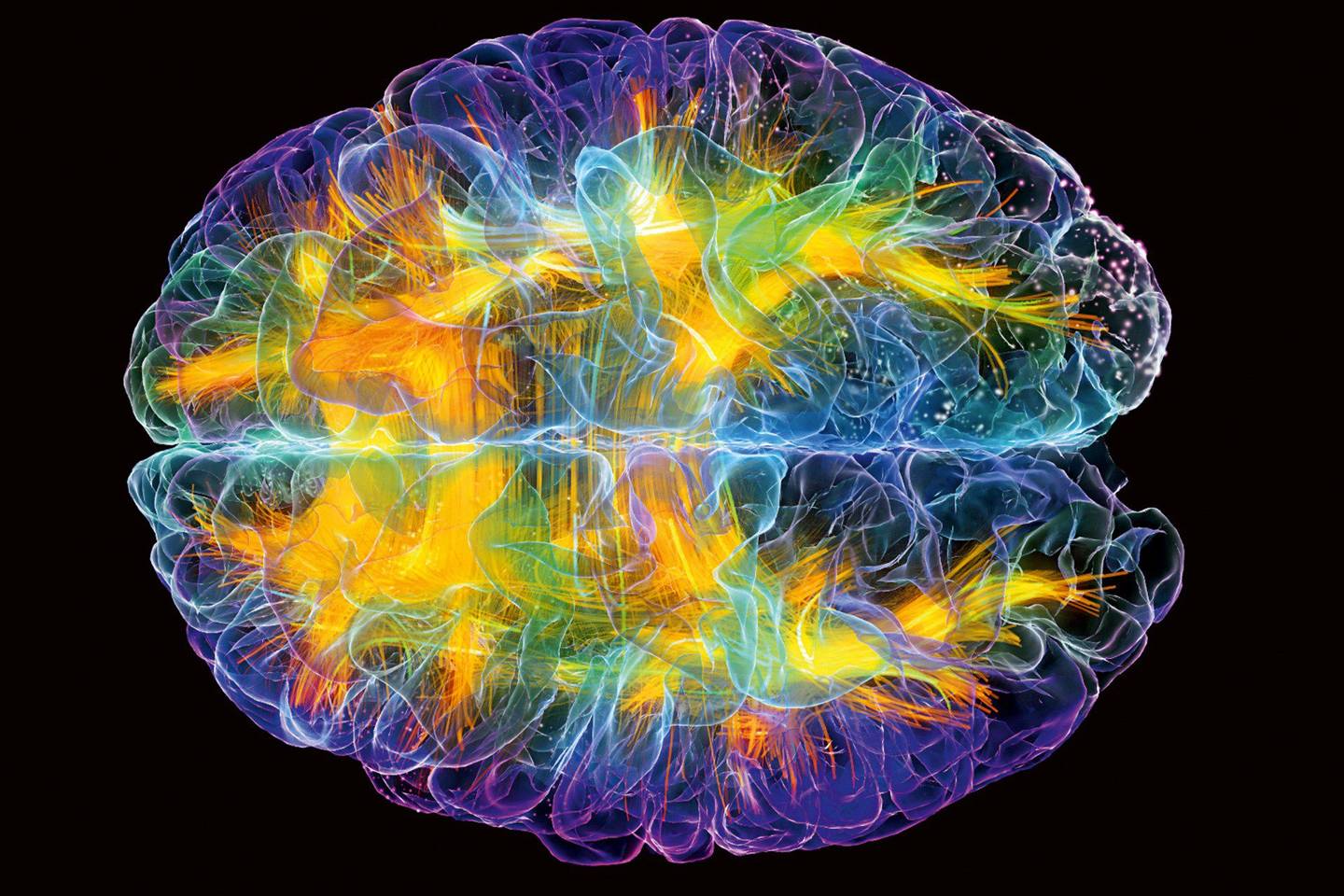
BRAIN ACTIVITY MAP
Neuroscape Lab
AI services like Apple’s Siri and others operate by sending your queries to faraway data centers, which send back responses. The reason they rely on cloud-based computing is that today’s electronics don’t come with enough computing power to run the processing-heavy algorithms needed for machine learning. The typical CPUs most smartphones use could never handle a system like Siri on the device. But Dr. Chris Eliasmith, a theoretical neuroscientist and co-CEO of Canadian AI startup Applied Brain Research, is confident that a new type of chip is about to change that.

“Many have suggested Moore's law is ending and that means we won't get 'more compute' cheaper using the same methods,” Eliasmith says. He’s betting on the proliferation of ‘neuromorphics’ — a type of computer chip that is not yet widely known but already being developed by several major chip makers.

Traditional CPUs process instructions based on “clocked time” – information is transmitted at regular intervals, as if managed by a metronome. By packing in digital equivalents of neurons, neuromorphics communicate in parallel (and without the rigidity of clocked time) using “spikes” – bursts of electric current that can be sent whenever needed. Just like our own brains, the chip’s neurons communicate by processing incoming flows of electricity - each neuron able to determine from the incoming spike whether to send current out to the next neuron.

What makes this a big deal is that these chips require far less power to process AI algorithms. For example, one neuromorphic chip made by IBM contains five times as many transistors as a standard Intel processor, yet consumes only 70 milliwatts of power. An Intel processor would use anywhere from 35 to 140 watts, or up to 2000 times more power.

Eliasmith points out that neuromorphics aren’t new and that their designs have been around since the 80s. Back then, however, the designs required specific algorithms be baked directly into the chip. That meant you’d need one chip for detecting motion, and a different one for detecting sound. None of the chips acted as a general processor in the way that our own cortex does.

This was partly because there hasn’t been any way for programmers to design algorithms that can do much with a general purpose chip. So even as these brain-like chips were being developed, building algorithms for them has remained a challenge.

Eliasmith and his team are keenly focused on building tools that would allow a community of programmers to deploy AI algorithms on these new cortical chips.

Central to these efforts is Nengo, a compiler that developers can use to build their own algorithms for AI applications that will operate on general purpose neuromorphic hardware. Compilers are a software tool that programmers use to write code, and that translate that code into the complex instructions that get hardware to actually do something. What makes Nengo useful is its use of the familiar Python programming language – known for it’s intuitive syntax – and its ability to put the algorithms on many different hardware platforms, including neuromorphic chips. Pretty soon, anyone with an understanding of Python could be building sophisticated neural nets made for neuromorphic hardware.

“Things like vision systems, speech systems, motion control, and adaptive robotic controllers have already been built with Nengo,” Peter Suma, a trained computer scientist and the other CEO of Applied Brain Research, tells me.

Perhaps the most impressive system built using the compiler is Spaun, a project that in 2012 earned international praise for being the most complex brain model ever simulated on a computer. Spaun demonstrated that computers could be made to interact fluidly with the environment, and perform human-like cognitive tasks like recognizing images and controlling a robot arm that writes down what it’s sees. The machine wasn’t perfect, but it was a stunning demonstration that computers could one day blur the line between human and machine cognition. Recently, by using neuromorphics, most of Spaun has been run 9000x faster, using less energy than it would on conventional CPUs – and by the end of 2017, all of Spaun will be running on Neuromorphic hardware.


Eliasmith won NSERC’s John C. Polyani award for that project — Canada’s highest recognition for a breakthrough scientific achievement – and once Suma came across the research, the pair joined forces to commercialize these tools.

“While Spaun shows us a way towards one day building fluidly intelligent reasoning systems, in the nearer term neuromorphics will enable many types of context aware AIs,” says Suma. Suma points out that while today’s AIs like Siri remain offline until explicitly called into action, we’ll soon have artificial agents that are ‘always on’ and ever-present in our lives.

“Imagine a SIRI that listens and sees all of your conversations and interactions. You’ll be able to ask it for things like - "Who did I have that conversation about doing the launch for our new product in Tokyo?" or "What was that idea for my wife's birthday gift that Melissa suggested?,” he says.

When I raised concerns that some company might then have an uninterrupted window into even the most intimate parts of my life, I’m reminded that because the AI would be processed locally on the device, there’s no need for that information to touch a server owned by a big company. And for Eliasmith, this ‘always on’ component is a necessary step towards true machine cognition. “The most fundamental difference between most available AI systems of today and the biological intelligent systems we are used to, is the fact that the latter always operate in real-time. Bodies and brains are built to work with the physics of the world,” he says.

Already, major efforts across the IT industry are heating up to get their AI services into the hands of users. Companies like Apple, Facebook, Amazon, and even Samsung, are developing conversational assistants they hope will one day become digital helpers.

ORIGINAL: Wired
Monday 6 March 2017

domingo, 13 de septiembre de 2015

Modular Add-On Brings Polarized Light Microscopy, Malaria Diagnosis to Smartphones


Researchers at Texas A&M University have developed a novel point-of-care device for field-based diagnosis of malaria using a smartphone. The mobile-optical-polarization imaging device (MOPID) attaches to smartphones or tablets and co-opts the camera to detect birefringent hemozoin in histological samples, which is indicative of malarial infection.

Despite advances in diagnostic approaches and treatment, malaria remains one of the leading sources of disease and death in developing nations. The “gold standard” of detection, evaluation of Giemsa-stained blood smears via bright-field microscopy, often requires skilled technicians and laboratory environments that are few and far between in the regions that are most in need. Even when available for field-testing, white light microscopy tends to report many false positive diagnoses as well. Bench-top polarized light microscopy systems, while more definitive, are large, expensive pieces of equipment that are complex to operate, and to maintain as well.

The MOPID, though, appears to offer a highly-mobile and effective alternative, at a cost that should be palatable in underserved countries. The device in its current form has demonstrated imaging properties that compare favorably with a reference Leica DMLM polarized microscope – a resolution of 1.05 μm, system magnification in the range of 50x, and field of view measuring 0.78 mm x 0.79 mm.

Going forward towards release and dissemination of the technology, the group is currently concentrating on preparing units for in vivo field-testing in Rwanda. To do so, they will be taking efforts to lower the physical profile of the device, improve upon human factors engineering and user-interface components, and lower costs. The ultimate vision is for each MOPID diagnostic test to be priced under $1.00 per result, anywhere in the world.


The MOPID device marks another in a series of recent mobile device imaging innovations that are empowering clinicians and researchers without access to traditional acquisition tools (see our recent post on the smartphone-powered D-EYE Digital Ophthalmoscope or read about technology pioneer Jonathan Rothberg’s plan to bring ultrasound to mobile devices).


ORIGINAL: Medgadget
ZACH KAUFMAN
SEPTEMBER 4TH, 2015 

domingo, 17 de mayo de 2015

Silicon Chips That See Are Going to Make Your Smartphone Brilliant

Many gadgets will be able to understand images and video thanks to chips designed to run powerful artificial-intelligence algorithms.

WHY IT MATTERS
Many applications for mobile computers could be more powerful with advanced image recognition.

Many of the devices around us may soon acquire powerful new abilities to understand images and video, thanks to hardware designed for the machine-learning technique called deep learning.

Companies like Google have made breakthroughs in image and face recognition through deep learning, using giant data sets and powerful computers (see “10 Breakthrough Technologies 2013: Deep Learning”). Now two leading chip companies and the Chinese search giant Baidu say hardware is coming that will bring the technique to phones, cars, and more.

Chip manufacturers don’t typically disclose their new features in advance. But at a conference on computer vision Tuesday, Synopsys, a company that licenses software and intellectual property to the biggest names in chip making, showed off a new image-processor core tailored for deep learning. It is expected to be added to chips that power smartphones, cameras, and cars. The core would occupy about one square millimeter of space on a chip made with one of the most commonly used manufacturing technologies.

Pierre Paulin, a director of R&D at Synopsys, told MIT Technology Review that the new processor design will be made available to his company’s customers this summer. Many have expressed strong interest in getting hold of hardware to help deploy deep learning, he said.

Synopsys showed a demo in which the new design recognized speed-limit signs in footage from a car. Paulin also presented results from using the chip to run a deep-learning network trained to recognize faces. It didn’t hit the accuracy levels of the best research results, which have been achieved on powerful computers, but it came pretty close, he said. “For applications like video surveillance it performs very well,” he said. The specialized core uses significantly less power than a conventional chip would need to do the same task.

The new core could add a degree of visual intelligence to many kinds of devices, from phones to cheap security cameras. It wouldn’t allow devices to recognize tens of thousands of objects on their own, but Paulin said they might be able to recognize dozens.

That might lead to novel kinds of camera or photo apps. Paulin said the technology could also enhance car, traffic, and surveillance cameras. For example, a home security camera could start sending data over the Internet only when a human entered the frame. “You can do fancier things like detecting if someone has fallen on the subway,” he said.

Jeff Gehlhaar, vice president of technology at Qualcomm Research, spoke at the event about his company’s work on getting deep learning running on apps for existing phone hardware. He declined to discuss whether the company is planning to build support for deep learning into its chips. But speaking about the industry in general, he said that such chips are surely coming. Being able to use deep learning on mobile chips will be vital to helping robots navigate and interact with the world, he said, and to efforts to develop autonomous cars.

“I think you will see custom hardware emerge to solve these problems,” he said. “Our traditional approaches to silicon are going to run out of gas, and we’ll have to roll up our sleeves and do things differently.” Gehlhaar didn’t indicate how soon that might be. Qualcomm has said that its coming generation of mobile chips will include software designed to bring deep learning to camera and other apps (see “Smartphones Will Soon Learn to Recognize Faces and More”).

Ren Wu, a researcher at Chinese search company Baidu, also said chips that support deep learning are needed for powerful research computers in daily use. “You need to deploy that intelligence everywhere, at any place or any time,” he said.

Being able to do things like analyze images on a device without connecting to the Internet can make apps faster and more energy-efficient because it isn’t necessary to send data to and fro, said Wu. He and Qualcomm’s Gehlhaar both said that making mobile devices more intelligent could temper the privacy implications of some apps by reducing the volume of personal data such as photos transmitted off a device.

“You want the intelligence to filter out the raw data and only send the important information, the metadata, to the cloud,” said Wu.


ORIGINAL: Tech Review
May 14, 2015