Mostrando entradas con la etiqueta Delfines. Mostrar todas las entradas

jueves, 13 de marzo de 2014

Drones Over Dolphin Stampede and Whales off Dana Point and Maui as seen on Nat Geo Daily News


Captain Dave Anderson of Capt. Dave's Dolphin and Whale Safari in Dana Point, California, at great personal risk, has recently filmed and edited a 5-minute video that contains some of the most beautiful, jaw-dropping, footage ever taken with a drone from the air of 
  • a huge mega-pod of thousands of common dolphins stampeding off Dana Point, California, 
  • three gray whales migrating together down the coast off San Clemente, California, and 
  • heartwarming close-ups hovering over a newborn Humpback whale calf snuggling and playing with its mom as an escort whale stands guard nearby, filmed recently in Maui.
According to N.O.A.A. Southern California has the greatest density of dolphins in the world. We have pods up to 10,000 strong stretched out for miles like the wildebeests of Africa. Over 400,000 common dolphin alone. We also have the largest concentration of blue whales on earth.

Capt. Dave explains, "This is the most beautiful and compelling five minute video I have ever put together. I learned so much about these whales and dolphins from this drone footage that it feels like I have entered a new dimension! I have not been this excited about a new technology since we built our underwater viewing pods on our whale watching boat. Drones are going to change how we view the animal world. Wow!"

sábado, 11 de enero de 2014

What's a humpback whale doing in the forest?


This eye-opening video could change your perspective about the oceans.

This surreal short video made by Gentleman Scholar for Whales and Dolphin Conservation (WDC) is so striking, you have to see it (make sure to watch in HD and full-screen mode):


It silently makes the point that if whales and dolphins were floating around us this visibly, maybe we would care more about their protection. Sadly, for most people, what's out of sight is out of mind, and our ocean ecosystems are suffering tremendously from overfishing, pollution and global warming.
Related on MNN: 
 Overfishing: Are there really plenty of fish in the sea?
7 major threats to our oceans
10 of the world's most famous whales

ORIGINAL: Mother Nature Network
By Michael Graham Richard
Nov 18 2013

domingo, 31 de marzo de 2013

Dolphin discovery-Bubble Rings!

ORIGINAL: Ryan Burke

Dolphins and a human producing unbelievable bubble rings that defy explanation - simply amazing must see vid

domingo, 18 de noviembre de 2012

Encuentran delfines mutilados en la costa del golfo de México

ORIGINAL: Russia Today
18 nov 2012

Los socorristas no se explican "por qué alguien podría querer matar a estos animales"

facebook.com / The Institute for Marine Mammal Studies
Las autoridades han abierto una investigación sobre los ataques a los delfines que tienen lugar en la costa norteña del golfo de México.

Varios animales marinos fueron hallados allí con heridas de bala, cortes y con partes de sus mandíbulas arrancadas, informa el periódico local ‘The Sun Herald’. 

Los delfines mutilados fueron encontrados por los empleados del Instituto de Estudios de Mamíferos Marinos en la ciudad de Gulfport, Mississippi. Moby Solangi, el director ejecutivo del Instituto, dijo que recuperar los animales y realizar una necropsia para determinar la causa de su muerte es una experiencia desgarradora para su personal. 

facebook.com / The Institute for Marine Mammal Studies. Empleados del Instituto durante una operación de salvamento de delfines 

"Creemos que hay alguien o algún grupo que lo hace a propósito", indicó. "No sólo los matan, sino que también los mutilan". Añadió que no tenía idea por qué alguien podría querer matar a estos animales. "Ellos ya están bajo mucho estrés por el derrame de petróleo en la zona", destacó Solangi. 

Según él, la gente común puede ayudar entregando cualquier información que conozcan acerca de estos crímenes. También pidió a los pescadores deportivos y comerciales que permanezcan alerta por si ven que alguien mata a delfines. Los ataques a estos animales pueden ser castigados con la imposición de multas e incluso de sentencias de cárcel. 

domingo, 8 de julio de 2012

Navy to deafen 15,900 whales and dolphins and kill 1,800 more

By Lyndia Storey (Contact)

To be delivered to: U.S. Navy EIS Comments
Stop the killing of 1,800 whales and dolphins and the deafening of 15,900 more by ceasing the operation of the Navy's underwater sound system in the Hawaiian Islands, the California and Atlantic Coasts, and the Gulf of Mexico.

The Navy is required to include comments on their Environmental Impact Statement (EIS) re: the use of high frequency underwater sound for testing in Hawaii, the California and Atlantic Coasts, and the Gulf of Mexico. According to their estimates it will deafen more than 15,900 whales and dolphins and kill 1,800 more over the next 5 years. Whales and dolphins depend on sound to navigate and live. Your signature and comment will have to be included in the EIS and could stop this Naval program, potentially saving the lives of these ocean creatures. The comments must be in by July 10, 2012.


NEW goal - We need 375,000 signatures
There are currently 373,920 signatures

martes, 8 de mayo de 2012

Hallan más de 1,200 pelícanos muertos en Perú

ORIGINAL: Peru21
Sábado 28 de abril del 2012


Las aves comenzaron a aparecer muertas en el litoral norte del país desde hace más de 10 días. Ni el Instituto del Mar Peruano ni el Sernanp han podido explicar el fenómeno.


Según Francisco Ñique, presidente de la Asociación de Pescadores Artesanales de Puerto Eten, desde hace aproximadamente 10 o 12 días se han encontrado más de 1,200 pelícanos muertos a lo largo de 160 kilómetros, entre Punta Negra, en Piura, y la caleta de San José, en Lambayeque.

Además, informó que se encontró siete delfines varados, los cuales se suman a los más de 3,000 ejemplares muertos en el norte del Perú en lo que va del año.

El Instituto del Mar Peruano (Imarpe) no ha determinado aún el motivo de la muerte de las aves y sostuvo que
  • los delfines pudieron haber perdido la vida por un virus, mientras que
  • Ñique indicó que la causa podría ser la escasez de especies que funcionan como alimento o
  • las ondas sísmicas por actividades exploratorias en la zona.
El Servicio Nacional de Áreas Naturales Protegidas por el Estado (Sernanp) tampoco pudo explicar el fenómeno, pero ha descartado que las razones respondan a las ondas sonoras de exploración sísmica que se realizan en el mar. Pusieron en marcha un plan de contingencia para investigar el caso.

lunes, 2 de abril de 2012

Bárbaro saqueo de peces en aguas del Pacífico colombiano

ORIGINAL: El Colombiano
Por COLPRENSA | Publicado el 2 de abril de 2012


Entre enero y marzo los guardacostas capturaron a 43 pescadores ilegales. De 14 barcos, 13 eran ecuatorianos.

El kilo de tiburón azul (tollo) se vende a 8.000 pesos en Buenaventura, sus aletas cuestan entre 40.000 y 150.000 pesos según el tamaño. FOTO COLPRENSA
La pesca ilegal en el Pacífico colombiano, adelantada principalmente por extranjeros, está poniendo no solo en riesgo a especies como el tiburón martillo, el tiburón azul (conocido como tollo) sino que se lleva entre sus redes a tortugas (en vía de extinción) delfines, rayas y peces marlin (de hocico puntiagudo).

El negocio ilegal mueve cada año en Colombia unas 200 toneladas de pesca. Lo dice el capitán de fragata William Palomino, comandante de Guardacostas del Pacífico.

Sólo en la región pacífica se ha incautado en el primer trimestre del año más de doce toneladas de pesca. Se retuvieron 14 embarcaciones (13 extranjeras y 1 nacional), 48 personas fueron capturadas.

El capitán de Fragata Palomino agrega que en el mundo el tráfico de pesca ilegal representa hasta 25.000 millones de dólares cada año, es decir, la tercera parte del presupuesto de Colombia.

Y es que si se mira en cifras el negocio que acaba la fauna marítima del país no es nada despreciable: unas aletas de tiburón, consideradas en Asia un plato exclusivo para bodas porque son símbolo de salud y de prestigio, pueden costar hasta 600 dólares.

En Colombia, los turistas de las zonas costeras pueden pedir en Semana Santa un sancocho de aletas de tiburón azul por 15.000 pesos.

Germán Soler, director de la Fundación Malpelo y Otros Ecosistemas Marinos, dice que la ballena Jorobada -que engalana el Pacífico colombiano desde mediados de año- también podría desaparecer.

La alta presencia de embarcaciones está ocasionando choques con los gigantes marinos y en algún momento podrían hacer que éstos migren a lugares menos perturbados por el hombre. Entonces, el turismo en Buenaventura se afectaría porque los porteños dejarían de recibir los cinco mil visitantes que llegan cada año.

Recurso sobreexplotado
La mayoría de los pescadores son ecuatorianos. Uno de ellos, quien fue aprehendido en un operativo en el Chocó, señaló que en su país hay tanta pesca industrial y artesanal que la producción va en descenso.

Según el capitán Palomino, en los países vecinos la demanda pesquera es tan alta que el recurso está sobreexplotado en un 85 por ciento.

Germán Caicedo, director de la fundación Stella Maris Casa del Marino, en Buenaventura, sostiene que el negocio no es lucrativo para los pescadores. "Ninguno de ellos tiene un Ferrari en el garaje de la casa. Es más, ni siquiera tienen casa, pero sí varias bocas para alimentar. El producido no les alcanzará siquiera para vivir quince días".

Caicedo sabe de qué habla porque también fue pescador. Ahora se dedica a velar por aquellos que son detenidos en prácticas ilegales o quedan a la deriva en aguas colombianas y son rescatados por guardacostas. "Esta gente es pobre y no tiene qué comer en un país extraño", sentencia para argumentar su labor.

El Gobierno identificó rutas
La ruta de los foráneos ilegales está definida y el Gobierno colombiano ya la detectó. Cristian Cadavid, abogado sustanciador de la Subdirección de Áreas Protegidas del Ministerio del Medio Ambiente, revela que los costarricenses bajan hasta la frontera con Panamá para ir directamente al Santuario de Flora y Fauna de la Isla de Malpelo.

"Ellos compiten en su área marina con los asiáticos ilegales y se ven obligados a buscar nuevas áreas de pesca", comenta Germán Soler , director de la Fundación Malpelo y Otras Áreas Protegidas.

Los ecuatorianos, parten casi siempre del puerto de Esmeraldas. Dice Cadavid que son naves que posiblemente tienen patente de pesca, pero que lideran pequeñas embarcaciones (nodriza).

Es decir, que desde las lanchas se pescan pequeñas cantidades que luego se llevan a un barco más grande.

José*, uno de los pescadores capturados en el Parque Nacional Natural Gorgona por los guardacostas y que ahora se encuentra en la Casa del Marino, contó que llegó a territorio colombiano huyendo de piratas.

"Todo estaba oscuro cuando pescamos la carnada. De repente sentimos una lancha que se acercaba y eran piratas que venían por los motores de nuestra lancha. Arrancamos sin saber para dónde coger y esa gente nos estaba persiguiendo hasta que logramos escapar. Cuando ya estaba de día sentimos que nos estaban sobrevolando y en cuestión de minutos llegaron los guardacostas", afirmó el hombre.

El Comandante de Guardacostas del Pacífico, señaló que esa versión no es cierta. Incluso, sostiene, que es el mismo argumento del 80 por ciento de los capturados en el corazón de las áreas de reserva natural colombianas.

"Estas personas son sorprendidas haciendo la actividad ilícita, cargando la red, con cientos de animales en las barcas", reiteró el alto oficial.

La versión del marino extranjero tampoco es aceptada por el abogado del Ministerio de Medio Ambiente quien agregó que la mayoría de los capturados son encontrados a más de 500 millas de Ecuador. "¿No es más fácil arrinconarse a la costa de su país para luego correr, o llegar al puerto más cercano que está en Guapi o Tumaco (Nariño)?".

No es coincidencia
Aunque los marinos capturados insisten en que su ingreso a Colombia es producto del miedo y el afán de salvar sus vidas, el capitán Palomino asegura que no es coincidencia que en el último año se hayan incautado barcos y lanchas que estén afiliadas a las mismas empresas.

En los registros aparece que la embarcación de bandera costarricense Panameña II ingresó a Malpelo en el 2008 y en el 2011. En el caso de Ecuador, en el último mes se han incautado las lanchas de nombre Derian V y Derian VIII.

Otro pescador capturado que acompaña a José dice que si bien estaban pescando, ¿cómo hacen para saber si el tiburón u otro animal se cogió en área protegida? "Los peces no son como nosotros que están siempre en un mismo lugar. Ellos no conocen de barreras".

Sí. Los peces no tienen fronteras que dividan su territorio, pero el hombre sí. El abogado Cadavid, que enfrenta los procesos contra los marinos que realizan prácticas ilegales, dice que las especies son migratorias, pero la cantidad o el tamaño de los peces que son incautados revelan en qué áreas del Pacífico fueron capturadas.

Por ejemplo, explica que si un barco atunero se posa sobre inmediaciones de la Isla de Malpelo, donde hay reproducción, desovamiento y alimentación de peces, es más fácil que se cargue con cientos de toneladas, que en cualquier otra zona del Pacífico.

Las fundaciones que velan por las áreas protegidas están analizando el ADN de las especies que se encuentran en esas zonas y cuando se hacen capturas en barcos y en las mismas pescaderías se adelanta una comparación para descubrir si se trata de la misma familia de peces.

El capitán Palomino dice que la Armada va a continuar ejerciendo la soberanía nacional para garantizar la reserva alimentaria porque en algún momento el país va a tener que volver sus ojos al océano para alimentarse n

* Nombre cambiado por petición de la fuente.

CLAVES
PROTEGER LAS ESPECIES
  1. Las áreas protegidas son apetecidas por los extranjeros por su abundancia de especies.
  2. La CVC adelanta proyectos autosostenibles con las comunidades afro, en el Pacífico.
  3. En 2000 casi todas las incidencias de pesca ilegal eran de colombianos ahora son casi cero.
  4. La pesca de tiburón no es ilegal en el país. Se prohibe es cortarles las aletas y dejarlos ahogar.
  5. El caso más grave en el país es el de los 2.000 tiburones pescados por costarisences.

ANTECEDENTES
NO HAY LEYES CLARAS EN EL PAÍS
"En Colombia las leyes ambientales todos se las pasan por la faja", sostiene Manuel Bedoya, presidente de la Asociación Nacional de Pescadores Artesanales de Colombia. Dice que desde hace un año el Incoder, que se encarga de otorgar permisos o establecer sanciones en la actividad pesquera, fue desmembrado y ahora hay una nueva unidad que no arranca.

El abogado Cristian Cadavid, señala que si las capturas son fuera de área protegida le compete al Incoder si son en área protegida procede a Parques Naturales. Si los capturados son extranjeros, el proceso es más lengo.

ESCENA
RUTINA DE UN PESCADOR ILEGAL
Salen en la mañana cuando todavía el sol está calentando el otro lado del planeta. En sus embarcaciones (principalmente lanchas pequeñas) cargan hielo y combustible. La provisión debe alcanzar, máximo, para cinco días, tiempo que durarán en alta mar. Salen de Ecuador y se alejan 30 millas. Cargan la carnada y luego se alejan a aguas más profundas para comenzar con el verdadero banquete.

Después de pasar varios días en alta mar regresa a casa para entregar el producido a un jefe que distrubuye los peces en el mercado local o internacional.


viernes, 23 de marzo de 2012

Gulf Dolphins Exposed to Oil Are Seriously Ill, Agency Says

ORIGINAL: NYTimes-Blog
By LESLIE KAUFMAN

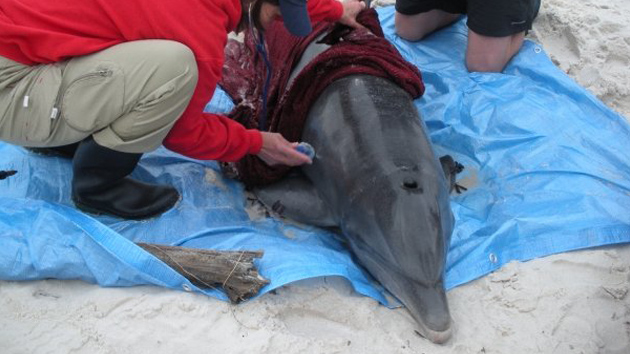
NOAA. Dolphins encountering oil from the BP oil spill in July 2010. 
Dolphins in Barataria Bay off Louisiana, which was hit hard by the BP oil spill in 2010, are seriously ill, and their ailments are probably related to toxic substances in the petroleum, the National Oceanic and Atmospheric Administration suggested on Friday.

As part of an ongoing assessment of damages caused by the three-month spill, which began with an explosion aboard the Deepwater Horizon rig, NOAA scientists performed comprehensive physicals last summer on 32 dolphins from the bay. They found problems like drastically low weight, low blood sugar and, in some cases, cancer of the liver and lungs.

Yet the most common symptom among the dolphins, found in about half the group, was an abnormally low level of stress hormones like cortisol. Such hormones regulate many functions in the animal, including the immune system and responses to threats. Scientists said the dearth of hormones suggested that the animals were suffering from adrenal insufficiency.

Lori Schwacke, the lead scientist for the health assessment, said the findings were preliminary and could not be conclusively linked to the oil spill at this point. But she said the exams were also conducted on control groups of dolphins that live along the Atlantic coast and in other areas that were not affected by the 2010 spill and that those dolphins did not manifest those symptoms.

“The findings we have are also consistent with other studies that have looked at the effects of oil exposure in other mammals,” Dr. Schwacke added, citing experimental studies of mink that were dosed with oil. Some of those minks developed adrenal insufficiency.

Strandings of dolphins began rising in states along the Gulf of Mexico in February 2010, or about two months before the oil spill.

But NOAA says that the strandings have returned to normal rates along the Florida coast, which was the farthest from the spill, while remaining abnormally high along the coasts of Louisiana, Mississippi and Alabama. In Barataria Bay alone, with a population of about 1,000 dolphins, 180 strandings have been reported since February 2010. In a normal year, about 20 dolphin standings would be reported in all of Louisiana, the agency said.

Ben Sherman, a NOAA spokesman, cautioned against drawing too broad a conclusion about dolphin deaths across the gulf from the findings. He said the results could provide “possible clues” to the effects of the oil spill on other dolphins in the northern Gulf of Mexico. “However, it is too soon to tell how the Barataria Bay findings apply,” he said.

martes, 20 de marzo de 2012

Complaints force Seoul to suspend popular dolphin shows

ORIGINAL: AsahiAJW
By AKIRA NAKANO / Correspondent
March 20, 2012
Seoul Mayor Park Won-soon, center, plays with a dolphin at Seoul Grand Park. (Provided by the city of Seoul)
SEOUL--Seoul officials have been thrown into the deep end after suspending popular dolphin shows from March 19 at a city-run zoo after an animal rights group called them a form of animal abuse.

With the shows at Seoul Grand Park being so popular among parents and children, officials are now being swamped with requests to continue them.

The Seoul Metropolitan Government plans to decide whether to discontinue the shows permanently in about a month after holding discussions and conducting a survey, officials said.

In South Korea, capturing dolphins is prohibited in principle, except for scientific research.

Since one of the five dolphins at the zoo had been found to have been illegally captured off the coast of Jejudo island, an animal rights group has been calling for the halt of the dolphin shows and the release of the dolphin.

The city plans to release it back into the sea where it was caught. Before releasing it, however, the government will provide two years of preparation and training for it to live again in the wild, the officials said.

The city has decided not to release the zoo's four other dolphins, citing their age and the fact that they have grown too dependent on the care of people.

lunes, 19 de marzo de 2012

2000 delfines compiten en velocidad con un barco solo por jugar (VIDEO)

ORIGINAL: Pijamasurf

Una inesperada reunión de 2000 delfines sorprende a los tripulantes de un barco de observación en las costas de California; los cetáceos por su parte toman el encuentro con alegría y retan al transporte a una competencia de velocidad.


En condiciones usuales los delfines suelen formar grupos de pocos individuos, casi siempre rondando la docena de integrantes. Sin embargo, en ciertos casos, cuando la comida es abundante en determinada zona, estos pueden alcanzar cifras increíbles de hasta mil delfines nadando en las inmediaciones.

El video que ahora presentamos, grabado hace unos días en la costa de Dana Point, California, muestra una inesperada reunión de al menos 2000 delfines surcando el mar con una velocidad de 40 kilómetros por hora, al parecer con el lúdico espíritu de competir con un barco de observación que encontraron en su camino: unas “carreritas” multitudinarias.

Pero más allá de dilucidar si esa era o no la intención de su proceder, el solo número de los cetáceos y la coordinación perfecta de su acción son motivos más que suficientes para observarlos y sorprendernos de su armónico jugueteo marítimo.

viernes, 2 de marzo de 2012

Tell Amazon.com To Permanently Ban The Sale Of Whale, Dolphin, and Porpoise Meat

ORIGINAL: Change.org


Change.org
Tell Amazon.com to ban the sale of dolphin and whale meat on its sites worldwide

Dear Reader,
Last week, public outcry forced Amazon.com to pull over one hundred whale and dolphin meat products from its Japanese site. Consumers were outraged that the world's largest online retailer supported the killing of whales and dolphins -- and Amazon.com listened.
But now, Amazon.com is refusing to put a permanent ban in place to protect these animals in the future.
Melissa Sehgal, an Amazon.com customer, is in Taiji, Japan -- the site of an annual dolphin hunt that was exposed in the documentary The Cove. Every day she is witnessing how dolphins are captured and killed, and she wants Amazon.com to help stop it. That's why Melissa started a petition calling on Amazon to never again sell meat from dolphins and whales.
Tens of thousands of dolphins, whales and porpoises are captured and killed for their meat every year in Japan. The method by which they are killed is gruesome. "Rods are hammered into (dolphins) spinal cords to paralyze them," Melissa says. "And then they are dragged by their tails to the butcher house."
But Amazon.com has responded positively and quickly to consumer feedback before. Melissa also knows that further action from the online retailer could impact the trade in dolphin and whale meat since hunts are happening right now. Without an official policy, Amazon.com could start selling whale and dolphin meat again at any time.
Thanks for being a change-maker,
- Pulin and the Change.org team

miércoles, 29 de febrero de 2012

Tell Hong Kong Airlines: No more live dolphin shipments!

ORIGINAL: HumaneSociety

The capture and trade of live dolphins for captive display is strongly opposed by the general public. Yet in January 2012, Hong Kong Airlines cashed in on a deal to fly five dolphins from Japan to Vietnam to be displayed in dolphinariums – for a paying public’s amusement. Most likely, these animals were taken during the brutal slaughter known as drive hunts that occur in Japan, The cruelty was featured in the 2009 Oscar winning documentary The Cove. More than 1,200 dolphins were killed in the 2010-2011 hunting season, and at least 150 were set aside alive, destined for a life in captivity.

The capture, transport, and lifelong confinement of wild dolphins pose severe welfare and conservation concerns. The potential for harmful mental and physical effects is incredibly high, such as stress-induced illness and premature death. Additionally, the removal of these marine mammals from the wild presents a threat to the continued survival of some populations.


TAKE ACTION
Hong Kong Airlines has indicated that this shipment was not a one-off deal – it means to continue this lucrative and highly controversial business of transporting live dolphins. Please send a message today and urge the president of Hong Kong Airlines to enact a corporate policy to end any future shipments of live dolphins.


Thank you for speaking out for animals.  

domingo, 26 de febrero de 2012

Marine Mammal Rights Are Needed Too, Scientists Claim

ORIGINAL: Huffington Post

By Jennifer Welsh, LiveScience Staff Writer:

VANCOUVER, British Columbia -- Orcas mourn their dead, right whales have accents and dolphins like to have fun (and they "talk" in their sleep). Because of their special intelligence and culture, marine mammals should have their own set of rights, researchers attending the American Association for the Advancement of Science's annual meeting here said.

"Because of their cultural sophistication these are enormously vulnerable individuals," said Lori Marino, who studies brain and behavioral evolution in mammals at Emory University in Atlanta. "We have all the evidence to show that there is an egregious mismatch between how cetaceans are and how they are perceived and still treated by our species."

Giving rights to cetaceans, the name for the group of marine mammals that includes dolphins and whales, would allow them better treatment under the law, including making sure they have healthy habitats and enough food to hunt and survive, as well as getting them out of captivity.

Special brains


Scientists point to a few qualities of marine mammals when suggesting the animals deserve some basic rights: they are self-aware, display complex intelligence and even have culture.

"These characteristics are shared with our own species, we recognize them," Marino said. "All of these characteristics make it ethically inconsistent to deny the basic rights of cetaceans."

And what do they mean by "basic rights?"

"When we talk about rights, that's a shorthand way to talk about the fundamental needs of a being," Thomas White, of Loyola Marymount University in California, said at the symposium. He also draws the difference between "human" and "person," similar to how philosophers distinguish the two: A human is a biological idea -- Homo sapiens, to be specific, while in philosophy, a person is a being of any species with a particular set of characteristics that deserves special treatment. [10 Things That Make Humans Special]

"You have to have a species-appropriate understanding of rights," White said. These include the basic set of conditions for growth, development, flourishingand even a rudimentary sense of satisfaction in life.

The researchers noted some areas where humans are stripping these animals of their rights. For instance, by keeping them in captivity we are exploiting their right to live in their natural environment without human interference, and taking away their right to physical and mental health, Marino said, adding, "The effects of captivity are well known. These animals suffer from stress and disease in captivity. Many captive dolphins and orcas show physical and behavioral indications of stress." (Some endangered animals are kept in captivity for specially designed breeding programs meant to protect their population from extinction.)

PETA problems

The meeting comes on the heels of a recent ruling in a San Diego court that animals such as whales and dolphins don't have human rights, shutting down a lawsuit from the group People for the Ethical Treatment of Animals (PETA), who had claimed that SeaWorld’s orcas were slaves. PETA claimed that the park broke the 13th Amendment of the Constitution -- banning slavery -- by forcing their animals, specifically the orcas, to work against their will for the financial gain of their owners.

San Diego District Judge Jeffrey Miller dismissed the case before the hearing even began. "As 'slavery' and 'involuntary servitude' are uniquely human activities," he explained in his decision on Feb. 8, "there is simply no basis to construe the Thirteenth Amendment as applying to non-humans."

His statement makes clear, Marino pointed out, why she and others are fighting for "person" status for marine mammals. "Without obtaining legal status as a person in the law there's nowhere to go and there's nothing that judge could have done in that PETA case, even if he wanted to,” Marino said. Before we start asking for legal action, she said, we need to get these animals their basic rights.