Mostrando entradas con la etiqueta Sentidos. Mostrar todas las entradas

jueves, 2 de abril de 2015

"Las plantas tienen nuestros cinco sentidos y quince más": Stefano Mancuso, neurobiólogo vegetal

Foto: Xavier Gómez
Inteligencia vegetal
Representan el 98,7% de la vida en el planeta; sin embargo, sólo el 3% de los científicos estudian las plantas. ¡Sólo el 3% para estudiar casi la totalidad de la vida! Absurdo. Mancuso es uno de ellos, con más de 250 artículos científicos sobre el tema y que acaba de publicar, con la periodista Alessandra Viola, Sensibilidad e inteligencia en el mundo vegetal (Galaxia Gutenberg), en el que narra los estudios y resultados más recientes, propios y ajenos, y que demuestran que las plantas se comunican entre ellas y con otros animales, duermen, memorizan, aprenden, cuidan de su prole, toman decisiones, e incluso son capaces de manipular a otras especies. Un mundo por descubrir.

Las plantas sienten?
Mucho más de lo que sentimos los animales. Y no es mi opinión o percepción, es una evidencia científica.

No es usted un iluminado.
No. Sabemos que perciben los cambios eléctricos, el campo magnético, el gradiente químico, la presencia de patógenos...

¿Oyen, ven...?
Las plantas tienen nuestros cinco sentidos y quince más. No tienen ojos y oídos como nosotros, pero perciben todas las gradaciones de la luz y las vibraciones sonoras.

¿Y les gusta la música?
Ciertas frecuencias, sobre todo las bajas (entre los 100 Hz y los 500 Hz), favorecen la germinación de las semillas y el crecimiento de las plantas hacia la fuente de ese sonido, que equivale a frecuencias naturales como la del agua que corre, pero hablar o cantar a las plantas es perder el tiempo.

¿Hay sonidos bajo tierra?

Se ha descubierto que las raíces producen sonido y son capaces de percibirlo. Eso sugiere la existencia de una vía de comunicación subterránea.

Tampoco tienen nariz.
Su olfato y gusto son muy sensibles. Perciben las moléculas químicas, es su modo de comunicación, cada olor es un mensaje. Y tienen tacto, basta ver a cámara rápida cómo palpa una planta trepadora.

¿Y dice que se comunican?

Se comunican con otras plantas de la misma especie a través de moléculas químicas volátiles, mandan por ejemplo mensajes de peligro. Si un insecto se le está comiendo las hojas, la planta produce al instante determinadas moléculas que se difunden kilómetros y que avisan de que hay un ataque en curso.

¿Y cómo se defienden?
De muchas maneras. Pueden aumentar sus moléculas venenosas o producir proteínas indigeribles para el insecto. Muchas plantas al ser comidas por un insecto emiten determinadas sustancias para atraer a otros insectos que lo depreden.

Eso es comunicación entre especies.

Las plantas producen muchas moléculas químicas cuyo único objeto es manipular el cerebro de los animales, en ese contexto se inscriben las drogas.

Un ejemplo...
Estudios recientes demuestran que un naranjo o un limonero en flor actúa de diferente manera según la cantidad de polen que lleve el insecto. Si lleva mucho polen, aumenta en el néctar la cantidad de cafeína para activar su cerebro, para que se acuerde de esa planta y vuelva. Si lleva poco polen, corta la cafeína.

¿Inteligencia vegetal?
Si inteligencia es la capacidad para resolver problemas, las plantas son capaces de responder de manera adecuada a estímulos externos e internos, es decir: son conscientes de lo que son y de lo que las rodea.

¡Eso es mucho!

Hemos ignorado cómo funciona el 99,7% de la vida en el planeta y no podemos permitírnoslo porque nuestra dependencia del reino vegetal incluye -además del aire, la comida y los fármacos- la energía (los combustibles fósiles son depósitos orgánicos).

Desconocemos el 90 por ciento de las plantas.

En su evolución las plantas han producido millones de soluciones que son muy distintas de las que han producido los animales. Hasta ahora el hombre ha basado su tecnología en cómo estamos hechos nosotros: un centro de mando y una jerarquía de órganos, y así se organizan nuestras sociedades, gobiernos, máquinas...

Hay otro mundo en el que inspirarnos.
Estudiar las plantas nos dará una cantidad ingente de posibilidades tecnológicas. Por ejemplo, las redes: una red de internet y un conjunto de raíces son muy similares. Pero las plantas son redes vivas, imagine lo que podemos llegar a aprender de ellas.

¿Son altruistas?

Compiten con otras especies y cooperan si son del mismo clan. Pero hay algunos ejemplos extraordinarios en los que podemos hablar de un alto grado de altruismo. Hay una investigación muy hermosa que se hizo hace cuatro años en Canadá.

Cuénteme.
Se aisló a un gran abeto del acceso al agua, y los abetos de alrededor le pasaron sus nutrientes durante años para que no muriera. Las plantas son organismos sociales tan sofisticados y evolucionados como nosotros.

¿Cuidan de su prole?
En las plantas observamos el cuidado parental que observamos en los animales más evolucionados. En un bosque denso, para que un árbol recién nacido adquiera cierta altura para poder hacer la fotosíntesis y ser autosuficiente han de pasar al menos diez o quince años durante los cuales será alimentado y cuidado por su familia.

¿Dónde tienen el cerebro?
Las neuronas son las únicas células en los animales que producen y transmiten señales eléctricas. En las plantas, la mayor parte de las células de su cuerpo lo hacen, y en la punta de las raíces tienen muchísimas. Podríamos decir que toda la planta es cerebro.


ORIGINAL: Vanguardia.es
Victor-M Amela, Ima Sanchís, Lluís Amiguet
31/03/2015

viernes, 13 de junio de 2014

Mathematical Model Of Consciousness Proves Human Experience Cannot Be Modelled On A Computer


A new mathematical model of consciousness implies that your PC will never be conscious in the way you are

One of the most profound advances in science in recent years is the way researchers from a variety of fields are beginning to think about consciousness. Until now, the c-word was been taboo for most scientists. Any suggestion that a researchers was interested in this area would be tantamount to professional suicide.

That has begun to change thanks to a new theory of consciousness developed in the last ten years or so by Giulio Tononi, a neuroscientist at the University of Wisconsin in Madison, and others. Tononi’s key idea is that consciousness is phenomenon in which information is integrated in the brain in a way that cannot be broken down.

So each instant of consciousness integrates the smells, sounds and sights of that moment of experience. And consciousness is simply the feeling of this integrated information experience.

What makes Tononi’s ideas different from other theories of consciousness is that it can be modelled mathematically using ideas from physics and information theory. That doesn’t mean this theory is correct. But it does mean that, for the first time, neuroscientists, biologists physicists and anybody else can all reason about consciousness using the universal language of science: mathematics.

This has led to an extraordinary blossoming of ideas about consciousness. A few months ago, for example, we looked at how physicists are beginning to formulate the problem consciousness in terms of quantum mechanics and information theory.

Today, Phil Maguire at the National University of Ireland and a few pals take this mathematical description even further. These guys make some reasonable assumptions about the way information can leak out of a consciousness system and show that this implies that consciousness is not computable. In other words, consciousness cannot be modelled on a computer.

Maguire and co begin with a couple of thought experiments that demonstrate the nature of integrated information in Tononi’s theory. They start by imagining the process of identifying chocolate by its smell. For a human, the conscious experience of smelling chocolate is unified with everything else that a person has smelled (or indeed seen, touched, heard and so on).

This is entirely different from the process of automatically identifying chocolate using an electronic nose, which measures many different smells and senses chocolate when it picks out the ones that match some predefined signature.

A key point here is that it would be straightforward to access the memory in an electronic nose and edit the information about its chocolate experience. You could delete this with the press of a button.

But ask a neuroscientist to do the same for your own experience of the smell of chocolate—to somehow delete this—and he or she would be faced with an impossible task since the experience is correlated with many different parts of the brain.

Indeed, the experience will be integrated with all kinds of other experiences. “According to Tononi, the information generated by such [an electronic nose] differs from that generated by a human insofar as it is not integrated,” say Maguire and co.

This process of integration is then crucial and Maguire and co focus on the mathematical properties it must have. For instance, they point out that the process of integrating information, of combining it with many other aspects of experience, can be thought of as a kind of information compression.

This compression allows the original experience to be constructed but does not keep all of the information it originally contained.

To better understand this, they give as an analogy the sequence of numbers: 4, 6, 8, 12, 14, 18, 20, 24…. This is an infinite series defined as: odd primes plus 1. This definition does not contain all the infinite numbers but it does allow it be reproduced. It is clearly a compression of the information in the original series.

The brain, say Maguire and co, must work like this when integrating information from a conscious experience. It must allow the reconstruction of the original experience but without storing all the parts.

That leads to a problem. This kind of compression inevitably discards information. And as more information is compressed, the loss becomes greater.

But if our memories were like that cannot be like that, they would be continually haemorrhaging meaningful content. “Memory functions must be vastly non-lossy, otherwise retrieving them repeatedly would cause them to gradually decay,” say Maguire and co.

The central part of their new work is to describe the mathematical properties of a system that can store integrated information in this way but without it leaking away. And this leads them to their central proof. “The implications of this proof are that we have to abandon either the idea that people enjoy genuinely [integrated] consciousness or that brain processes can be modelled computationally,” say Maguire and co.

Since Tononi’s main assumption is that consciousness is the experience of integrated information, it is the second idea that must be abandoned: brain processes cannot be modelled computationally.

They go on to discuss this in more detail. If a person’s behaviour cannot be analysed independently from the rest of their conscious experience, it implies that something is going on in their brain that is so complex it cannot feasibly be reversed, they say.

In other words, the difference between cognition and computation is that computation is reversible whereas cognition is not. And they say that is reflected in the inability of a neuroscientist to operate and remove a particular memory of the small of chocolate.

That’s an interesting approach but it is one that is likely to be controversial. The laws of physics are computable, as far as we know. So critics might ask how the process of consciousness can take place at all if it is non-computable. Critics might even say this is akin to saying that consciousness is in some way supernatural, like magic.

But Maguire and go counter this by saying that their theory doesn’t imply that consciousness is objectively non-computable only subjectively so. In other words, a God-like observer with perfect knowledge of the brain would not consider it non-computable. But for humans, with their imperfect knowledge of the universe, it is effectively non-computable.

There is something of a card trick about this argument. In mathematics, the idea of non-computability is not observer-dependent so it seems something of a stretch to introduce it as an explanation.

What’s more, critics might point to other weaknesses in the formulation of this problem. For example, the proof that conscious experience is non-computable depends critically on the assumption that our memories are non-lossy.

But everyday experience is surely the opposite—our brains lose most of the information that we experience consciously. And the process of repeatedly accessing memories can cause them to change and degrade. Isn’t the experience of forgetting a face of a known person well documented?

Then again, critics of Maguire and co’s formulation of the problem of consciousness must not lose sight of the bigger picture—that the debate about consciousness can occur on a mathematical footing at all. That’s indicative of a sea change in this most controversial of fields.

Of course, there are important steps ahead. Perhaps the most critical is that the process of mathematical modelling must lead to hypotheses that can be experimentally tested. That’s the process by which science distinguishes between one theory and another. Without a testable hypothesis, a mathematical model is not very useful.

For example, Maguire and co could use their model to make predictions about the limits in the way information can leak from a conscious system. These limits might be testable in experiments focusing on the nature of working memory or long-term memory in humans.

That’s the next challenge for this brave new field of consciousness.

Ref: arxiv.org/abs/1405.0126 : Is Consciousness Computable? Quantifying Integrated Information Using Algorithmic Information Theory


Follow the Physics arXiv Blog on Twitter at @arxivblog, on Facebook and by hitting the Follow button below.

ORIGINAL: Medium

martes, 18 de marzo de 2014

The Future of Brain Implants

How soon can we expect to see brain implants for perfect memory, enhanced vision, hypernormal focus or an expert golf swing?

Brain implants today are where laser eye surgery was several decades ago, fraught with risk, applicable only to a narrowly defined set of patients – but a sign of things to come. NYU Professor of Psychology Gary Marcus discusses on Lunch Break. Photo: Getty.

What would you give for a retinal chip that let you see in the dark or for a next-generation cochlear implant that let you hear any conversation in a noisy restaurant, no matter how loud? Or for a memory chip, wired directly into your brain's hippocampus, that gave you perfect recall of everything you read? Or for an implanted interface with the Internet that automatically translated a clearly articulated silent thought ("the French sun king") into an online search that digested the relevant Wikipedia page and projected a summary directly into your brain?

Science fiction? Perhaps not for very much longer. Brain implants today are where laser eye surgery was several decades ago. They are not risk-free and make sense only for a narrowly defined set of patients—but they are a sign of things to come.

Unlike pacemakers, dental crowns or implantable insulin pumps, neuroprosthetics—devices that restore or supplement the mind's capacities with electronics inserted directly into the nervous system—change how we perceive the world and move through it. For better or worse, these devices become part of who we are.

Neuroprosthetics aren't new. They have been around commercially for three decades, in the form of the cochlear implants used in the ears (the outer reaches of the nervous system) of more than 300,000 hearing-impaired people around the world. Last year, the Food and Drug Administration approved the first retinal implant, made by the company Second Sight.

Both technologies exploit the same principle: An external device, either a microphone or a video camera, captures sounds or images and processes them, using the results to drive a set of electrodes that stimulate either the auditory or the optic nerve, approximating the naturally occurring output from the ear or the eye.

Getty Images

Another type of now-common implant, used by thousands of Parkinson's patients around the world, sends electrical pulses deep into the brain proper, activating some of the pathways involved in motor control. A thin electrode is inserted into the brain through a small opening in the skull; it is connected by a wire that runs to a battery pack underneath the skin. The effect is to reduce or even eliminate the tremors and rigid movement that are such prominent symptoms of Parkinson's (though, unfortunately, the device doesn't halt the progression of the disease itself). Experimental trials are now under way to test the efficacy of such "deep brain stimulation" for treating other disorders as well.

Electrical stimulation can also improve some forms of memory, as the neurosurgeon Itzhak Fried and his colleagues at the University of California, Los Angeles, showed in a 2012 article in the New England Journal of Medicine. Using a setup akin to a videogame, seven patients were taught to navigate a virtual city environment with a joystick, picking up passengers and delivering them to specific stores. Appropriate electrical stimulation to the brain during the game increased their speed and accuracy in accomplishing the task.

But not all brain implants work by directly stimulating the brain. Some work instead by reading the brain's signals—to interpret, for example, the intentions of a paralyzed user. Eventually, neuroprosthetic systems might try to do both, reading a user's desires, performing an action like a Web search and then sending the results directly back to the brain.

How close are we to having such wondrous devices?
To begin with, scientists, doctors and engineers need to figure out safer and more reliable ways of inserting probes into people's brains. For now, the only option is to drill small burr-holes through the skull and to insert long, thin electrodes—like pencil leads—until they reach their destinations deep inside the brain. This risks infection, since the wires extend through the skin, and bleeding inside the brain, which could be devastating or even fatal.

External devices, like the brainwave-reading skull cap made by the company NeuroSky (marketed to the public as "having applications for wellness, education and entertainment"), have none of these risks. But because their sensors are so far removed from individual neurons, they are also far less effective. They are like Keystone Kops trying to eavesdrop on a single conversation from outside a giant football stadium.

A boy wearing a cochlear implant for the hearing-impaired. A second portion is surgically implanted under the skin. Barcroft Media/Getty Images

Today, effective brain-machine interfaces have to be wired directly into the brain to pick up the signals emanating from small groups of nerve cells. But nobody yet knows how to make devices that listen to the same nerve cells that long. Part of the problem is mechanical: The brain sloshes around inside the skull every time you move, and an implant that slips by a millimeter may become ineffective.

Another part of the problem is biological: The implant must be nontoxic and biocompatible so as not to provoke an immune reaction. It also must be small enough to be totally enclosed within the skull and energy-efficient enough that it can be recharged through induction coils placed on the scalp at night (as with the recharging stands now used for some electric toothbrushes).

These obstacles may seem daunting, but many of them look suspiciously like the ones that cellphone manufacturers faced two decades ago, when cellphones were still the size of shoeboxes. Neural implants will require even greater advances since there is no easy way to upgrade them once they are implanted and the skull is sealed back up.

But plenty of clever young neuro-engineers are trying to surmount these problems, like Michel Maharbiz and Jose Carmena and their colleagues at the University of California, Berkeley. They are developing a wireless brain interface that they call "neural dust." Thousands of biologically neutral microsensors, on the order of one-tenth of a millimeter (approximately the thickness of a human hair), would convert electrical signals into ultrasound that could be read outside the brain.

The real question isn't so much whether something like this can be done but how and when. How many advances in material science, battery chemistry, molecular biology, tissue engineering and neuroscience will we need? Will those advances take one decade, two decades, three or more? As Dr. Maharbiz said in an email, once implants "can be made 'lifetime stable' for healthy adults, many severe disabilities…will likely be chronically treatable." For millions of patients, neural implants could be absolutely transformative.

Assuming that we're able to clear these bioengineering barriers, the next challenge will be to interpret the complex information from the 100 billion tiny nerve cells that make up the brain. We are already able to do this in limited ways.

Based on decades of prior research in nonhuman primates, John Donoghue of Brown University and his colleagues created a system called BrainGate that allows fully paralyzed patients to control devices with their thoughts. BrainGate works by inserting a small chip, studded with about 100 needlelike wires—a high-tech brush—into the part of the neocortex controlling movement. These motor signals are fed to an external computer that decodes them and passes them along to external robotic devices.

Almost a decade ago, this system was used by a tetraplegic to control an artificial hand. More recently, in a demonstration of the technology's possibilities that is posted on YouTube, Cathy Hutchinson, paralyzed years earlier by a brainstem stroke, managed to take a drink from a bottle of coffee by manipulating a robot arm with only her brain and a neural implant that literally read (part of) her mind.

For now, guiding a robot arm this way is cumbersome and laborious, like steering a massive barge or an out-of-alignment car. Given the current state of neuroscience, even our best neuroscientists can read the activity of a brain only as if through a glass darkly; we get the gist of what is going on, but we are still far from understanding the details.

In truth, we have no idea at present how the human brain does some of its most basic feats, like translating a vague desire to return that tennis ball into the torrent of tightly choreographed commands that smoothly execute the action. No serious neuroscientist could claim to have a commercially ready brain-reading device with a fraction of the precision or responsiveness of a computer keyboard.

In understanding the neural code, we have a long way to go. That's why the federally funded BRAIN Initiative, announced last year by President Barack Obama, is so important. We need
  • better tools to listen to the brain and 
  • more precise tools for sending information back to the brain
  • along with a far more detailed understanding of different kinds of nerve cells and 
  • how they fit together in complex circuits.
The coarse-grained functional MRI brain images that have become so popular in recent years won't be enough. For one thing, they are indirect; they measure changes not in electrical activity but in local blood flow, which is at best an imperfect stand-in. Images from fMRIs also lack sufficient resolution to give us true mastery of the neural code. Each three-dimensional pixel (or "voxel") in a brain scan contains a half-million to one million neurons. What we really need is to be able to zero in on individual neurons.

Zooming in further is crucial because the atoms of perception, memory and consciousness aren't brain regions but neurons and even finer-grained elements. Chemists turned chemistry into a quantitative science once they realized that chemical reactions are (almost) all about electrons making and breaking bonds among atoms. Neuroscientists are trying to do the same thing for the brain. Until we do, brain implants will be working only on the logic of forests, without sufficient understanding of the individual trees.

One of the most promising tools in this regard is a recently developed technique called optogenetics, which hijacks the molecular machinery of the genes found inside every neuron to directly manipulate the brain's circuitry. In this way, any group of neurons with a unique genetic ZIP Code can be switched on or off, with unparalleled precision, by brief pulses of different colored light—effectively turning the brain into a piano that can be played. This fantastic marriage of molecular biology with optics and electronics is already being deployed to build advanced retinal prosthetics for adult-onset blindness. It is revolutionizing the whole field of neuroscience.

Advances in molecular biology, neuroscience and material science are almost certainly going to lead, in time, to implants that are smaller, smarter, more stable and more energy-efficient. These devices will be able to interpret directly the blizzard of electrical activity inside the brain. For now, they are an abstraction, something that people read about but are unlikely to experience for themselves. But someday that will change.

Consider the developmental arc of medical technologies such as breast surgery. Though they were pioneered for post-mastectomy reconstruction and for correcting congenital defects, breast augmentation and other cosmetic procedures such as face-lifts and tummy tucks have become routine. The procedures are reliable, effective and inexpensive enough to be attractive to broad segments of society, not just to the rich and famous.

Eventually neural implants will make the transition from being used exclusively for severe problems such as paralysis, blindness or amnesia. They will be adopted by people with less traumatic disabilities. When the technology has advanced enough, implants will graduate from being strictly repair-oriented to enhancing the performance of healthy or "normal" people. They will be used to improve memory, mental focus (Ritalin without the side effects), perception and mood (bye, bye Prozac).

Many people will resist the first generation of elective implants. There will be failures and, as with many advances in medicine, there will be deaths. But anybody who thinks that the products won't sell is naive. Even now, some parents are willing to let their children take Adderall before a big exam. The chance to make a "superchild" (or at least one guaranteed to stay calm and attentive for hours on end during a big exam) will be too tempting for many.

Even if parents don't invest in brain implants, the military will. A continuing program at Darpa, a Pentagon agency that invests in cutting-edge technology, is already supporting work on brain implants that improve memory to help soldiers injured in war. Who could blame a general for wanting a soldier with hypernormal focus, a perfect memory for maps and no need to sleep for days on end? (Of course, spies might well also try to eavesdrop on such a soldier's brain, and hackers might want to hijack it. Security will be paramount, encryption de rigueur.)

An early generation of enhancement implants might help elite golfers improve their swing by automating their mental practice. A later generation might allow weekend golfers to skip practice altogether. Once neuroscientists figure out how to reverse-engineer the end results of practice, "neurocompilers" might be able to install the results of a year's worth of training directly into the brain, all in one go.

That won't happen in the next decade or maybe even in the one after that. But before the end of the century, our computer keyboards and trackpads will seem like a joke; even Google Glass 3.0 will seem primitive. Why would you project information onto your eyes (partly occluding your view) when you could write information into your brain so your mind can directly interpret it? Why should a computer wait for you to say or type what you mean rather than anticipating your needs before you can even articulate them?

By the end of this century, and quite possibly much sooner, every input device that has ever been sold will be obsolete. Forget the "heads-up" displays that the high-end car manufactures are about to roll out, allowing drivers to see data without looking away from the road. By the end of the century, many of us will be wired directly into the cloud, from brain to toe.

Will these devices make our society as a whole happier, more peaceful and more productive? What kind of world might they create?

It's impossible to predict. But, then again, it is not the business of the future to be predictable or sugarcoated. As President Ronald Reagan once put it, "The future doesn't belong to the fainthearted; it belongs to the brave."

The augmented among us—those who are willing to avail themselves of the benefits of brain prosthetics and to live with the attendant risks—will outperform others in the everyday contest for jobs and mates, in science, on the athletic field and in armed conflict. These differences will challenge society in new ways—and open up possibilities that we can scarcely imagine.

Dr. Marcus is professor of psychology at New York University and often blogs about science and technology for the New Yorker. Dr. Koch is the chief scientific officer of the Allen Institute for Brain Science in Seattle.

ORIGINAL: WSJ On Line
By  GARY MARCUS and CHRISTOF KOCH
March 14, 2014

lunes, 9 de diciembre de 2013

The Computer Of The Future Will Be An Electronic Human Brain

[Image via Shutterstock]
Qualcomm is perfecting new software that can better process information from huge amounts of sensors and deal with uncertainty--just like the powerful computer already in our heads.

Earlier this year, President Obama announced what is perhaps the biggest collaborative scientific undertaking in the U.S. since the Human Genome Project. The BRAIN Initiative is a $300 million project to map activity in every one of the brain's billions of neurons. There are countless scientific institutions working on the project. And then there is Qualcomm, a company best known for making wireless telecommunications chips.

Not only is Qualcomm an active participant in The BRAIN Initiative, it's also working on an entirely new class of processor, called the Neural Processor Unit (branded as the Qualcomm Zeroth), that could have applications in the medical world. But what's a wireless company doing in the BRAIN world? What is one example we see in biology that's good at processing sensory information efficiently? That's the brain.

For years--long before the BRAIN Initiative was announced--Qualcomm has been working on tools for large-scale brain simulation through its partner Brain Corp, a startup with a staff of neuroscientists. "In the business of wireless technology and mobile devices, we're seeing more devices with all types of sensors. In order to process and derive meaning from sensor information, you can do a lot of processing and throw horsepower at it, or say what is one example we see in biology that's good at processing sensory information efficiently? That's the brain," explains Samir Kumar, director of business development at Qualcomm.

Think about how much the brain takes in through the senses--every millisecond, new sounds, sights, touches, and tastes are instantaneously processed and fused together into information about the world. Qualcomm is trying to replicate that ability so a smartphone could, say, fuse together data about the environment for a comprehensible look at immediate surroundings.

Qualcomm's research also has applications in the medical world. "The brain is filled with electrical activity, and activity patterns--consciousness, behavior, those kinds of activities--people have never been able to observe before, or develop treatments for when those patterns [indicate disease]," says Tony Lewis, senior director, product management, corporate R&D at Qualcomm. With help from Qualcomm's research, he says, "people will look at complex [brain] patterns and be able to identify them, to come up with treatments and restore functionality."

The wireless company's brain-related work goes beyond research into brain simulation. Qualcomm is also working on a real piece of hardware, the Zeroth. "If you look at a normal CPU, it's built to do things like balance a checkbook, but if you want to deal with uncertain information, probabilistic information, having 64 bit precision is not the best use of hardware resources," says Lewis. "We can design better processors to handle this info. We think that we can handle uncertain, fuzzy data much more efficiently."

Qualcomm doesn't anticipate replacing today's processors with the Zeroth--instead, it would act as a co-processor. The Zeroth could be good at things like learning and then anticipating user preferences on a smartphone, for example. In the car, the Zeroth could help vehicles become aware of the surrounding environment and protect drivers from unsafe situations. Is it a little eerie? Sure. But as we inch closer towards technology like autonomous vehicles, we're already ceding much of our control over to computers.

These days, Qualcomm is refining the Zeroth design, but it doesn't have a firm production date yet. But Lewis says there is "a lot of interest" in the processor from academics and big companies alike.

ORIGINAL: FastCo Exist

viernes, 6 de diciembre de 2013

Fox Dives Headfirst Into Snow | North America

A red fox pinpoints field mice buried deep beneath the snow, using his sensitive hearing and the magnetic field of the North Pole to plot his trajectory


ORIGINAL: Discovery 
Nov 19, 2013 

jueves, 28 de febrero de 2013

Things we can't see

ORIGINAL: Truth Theory
11 November 2012

When you think about it, there is a great deal out there that we can’t see.

Our eyes only respond to a very narrow range of electromagnetic radiation. The following diagram demonstrates just how narrow our range of vision compared to the overall electromagnetic spectrum.

Image Source: http://9-4fordham.wikispaces.com/Electro+Magnetic+Spectrum+and+light
So we can’t see anything that generates or reflects wavelengths equal to or longer than infrared, as the following image demonstrates. Even the Hubble Space Telescope can’t see the distant infrared galaxy that the Spitzer Space Telescope can see with its infrared sensors.

Image Source
And we can’t see anything that generates or reflects wavelengths equal to or shorter than ultraviolet, as the following image from NASA demonstrates. Only instruments with special sensors that can detect ultraviolet or x-rays can see some of the objects in the sky.

Of course, we can’t see things that are smaller in size than about 40 microns, which includes germs and molecules.

We can’t see things that are camouflaged by technology, such as the Mercedes in the following picture.

Sometimes, it isn’t our eyes that can’t sense something that is right in front of us, but rather, our brain. We actually stare at our noses all day long but don’t notice because our brains effectively subtract it out from our perception, given that we don’t really need it. Our brains also fill in the imagery that is missing from the blind spot that we all have due to the optic nerve in our retinas.


In addition to these limitations of static perception, there are significant limitations to how we perceive motion. It actually does not take much in terms of speed to render something invisible to our perception.

Clearly, we can’t see something zip by as fast as a bullet, which might typically move at speeds of 700 mph or more. And yet, a plane moving at 700 mph is easy to see from a distance. Our limitations of motion perception are a function of the speed of the object and the size of the image that it casts upon your retina; e.g. for a given speed, the further away something is, the larger it has to be to register in our conscious perception. This is because our perception of reality refreshes no more than 13-15 times per second, or every 77 ms. So, if something is moving so fast that it passes by our frame of perception in less than 77 ms or so, or it is so small that it doesn’t make a significant impression in our conscious perception within that time period, we simply won’t be aware of its existence.

It makes one wonder what kinds of things may be in our presence, but moving too quickly to be observed. Some researchers have captured objects on high-speed cameras, for which there appears to be no natural explanation. For example, there is this strange object captured on official NBC video at an NFL football game in 2011: Whether these objects have mundane explanations or might be hints of something a little more exotic, one thing is for certain: our eye cannot capture them. They are effectively invisible to us, yet exist in our reality.

This article originally appeared at TheUniverseSolved.

Sources:


miércoles, 13 de febrero de 2013

Night-vision rat becomes first animal with sixth sense

ORIGINAL: New Scientist
Douglas Heaven, reporter
13 February 2013


The latest bionic superhero is a rat: its brain hooked up to an infrared detector, it's become the first animal to be given a sixth sense.

Developed by Miguel Nicolelis and colleagues at Duke University in Durham, North Carolina, the system connects a head-mounted sensor to a brain region that normally processes touch sensations from whiskers. As shown in this video, the rat's brain is tricked when infrared light is detected, giving it a new sense organ. "Instead of seeing, the rats learned how to touch the light," says Nicolelis.

Even though the touch-processing brain area acquires a new role, the team found that it continues to process touch sensations from whiskers, somehow dividing its time between both types of signal. "The adult brain is a lot more plastic than we thought," says Nicolelis.

The finding could lead to new brain prostheses that restore sight in humans with a damaged visual cortex. By bypassing the damaged part of the brain altogether, it might be possible to wire up a video camera to a part of the brain that processes touch, letting people "touch" what the camera sees.

According to Nicolelis, it could also lead to superhero powers for humans. "It could be X-rays, radio waves, anything," he says. "Superman probably had a prosthetic device that nobody knew of."

domingo, 20 de enero de 2013

A Cat’s 200-Mile Trek Home Leaves Scientists Guessing

ORIGINAL: NYTimes
JANUARY 19, 2013

Barbara P. Fernandez for The New York Times. Jacob Richter, 70, left, and Bonnie Richter, 63, flank Holly, the cat that traveled 190 miles to find her way home.
Nobody knows how it happened: an indoor housecat who got lost on a family excursion managing, after two months and about 200 miles, to return to her hometown.

Even scientists are baffled by how Holly, a 4-year-old tortoiseshell who in early November became separated from Jacob and Bonnie Richter at an R.V. rally in Daytona Beach, Fla., appeared on New Year’s Eve — staggering, weak and emaciated — in a backyard about a mile from the Richters’ house in West Palm Beach.

Are you sure it’s the same cat?” wondered John Bradshaw, director of the University of Bristol’s Anthrozoology Institute. In other cases, he has suspected, “the cats are just strays, and the people have got kind of a mental justification for expecting it to be the same cat.

But Holly not only had distinctive black-and-brown harlequin patterns on her fur, but also an implanted microchip to identify her.

I really believe these stories, but they’re just hard to explain,” said Marc Bekoff, a behavioral ecologist at the University of Colorado. “Maybe being street-smart, maybe reading animal cues, maybe being able to read cars, maybe being a good hunter. I have no data for this.

There is, in fact, little scientific dogma on cat navigation. Migratory animals like birds, turtles and insects have been studied more closely, and use magnetic fields, olfactory cues, or orientation by the sun.

Scientists say it is more common, although still rare, to hear of dogs returning home, perhaps suggesting, Dr. Bradshaw said, that they have inherited wolves’ ability to navigate using magnetic clues. But it’s also possible that dogs get taken on more family trips, and that lost dogs are more easily noticed or helped by people along the way.

Cats navigate well around familiar landscapes, memorizing locations by sight and smell, and easily figuring out shortcuts, Dr. Bradshaw said.

Strange, faraway locations would seem problematic, although he and Patrick Bateson, a behavioral biologist at Cambridge University, say that cats can sense smells across long distances. “Let’s say they associate the smell of pine with wind coming from the north, so they move in a southerly direction,” Dr. Bateson said.

Peter Borchelt, a New York animal behaviorist, wondered if Holly followed the Florida coast by sight or sound, tracking Interstate 95 and deciding to “keep that to the right and keep the ocean to the left.

But, he said, “nobody’s going to do an experiment and take a bunch of cats in different directions and see which ones get home.

The closest, said Roger Tabor, a British cat biologist, may have been a 1954 study in Germany which cats placed in a covered circular maze with exits every 15 degrees most often exited in the direction of their homes, but more reliably if their homes were less than five kilometers away.

New research by the National Geographic and University of Georgia’s Kitty Cams Project, using video footage from 55 pet cats wearing video cameras on their collars, suggests cat behavior is exceedingly complex.

For example, the Kitty Cams study found that four of the cats were two-timing their owners, visiting other homes for food and affection. Not every cat, it seems, shares Holly’s loyalty.

KittyCams also showed most of the cats engaging in risky behavior, including crossing roads and “eating and drinking substances away from home,” risks Holly undoubtedly experienced and seems lucky to have survived.

But there have been other cats who made unexpected comebacks.

It’s actually happened to me,” said Jackson Galaxy, a cat behaviorist who hosts “My Cat From Hell” on Animal Planet. While living in Boulder, Colo., he moved across town, whereupon his indoor cat, Rabbi, fled and appeared 10 days later at the previous house, “walking five miles through an area he had never been before,” Mr. Galaxy said.

Professor Tabor cited longer-distance reports he considered credible: 

  • Murka, a tortoiseshell in Russia, traveling about 325 miles home to Moscow from her owner’s mother’s house in Voronezh in 1989; 
  • Ninja, who returned to Farmington, Utah, in 1997, a year after her family moved from there to Mill Creek, Wash.; and 
  • Howie, an indoor Persian cat in Australia who in 1978 ran away from relatives his vacationing family left him with and eventually traveled 1,000 miles to his family’s home. 
  • Professor Tabor also said a Siamese in the English village of Black Notley repeatedly hopped a train, disembarked at White Notley, and walked several miles back to Black Notley.

Still, explaining such journeys is not black and white.

In the Florida case, one glimpse through the factual fog comes on the little cat’s feet. While Dr. Bradshaw speculated Holly might have gotten a lift, perhaps sneaking under the hood of a truck heading down I-95, her paws suggest she was not driven all the way, nor did Holly go lightly.

Her pads on her feet were bleeding,” Ms. Richter said. “Her claws are worn weird. The front ones are really sharp, the back ones worn down to nothing.”

Scientists say that is consistent with a long walk, since back feet provide propulsion, while front claws engage in activities like tearing. The Richters also said Holly had gone from 13.5 to 7 pounds.

The New York Times Holly fled a vacation with her owners, the Richters, in Daytona Beach, Fla. Two months later, a family not far from the Richters’ home in West Palm Beach found her, weak and thin, in their yard.

Holly hardly seemed an adventurous wanderer, though her background might have given her a genetic advantage. Her mother was a feral cat roaming the Richters’ mobile home park, and Holly was born inside somebody’s air-conditioner, Ms. Richter said. When, at about six weeks old, Holly padded into their carport and jumped into the lap of Mr. Richter’s mother, there were “scars on her belly from when the air conditioner was turned on,” Ms. Richter said.

Scientists say that such early experience was too brief to explain how Holly might have been comfortable in the wild — after all, she spent most of her life as an indoor cat, except for occasionally running outside to chase lizards. But it might imply innate personality traits like nimbleness or toughness.

You’ve got these real variations in temperament,” Dr. Bekoff said. “Fish can by shy or bold; there seem to be shy and bold spiders. This cat, it could be she has the personality of a survivor.

He said being an indoor cat would not extinguish survivalist behaviors, like hunting mice or being aware of the sun’s orientation.

The Richters — Bonnie, 63, a retired nurse, and Jacob, 70, a retired airline mechanics’ supervisor and accomplished bowler — began traveling with Holly only last year, and she easily tolerated a hotel, a cabin or the R.V.

But during the Good Sam R.V. Rally in Daytona, when they were camping near the speedway with 3,000 other motor homes, Holly bolted when Ms. Richter’s mother opened the door one night. Fireworks the next day may have further spooked her, and, after searching for days, alerting animal agencies and posting fliers, the Richters returned home catless.

Two weeks later, an animal rescue worker called the Richters to say a cat resembling Holly had been spotted eating behind the Daytona franchise of Hooters, where employees put out food for feral cats.

Then, on New Year’s Eve, Barb Mazzola, a 52-year-old university executive assistant, noticed a cat “barely standing” in her backyard in West Palm Beach, struggling even to meow. Over six days, Ms. Mazzola and her children cared for the cat, putting out food, including special milk for cats, and eventually the cat came inside.

They named her Cosette after the orphan in Les Misérables, and took her to a veterinarian, Dr. Sara Beg at Paws2Help. Dr. Beg said the cat was underweight and dehydrated, had “back claws and nail beds worn down, probably from all that walking on pavement,” but was “bright and alert” and had no parasites, heartworm or viruses. She was hesitant and scared around people she didn’t know, so I don’t think she went up to people and got a lift,” Dr. Beg said. “I think she made the journey on her own.”

At Paws2Help, Ms. Mazzola said, “I almost didn’t want to ask, because I wanted to keep her, but I said, ‘Just check and make sure she doesn’t have a microchip.’” When told the cat did, “I just cried.

The Richters cried, too upon seeing Holly, who instantly relaxed when placed on Mr. Richter’s shoulder. Re-entry is proceeding well, but the mystery persists.

We haven’t the slightest idea how they do this,” Mr. Galaxy said. “Anybody who says they do is lying, and, if you find it, please God, tell me what it is.

domingo, 21 de octubre de 2012

From Cooling System to Thinking Machine

ORIGINAL: Being Human
Carl Zimmer
10/10/2012

The Long, Strange History of Ideas About the Brain


Hilary Putnam is not a household name. The Harvard philosopher’s work on the nature of reality, meaning, and language may be required reading in graduate school, but Putnam’s fame hasn’t extended far beyond the academy. But one of Putnam’s thought experiments is familiar to millions of people: what it would be like to be a brain in a vat?

Here’s how Putnam presented the idea in his 1981 book, Reason, Truth, and History:

Imagine that a human being…has been subjected to an operation by an evil scientist. The person's brain…has been removed from the body and placed in a vat of nutrients which keeps the brain alive. The nerve endings have been connected to a super-scientific computer which causes the person whose brain it is to have the illusion that everything is perfectly normal. There seem to be people, objects, the sky, etc.; but really, all the person…is experiencing is the result of electronic impulses travelling from the computer to the nerve endings.

Philosophers have wondered for thousands of years how we can be sure whether what we’re experiencing is reality or some shadowy deception. Plato imagined people looking at shadows cast by a fire in a cave. Descartes imagined a satanic genius. Starting in the 1960s, philosophers began to muse about what it would be like to be a brain in a vat, with reality supplied by a computer. The story circulated in obscure philosophy journals for over a decade before Putnam laid it out in his book.

To track the rise of the “brain in a vat” story, I turned to the Google Ngram Viewer, a web site that can search for any word or phrase you supply in Google’s digital library of millions of books and magazines. After Putnam published his account, the story exploded, the number of times it appeared rising like a rocket into orbit. Hollywood made billions off the image, by making it the basis of the Matrix movie series.

But there’s something telling and important about the success of the brain in a vat that usually goes unremarked. Putnam’s story became an instant hit because it made sense. To see why this fact matters, imagine if Putnam had suggested you imagine an evil scientist had removed your heart, rather than your brain. He put your heart in a vat, and connected its veins and arteries to a computer, causing you to have the illusion that everything is perfectly normal.

This thought experiment would strike a modern listener as absurd. Of course, given the current state of technology, it’s also absurd to think that a human brain could be kept alive in a vat. And yet the idea that a scientist could create a full-fledged experience for someone in their brain remains plausible. It accords with how we think about the brain. We all know that the brain is where we receive sensations, store memories, experience emotions. We all know that all those sensations, memories, and emotions are encoded in electrical impulses in the brain. If indeed you could keep a brain alive, and if indeed you could supply it with the right electrical impulses, then it makes perfect sense that the person whose brain you had extracted would go on having the same experiences as before.

It’s a remarkable assumption when you think about it. None of us has held our own brain in our hands. We have no direct evidence from experience of how it works. Nevertheless, we all agree that the brain is the center of our world. It’s a world, after all, where the death of the brain is equivalent to death itself.

It was not always thus. Consider the words of Henry More, one of the leading English philosophers of the seventeenth century. In 1652, he wrote that the brain "shows no more capacity for thought than a cake of suet or a bowl of curds."

To us this seems like madness. But More was no fool. Given the philosophical and medical traditions in which he was educated, such a low view of the brain was eminently sensible.

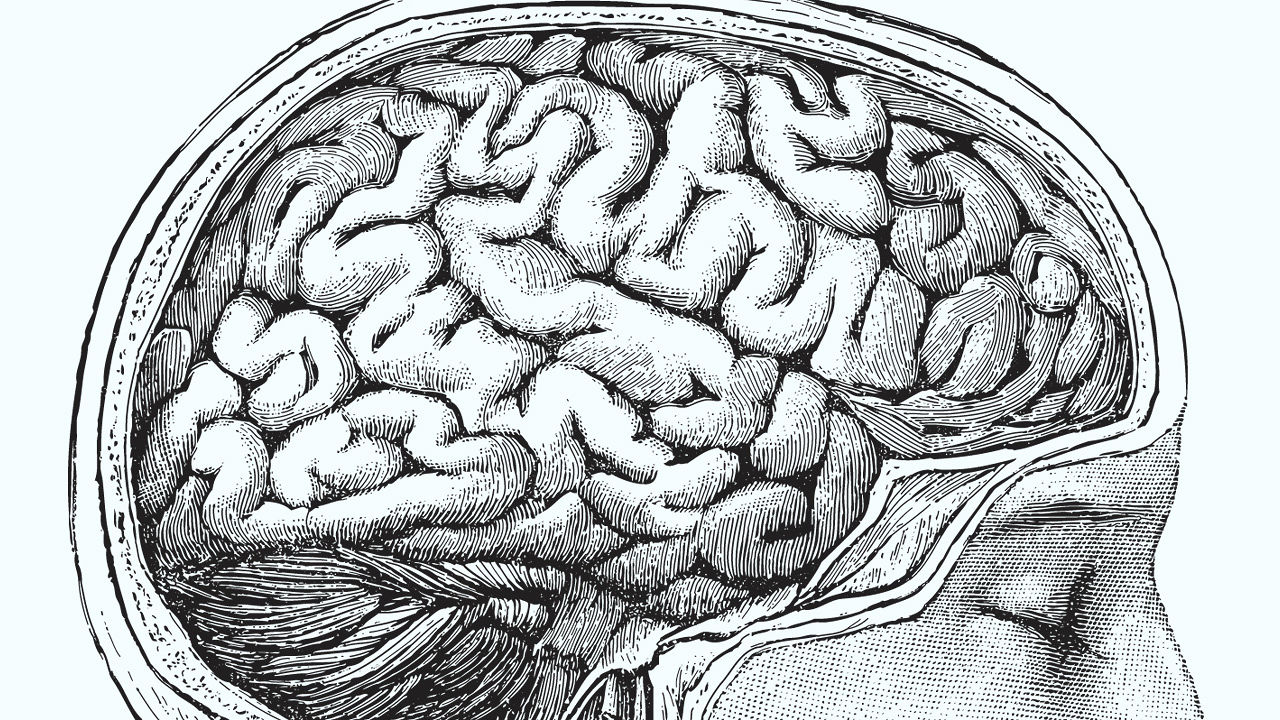
For all the cognitive power that the human brain contains, it’s also exquisitely delicate. It has the consistency of custard. When an ancient anatomist decided to investigate the organs of a cadaver, he would have had no trouble pulling out the heart and manipulating its rugged chambers and valves. But after death, the brain’s enzymes make quick work of it. By the time the anatomist had sawed open the skull, he might well be looking at nothing but blush-colored goo. Who could ever think that in that goo could be found anything having to do with our very selves?

When ancient anatomists examined the heart, the brain, and the rest of the body, they came up with explanations for what each organ did. Many of their explanations feel weirdly alien today. Aristotle, for example, believed that the heart was responsible for perceptions and actions. The brain was something like a refrigerator. It was made of phlegm, which was cold by nature, and so its coldness could flow down to balance out the raging heat of the heart.

It may seem bizarre that the founder of Western biology could have gotten the brain so wrong. But Aristotle was working from what was known at the time, and what he could see for himself. There were no microscopes that could reveal to him the hidden filigree of neurons in the brain and the nervous system. No one in his day even knew that nerves existed.

Other scholars in ancient Greece looked a bit more favorably on the brain. Instead of an air conditioner, they viewed it more like a pump. The body was set in motion by animal spirits, which coursed through the nervous system, inflating them like string-shaped balloons. The spirits flowed through cavities in the head, and it was the job of the brain to squeeze down and pump them on their way.

Christian scholars in medieval Europe brought together the Bible with ancient Greek philosophy—including this view of the brain. In their books on anatomy, they drew absurdly confident atlases of the insides of the head, dominated by three ventricles linked by channels in a row. It somehow didn’t matter that no one could ever see such chambers in the brains of cadavers. Anatomists had an explanation at the ready: After death, the animal spirits departed the body, leaving the ventricles to collapse like sails on a windless day.

This vision—self-consistent and powerfully explanatory—held sway over many great minds. Even Leonardo da Vinci was in its thrall. Whereas previous generations of anatomists might simply consult the work of an ancient Greek writer, Leonardo wanted to see anatomy for himself. He filled notebooks with revelatory sketches of bone, muscle, and even fetuses in the womb. And to understand the structure of the brain, he devised a brilliant experiment. After having an ox slaughtered, Leonardo injected hot wax into its skull. He waited for the wax to cool, and then opened up the ox’s skull. The wax, having filled the ventricles of the brain, would preserve their structure.

In his notebook, we can see what Leonardo saw: that the ventricles looked nothing like the medieval chambers. They swept up through the brain like hollow horns or wriggled between the hemispheres. But we can also see how Leonardo imposed onto that anatomy his medieval ideas about how the brain worked. He created links between the ventricles where none existed, so that they could remain a channel for the animal spirits that he assumed gave life to the body.

Leonardo sought to publish his anatomical research, but eventually wars and other distractions forced him to abandon the project. No one was able to see his glimmerings of the brain’s true anatomy. It remained for a younger anatomist, Andreas Vesalius, to publish such an account in his 1543 masterpiece, De Humani Corporis Fabrica.

Vesalius’s method for drawing the brain was grisly. He would saw the skulls of cadavers (typically executed criminals) at different depths. Working his way down through the brain, he would draw each exposed layer. Working with other cadavers, he would cut off the entire top of the skull cap and slit apart the membranes, exposing the furrowed surface of the cerebral cortex.

It was all rather messy, and very far from complete. But it was better than anything anyone had achieved before—better even than Leonardo da Vinci, which is certainly saying something. Vesalius even went so far as to question the workings of the ventricles. But he shied away from proposing an alternative explanation. In the sixteenth century, such a proposal could have raised the ire of the church.

Nevertheless, Vesalius pushed anatomy in a new direction. Anatomists gradually began to publish their own research, not just on the structure of the body, but also on its function. The scientific revolution replaced the four humours of the body with atoms and molecules, subject to the laws of physics and chemistry. Natural philosophers recognized that the same kinds of chemical reactions that turned grape juice into wine were at work inside the human body. In 1664, this revolution eventually reached the brain. In that year, the English physician Thomas Willis published the first book dedicated to the organ: The Anatomy of the Brain and Nerves. It was also the first book to present accurate anatomical drawings of the brain in full.

Willis succeeded in large part thanks to the company he kept. His assistant Richard Lower (who would later go on to pioneer blood transfusions) ably dissected brains completely out of their skulls. Willis’s friend Robert Boyle discovered how to preserve delicate organs like brains in alcohol. Willis now had the luxury of time to examine the brain in detail. And Christopher Wren handled the medical illustrations and microscopic examinations of the brains.

Willis combined their insights with his own observations of thousands of patients, as well as careful experiments in which he injected ink into the cerebral arteries to trace their paths. This synthesis led Willis to a radically new picture of the brain and its functions. The ventricles, which had once channeled the animal spirits, were mere infoldings. Will argued that animal spirits traveled through paths inside the brain to carry out different functions. Damage to different parts of the brain, he argued, led to different kinds of disorders.

Like any scientist, Willis was still enmeshed in his age. He knew nothing about electricity, and so he could not guess that the phenomenon he witnessed in a lightning storm was taking place in his own head. Well over a century after his death did scientists such as Luigi Galvani discover that electric current could travel down nerves, finally banishing animal spirits from neurology.

In Galvani’s time, electricity was an amusement, the stuff of parlor tricks. No one imagined that it could power civilization. Nor could they imagine that electricity could deliver messages nearly instantaneously. In 1844 Samuel Morse set up the first commercial telegraph line from Washington to Baltimore, and one of the first messages transmitted on it came from the Democratic National Convention. The convention delegates, who had gathered in Baltimore, picked a senator named Silas Wright as their nominee for vice-president. They needed to know if Wright would accept or refuse the nomination, but he was in Washington. The president of the convention decided to send a message to Wright by telegraph.

Wright immediately wired back: No. The delegates refused to believe that a message could fly down a wire. They adjourned the convention and sent a flesh-and-blood committee by train to see Wright in person. Wright turned them down again. After the committee came back to Baltimore with the news, the convention president took some delegates to the telegraph office to see the machine for themselves. And yet, he later wrote, “many of the delegates shook their heads and could not but think the whole thing a deception.

Imagine how much they might have shaken their heads if they had been told that their experience of the telegraph was made possible by similar pulses of electricity traveling through their nerves and brains.

The telegraph’s dribble of digital pulses foreshadowed today’s torrents of Internet communication. By the mid-twentieth century, mathematicians had developed a method for using a digital system of ones and zeroes to carry out computations. Transistors sent signals to one another, combining flows of information to produce new outputs.

It became increasingly clear that brains and electronics shared much in common. In 1963, the neuroscientist Jose Delgado displayed their seamless union on a cattle ranch. He inserted an electrode into the brains of bulls, which he could activate with a remote control. The bulls charged toward Delgado, and with a touch of the remote, he could force them to skid to a halt within just a few feet of him.

To philosophers like Hilary Putnam, this must have been a thrilling moment. Indeed, even as Delgado was controlling animals with electrodes, Putnam was developing a computational theory of mind, in which sensations traveled into the brain as input, and the brain then functioned like a computer to produce output commands. Putnam was no neuroscientist and didn’t care much about the details of how one neuron connected to another. Instead, he argued that the structure of thought itself showed signs of being the product of computation. It didn’t much matter what carried out those computations—neurons or transistors could do the job. It was this cultural evolution that made the brain in a vat so easy for people to absorb. If, as Delgado had shown, electronics and the brain were seamless, then surely it should be possible for an evil scientist to have his way.

Over the past two decades, the brain-in-a-vat thought experiment has itself evolved. Imagine that you are facing death. Now imagine that a well-meaning scientist offers to make a perfect map of your brain, recording all 100 trillion synaptic connections that encode your memories, your feelings, everything that is you. She then uploads that information into an equally detailed model of a human brain, one that is capable of being supplied with inputs, and which then produces outputs of its own. Perhaps your uploaded mind exists solely within a virtual universe. Meanwhile, your biological brain dies off with your own failing body.

In some circles, brain uploading is considered a serious possibility as computers continue to grow more powerful, and as we learn more about the structure and the function of the brain. For philosophers, it presents a new puzzle. The computer of Hilary Putnam’s thought experiment extends its sphere, taking over the brain’s own computation, until there is no brain left. If you are uploaded into a computer, would your self still be yourself? How could you even know whether you’ve already been uploaded? How could you know if you had ever been outside of a computer?

These are entertaining questions to consider, but they are far from practical ones. The mind may indeed be computational, but that does not mean it resembles any computer humans have built. It processes information in a massively parallel fashion, rather than doing so sequentially, as manmade computers do. Its memory does not exist like bits on a hard drive, but in a distributed, dynamic pattern of connections. Its computations do not create a full-blown representation of the world, but only create useful predictions, which allow us to control our bodies.

Nor do our brains exist in isolation, like some laptop sitting on a table that can be simply powered up. They are embedded in bodies, and they have evolved to depend on a continual flow of feedback about how well their predictions have fared in the outside world. And, finally, out of all that computation, consciousness emerges. While many scientists are exploring the nature of consciousness in inventive ways, no one has a theory that makes sense of it yet.

Are we brains in a vat? Strictly speaking, it’s hard to prove we’re not. But in any world—real or manufactured—we still know so little about how brains work that we wouldn’t be able to put Putnam’s thought experiment into practice.


Carl Zimmer writes about science for the New York Times and magazines such as Discover, where he is a contributing editor and columnist. He is the author of twelve books, the most recent of which is Science Ink: Tattoos of the Science Obsessed.

photo by Gaetan Lee