Mostrando entradas con la etiqueta mutaciones. Mostrar todas las entradas

jueves, 11 de septiembre de 2014

I Contain Multitudes

Our bodies are a genetic patchwork, possessing variation from cell to cell. Is that a good thing?

Olena Shmahalo for Quanta Magazine

Even healthy brains harbor genetic diversity, though scientists disagree over the extent.

Your DNA is supposed to be your blueprint, your unique master code, identical in every one of your tens of trillions of cells. It is why you are you, indivisible and whole, consistent from tip to toe.

But that’s really just a biological fairy tale. In reality, you are an assemblage of genetically distinctive cells, some of which have radically different operating instructions. This fact has only become clear in the last decade. Even though each of your cells supposedly contains a replica of the DNA in the fertilized egg that began your life, mutations, copying errors and editing mistakes began modifying that code as soon as your zygote self began to divide. In your adult body, your DNA is peppered by pinpoint mutations, riddled with repeated or rearranged or missing information, even lacking huge chromosome-sized chunks. Your data is hopelessly corrupt.

Most genome scientists assume that this DNA diversity, called “somatic mutation” or “structural variation,” is bad. Mutations and other genetic changes can alter the function of the cell, usually for the worse. Disorderly DNA is a hallmark of cancers, and genomic variation can cause a suite of brain disorders and malformations. It makes sense: Cells working off garbled information probably don’t function very well.

Most research to date has focused on how aberrant DNA drives disease, but even healthy bodies harbor genetic disorder. In the last few years, some researchers report that anywhere from 10 to 40 percent of brain cells and between 30 and 90 percent of human liver cells are aneuploid, meaning that one entire chromosome is either missing or duplicated. Copy number variations, in which chunks of DNA between 100 and a few million letters in length are multiplied or eliminated, also seem to be widespread in healthy people.

miércoles, 18 de junio de 2014

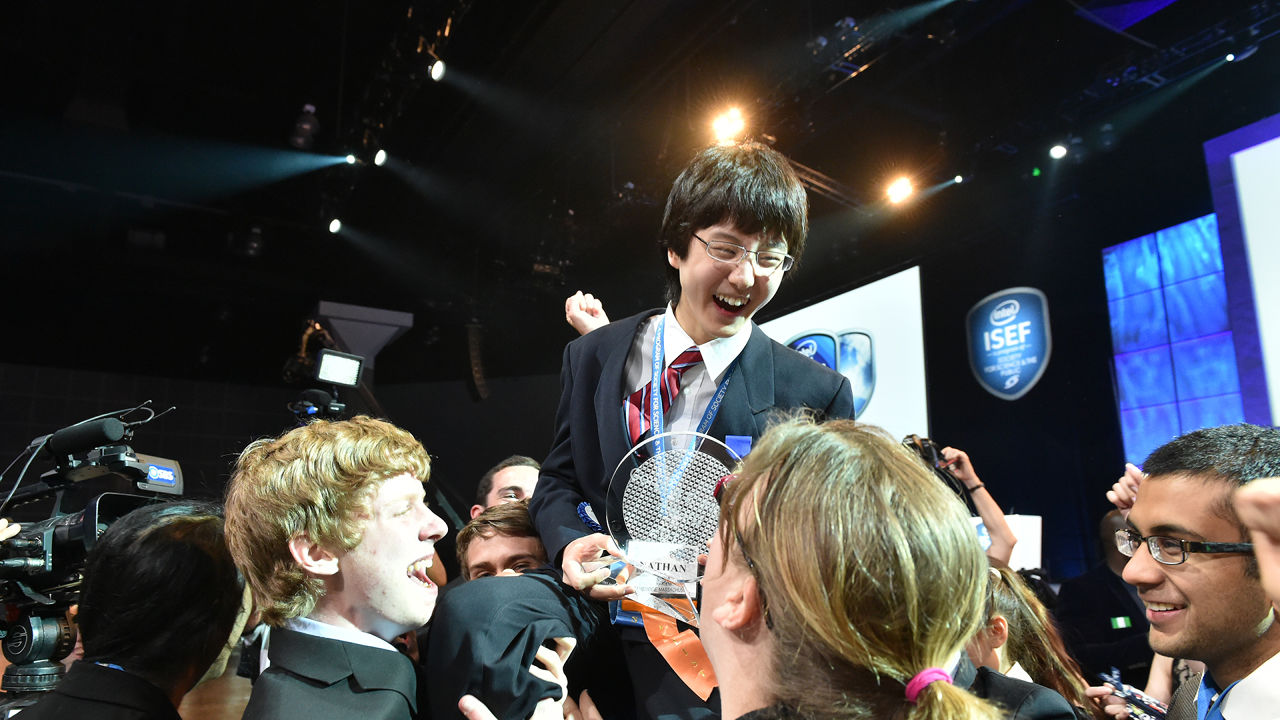
This 15-Year-Old Came Up With Software To Hunt Down Cancer-Causing Gene Mutations

In winning the Intel science fair, Nathan Han is already having an impact.

The Intel International Science and Engineering Fair doles out awards each year to high schoolers who could run intellectual circles around many adults. Jack Andraka, the creator of a cheap, accurate pancreatic cancer sensor, is a past winner. This time around, first place went to another cancer-related project: a computer program that can predict how harmful gene mutations related to cancer might be.

Nathan Han, a 15-year-old from Boston, says that he's been fascinated with bioinformatics for awhile. When a close friend's mother was diagnosed with ovarian cancer, he started thinking about possible projects. It's one of the most studied genes in the human genome.

In January, Han settled on his entry, which evaluates mutations in the BRCA1 gene--a gene commonly associated with ovarian and breast cancer--to see how harmful they are. Han taught his software program to suss out the difference between disease-related mutations and harmless mutations using data from public databases.

"I chose to focus on BRCA1 in particular for practicality. It's one of the most studied genes in the human genome," he says.

According to Han, his program has an 81% accuracy rate in identifying cancer-causing mutations, while existing algorithms have an accuracy rate of about 40%. His software could one day be customized to evaluate other genes and diseases, paving the way for better cancer diagnostic tools. "Down the road, as accuracy improves, I can imagine using this sort of process for personalized genomic analysis," Han says.

The 15-year-old hopes to publish his research, but at the moment, he's looking for a summer job in a research lab. His $75,000 science fair winnings will go towards college funds.

ORIGINAL: FastCo
By Ariel Schwartz
June 5, 2014

Ariel Schwartz is a Senior Editor at Co.Exist. She has contributed to SF Weekly, Popular Science, Inhabitat, Greenbiz, NBC Bay Area, GOOD Magazine and more. For story ideas: ariel[at]fastcompany.com

martes, 4 de diciembre de 2012

'Cognitive Big Bang' Discovered in Tiny Sea Worm

ORIGINAL: LiveScience
By Tia Ghose, LiveScience Staff Writer | LiveScience.com

The tiny worm Pikaia gracilens, the earliest known vertebrate ancestor, from the Middle Cambrian of British Columbia, may hold the secret to the expansion of intelligence in vertebrates (animals with backbones). CREDIT: Nobu Tamura, Wikimedia Commons
Gene duplications in the ancient sea worm Pikaia (fossil specimen shown here at the Smithsonian) some 550 million years ago may explain vertebrate smarts.
CREDIT: Public Domain

Several "brainy" genes that were duplicated in a tiny sea creature nearly 550 million years ago may have led to the massive expansion in intelligence in vertebrate species, two new studies have found.

The studies, published today (Dec. 2) in the journal Nature Neuroscience, suggest this duplication of certain genes spurred an explosion in the number of chemicals that regulate brain function in vertebrates (animals with backbones), thereby leading to greater intelligence, the research suggests.

"This genome event produced a kind of cognitive big bang; it produced a large set of interesting behavior," said study co-author Seth Grant, a neuroscientist at the University of Cambridge in the United Kingdom. "It produced a molecular toolbox, which in the case of the brain, produced many, many more proteins that you find in the synapses, the junctions between nerve cells."

The study showed that changes, or mutations, in these genes lead to learning problems in both mice and humans, as well as psychological disorders in humans, said Jeffrey Boore, the CEO of Genome Project Solutions, who was not involved in the study. That supports the notion that these genes "have diversified throughout evolution from their ancient duplications to perform important, specific, diverse roles in mammal cognition in behavior."

Vertebrate explosion
Vertebrates are more intelligent than invertebrates (animals with no backbone), but how those smarts evolved has remained a mystery. In general, vertebrates have many more proteins, which carry out a gene's instructions, in the brain and nervous system; these proteins enable spiny creatures to have a wider, more flexible range of behaviors than invertebrates, Grant said. [Inside the Brain: A Journey Through Time]

"It would be like a stereo or a machine with many more switches in it; it can do more sophisticated types of things," Grant told LiveScience.

Grant and his colleagues wondered whether duplications of certain genes contributed to this explosion in the number of brain proteins, and as a result, to vertebrate intelligence. That's because duplications in genes can give creatures the buffering to evolve more rapidly, Grant said.

(Normally, if a mutation crops up in a gene that's critical to an animal's survival, evolution will weed out that animal, which usually means very little change occurs in critical genes. But if there are two copies of a gene, then the animal has a spare functioning copy, which allows those genes to rack up more mutations — both beneficial, harmful and neutral — without reducing survival fitness.)

In particular, the researchers noticed that vertebrates had multiple copies of two genes that process glutamate, a brain chemical critical for learning and memory. Those genes, which code for the receptor that binds glutamate and the cellular components that process it inside brain cells, were first duplicated in a 2-inch-long (5 centimeters), sea-faring worm called a pikaia that gave rise to all vertebrate species about 550 million yeas ago.

Roots of intelligence
To see whether that duplication formed the genetic origin of intelligence in vertebrates, Grant's team subjected mice with different mutations in these genes to a battery of visual tests that assess learning and attention in changing environments. Different mutations led mice to perform better or worse on cognitive tests, which implied that these genes play a key role in mouse intelligence.

Moreover, the team showed humans and mice carrying the same mutation in a specific glutamate-transporting gene have reduced adaptive learning, suggesting these genes control intelligence and learning across vertebrate species. (In humans, this gene mutation is linked to schizophrenia.)

The findings suggest those first gene duplications probably also gave rise to rapid evolution in the nervous-system proteins that interact with the glutamate receptor, enabling vertebrates to have more subtle, sophisticated responses to their environment.

"Our evidence shows unambiguously that these genome duplications and expansions in the gene family have produced greater complexity to the behavioral repertoire of the vertebrate," Grant said.

Follow LiveScience on Twitter @livescience. We're also on Facebook & Google+. 

viernes, 24 de agosto de 2012

Most Mutations Come from Dad: New Insights Into Age, Height and Sex Reshape Views of Human Evolution

ORIGINAL: Science Daily

Humans inherit more than three times as many mutations from their fathers as from their mothers, and mutation rates increase with the father's age but not the mother's, researchers have found in the largest study of human genetic mutations to date. (Credit: © yanlev / Fotolia)
ScienceDaily (Aug. 23, 2012) — Humans inherit more than three times as many mutations from their fathers as from their mothers, and mutation rates increase with the father's age but not the mother's, researchers have found in the largest study of human genetic mutations to date.

The study, based on the DNA of around 85,000 Icelanders, also calculates the rate of human mutation at high resolution, providing estimates of when human ancestors diverged from nonhuman primates. It is one of two papers published this week by the journal Nature Genetics as well as one published at Nature that shed dramatic new light on human evolution.

"Most mutations come from dad," said David Reich, professor of genetics at Harvard Medical School and a co-leader of the study. In addition to finding 3.3 paternal germ line mutations for each maternal mutation, the study also found that the mutation rate in fathers doubles from age 20 to 58 but that there is no association with age in mothers -- a finding that may shed light on conditions, such as autism, that correlate with the father's age.

The study's first author is James Sun, a graduate student in Reich's lab who worked with researchers from deCODE Genetics, a biopharma company based in Reykjavik, Iceland, to analyze about 2,500 short sequences of DNA taken from 85,289 Icelanders in 24,832 father-mother-child trios. The sequences, called microsatellites, vary in the number of times that they repeat, and are known to mutate at a higher rate than average places in the genome.

Reich's team identified 2,058 mutational changes, yielding a rate of mutation that suggests human and chimpanzee ancestral populations diverged between 3.7 million and 6.6 million years ago.

A second team, also based at deCODE Genetics (but not involving HMS researchers), published a paper this week in Nature on a large-scale direct estimate of the rate of single nucleotide substitutions in human genomes (a different type of mutation process), and came to largely consistent findings.

The finding complicates theories drawn from the fossil evidence. The upper bound, 6.6 million years, is less than the published date of Sahelanthropus tchadensis, a fossil that has been interpreted to be a human ancestor since the separation of chimpanzees, but is dated to around 7 million years old. The new study suggests that this fossil may be incorrectly interpreted.

Great Heights

A second study led by HMS researchers, also published in Nature Genetics this week, adds to the picture of human evolution, describing a newly observable form of recent genetic adaptation.

The team led by Joel Hirschhorn, Concordia Professor of Pediatrics and professor of genetics at Boston Children's Hospital and HMS, first asked why closely-related populations can have noticeably different average heights. David Reich also contributed to this study.

They examined genome-wide association data and found that average differences in height across Europe are partly due to genetic factors. They then showed that these genetic differences are the result of an evolutionary process that acts on variation in many genes at once. This type of evolution had been proposed to exist but had not previously been detected in humans.

Although recent human evolution is difficult to observe directly, some of its impact can be inferred by studying the human genome. In recent years, genetic studies have uncovered many examples where recent evolution has left a distinctive signature on the human genome. The clearest "footprints" of evolution have been seen in regions of DNA surrounding mutations that occurred fairly recently (typically in the last several thousand years) and confer an advantageous trait, such as resistance to malaria. Hirschhorn's team observed, for the first time in humans, a different signature of recent evolution: widespread small but consistent changes at many different places in the genome, all affecting the same trait, adult height.

"This paper offers the first proof and clear example of a new kind of human evolution for a specific trait," said Hirschhorn, who is also a senior associate member of the Broad Institute. "We provide a demonstration of how humans have been able to adapt rapidly without needing to wait for new mutations to happen, by drawing instead on the existing genetic diversity within the human population."

Average heights can differ between populations, even populations that are genetically very similar, which suggests that human height might have been evolving differently across these populations. Hirschhorn's team studied variants in the genome that are known to have small but consistent effects on height: people inheriting the "tall" version of these variants are known to be slightly taller on average than people inheriting the "short" versions of the same variants.

The researchers discovered that, in northern Europe, the "tall" versions of these variants are consistently a little more common than they are in southern Europe. The combined effects of the "tall" versions being more common can partly explain why northern Europeans are on average taller than southern Europeans. The researchers then showed that these slight differences have arisen as a result of evolution acting at many variants, and acting differently in northern than in southern Europe.

"This paper explains -- at least in part -- why some European populations, such as people from Sweden, are taller on average than others, such as people from Italy," Hirschhorn said.

The researchers were only able to detect this signature of evolution by using the results of recent genome-wide association studies by the GIANT consortium, which identified hundreds of different genetic variants that influence height.

martes, 14 de agosto de 2012

Japón: Exposición a radiación pudo generar mutaciones en mariposas

ORIGINAL: Más Verde


Un equipo de científicos japoneses vinculó mutaciones en mariposas con la exposición a la radiación de la central nuclear de Fukushima Daichii.

Cambios en las antenas, patas y forma de las alas fueron observados por investigadores de la Universidad de Ryukyus, Okinawa, en esos insectos tras el desastre nuclear en esa región, sacudida por un fuerte sismo del 11 de marzo del 2011.


Transcurridos dos meses del accidente nuclear en la planta de energía, los científicos recogieron 144 ejemplares de la especie Zizeeria maha en 10 lugares de Japón, que incluía la región de Fukushima.

Mediante la comparación de las mutaciones encontradas en las mariposas seleccionadas en los diferentes sitios, el equipo halló que las áreas con mayores cantidades de radiación eran el hogar de las mariposas con alas mucho más pequeñas y los ojos irregularmente desarrollados.

“Se ha creído que los insectos son muy resistentes a la radiación, en ese sentido nuestros resultados fueron inesperados”, indicó el autor principal del estudio, Joji Otaki. Su equipo realizó un experimento en laboratorio con ejemplares que vivían a mil 750 kilómetros de donde ocurrió el accidente.


Fue por la cría de estas mariposas que se comenzó a notar una serie de anomalías que no se habían visto en la anterior generación recogida de Fukushima tales como antenas con malformaciones.

Investigadores que no participaron en el estudio opinaron que estos resultados son importantes para las personas y las comunidades biológicas que viven en Fukushima y sus alrededores.

Fuente: Prensa Latina, Agencias