Mostrando entradas con la etiqueta Action. Mostrar todas las entradas

jueves, 19 de septiembre de 2019

I have a dream that the powerful take the climate crisis seriously. The time for their fairytales is over

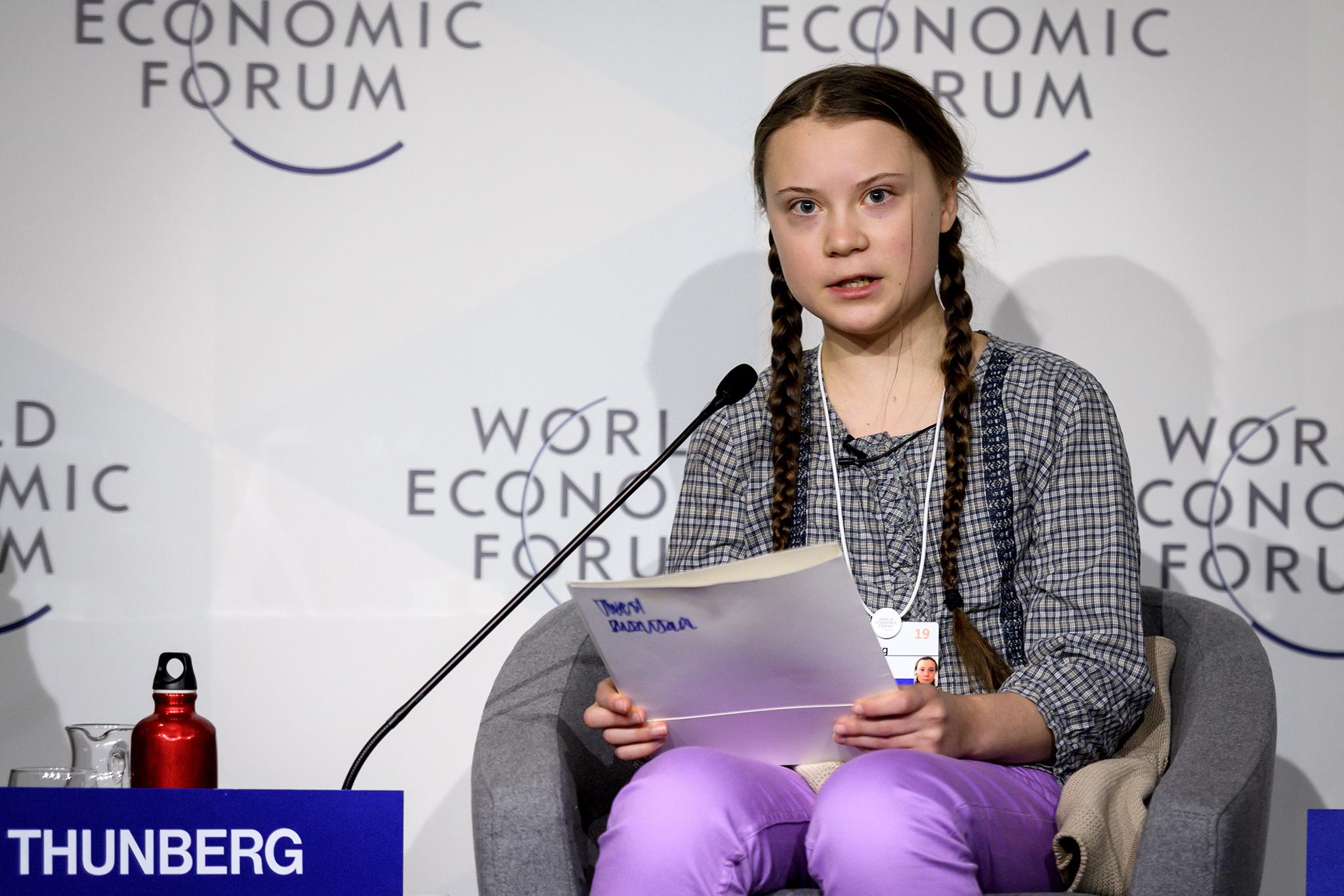
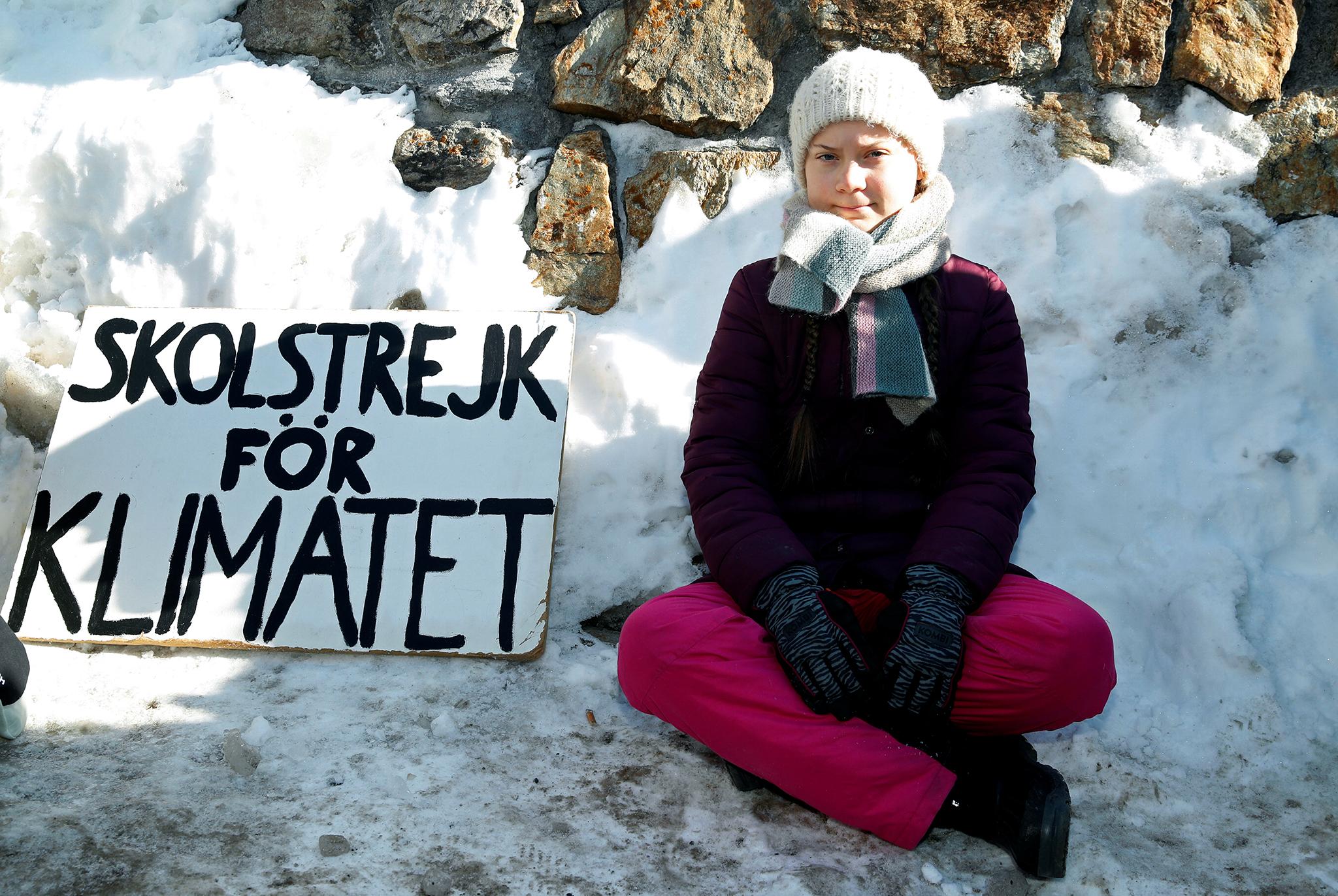
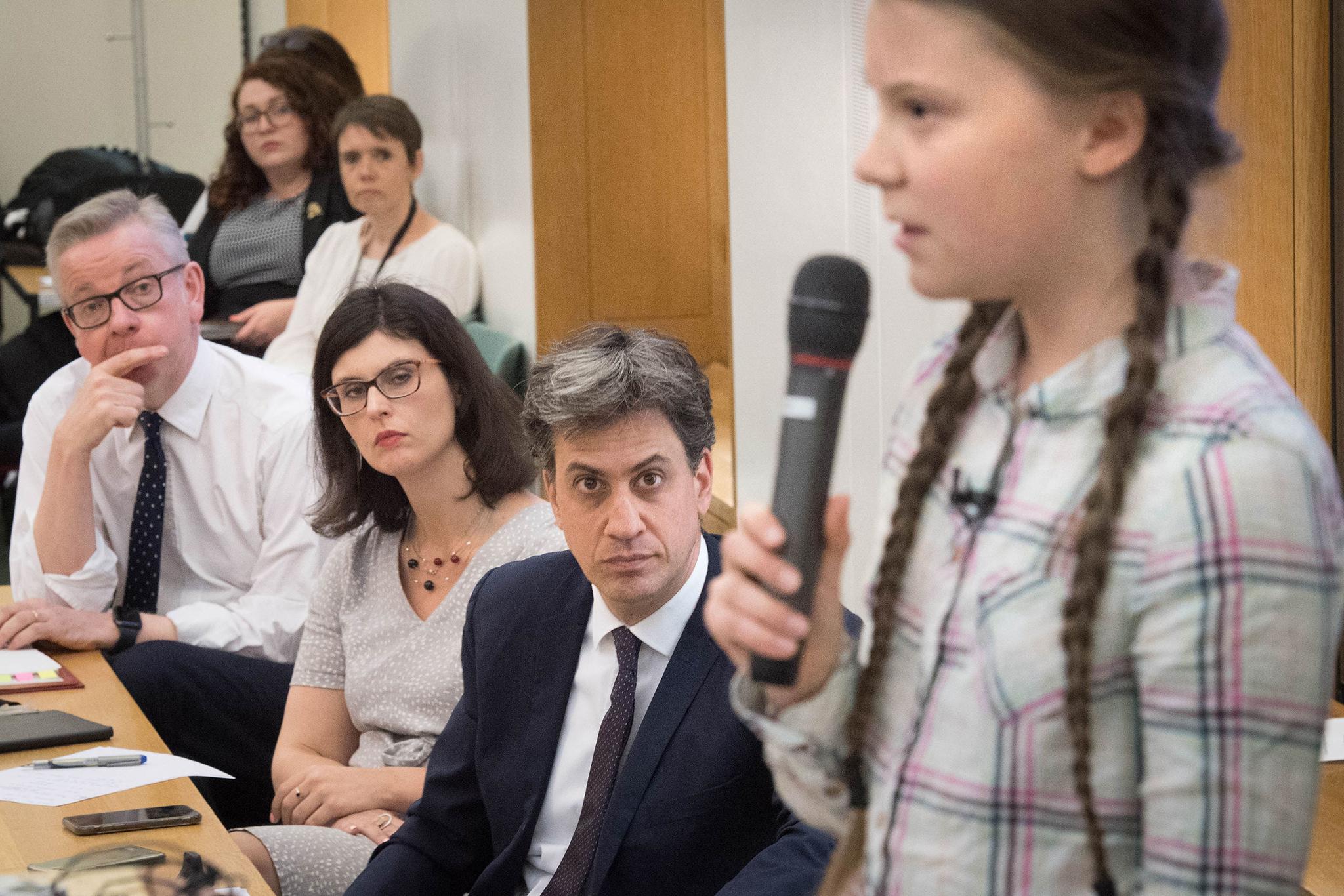
IN A HIGHLY ANTICIPATED SPEECH IN CONGRESS AFTER TRAVELLING HALF THE WAY ACROSS THE ATLANTIC BY BOAT, GRETA THUNBERG URGES US SENATORS TO LEARN FROM THE SACRIFICES OF MARTIN LUTHER KING AND OTHER CIVIL RIGHTS ACTIVISTS IN THE FIGHT AGAINST CLIMATE CHANGE. HERE IS THE TRANSCRIPT



My name is Greta Thunberg, I am 16 years old and I’m from Sweden. I am grateful for being with you here in the USA. A nation that, to many people, is the country of dreams.

I also have a dream: that governments, political parties, and corporations grasp the urgency of the climate and ecological crisis and come together despite their differences - as you would in an emergency - and take the measures required to safeguard the conditions for a dignified life for everybody on earth.

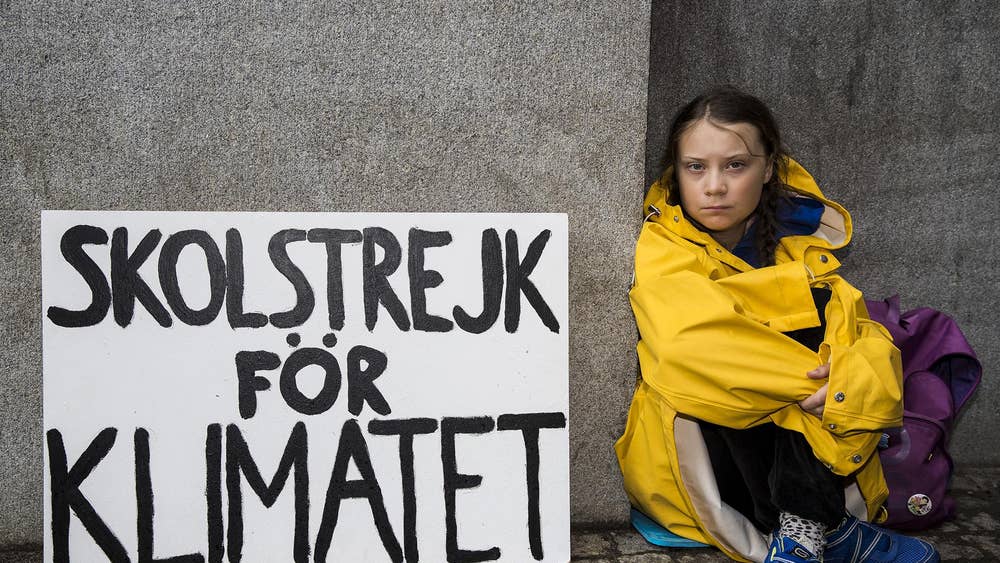
Because then - we millions of school striking youth - could go back to school.

I have a dream that the people in power, as well as the media, start treating this crisis like the existential emergency it is. So that I could go home to my sister and my dogs. Because I miss them.

In fact, I have many dreams. But this is the year 2019. This is not the time and place for dreams. This is the time to wake up. This is the moment in history when we need to be wide awake.

And yes, we need dreams, we can not live without dreams. But there’s a time and place for everything. And dreams can not stand in the way of telling it like it is.

Greta Thunberg inspires climate activists everywhere: in pictures

And yet, wherever I go I seem to be surrounded by fairytales. Business leaders, elected officials all across the political spectrum spending their time making up and telling bedtime stories that soothe us, that make us go back to sleep.

These are “feel-good” stories about how we are going to fix everything. How wonderful everything is going to be when we have “solved” everything. But the problem we are facing is not that we lack the ability to dream or to imagine a better world. The problem now is that we need to wake up. It’s time to face the reality, the facts, the science.

And the science doesn’t mainly speak of “great opportunities to create the society we always wanted”. It tells of unspoken human sufferings, which will get worse and worse the longer we delay action - unless we start to act now. And yes, of course, a sustainable transformed world will include lots of new benefits. But you have to understand. This is not primarily an opportunity to create new green jobs, new businesses or green economic growth. This is above all an emergency, and not just any emergency. This is the biggest crisis humanity has ever faced.

And we need to treat it accordingly so that people can understand and grasp the urgency. Because you can not solve a crisis without treating it as one. Stop telling people that everything will be fine when in fact, as it looks now, it won’t be very fine. This is not something you can package and sell or ”like” on social media.

Stop pretending that you, your business idea, your political party or plan will solve everything. We must realize that we don’t have all the solutions yet. Far from it. Unless those solutions mean that we simply stop doing certain things.

Changing one disastrous energy source for a slightly less disastrous one is not progress. Exporting our emissions overseas is not reducing our emission. Creative accounting will not help us. In fact, it’s the very heart of the problem.

Some of you may have heard that we have 12 years from 1 January 2018 to cut our emissions of carbon dioxide in half. But I guess that hardly any of you have heard that there is a 50 percent chance of staying below a 1.5 degree Celsius of global temperature rise above pre-industrial levels. Fifty percent chance.

And these current, best available scientific calculations do not include nonlinear tipping points as well as most unforeseen feedback loops like the extremely powerful methane gas escaping from rapidly thawing arctic permafrost. Or already locked in warming hidden by toxic air pollution. Or the aspect of equity; climate justice.

So a 50 percent chance - a statistical flip of a coin - will most definitely not be enough. That would be impossible to morally defend. Would anyone of you step onto a plane if you knew it had more than a 50 percent chance of crashing? More to the point: would you put your children on that flight?


And why is it so important to stay below the 1.5 degree limit? Because that is what the united science calls for, to avoid destabilizing the climate so that we stay clear of setting off an irreversible chain reaction beyond human control. Even at 1 degree of warming, we are seeing an unacceptable loss of life and livelihoods.

So where do we begin? Well, I would suggest that we start looking at chapter 2, on page 108 in the IPCC report that came out last year. Right there it says that if we are to have a 67 per cent chance of limiting the global temperature rise to below 1.5 degrees Celsius, we had, on 1 January 2018, about 420 Gtonnes of CO2 left to emit in that carbon dioxide budget. And of course, that number is much lower today. As we emit about 42 Gtonnes of CO2 every year if you include land use.

With today’s emissions levels, that remaining budget is gone within less than 8 and a half years. These numbers are not my opinions. They aren’t anyone’s opinions or political views. This is the current best available science. Though a great number of scientists suggest even these figures are too moderate, these are the ones that have been accepted by all nations through the IPCC.

And please note that these figures are global and therefore do not say anything about the aspect of equity, clearly stated throughout the Paris Agreement, which is absolutely necessary to make it work on a global scale. That means that richer countries need to do their fair share and get down to zero emissions much faster, so that people in poorer countries can heighten their standard of living, by building some of the infrastructures that we have already built. Such as roads, hospitals, schools, clean drinking water, and electricity.

The USA is the biggest carbon polluter in history. It is also the world’s number one producer of oil. And yet, you are also the only nation in the world that has signaled your strong intention to leave the Paris Agreement. Because quote ”it was a bad deal for the USA”.

Four-hundred and twenty GTons of CO2 left to emit on 1 January 2018 to have a 67 percent chance of staying below 1.5 degrees of global temperature rise. Now that figure is already down to less than 360 GTons.

These numbers are very uncomfortable. But people have the right to know. And the vast majority of us have no idea these numbers even exist. In fact, not even the journalists that I meet seem to know that they even exist. Not to mention the politicians. And yet they all seem so certain that their political plan will solve the entire crisis.

But how can we solve a problem that we don’t even fully understand? How can we leave out the full picture and the current best available science?

I believe there is a huge danger in doing so. And no matter how political the background to this crisis may be, we must not allow this to continue to be a partisan political question. The climate and ecological crisis are beyond party politics. And our main enemy right now is not our political opponents. Our main enemy now is physics. And we can not make “deals” with physics.

Everybody says that making sacrifices for the survival of the biosphere - and to secure the living conditions for future and present generations - is an impossible thing to do.

Americans have indeed made great sacrifices to overcome terrible odds before.

Think of the brave soldiers that rushed ashore in that first wave on Omaha Beach on D Day. Think of Martin Luther King and the 600 other civil rights leaders who risked everything to march from Selma to Montgomery. Think of President John F. Kennedy announcing in 1962 that America would “choose to go to the moon in this decade and do the other things, not because they are easy, but because they are hard…”

Perhaps it is impossible. But looking at those numbers - looking at the current best available science signed by every nation - then I think that is precisely what we are up against.

But you must not spend all of your time dreaming or see this as some political fight to win.

And you must not gamble your children’s future on the flip of a coin.

Instead, you must unite behind the science.

You must take action.

You must do the impossible.

Because giving up can never ever be an option.

ORIGINAL: The Independent
by Greta Thumberg
2019/09/19

sábado, 26 de enero de 2019

David Attenborough: 'The Garden of Eden is no more'. Read his Davos speech in full

Hilde Schwab and Sir David Attenborough at the 25th Annual Crystal Awards.
Image: World Economic Forum / Manuel Lopez
Thank you, Professor Klaus Schwab, Hilde Schwab and the World Economic Forum for this generous award and inviting me to Davos.

I am quite literally from another age.

I was born during the Holocene- the name given to the 12,000-year period of climatic stability that allowed humans to settle, farm and create civilisations.

Those conditions fostered our unique minds, giving rise to international trade in ideas as well as goods making us the globally-connected species we are today.

Much of what will be discussed here is the consequence of that stability.

Global businesses, international co-operation and the striving for higher ideals these are all possible because for millennia, on a global scale, nature has largely been predictable and stable.

Now in the space of one human lifetime - indeed in the space of my lifetime all that has changed.
The Holocene has ended. The Garden of Eden is no more.
We have changed the world so much that scientists say we are now in a new geological age - The Anthropocene - The Age of Humans.

When you think about it, there is perhaps no more unsettling thought. The only conditions modern humans have ever known are changing and changing fast.

It is tempting and understandable to ignore the evidence and carry on as usual or to be filled with doom and gloom.

But there is also a vast potential for what we might do.

We need to move beyond guilt or blame and get on with the practical tasks at hand.

We did not get to this point deliberately – and it has happened astonishingly quickly.

When I made my first television programmes most of audiences had never even seen a pangolin - indeed few pangolin had ever seen a TV camera!

When in 1979 I made a series tracing the history of life on earth, I was aware of environmental problems but I didn’t imagine we were fundamentally changing nature.

In 1999, whilst making the Blue Planet series about marine life, we filmed coral-bleaching, but I still didn’t appreciate the magnitude of the damage that had already started.

Now however we have evidence, knowledge and the ability to share it on a scale unimaginable even just a few years ago.

Movements and ideas can spread at astonishing speed.

The audience for that first series, 60 years ago, was restricted to a few million viewers in southern England.

My next series - Our Planet- which is about to be launched, will go instantly to hundreds of millions of people in almost every country on Earth via Netflix.

And the evidence supporting the series will be free to view by everyone with an internet connection via WWF.

If people can truly understand what is at stake, I believe they will give permission to business and governments to get on with the practical solutions.

And as a species we are expert problem-solvers. But we haven’t yet applied ourselves to this problem with the focus it requires.

We can create a world with clean air and water, unlimited energy, and fish stocks that will sustain us well into the future.

But to do that we need a plan.

Over the next 2 years there will be United Nations decisions on Climate Change, Sustainable Development and a New Deal for Nature. Together these will form our species’ plan for a route through the Anthropocene.

What we do in the next few years will profoundly affect the next few thousand years.

I look forward very much to the discussions and insights this week

Thank you again for this great honour.

ORIGINAL: WEForum

jueves, 30 de junio de 2016

More than 100 Nobel laureates are calling on Greenpeace to end its anti-GMO campaign

Rice field in the Philippines. No Golden Rice here (yet).(Shutterstock)
This week, 109 Nobel laureates signed onto a sharply worded letter to Greenpeace urging the environmental group to rethink its longstanding opposition to genetically modified organisms (GMOs). The writers argue that the anti-GMO campaign is scientifically baseless and potentially harmful to poor people in the developing world.

Joel Achenbach broke the news in the Washington Post, and you can read the full letter here. The signatories include past winners of the Nobel Prize in medicine, chemistry, physics, and economics.

Nobel laureates to Greenpeace: Your anti-GMO campaign has to end
The letter notes that scientific assessments have repeatedly found GM foods are just as safe to eat as conventional foods and don’t pose an inherent risk to the environment (though, like any technology, they can be misused). Greenpeace, it argues, is on the wrong side here:
We urge Greenpeace and its supporters to re-examine the experience of farmers and consumers worldwide with crops and foods improved through biotechnology, recognize the findings of authoritative scientific bodies and regulatory agencies, and abandon their campaign against "GMOs" in general and Golden Rice in particular.

Scientific and regulatory agencies around the world have repeatedly and consistently found crops and foods improved through biotechnology to be as safe as, if not safer than those derived from any other method of production. There has never been a single confirmed case of a negative health outcome for humans or animals from their consumption. Their environmental impacts have been shown repeatedly to be less damaging to the environment, and a boon to global biodiversity.
The laureates also take Greenpeace to task for seeking to block Golden Rice, a strain of not-yet-approved rice that has been genetically enhanced to produce beta carotene — which, its creators hope, might one day alleviate the Vitamin A deficiency that’s causing widespread death and blindness in the developing world:
Greenpeace has spearheaded opposition to Golden Rice, which has the potential to reduce or eliminate much of the death and disease caused by a vitamin A deficiency (VAD), which has the greatest impact on the poorest people in Africa and Southeast Asia. ...

WE CALL UPON GREENPEACE to cease and desist in its campaign against Golden Rice specifically, and crops and foods improved through biotechnology in general;

Now, Greenpeace is far from the only reason Golden Rice has struggled to get regulatory approval — the crop also faces very serious technical challenges. Greenpeace isn’t even the only group seeking to block it. But they’re certainly a high-profile face of GMO opposition, so the laureates are focusing on them.

In a posted response, Greenpeace denied that they were the main reason Golden Rice has failed to come to market, but still showed no sign of ending their broader anti-GMO campaign. We'll get to that, but I do want to elaborate on a few issues the letter raises.

Greenpeace accepts climate science. So why do they dismiss GMO science?
(MICHAEL KAPPELER/AFP/Getty Images)A picture taken on May 3, 2005, shows Greenpeace activists flying a kite displaying a giant corn cob on a field in Seelow, Eastern Germany, to protest against the cultivation of genetically modified maize.

Let’s start off by noting that GMOs will never be a purely scientific issue. Like every policy matter on the planet, the question of how best to incorporate biotechnology into agriculture involves value judgments about what an ideal food system might look like, how to weigh the risks against the benefits, and so on.

But those positions can at least be informed by scientific understanding. To take a different example, on climate change, Greenpeace tends to take very seriously what scientists are telling them. Their website refers frequently to the scientific consensus that the world is getting warmer and humans are the cause.

By contrast, Greenpeace’s public statements on GMOs tend to be startlingly unscientific. On their website, they refer to transgenic crops as "genetic pollution." This is absurd. When scientists create transgenic crops, they frequently use Agrobacterium to transfer genes from one plant or organism to another. But nature does this too: Scientists recently discovered that on two separate occasions in history, Agrobacterium transferred bacterial DNA into the sweet potatoes we now eat. Are sweet potatoes also "polluted"? Because it's the same thing.

In fact, many crop scientists tend to see GMOs as sitting along a continuum. Humans have long used all sorts of tools to alter plant DNA and get crops with the traits we desire — this is a big reason farms can feed 7 billion people every year. For thousands of years, farmers interbred crops to alter their genes. Like so:
(James Kennedy)

In the 20th century, plant breeders began exposing crops to radiation or mutagenic chemicals to scramble their DNA and get new traits. Today, scientists use advanced techniques (like transferring genes or CRISPR) that allow even more precision. But it’s the same basic idea. Under the circumstances, it’s no surprise that GMOs don't appear to pose a special health risk. They’re just not fundamentally different.

Now, the vast majority of the public is unaware of this fact. Most people don’t spend much time thinking about how our food is created. (One of the lovely things about the modern age is that we don’t have to.) So, in the abstract, people tend to fall back on their intuitions: Tampering with the DNA of food seems inherently unnatural. Anything "unnatural" triggers disgust. Therefore, GMOs are bad.

Those intuitions are understandable. But they're unsupported by scientific evidence. And rather than seeking to correct those misapprehensions, as they do on climate change, Greenpeace has long sought to inflame those fears. Take this line from their website: "When we force life forms and our world's food supply to conform to human economic models rather than their natural ones, we do so at our own peril." (Never mind that we’ve been doing this since the dawn of civilization.)

The Nobel laureates are, in essence, telling them to knock it off.

Ultimately, the world will face staggering challenges around food and agriculture in the 21st century. The global population is expected to soar past 9 billion, and we’ll need to figure out how to feed everyone without razing too many forests for farmland. Farmers will have to handle the droughts and heat waves that will come with global warming. There are tricky issues around antibiotic overuse, nitrogen pollution, food distribution, and much more.

Genetic engineering certainly won’t solve all those problems. (It might not even solve most of them.) But it ispotentially a valuable tool for, say, breeding plants with higher drought tolerance or engineering foods that are more nutritious. See, for example, this important work on vitamin-fortified bananas in Africa. We should be thinking seriously about how to use these tools as a larger strategy for improving our food system — not sowing fears about "genetic pollution."

Greenpeace’s campaign against Golden Rice is incoherent — though the crop faces other serious challenges

(David Greedy/Getty Images)Plant Biotechnologist Dr. Swapan Datta inspects a genetically modified "Golden Rice" plant at the International Rice Research Institute (IRRI), November 27, 2003.
The Nobel laureate letter particularly criticizes Greenpeace’s opposition to Golden Rice — rice that’s being modified in an attempt to alleviate Vitamin A deficiency — and here it’s worth expanding a bit.

Last year in Slate, Will Saletan wrote a damning piece on how incoherent Greenpeace’s campaign against Golden Rice was. As research advanced, the group kept shifting its position. A sample:
In 2001, Benedikt Haerlin, Greenpeace’s anti-GMO coordinator, appeared with Potrykus at a press conference in France. Haerlin conceded that Golden Rice served "a good purpose" and posed "a moral challenge to our position." Greenpeace couldn’t dismiss the rice as poison. So it opposed the project on technical grounds: Golden Rice didn’t produce enough beta carotene. …

While critics tried to block the project, Potrykus and his colleagues worked to improve the rice. By 2003 they had developed plants with eight times as much beta carotene as the original version. In 2005 they unveiled a line that had 20 times as much beta carotene as the original. GMO critics could no longer dismiss Golden Rice as inadequate. So they reversed course. Now that the rice produced plenty of beta carotene, anti-GMO activists claimed that beta carotene and vitamin A were dangerous. …

In the Philippines, where Greenpeace was fighting to block field trials of Golden Rice, its hypocrisy was egregious. "It is irresponsible to impose GE 'Golden' rice on people if it goes against their religious beliefs, cultural heritage and sense of identity, or simply because they do not want it," Greenpeace declared. But just below that pronouncement, Greenpeace recommended "vitamin A supplementation and vitamin fortification of foods as successfully implemented in the Philippines." 

Under Philippine law, beta carotene and vitamin A had to be added to sugar, flour, and cooking oil prior to distribution. The government administered capsules to preschoolers twice a year, and to some pregnant women for 28 consecutive days. If Greenpeace seriously believed that retinoids caused birth defects and should be a matter of personal choice, it would never have endorsed these programs.
It goes on and on like this. Greenpeace has simply dismissed scientific reviews showing that Golden Rice does not pose a threat to human health or the environment. Instead, it continues to file petitions to block all field trials and feeding studies in places like the Philippines.

Now, to repeat what I said above: Greenpeace and other anti-GMO groups aren’t the only obstacle to getting Golden Rice into farmers’ fields. It is fundamentally hard to create a high-yielding strain of rice that consistently produces higher levels of beta carotene. Even after 24 years of testing, researchers still haven’t been able to get Golden Rice to work perfectly in field trials. And they might be struggling even if Greenpeace had given them a pass all along.

In a reply to the Nobel laureates' letter, Greenpeace insisted as much: "Accusations that anyone is blocking genetically engineered ‘Golden’ rice are false," said Wilhelmina Pelegrina, Campaigner at Greenpeace Southeast Asia "‘Golden’ rice has failed as a solution and isn’t currently available for sale, even after more than 20 years of research."

True. But rather irrelevant. It is also fundamentally hard to create a Zika vaccine. It would nonetheless be misguided for me to wage a campaign against researchers working on the project or file a petition to stop trials without any good evidence that it was a risk — even if my protests weren’t the main hold-up.

On a final note, I do think Greenpeace does enormously vital work around the world. They played a crucial role in pressuring soy and beef companies in Brazil to reduce deforestation of the Amazon. Their efforts in China to pare back unnecessary coal-burning plants are one of the most consequential climate campaigns going.

But on GMOs, they are very much in the wrong. Let's hope this letter prods them to reflect and reconsider.
Go deeper:

ORIGINAL: Vox
June 30, 2016

domingo, 12 de abril de 2015

Wake Up Call

“ANYONE WHO BELIEVES IN INFINITE GROWTH ON A FINITE PLANET IS EITHER MAD OR AN ECONOMIST.” – D. ATTENBOROUGH


Have you ever felt like we're living through a nightmare of consumption? That you wish you could un-hook yourself and reconnect with a life that is somehow more real and vivid? Then perhaps you're ready to heed Earth's Wake Up Call.


Today we live in a time when there is little to no understanding of how the goods we consume and take for granted came into being. Without this we lack the knowledge to understand the true costs of our consumption, and the power to take action. As a result we have become disconnected from Earth - the origin of our health, wealth and all of the 'things' we depend on.

Wake Up Call takes us on a fast-paced, animated glimpse of the true costs behind some of our most prized possessions - our electronic gadgets. Joining the dots between the stages of extraction, production, consumption and disposal, it reveals that, although our gadgets appear sleek and shiny, their appearance is misleading.

From the mining that causes huge ecological and social destruction, to the mountains of e-waste shipped around the planet and dumped, the lifecycles of our technology are strewn with unacceptable devastation and toxicity.

It is time to Wake Up to this nightmarish destruction, broadly driven by our obsessive pursuit of economic growth at all costs. Things do not have to be this way, but it will take a critical mass of people willing to stand up and say ‘NO! We will not participate in these systems of violence against Earth and our fellow humans’ to make a change.

Wake Up Call invites us to do just that. To forge new paths into the future and join those who already are. We must reconnect with Earth, reduce our consumption, revalue what really makes us happy, and become part of the movement for an ecologically sane, and socially just economy that delivers fair technologies.

Wake Up Call expands on the story examined in “Short Circuit”, released by The Gaia Foundation in April 2013. It is a call to consciousness. Please watch, share, reflect and take action.

WITH A DONATION FROM YOU, WE CAN:
Continue to support communities affected by mining to raise their voices of resistance, to forge positive alliances and to secure legal expertise to challenge the companies involved.

Raise awareness of the true costs of our gadgets by sharing Wake Up Call around the world and developing materials about how we transition to a zero-waste, circular economy.
Join the conversation: #WakeUpCall. Find out more at
http://www.gaiafoundation.org/wakeupc...


ORIGINAL: Gaia Foundation