Mostrando entradas con la etiqueta Climate Change. Mostrar todas las entradas

jueves, 19 de septiembre de 2019

I have a dream that the powerful take the climate crisis seriously. The time for their fairytales is over

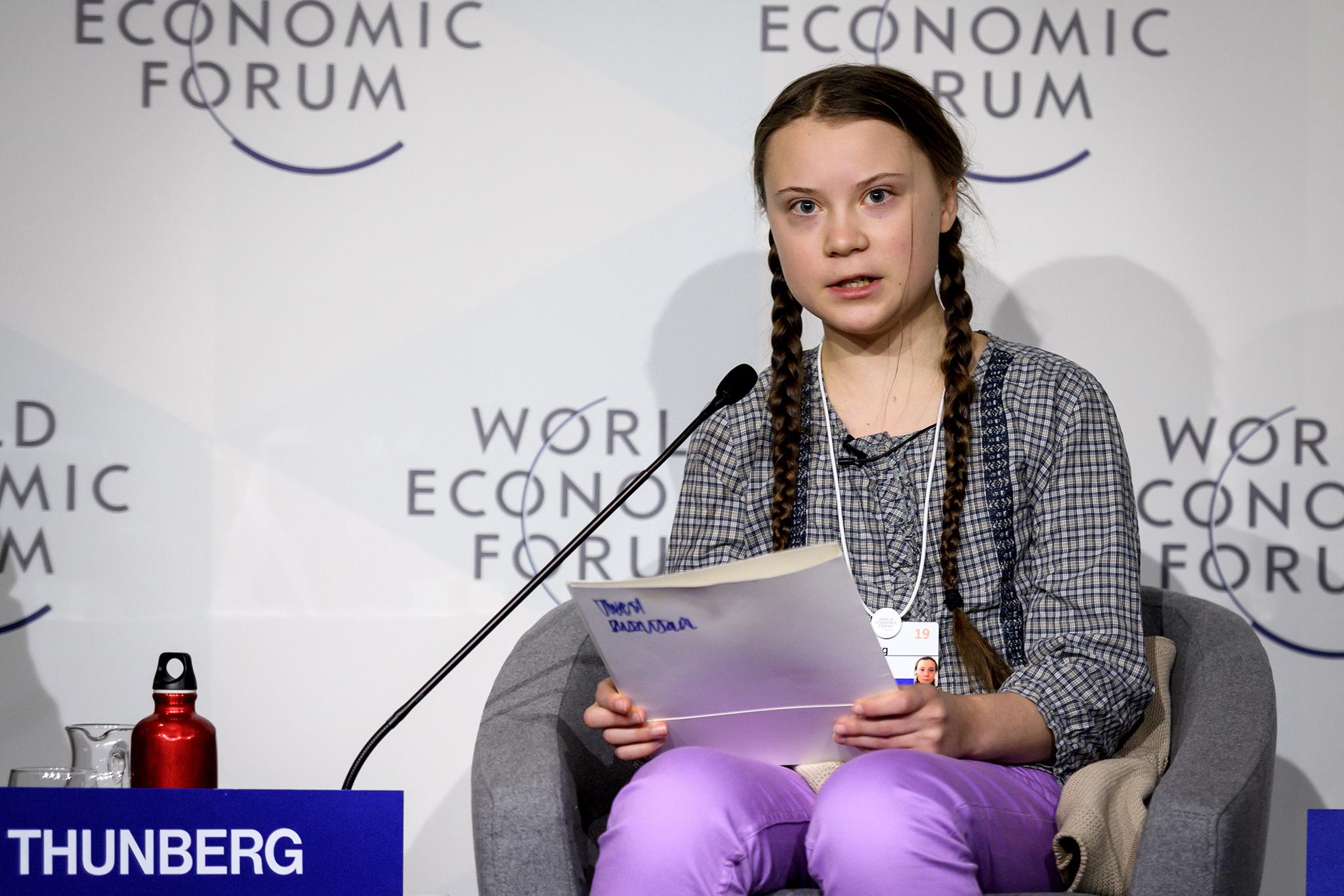
IN A HIGHLY ANTICIPATED SPEECH IN CONGRESS AFTER TRAVELLING HALF THE WAY ACROSS THE ATLANTIC BY BOAT, GRETA THUNBERG URGES US SENATORS TO LEARN FROM THE SACRIFICES OF MARTIN LUTHER KING AND OTHER CIVIL RIGHTS ACTIVISTS IN THE FIGHT AGAINST CLIMATE CHANGE. HERE IS THE TRANSCRIPT



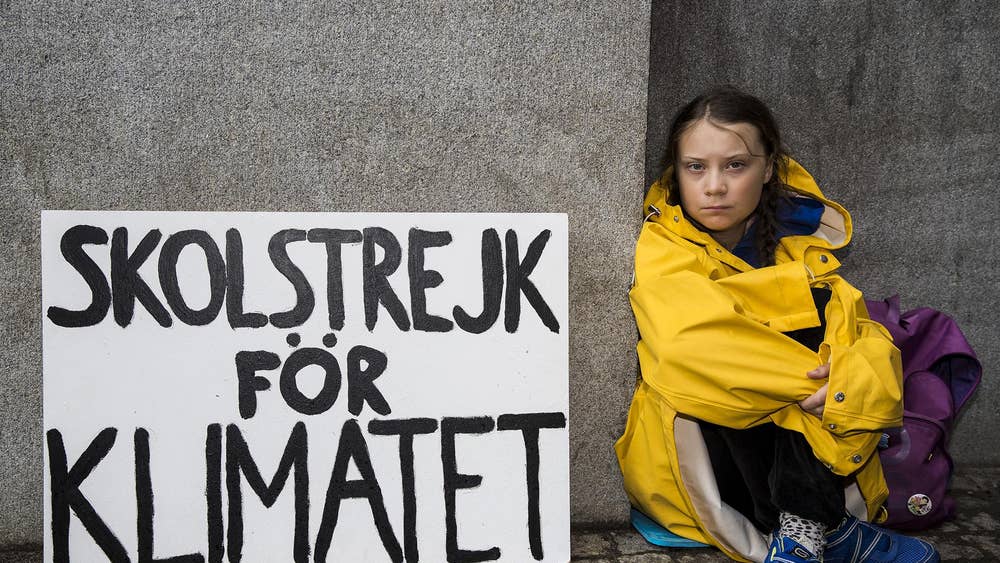
My name is Greta Thunberg, I am 16 years old and I’m from Sweden. I am grateful for being with you here in the USA. A nation that, to many people, is the country of dreams.

I also have a dream: that governments, political parties, and corporations grasp the urgency of the climate and ecological crisis and come together despite their differences - as you would in an emergency - and take the measures required to safeguard the conditions for a dignified life for everybody on earth.

Because then - we millions of school striking youth - could go back to school.

I have a dream that the people in power, as well as the media, start treating this crisis like the existential emergency it is. So that I could go home to my sister and my dogs. Because I miss them.

In fact, I have many dreams. But this is the year 2019. This is not the time and place for dreams. This is the time to wake up. This is the moment in history when we need to be wide awake.

And yes, we need dreams, we can not live without dreams. But there’s a time and place for everything. And dreams can not stand in the way of telling it like it is.

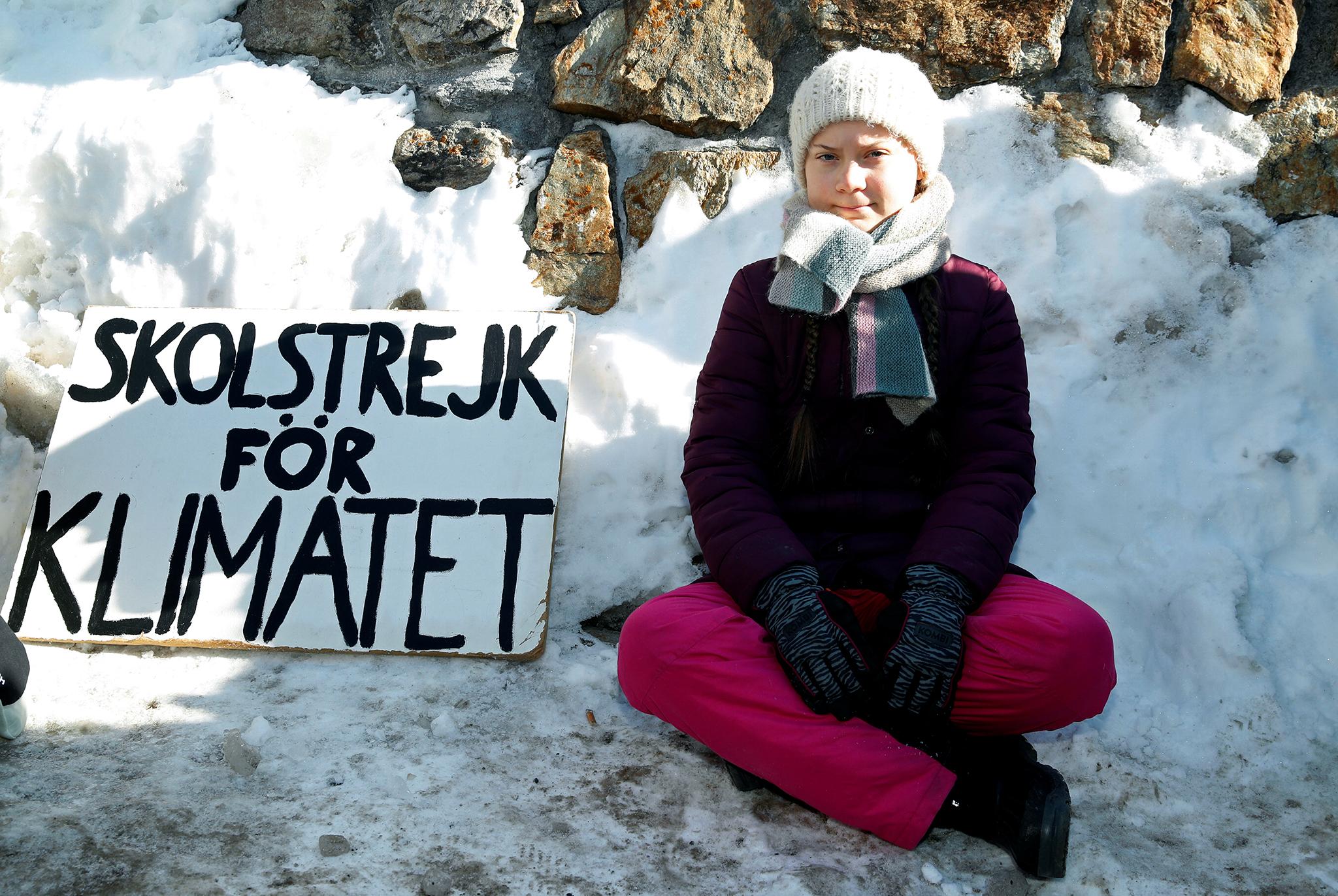
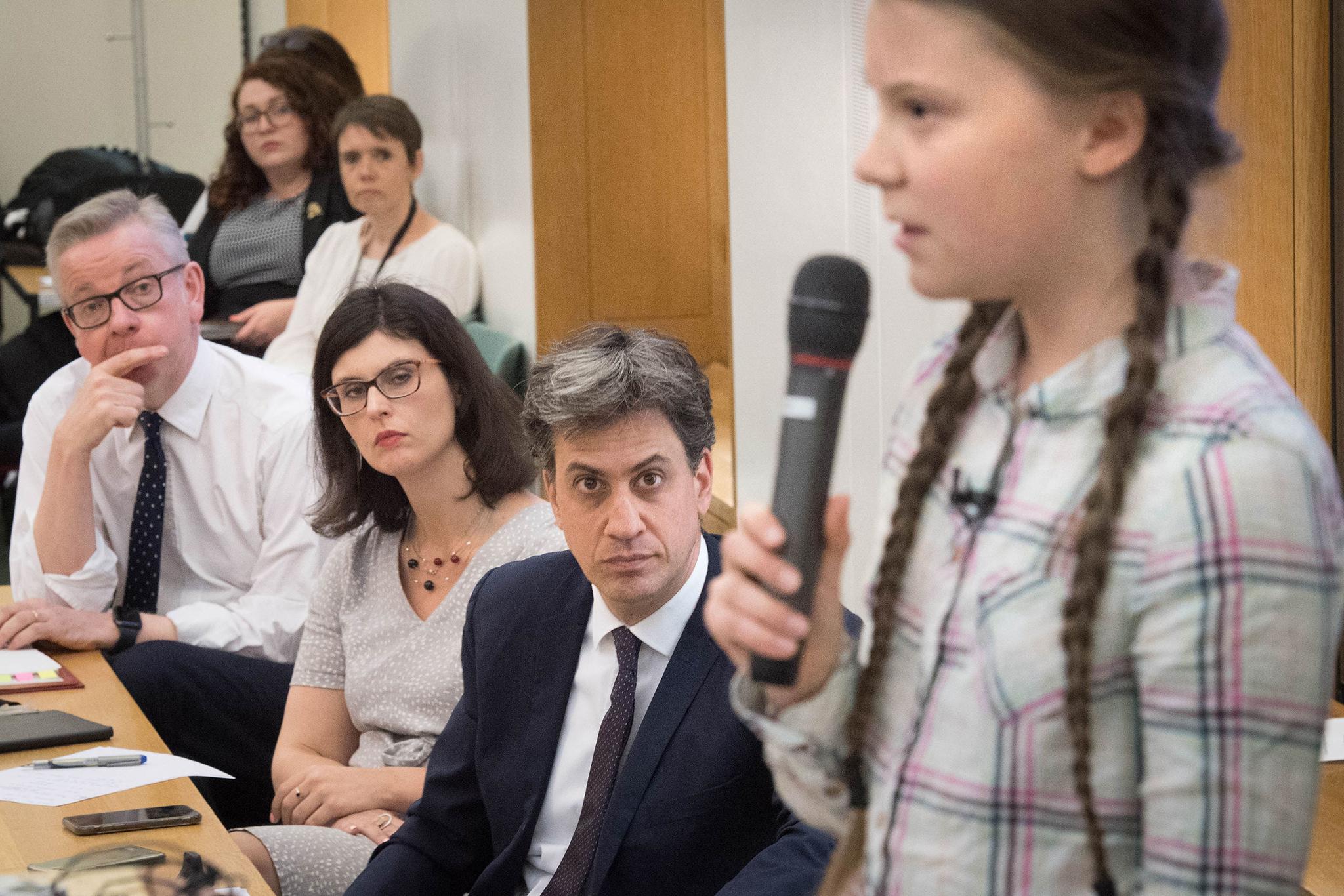
Greta Thunberg inspires climate activists everywhere: in pictures

And yet, wherever I go I seem to be surrounded by fairytales. Business leaders, elected officials all across the political spectrum spending their time making up and telling bedtime stories that soothe us, that make us go back to sleep.

These are “feel-good” stories about how we are going to fix everything. How wonderful everything is going to be when we have “solved” everything. But the problem we are facing is not that we lack the ability to dream or to imagine a better world. The problem now is that we need to wake up. It’s time to face the reality, the facts, the science.

And the science doesn’t mainly speak of “great opportunities to create the society we always wanted”. It tells of unspoken human sufferings, which will get worse and worse the longer we delay action - unless we start to act now. And yes, of course, a sustainable transformed world will include lots of new benefits. But you have to understand. This is not primarily an opportunity to create new green jobs, new businesses or green economic growth. This is above all an emergency, and not just any emergency. This is the biggest crisis humanity has ever faced.

And we need to treat it accordingly so that people can understand and grasp the urgency. Because you can not solve a crisis without treating it as one. Stop telling people that everything will be fine when in fact, as it looks now, it won’t be very fine. This is not something you can package and sell or ”like” on social media.

Stop pretending that you, your business idea, your political party or plan will solve everything. We must realize that we don’t have all the solutions yet. Far from it. Unless those solutions mean that we simply stop doing certain things.

Changing one disastrous energy source for a slightly less disastrous one is not progress. Exporting our emissions overseas is not reducing our emission. Creative accounting will not help us. In fact, it’s the very heart of the problem.

Some of you may have heard that we have 12 years from 1 January 2018 to cut our emissions of carbon dioxide in half. But I guess that hardly any of you have heard that there is a 50 percent chance of staying below a 1.5 degree Celsius of global temperature rise above pre-industrial levels. Fifty percent chance.

And these current, best available scientific calculations do not include nonlinear tipping points as well as most unforeseen feedback loops like the extremely powerful methane gas escaping from rapidly thawing arctic permafrost. Or already locked in warming hidden by toxic air pollution. Or the aspect of equity; climate justice.

So a 50 percent chance - a statistical flip of a coin - will most definitely not be enough. That would be impossible to morally defend. Would anyone of you step onto a plane if you knew it had more than a 50 percent chance of crashing? More to the point: would you put your children on that flight?


And why is it so important to stay below the 1.5 degree limit? Because that is what the united science calls for, to avoid destabilizing the climate so that we stay clear of setting off an irreversible chain reaction beyond human control. Even at 1 degree of warming, we are seeing an unacceptable loss of life and livelihoods.

So where do we begin? Well, I would suggest that we start looking at chapter 2, on page 108 in the IPCC report that came out last year. Right there it says that if we are to have a 67 per cent chance of limiting the global temperature rise to below 1.5 degrees Celsius, we had, on 1 January 2018, about 420 Gtonnes of CO2 left to emit in that carbon dioxide budget. And of course, that number is much lower today. As we emit about 42 Gtonnes of CO2 every year if you include land use.

With today’s emissions levels, that remaining budget is gone within less than 8 and a half years. These numbers are not my opinions. They aren’t anyone’s opinions or political views. This is the current best available science. Though a great number of scientists suggest even these figures are too moderate, these are the ones that have been accepted by all nations through the IPCC.

And please note that these figures are global and therefore do not say anything about the aspect of equity, clearly stated throughout the Paris Agreement, which is absolutely necessary to make it work on a global scale. That means that richer countries need to do their fair share and get down to zero emissions much faster, so that people in poorer countries can heighten their standard of living, by building some of the infrastructures that we have already built. Such as roads, hospitals, schools, clean drinking water, and electricity.

The USA is the biggest carbon polluter in history. It is also the world’s number one producer of oil. And yet, you are also the only nation in the world that has signaled your strong intention to leave the Paris Agreement. Because quote ”it was a bad deal for the USA”.

Four-hundred and twenty GTons of CO2 left to emit on 1 January 2018 to have a 67 percent chance of staying below 1.5 degrees of global temperature rise. Now that figure is already down to less than 360 GTons.

These numbers are very uncomfortable. But people have the right to know. And the vast majority of us have no idea these numbers even exist. In fact, not even the journalists that I meet seem to know that they even exist. Not to mention the politicians. And yet they all seem so certain that their political plan will solve the entire crisis.

But how can we solve a problem that we don’t even fully understand? How can we leave out the full picture and the current best available science?

I believe there is a huge danger in doing so. And no matter how political the background to this crisis may be, we must not allow this to continue to be a partisan political question. The climate and ecological crisis are beyond party politics. And our main enemy right now is not our political opponents. Our main enemy now is physics. And we can not make “deals” with physics.

Everybody says that making sacrifices for the survival of the biosphere - and to secure the living conditions for future and present generations - is an impossible thing to do.

Americans have indeed made great sacrifices to overcome terrible odds before.

Think of the brave soldiers that rushed ashore in that first wave on Omaha Beach on D Day. Think of Martin Luther King and the 600 other civil rights leaders who risked everything to march from Selma to Montgomery. Think of President John F. Kennedy announcing in 1962 that America would “choose to go to the moon in this decade and do the other things, not because they are easy, but because they are hard…”

Perhaps it is impossible. But looking at those numbers - looking at the current best available science signed by every nation - then I think that is precisely what we are up against.

But you must not spend all of your time dreaming or see this as some political fight to win.

And you must not gamble your children’s future on the flip of a coin.

Instead, you must unite behind the science.

You must take action.

You must do the impossible.

Because giving up can never ever be an option.

ORIGINAL: The Independent
by Greta Thumberg
2019/09/19

sábado, 26 de enero de 2019

David Attenborough: 'The Garden of Eden is no more'. Read his Davos speech in full

Hilde Schwab and Sir David Attenborough at the 25th Annual Crystal Awards.
Image: World Economic Forum / Manuel Lopez
Thank you, Professor Klaus Schwab, Hilde Schwab and the World Economic Forum for this generous award and inviting me to Davos.

I am quite literally from another age.

I was born during the Holocene- the name given to the 12,000-year period of climatic stability that allowed humans to settle, farm and create civilisations.

Those conditions fostered our unique minds, giving rise to international trade in ideas as well as goods making us the globally-connected species we are today.

Much of what will be discussed here is the consequence of that stability.

Global businesses, international co-operation and the striving for higher ideals these are all possible because for millennia, on a global scale, nature has largely been predictable and stable.

Now in the space of one human lifetime - indeed in the space of my lifetime all that has changed.
The Holocene has ended. The Garden of Eden is no more.
We have changed the world so much that scientists say we are now in a new geological age - The Anthropocene - The Age of Humans.

When you think about it, there is perhaps no more unsettling thought. The only conditions modern humans have ever known are changing and changing fast.

It is tempting and understandable to ignore the evidence and carry on as usual or to be filled with doom and gloom.

But there is also a vast potential for what we might do.

We need to move beyond guilt or blame and get on with the practical tasks at hand.

We did not get to this point deliberately – and it has happened astonishingly quickly.

When I made my first television programmes most of audiences had never even seen a pangolin - indeed few pangolin had ever seen a TV camera!

When in 1979 I made a series tracing the history of life on earth, I was aware of environmental problems but I didn’t imagine we were fundamentally changing nature.

In 1999, whilst making the Blue Planet series about marine life, we filmed coral-bleaching, but I still didn’t appreciate the magnitude of the damage that had already started.

Now however we have evidence, knowledge and the ability to share it on a scale unimaginable even just a few years ago.

Movements and ideas can spread at astonishing speed.

The audience for that first series, 60 years ago, was restricted to a few million viewers in southern England.

My next series - Our Planet- which is about to be launched, will go instantly to hundreds of millions of people in almost every country on Earth via Netflix.

And the evidence supporting the series will be free to view by everyone with an internet connection via WWF.

If people can truly understand what is at stake, I believe they will give permission to business and governments to get on with the practical solutions.

And as a species we are expert problem-solvers. But we haven’t yet applied ourselves to this problem with the focus it requires.

We can create a world with clean air and water, unlimited energy, and fish stocks that will sustain us well into the future.

But to do that we need a plan.

Over the next 2 years there will be United Nations decisions on Climate Change, Sustainable Development and a New Deal for Nature. Together these will form our species’ plan for a route through the Anthropocene.

What we do in the next few years will profoundly affect the next few thousand years.

I look forward very much to the discussions and insights this week

Thank you again for this great honour.

ORIGINAL: WEForum

domingo, 11 de junio de 2017

The Big, Hot, Expensive Problem Facing Cities Now

Cities will lose billions, and the planet will suffer–but designers could help.
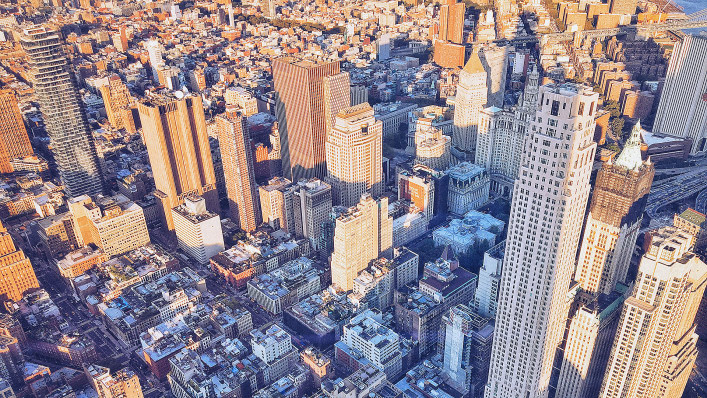
[Photo: Max Ostrozhinskiy/Unsplash]
Certain climate change scenarios lend themselves to the imagination. Our brains can easily understand the risks; they’re almost filmic. Storms intensify. Cities heat up. Drought and disease explode. Coastlines are abandoned. Comparatively, financial losses can seem like an afterthought. But as economists piece together a more complex understanding of how climate change will impact the world, they’re raising the alarm.

The latest warning comes from economists from Mexico, the U.K., and the Netherlands, who show that most estimates of the cost of climate change are missing something important: the fact that global warming will be much worse in cities thanks to the urban heat island effect. Not only will cities be much hotter, they’ll pay for it, losing as much as 11% of their GDP in the most extreme cases. And overall, this “local” warming will make global warming worse. Cities need to act now to increase cool roofs, cool asphalt, and other design changes that can dampen the effect, they argue.

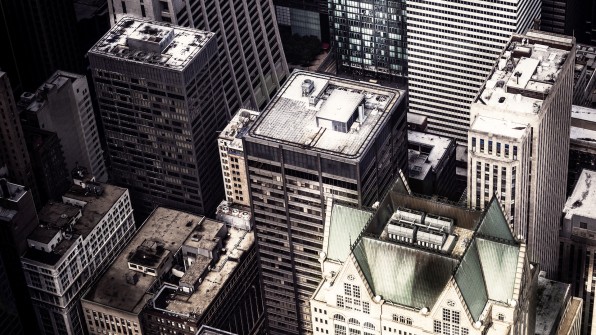
In the 1800s, a British scientist named Luke Howard observed that the temperature in London was consistently higher than nearby areas. Today that phenomenon is called the urban heat island effect: Asphalt, dense architecture, energy usage, and a lack of green space all conspire to make cities much warmer than areas nearby–which actually cascades to dramatically alter the weather patterns around cities in general. The effect also compounds climate change in cities, which see hotter temperatures than what the rest of the world experiences.

[Photo: Vladimir Kudinov/Unsplash]
In the journal Nature Climate Change, the economists Francisco Estrada, W.J. Wouter Botzen, and Richard S.J. Tol write that this “local” form of climate change will deeply depress the urban economy–and dramatically “amplify” global climate change overall. “Any hard-won victories over climate change on a global scale could be wiped out by the effects of uncontrolled urban heat islands,” Tol said in a University of Sussex statement. The impact is so dramatic, the economic losses from climate change are almost three times worse when the urban heat island effect is included in the model, as opposed to conventional models that don’t consider the effect.

The trio ran an analysis of the 1,692 largest cities in the world under several different future greenhouse gas concentration models, ultimately finding that the hardest-hit cities could lose almost 11% of their GDP by 2100 under the most extreme scenario, with average losses at about 5.6%. For a city like New York, which had a GDP of $1.33 trillion in 2012, an 11% loss could mean roughly $146 billion. For comparison’s sake, that’s almost double the city budget Mayor de Blasio proposed this year, or roughly what China spends on defense every year. The urban heat island effect would make any attempts to mitigate climate change on a global scale (say, through international treaties or large-scale efforts) way less effective. In short, if cities don’t start mitigating the urban heat island effect, they’ll be in big trouble economically very soon, and the rest of the world will suffer, too.

While that’s bad news for just about everyone involved, the economists point out a silver lining: Cities are more nimble and flexible to enact policy than hulking national or international governments. They modeled four different levels of policy that cities could make, and found that mitigating the urban heat island effect on a local level could have major benefits on a global scale. “And even when global efforts fail, we show that local policies can still have a positive impact, making them at least a useful insurance for bad climate outcomes on the international stage,” Tol added.

[Photo: Maxvis/iStock]
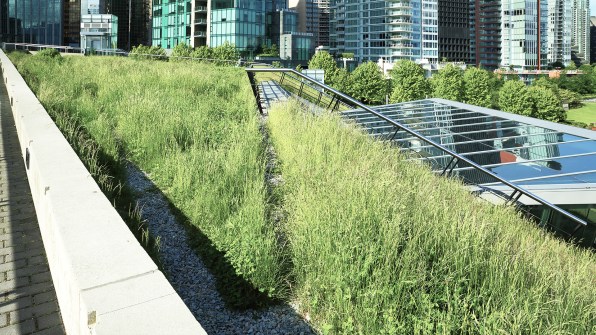
That includes green roofs and cool roofs, which reflect solar radiation with reflective paint or material, as well as cool pavements, which are made with reflective aggregate to bounce back the sun’s rays. (Expanding green spaces and increasing tree plantings are important, too, they add.)

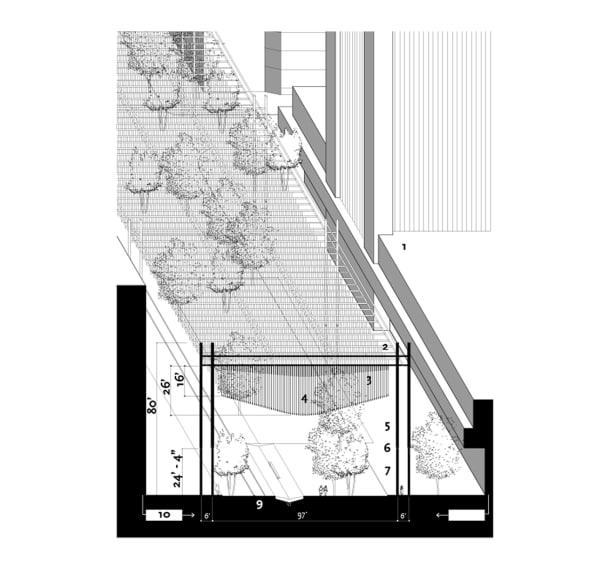
Some cities are already enacting policy in line with their recommendations: Los Angeles made cool roofs a requirement in 2013, and just last month New York City released guidelines for resilient architecture that include cool roofs and cool pavement, as well as other heat-mitigation designs like bioswales ("...landscape elements designed to concentrate or remove silt and pollution from surface runoff water. They consist of a swaled drainage course with gently sloped sides (less than 6%) and filled with vegetation, compost and/or riprap..."). Meanwhile, many other cities are replacing parking lots with green space and parks. Architects in Phoenix are incorporating heat island-busting canopies into their designs.
Photo: Co.Design
It’s further proof that the battle for the planet will be fought in cities–and that architecture, infrastructure, and urban design will be important weapons against it. 

ABOUT THE AUTHOR
Kelsey Campbell-Dollaghan is Co.Design's deputy editor

ORIGINAL: FastCoDesign
05.31.17 

lunes, 22 de junio de 2015

Stanford researcher warns sixth mass extinction is here

Image: Esteban De Armas/Shutterstock.com
And humans may struggle to survive it.
Biologists have used conservative new estimates to prove that vertebrate species on Earth are disappearing faster than at any time since the extinction of the dinosaurs, and humans are now at risk of being wiped out.

"[The study] shows without any significant doubt that we are now entering the sixth great mass extinction event," one of the researchers, Paul Ehrlich from Stanford University in the US, said in a press release. Even worse, the research shows that we triggered the event ourselves.

Although many biologists have long believed that Earth is in the middle of a major extinction event, skeptics have argued that estimates were overstating how fast species were being wiped out as a result of inconsistent data.

Scientists work out whether we're in a major extinction event by comparing the current extinction rate to the background extinction rate - the rate at which you'd expect species to normally disappear.

By looking only at well-verified data and fossil records of vertebrates - our best-studied group of organisms - the new research came up with a background extinction rate that's twice as high as previous estimates.

But even using this background rate and the most conservative species loss estimates, the researchers found that animals are still being wiped out around 15 to 100 times faster than they should be - in fact, the rate of species loss hasn't been this high since the dinosaurs disappeared 65 million years ago.

"Rather than the nine extinctions among vertebrates that would be expected to have occurred in normal geological circumstances since 1900, their conservative estimate adds in another 468 extinctions, spread among mammals, birds, reptiles, amphibians and fish," Jan Zalasiewizc writes for The Guardian.

At this rate, the team estimates that around 41 percent of all amphibian species and 26 percent of all mammals will be wiped out.

Such dramatic biodiversity loss will also put humans in danger within just three generations, the team estimates, particularly if we also lose crucial pollinators such as the honeybee.

"If it is allowed to continue, life would take many millions of years to recover, and our species itself would likely disappear early on," said one of the lead researchers, Gerardo Ceballos from the Universidad Autónoma de México.

"We are sawing off the limb that we are sitting on," added Ehrlich.

The researchers also found that the main culprit for this mass extinction isn't a major event such as a volcanic eruptions or meteor strike. Instead, it's human activity. The researchers found the following four activities had been particularly damaging:
  • Land clearing for farming, logging and settlement
  • Introduction of invasive species
  • Carbon emissions that drive climate change and ocean acidification
  • Toxins that alter and poison ecosystems
"We emphasise that our calculations very likely underestimate the severity of the extinction crisis, because our aim was to place a realistic lower bound on humanity's impact on biodiversity," the researchers write in the journal Science Advances, where their results are published.

But it's not all bad news - the researchers remarked that we could still avoid such steep biodiversity loss through intense conservation action. "But that window of opportunity is rapidly closing," they conclude.

Hopefully the threat of wiping out our own species will be enough to finally make us sit up and take action. Find out more about the research in the Stanford University video below.


There is no longer any doubt: We are entering a mass extinction that threatens humanity's existence. That is the bad news at the center of a new study by a group of scientists including Paul Ehrlich, the Bing Professor of Population Studies in biology and a senior fellow at the Stanford Woods Institute for the Environment. Ehrlich and his co-authors call for fast action to conserve threatened species, populations and habitat, but warn that the window of opportunity is rapidly closing.
Read more: http://stanford.io/1RgQBMj


Read these next:

WATCH: The Sixth Extinction - this time, we're the asteroid

Earth has entered a new epoch, and we caused it

Here are the 15 vertebrates most likely to become extinct next


ORIGINAL: Science Alert
FIONA MACDONALD
22 JUN 2015