Mostrando entradas con la etiqueta U of Nottingham. Mostrar todas las entradas

viernes, 6 de julio de 2012

Spaceflight May Extend the Lifespan of Microscopic Worm

ORIGINAL: Science Daily

ScienceDaily (July 6, 2012) — The effect of spaceflight on a microscopic worm --Caenorhabditis elegans (C. elegans) -- could help it to live longer.

Image of worms post flight. (Credit: Image courtesy of University of Nottingham) 

The discovery was made by an international group of scientists studying the loss of bone and muscle mass experienced by astronauts after extended flights in space. The results of this research have been published July 5 2012, in the online journal Scientific Reports.

Dr Nathaniel Szewczyk, from The University of Nottingham, was part of the ICE-FIRST project which involved scientists from Japan, France, the US, and Canada. They discovered that spaceflight suppressed accumulation of toxic proteins that normally accumulate within aging muscle. They also discovered a group of genes that are expressed at lower levels during spaceflight. When the expression of these same genes were lowered in worms back on Earth the worms lived longer.

Dr Szewczyk, an expert in muscle metabolism, said: "We identified seven genes, which were down-regulated in space and whose inactivation extended lifespan under laboratory conditions."

How do these genes play a role in longevity control? Dr. Szewczyk said: "We are not entirely certain, but it would appear that these genes are involved in how the worm senses the environment and signals changes in metabolism in order to adapt to the environment. For example, one of the genes we have identified encodes insulin which, because of diabetes, is well known to be associated with metabolic control. In worms, flies, and mice insulin is also associated with modulation of lifespan."

What could this mean for space travellers? He said: "Well, most of us know that muscle tends to shrink in space. These latest results suggest that this is almost certainly an adaptive response rather than a pathological one. Counter-intuitively, muscle in space may age better than on Earth. It may also be that spaceflight slows the process of aging."

Dr Szewczyk's role was to provide expertise in the culturing of worms in CeMM -- a special liquid food for worms. Dr Szewczyk transported the samples to and from the Russian launch site and ran a series of 'health' checks to ensure that the tiny astronauts were fit for flying. On their return he helped with the analysis of the data.

Nottingham's space biology lab

Dr Szewczyk studies the signals that control muscle protein degradation in the human body. C. elegans is the perfect substitute for studying long-term changes in human physiology because they suffer from muscle atrophy -- muscle loss -- under many of the same conditions that people do.

C. elegans was the first multi-cellular organism to have its genetic structure completely mapped and many of its 20,000 genes perform the same functions as those in humans. Two thousand of these genes have a role in promoting muscle function and 50 to 60 per cent of these have very obvious human counterparts.

When the research began Dr Szewczyk was working at NASA. He is now based at The University of Nottingham's MRC and Arthritis Research UK Centre for Musculoskeletal Ageing Research. 

The experiment in 2004 involved a consignment of live worms being despatched to the International Space Station (ISS) onboard the Dutch DELTA mission.

He uses worms which originate from a garbage dump in Bristol. C. elegans often feed on decaying fruit and vegetable matter.

They have since taken part in five spaceflights to the ISS with the aim of learning more about the effect of microgravity on the physiology of the human body.

Notably, in 2003 Dr Szewczyk's C. elegans made the news when they survived the Space Shuttle Columbia disaster. Living in petri dishes and enclosed in aluminium canisters the worms survived re-entry and impact on the ground and were recovered weeks after the disaster.

This spaceflight work teaches us things about the body that we couldn't learn on Earth. They have led to the publication of research into how to block muscle degradation using a form of gene therapy in PLoS ONE and publication of a muscle repair mechanism in PLoS Genetics. The work on C. elegans has also established that worms can live and reproduce for at least six months in space. This makes it an ideal and cost-effective experimental system to investigate the effects of long duration and distance space exploration as recently reported in Interface, a journal of The Royal Society. Together these missions have established that the team is not only better able to understand how muscle works on Earth but they are also in a position to send worms to other planets and experiment on them along the way.

Astronaut now being studied

Another member of the Centre's team is currently examining the effects of spaceflight upon the muscles of the current European record holder for time spent in space.

Andre Kuipers, the Dutch astronaut who flew the mission in 2004, has just returned from ISS with yet another worm experiment from space for the team at Nottingham and is also, himself, being studied.

That experiment, led by Professor Marco Narici, is to study the effects of long-duration spaceflight on human muscle.

Story Source:
The above story is reprinted from materials provided by University of Nottingham .

Note: Materials may be edited for content and length. For further information, please contact the source cited above.


Journal Reference:
Yoko Honda, Akira Higashibata, Yohei Matsunaga, Yukiko Yonezawa, Tsuyoshi Kawano, Atsushi Higashitani, Kana Kuriyama, Toru Shimazu, Masashi Tanaka, Nathaniel J. Szewczyk, Noriaki Ishioka, Shuji Honda. Genes down-regulated in spaceflight are involved in the control of longevity in Caenorhabditis elegans. Scientific Reports, 2012; 2 DOI: 10.1038/srep00487


jueves, 31 de mayo de 2012

Logran secuencia del genoma del tomate

ORIGINAL: 


ORIGINAL: UPV TV

Video Original:UPV-TV

Un proyecto en el que participan investigadores de la UPV es hoy portada en la revista Nature. Su logro ha sido secuenciar el ADN del tomate, lo que permitirá mejorar la calidad de los mismos. Esperamos que, a partir de ahora, no sea tan difícil encontrar tomates con todo su sabor.


ORIGINAL: Nature

Tomato genome sequence bears fruit
30 May 2012

Work paves way for high-yield crops with good flavour.
Tomatos have twice triplicated their genome in the past hundred million years. NIK MERKULOV / SHUTTERSTOCK

The genome sequence of one of the world’s highest-value salad plants — the tomato — has been decoded by an international team of scientists, and is published today in Nature1 .

The tomato (Solanum lycopersicum) is an increasingly popular fruit, with 145.8 million tonnes produced globally in 2010.

According to the leaders of the UK arm of the Tomato Genome Consortium, Graham Seymour at the University of Nottingham and Gerard Bishop, formerly of Imperial College London, the sequence will make precision breeding possible not just in tomatoes, but also in other crop species from the Solanaceae family, such as aubergines (Solanum melongena) and peppers (Capsicum spp.).

They also hope it will help in the development of tomatoes that can survive pests, pathogens and even climate change, as well as high-yield crops that still have a good flavour. “It’s really all about making a better tomato,” says Allen Van Deynze, a molecular geneticist at the Seed Biotechnology Center at the University of California, Davis. “This work enables a lot of things we just couldn’t do before.”

Launched in 2003, the project has taken some time to get results, but it has produced an “amazingly complete” sequence, the leaders say. With more than 80% of the genome sequenced, and more than 90% of the genes within it identified, and refinements still taking place, the group hopes to make this a gold-standard reference sequence. "It's one of the better genomes out there," says Van Deynze.

Evolving tactics
Giovanni Giuliano, from the Italian National Agency for New Technologies, Energy and Sustainable Economic Development in Rome, and a lead researcher on the project, explains that the group started out using traditional tools to sequence the genomes of the domesticated tomato cultivar Heinz 1706 (the one used to make the famous ketchup) and its closest wild relative, Solanum pimpinellifolium.

However, when the data still had major holes by 2008, the team took advantage of ‘next-generation’ technologies and switched to the much faster method of whole-genome shotgun sequencing. In this technique, large chunks of DNA are sequenced separately, pieced back together, then assembled into the genome.

Giuliano says that one of the most exciting discoveries was that the entire tomato genome was copied in triplicate on two separate occasions. The earlier event occurred about 130 million years ago, and was first identified in grapes (Vitis vinifera)2, but what interests Giuliano is that a second event occurred around 60 million years ago, and had major implications for the development of the fruit.

“Several of the genes ‘born’ at that second triplication stayed in the genome for tens of millions of years,” he says. “Then, relatively recently, they changed their function — this brought about the appearance of the fleshy fruit as we know it today.” The tomato is already an established model for fleshy fruit development, so the information will also be useful for breeding fruits such as strawberries, melons and bananas.

“The next thing,” says Johnathan Napier, a plant biotechnologist at Rothamsted Research in Harpenden, UK, “is to link this genome sequence to traits that are useful and important, especially for food security and human health.”

sábado, 3 de marzo de 2012

Immortal worms defy aging

ORIGINAL: KurzweilAI
February 29, 2012

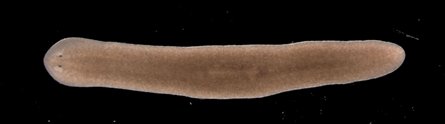
Planarian flatworm (credit: The University of Nottingham)
Researchers from The University of Nottingham have discovered how planarian flatworms overcome the aging process to be potentially immortal: they can rejuvenate their telomeres.

The discovery, funded by the Biotechnology and Biological Sciences Research Council (BBSRC) and Medical Research Council (MRC), may eventually lead to alleviating aging and age-related characteristics in human cells.

Planarian worms have amazed scientists with their apparently limitless ability to regenerate. Researchers have been studying their ability to replace aged or damaged tissues and cells in a bid to understand the mechanisms underlying their longevity.

“We’ve been studying two types of planarian worms; those that reproduce sexually, like us, and those that reproduce asexually, simply dividing in two,” said Dr. Aziz Aboobaker from the University’s School of Biology.

“Both appear to regenerate indefinitely by growing new muscles, skin, guts and even entire brains over and over again.

“Usually when stem cells divide — to heal wounds, or during reproduction or for growth — they start to show signs of aging. This means that the stem cells are no longer able to divide and so become less able to replace exhausted specialized cells in the tissues of our bodies.

“Our aging skin is perhaps the most visible example of this effect. Planarian worms and their stem cells are somehow able to avoid the aging process and to keep their cells dividing.”

Each time an animal cell divides, the protective telomere “cap” gets shorter. When they get too short, the cell loses its ability to renew and divide. In an immortal animal, we would therefore expect cells to be able to maintain telomere length indefinitely so that they can continue to replicate. Aboobaker predicted that planarian worms actively maintain the ends of their chromosomes in adult stem cells, leading to theoretical immortality.

Previous work, leading to the award of the 2009 Nobel Prize for Physiology or Medicine, had shown that telomeres could be maintained by the activity of an enzyme called telomerase. In most sexually reproducing organisms, the enzyme is most active only during early development. So as we age, telomeres start to reduce in length.

This project identified a possible planarian version of the gene coding for this enzyme and turned down its activity. This resulted in reduced telomere length and proved it was the right gene. They were then able to confidently measure its activity and resulting telomere length and found that asexual worms dramatically increase the activity of this gene when they regenerate, allowing stem cells to maintain their telomeres as they divide to replace missing tissues.

“The next goals for us are to understand the mechanisms in more detail and to understand more about how you evolve an immortal animal,” said Aboobaker.

“The worms are a model system in which we can ask questions, like is it possible for a multicellular animals to be immortal and avoid the effects of aging?,” he told KurzweilAI.

“If so, how does this animal do this in comparison to animals that don’t? Of course we hope that this impacts humans, that’s why we do it. But we aren’t planning on making any drugs or medicines… other people are, I’m sure.”

Ref.: Thomas C. J. Tan et al., , Telomere maintenance and telomerase activity are differentially regulated in asexual and sexual worms, Proceedings of the National Academy of Sciences, 2012 [DOI: 10.1073/pnas.1118885109] (open access)